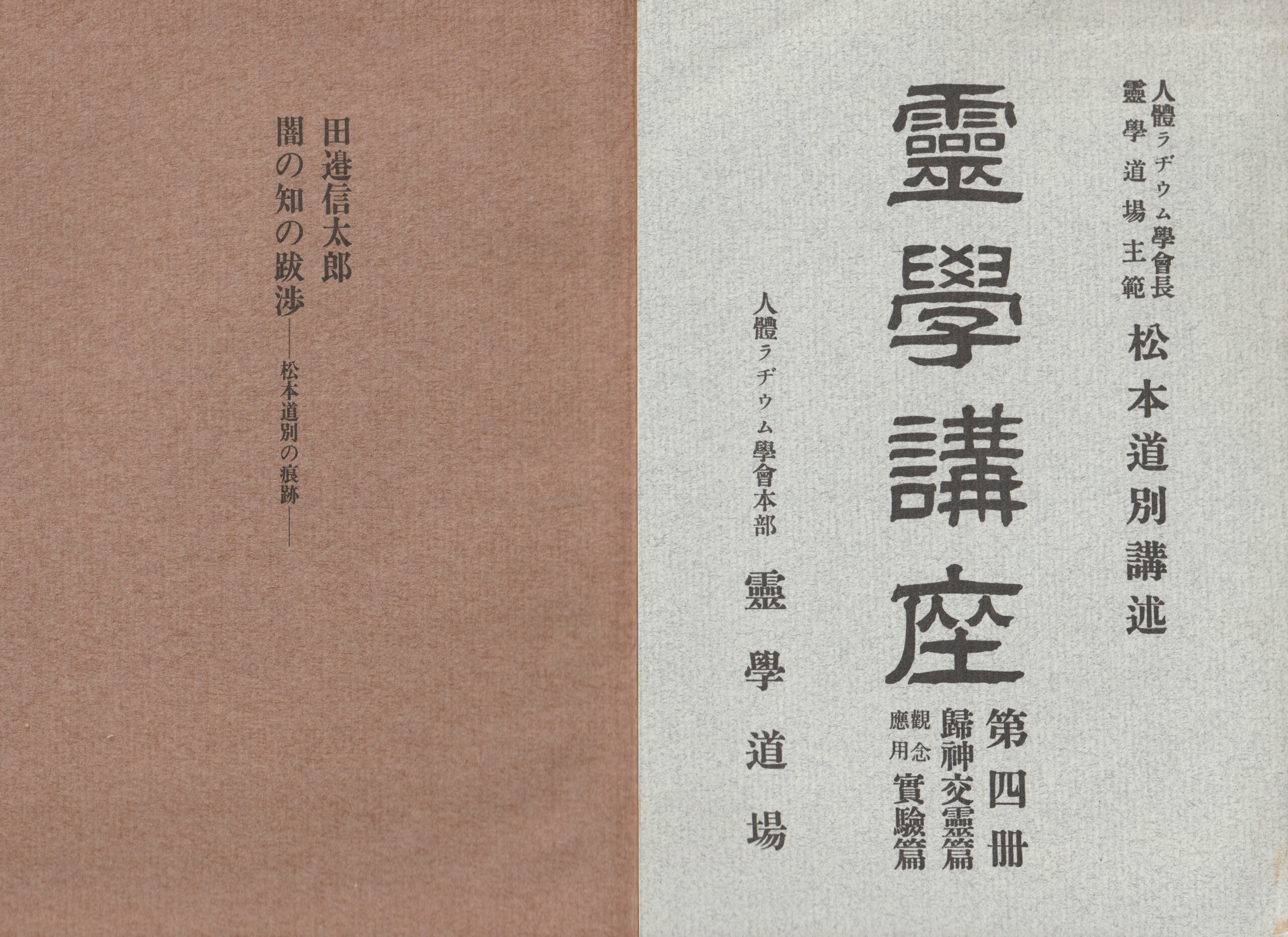
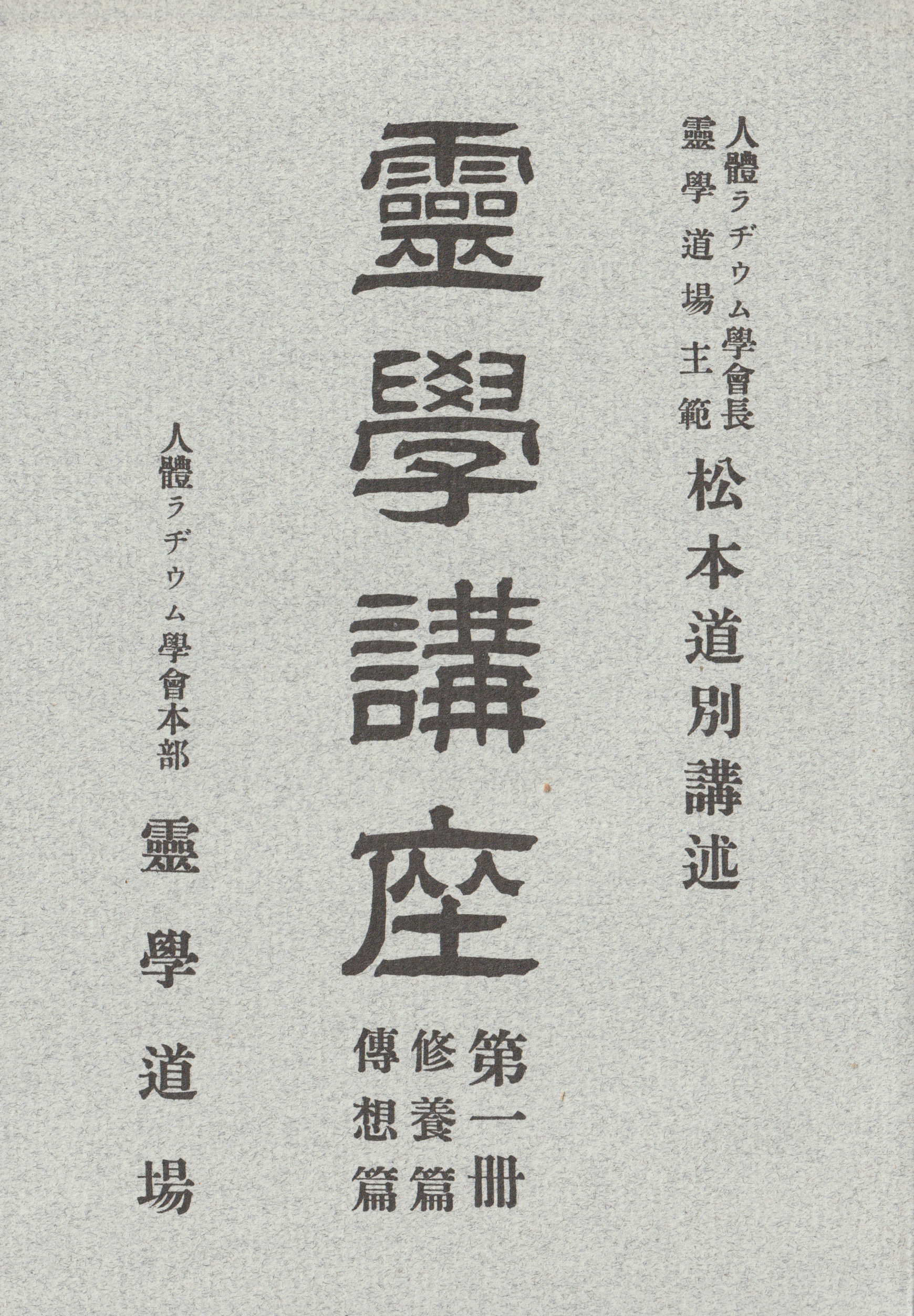
霊学講座
Reigaku Koza
- Author:
- Matsumoto Chiwaki (松本道別)
- Category:
- Martial Arts
- Collection:
- Robert C. Gruzanski Collection
Description
Comprehensive Master Catalog: 『霊学講座』 (Reigaku Kōza)
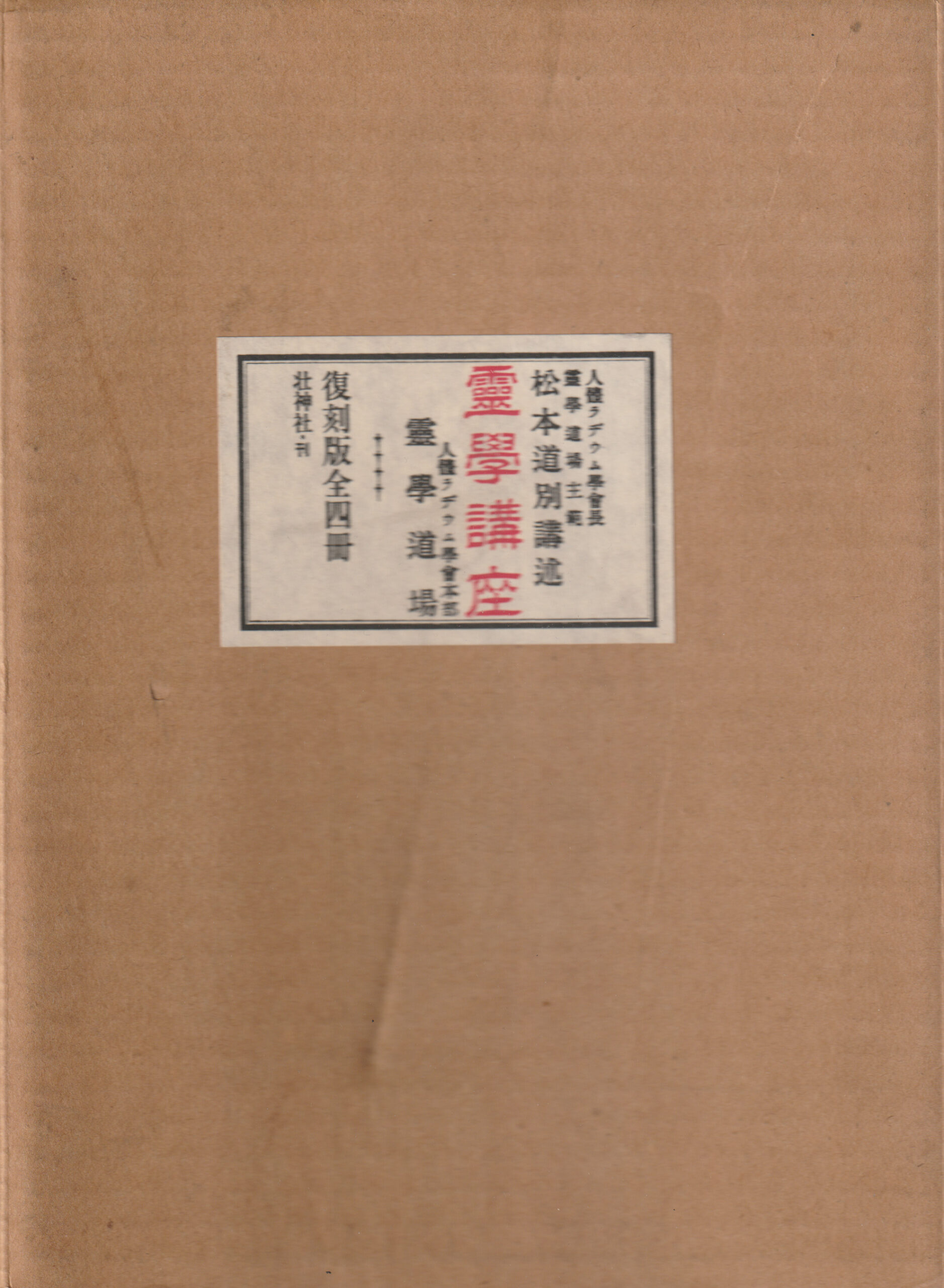
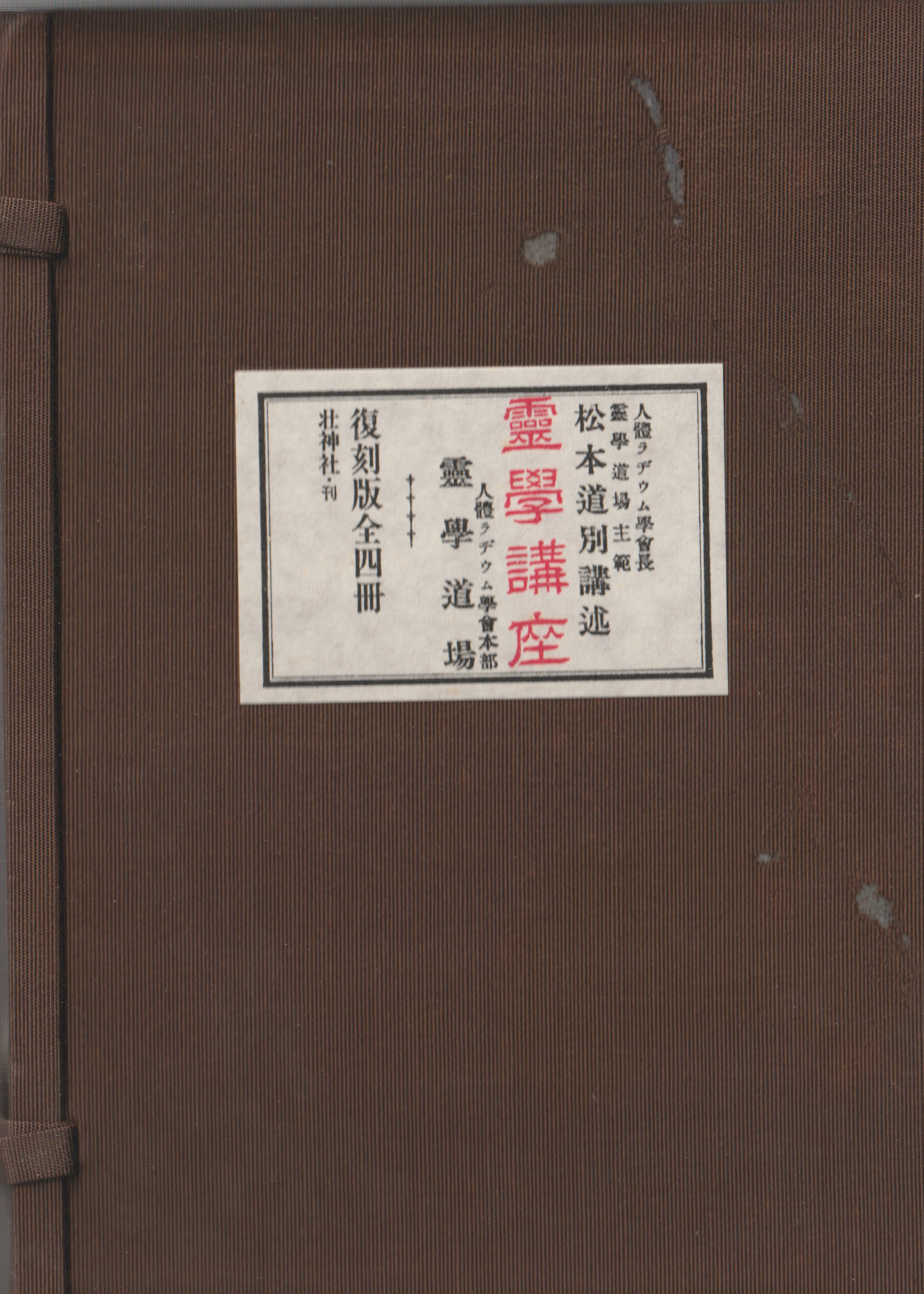
The Reigaku Kōza (霊学講座 / Course on Spiritual Science) is a legendary, multi-volume masterwork compiled by the pioneering late-Meiji and early-Shōwa researcher Matsumoto Chiwaki (松本道別). Originally published as an elite study course in 1927, this monumental 1990 facsimile box set by Sōjinsha reproduces the absolute raw, un-redacted training curriculum of Japan’s pre-war psycho-physical secret arts. Spanning 625 pages across four distinct technical textbooks, the course serves as the literal foundational blueprint that bridged ancient Shinto esoteric practices, martial arts nerve strikes (Atemi-jutsu), hypnosis, and early Western neurological sciences.
- Structural Profiles of the 4 Volumes
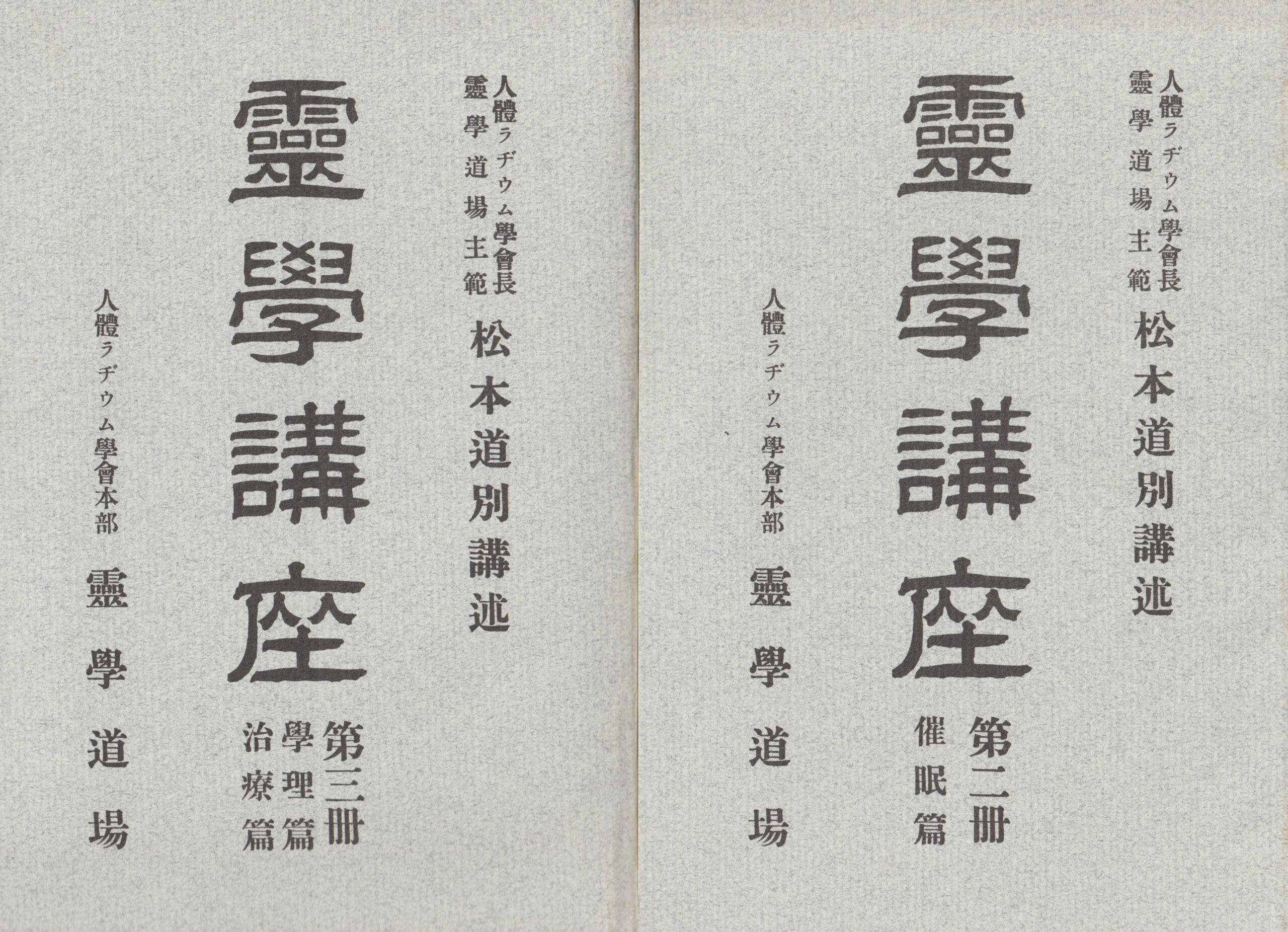
- 第1冊 (Volume 1): 修養篇・伝想篇 (Cultivation & Mind Dynamics)
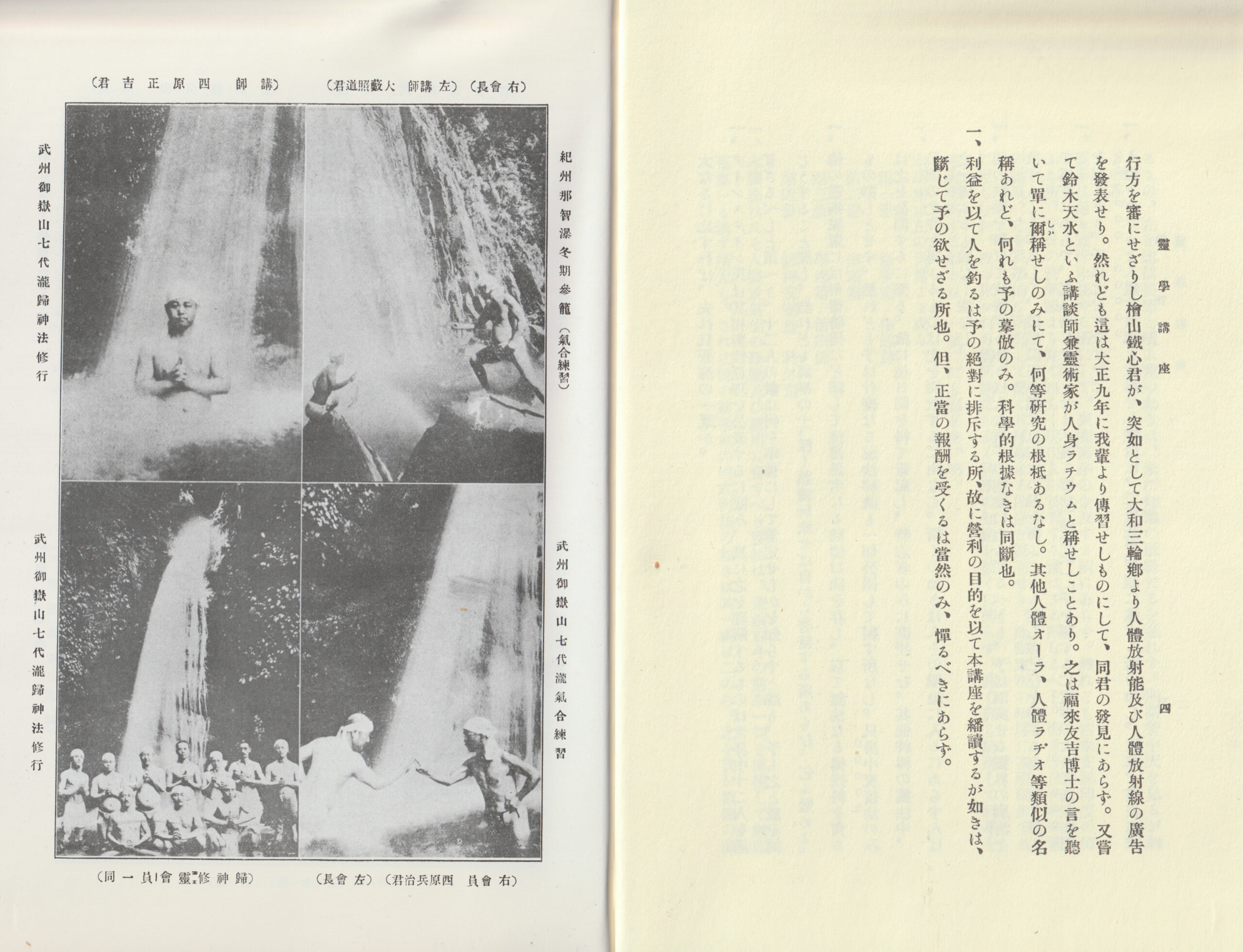
Focuses entirely on foundational psycho-physical development. It outlines deep conditioning via Taisoku-hō (胎息法 / Abdominal-Embryonic Breathing) and Gyōki-hō (行気法 / Energy Circulation). It documents methods to stabilize internal biological electrical currents (termed “Human Radium”) and clear mental static via Chinkon-hō (鎮魂法 / Spirit Quieting Concentration). The second half outlines basic models of conscious thought resonance and empathy testing. - 第2冊 (Volume 2): 催眠篇 (Hypnotism & Suggested States)
An exhaustive technical deep dive into late-Meiji and early-Shōwa era Saiminjutsu (催眠術 / Hypnotism). It catalogs explicit protocols for verbal induction, magnetic pass methods, and deepening trance states. Rather than parlor tricks, Matsumoto structures hypnotism as a rigorous physiological framework to manipulate the subjective senses and alter nervous feedback loops. - 第3冊 (Volume 3): 学理篇・治療篇 (Theory & Body Therapeutics)
Provides the core ideology of Matsumoto’s energetic universe, mapping traditional East Asian Ki over Western neuro-anatomy. The therapeutic section details spinal and diagnostic alignments using the nervous systems. It teaches practitioners how to radiate bio-energy (Shūkihō) out of their palms directly into an opponent’s physical blockages or neural clusters. - 第4冊 (Volume 4): 帰神交霊篇・観念応用実験篇 (Spirit Contact & Applied Ideation)
The most controversial book, dividing focus between esoteric Shinto spirit communication techniques (Chinkon Kishin) and extreme sensory isolation testing. It provides exact operating formulas to test internal willpower against catastrophic external stressors, featuring dedicated chapters detailing body resilience against severe trauma.
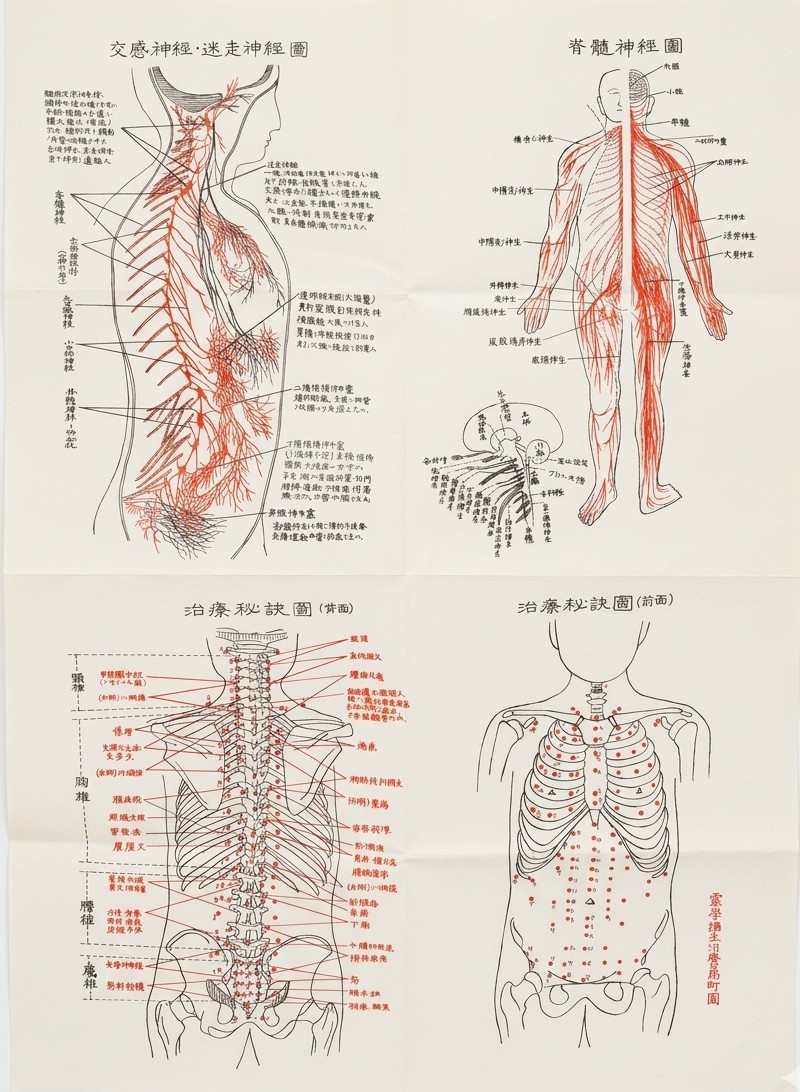
- Detailed Map Component Breakdown: The Chiryō Hiketsu-zu (治療秘訣図)
This high-end 1990 box set reproduces a crucial training asset—the oversized fold-out neuro-anatomy and treatment leaflet chart layout. This chart serves as a visual decoder for the physical applications outlined in Volume 3:
- Top Left Chart: 交感神經・迷走神經圖 (Sympathetic & Vagus Nervous Systems)
This anatomical plate details the deep visceral wiring of the human body. It explicitly tracks the path of the vagus nerve trunk and the sympathetic clusters regulating involuntary biological states, heart rates, and respiratory reflexes. - Top Right Chart: 脊髄神經圖 (Spinal Nervous System Map)
A clean anatomical cross-section mapping how nerve roots sprout outward from the spinal column to dictate motor functions, muscular reflexes, and autonomic feedback across the entire upper and lower limbs. - Bottom Left Chart: 治療秘訣圖 背面 (Secret Treatment Map — Posterior)
A localized, practical target grid mapping out clinical stimulation points directly along the cervical, thoracic, and lumbar vertebrae. It targets the nervous junctions responsible for deep organ stimulation and systematic fatigue relief. - Bottom Right Chart: 治療秘訣圖 前面 (Secret Treatment Map — Anterior)
An anterior skeletal point map tracing exactly where the intercostal nerves and critical respiratory muscle clusters anchor across the ribcage, clavicles, and lower pelvic ring.
- The Direct Connection to Fujita Seiko (藤田西湖)
This volume set is the exact, literal training curriculum that enabled Fujita Seiko’s transition from a standard martial artist into a celebrated pre-war master of “superhuman” feats:
- Official Lineage Proof: On the graduate registry logs detailed within this publication set, Fujita Seiko (藤田西湖) is explicitly documented alongside his legendary contemporary Noguchi Haruchika (野口晴哉) (the creator of Noguchi Seitai therapy) as top alumni of Matsumoto’s Reigaku Dōjō.
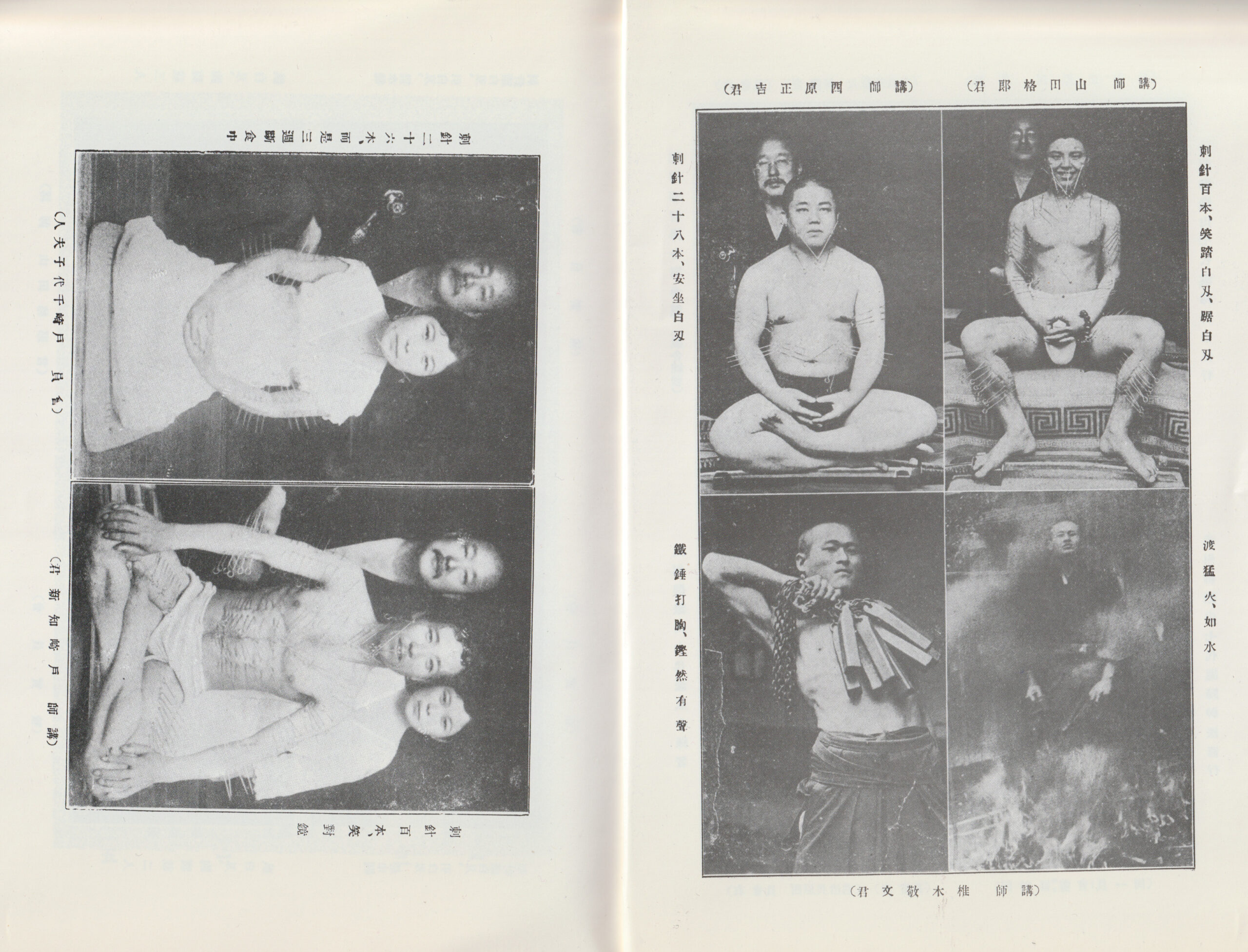
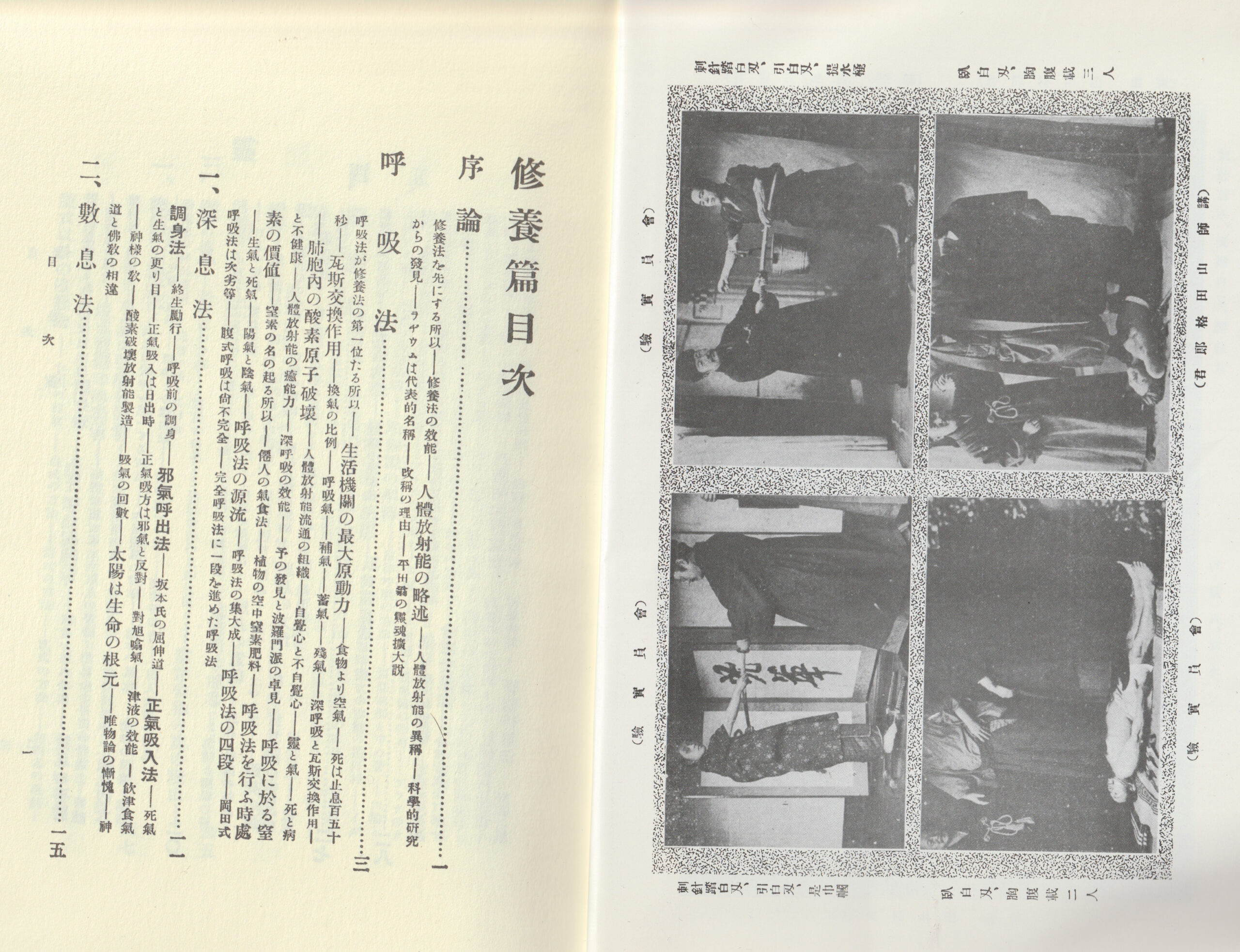
- The Needle Piercing Blueprint: Fujita was globally famous for driving thick iron tatami needles entirely through his skin, throat, and limbs without pain, swelling, or bleeding. Volume 4 features the exact textbook operation parameters under chapter 「刺針」 (Shishin). Fujita achieved this by executing the auto-hypnotic neurological detachment taught by Matsumoto to temporarily sever conscious sensory recognition of localized tissue trauma.
- The Element Endurance Blueprint: Fujita regularly performed feats of fire-walking, fire-eating, and swallowing iron objects. Volume 4 contains the explicit, matching execution recipes titled 「熱鉄・熱湯・火渡」 (Hot Iron, Boiling Water, Firewalking) and 「喰火・白刃」 (Eating Fire, Bare Blades).
- The Shocking Voice: Fujita’s famous mastery of Kiaijutsu (気合術)—using vocal shocks to visually freeze or drop physical attackers—was drawn directly from Matsumoto’s Volume 1 system of Seiki Gōhō (整気合法).
- The Blueprint for Atemi-jutsu: Throughout his career, Fujita authored definitive treatises on anatomical striking, most notably Zukai Kenpō Gokui Atemi Satsukatsu-hō Meikai (図解 拳法極意 当身殺活法明解). Matsumoto’s charts provided the anatomical validation Fujita used to transition folklore pressure points into physical Sympathetic and Vagus Nerve strikes to paralyze, knock out, or disrupt an adversary.
- Katsu (Resuscitation Mechanics): The lower spinal and anterior lung points on this chart mirror the precise manual physical manipulation vectors Fujita used to awaken unconscious fighters or restore damaged respiratory tracking during hard martial sparring.
- Rare & Unusual Facts About the Author and Set
The Seitai Core Connection: While martial historians value this set for decoding Fujita Seiko, wellness historians prize it because it contains the unedited origin of Seitai therapy. Noguchi Haruchika spent years refining Matsumoto’s spinal treatment maps (Chiryō Hiketsu-zu) to create his world-famous body alignment system. This 1990 box set is one of the only places where researchers can view the raw maps exactly as Noguchi studied them before he modernized and rebranded the techniques.
The Author’s Iron-Cage Miracle: Matsumoto Chiwaki was physically frail as a child, jokingly referring to himself as a “walking storehouse of diseases”. After being arrested as the ringleader of a violent, radical anti-government riot in 1905 (The Hibiya Incendiary Incident), he was jailed in an unheated iron cage for three winters without fire or adequate clothing. He claimed he survived the freezing sub-zero exposure solely by applying his custom abdominal heat-circulation breathing models (Taisokuhō).
The “Human Radium” Obsession: Writing in the early 20th century, Matsumoto was fascinated by Marie Curie’s discovery of radiation. He claimed human vital life force (Ki) was actually a form of biological radioactivity, naming his organization the Jintai Radium Gakkai (人體ラヂウム學會 / Human Radium Association).
The Silent Textbook Rule: A striking feature of the main textbook is that while Matsumoto’s publisher notes list elite graduates like Fujita Seiko to establish historical authority, no individual student names or martial journals are allowed within the active 4 textbook lesson volumes themselves. Matsumoto kept the educational content strictly objective and stripped of student storytelling to preserve it as a universal scientific guide.
The Scarcity Factor: The original pre-war 1927 print runs were largely wiped out during the firebombing campaigns of WWII. This high-end 1990 Sōjinsha facsimile reprint box set is itself long out of print (絶版), heavily sought after globally by niche historical researchers trying to decode the exact crossover period between pre-war mysticism and modern espionage physical training.
The Tanabe “Ghost” Research: The bundled 39-page commentary booklet by cultural researcher Tanabe Shintarō, titled Yamie no Chi no Bappo: Matsumoto Chiwaki no Konseki (闇の知の跋歩——松本道別の痕跡), reveals hidden surveillance data. Tanabe uncovers that because Matsumoto’s school actively taught hypnotic mind control and intense physical resilience techniques to high-ranking military figures, the pre-war Japanese Tokkō (Thought Police) kept active, secret files tracking Matsumoto’s dojo, fearing the curriculum could be weaponized to form an un-traceable insurgent cell.
Edition details
- Published:
- 05/30/1990
- Publisher:
- Sōjinsha
- Edition:
-
- • Publishing Format: Complete 4-Volume Facsimile Reprint Box Set with traditional Nami-so softcover bindings housed within a dedicated outer collector's slipcase box.
- • Facsimile Reproduction Timeline: Published May 30, 1990 (Heisei 2) | Original Source Text Layout: 1927 (Showa 2)
- • Total Master Length: 625 pages across the main volumes.
- • Print Status: Officially Out of Print / Zeppan
- • Special Archival Inclusions: Bundled with the rare 39-page independent scholarly commentary booklet by Tanabe Shintaro, and the large, fold-out anatomical training insert chart titled Chiryo Hiketsu-zu.
- Condition:
- Excellent
- Slipcase:
- Yes