
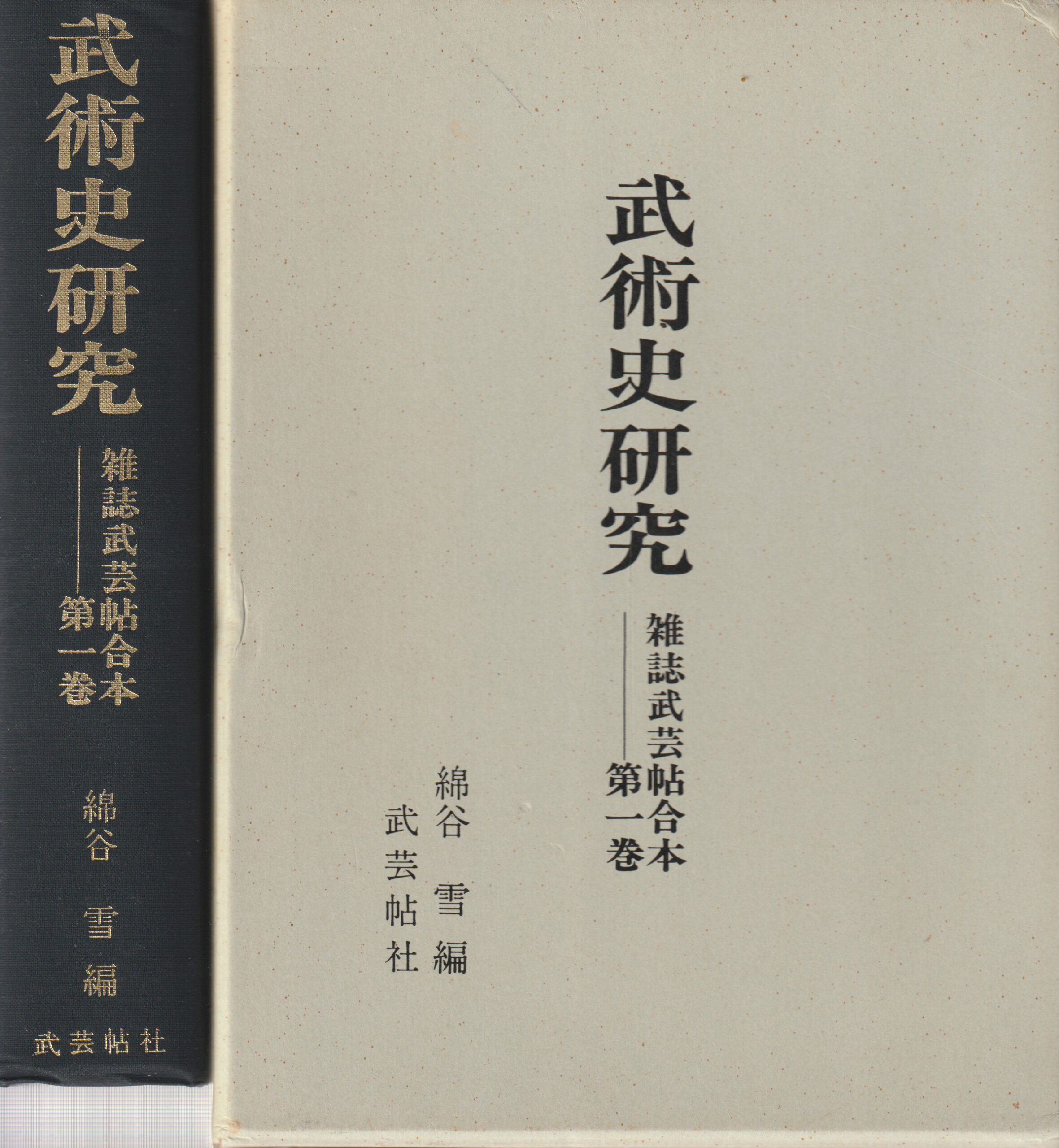
武術史研究
Bujutsu Shi Kenkyu
- Author:
- Watatani Kiyoshi (綿谷雪)
- Category:
- Martial Arts
- Collection:
- Robert C. Gruzanski Collection
Description
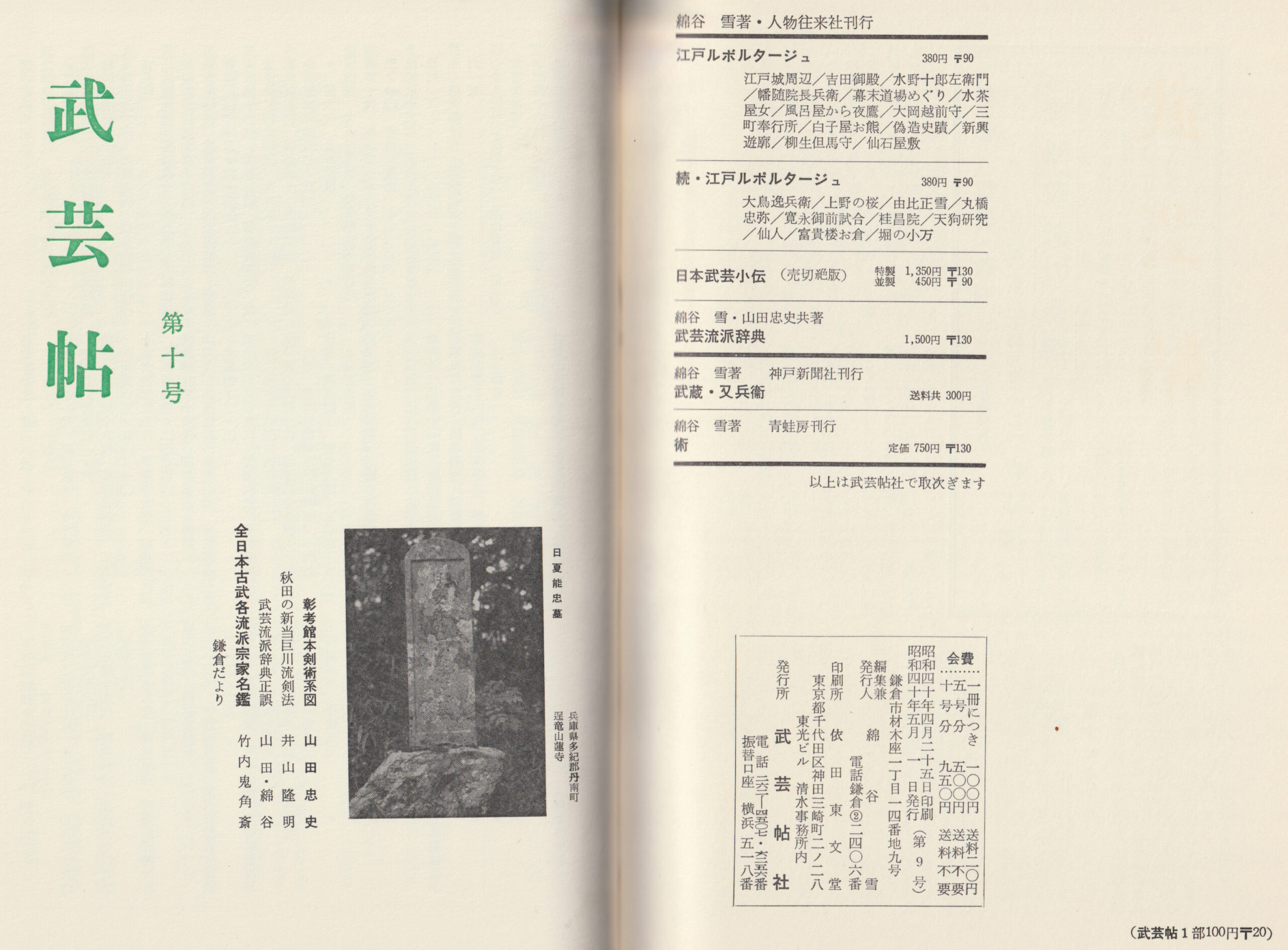
The Bujutsu Shi Kenkyu: Zasshi Bugeicho Gappon Dai-ichi-kan (武術史研究: 雑誌武芸帖合本 第一巻) is an unmatched masterpiece of early postwar martial arts historiography. Rather than an entertaining storybook, it serves as a cold, academic compilation preserving primary source documents, archaic transcription records, and illustrated manuals from the specialized historical research periodical ‘Bugeichō’. This specific 1966 anthology bridges the gap between hidden classical scroll archives and modern historical preservation, preserved here as a rare, individually numbered copy (No. 59) out of its ultra-limited print run.
- Specific Release Date: November 1, 1966 (昭和41年11月1日)
Rare and Unusual Facts About the Volume
- Part of a Two-Volume Numbered Set: This book represents the foundational first installment of a cohesive two-volume numbered set. It is designed to be cataloged alongside its direct successor, Volume 2 (Dai-ni-kan), which was granted a slightly larger but still ultra-limited print run of 150 certified copies.
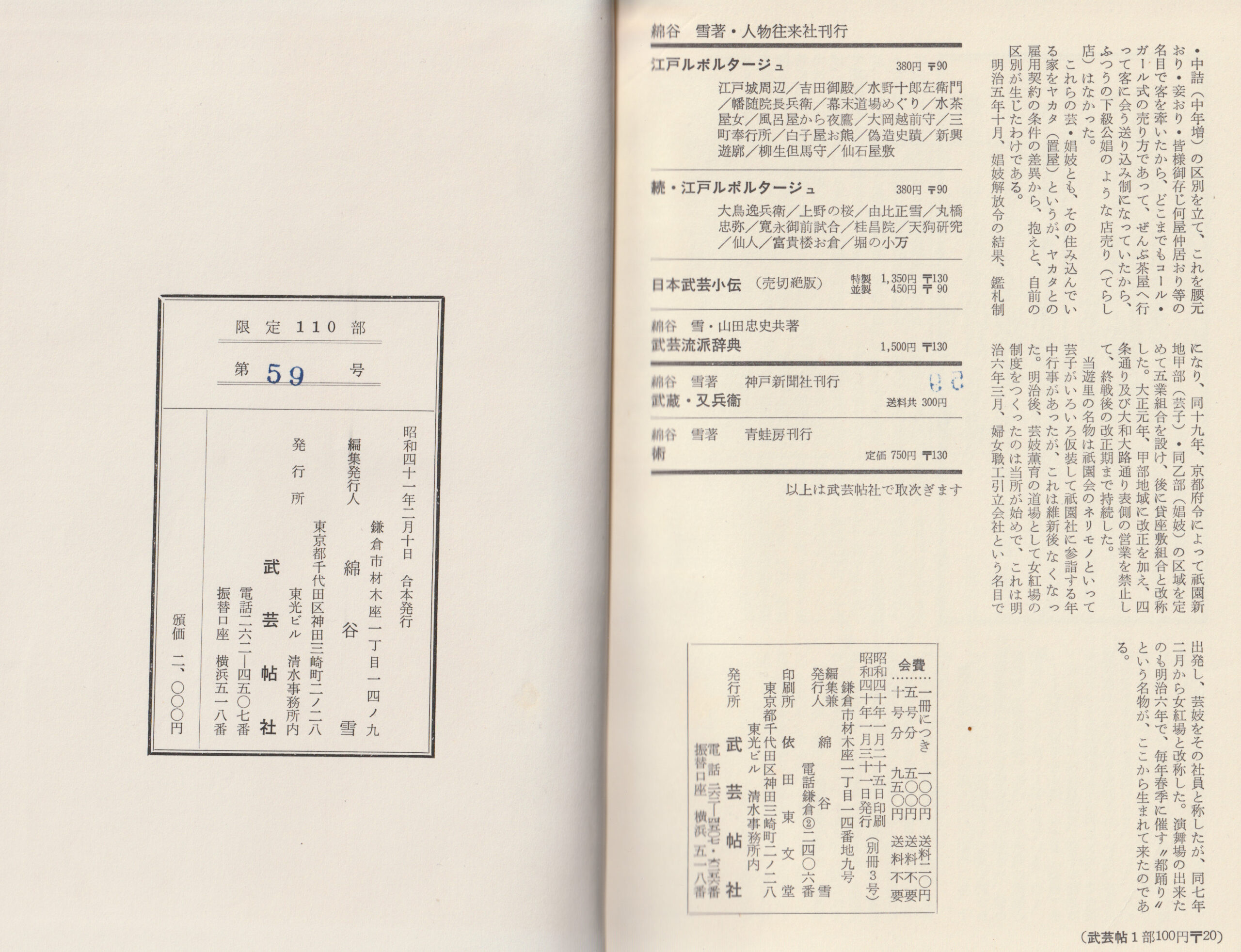
- The 110 Club Ultra-Limited Run: Unlike mass-market history books, or even the second volume, this initial compilation volume was produced in an even tighter, ultra-restricted print run of only 110 certified copies. The absolute scarcity of this numbered set makes it an incredibly prized acquisition for specialized institutional archives and elite martial arts libraries globally.
- Stamped Serial Authentication: Reflecting the meticulous independent production process, each copy of this 1966 edition features its unique registry number officially stamped in blue ink directly into the limited-edition box on the colophon page to certify its authentic place in the original print run.
- Primary Text Transcriptions (Kanbun): Unlike modern commercial martial arts books that rewrite history in simplified language, a massive portion of this compilation presents original historical texts preserved in their archaic format—including classical Kanbun (classical Chinese text utilized by samurai scholars). It serves as a raw linguistic bridge for researchers who want to translate the records directly without modern distortion.
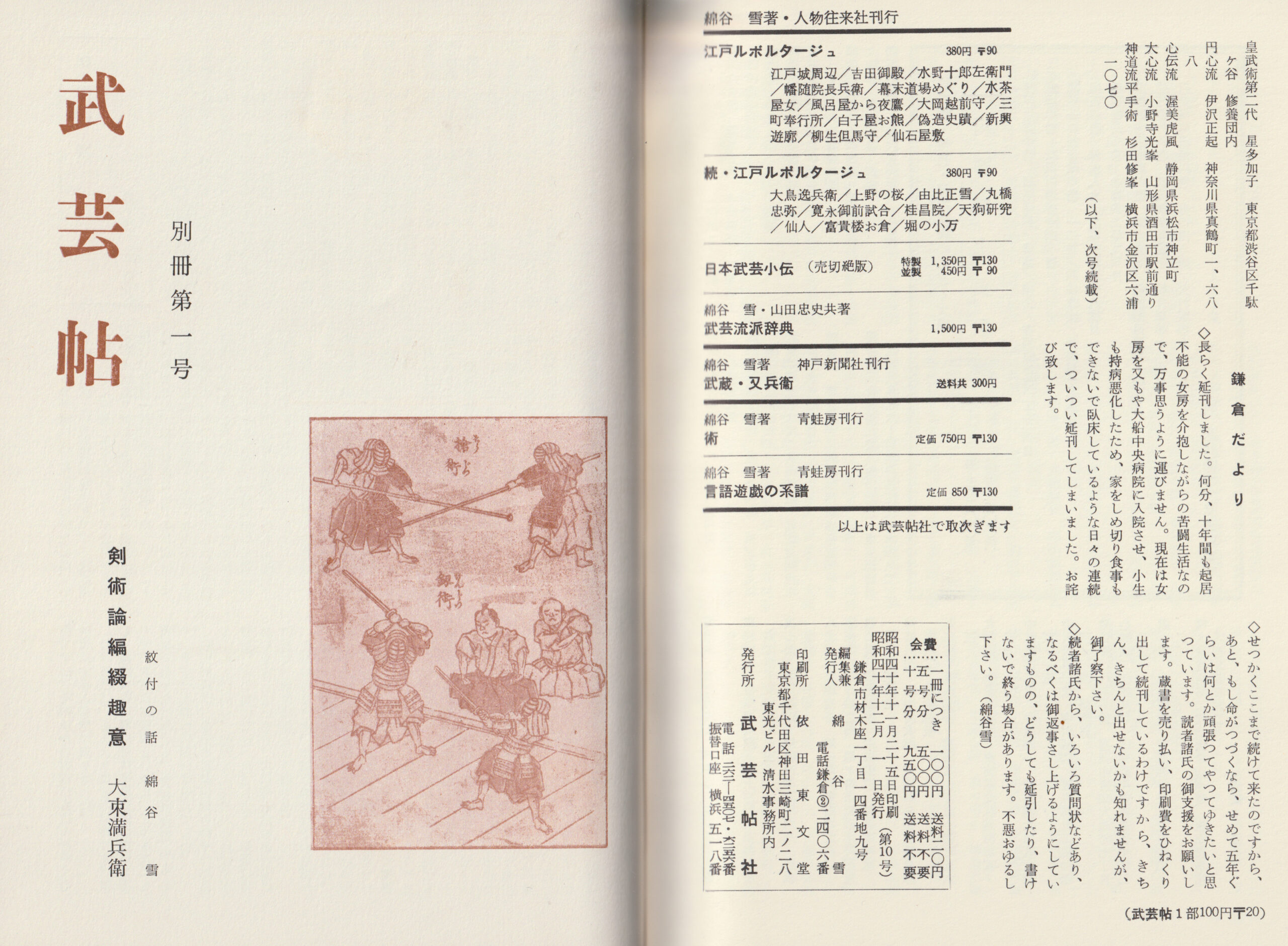
- The Underground Periodical: The contents of this anthology were originally printed as highly specialized, independent issues of the magazine “Bugeichō” during the mid-1960s. Because the articles targeted an incredibly small niche of academic researchers and traditional martial arts masters, mainstream book publishers refused to touch the project.
- Bypassing the Industry: To ensure these vital historical findings survived, the author bypassed commercial printing houses entirely. He established his own boutique press imprint—Bugeichō-sha—solely to print his research and distribute copies directly to verified collectors and elite traditional dojo libraries.
- The Master’s Hand-Press Layouts: Operating with virtually no commercial publishing infrastructure, Watatani personally oversaw the typography and layout. He painstakingly transcribed archaic, handwritten clan scroll texts into clean, legible printed blocks alongside vintage woodblock prints, binding these fragile individual magazine issues into a permanent hardcover record.
Internal Content & Research Highlights
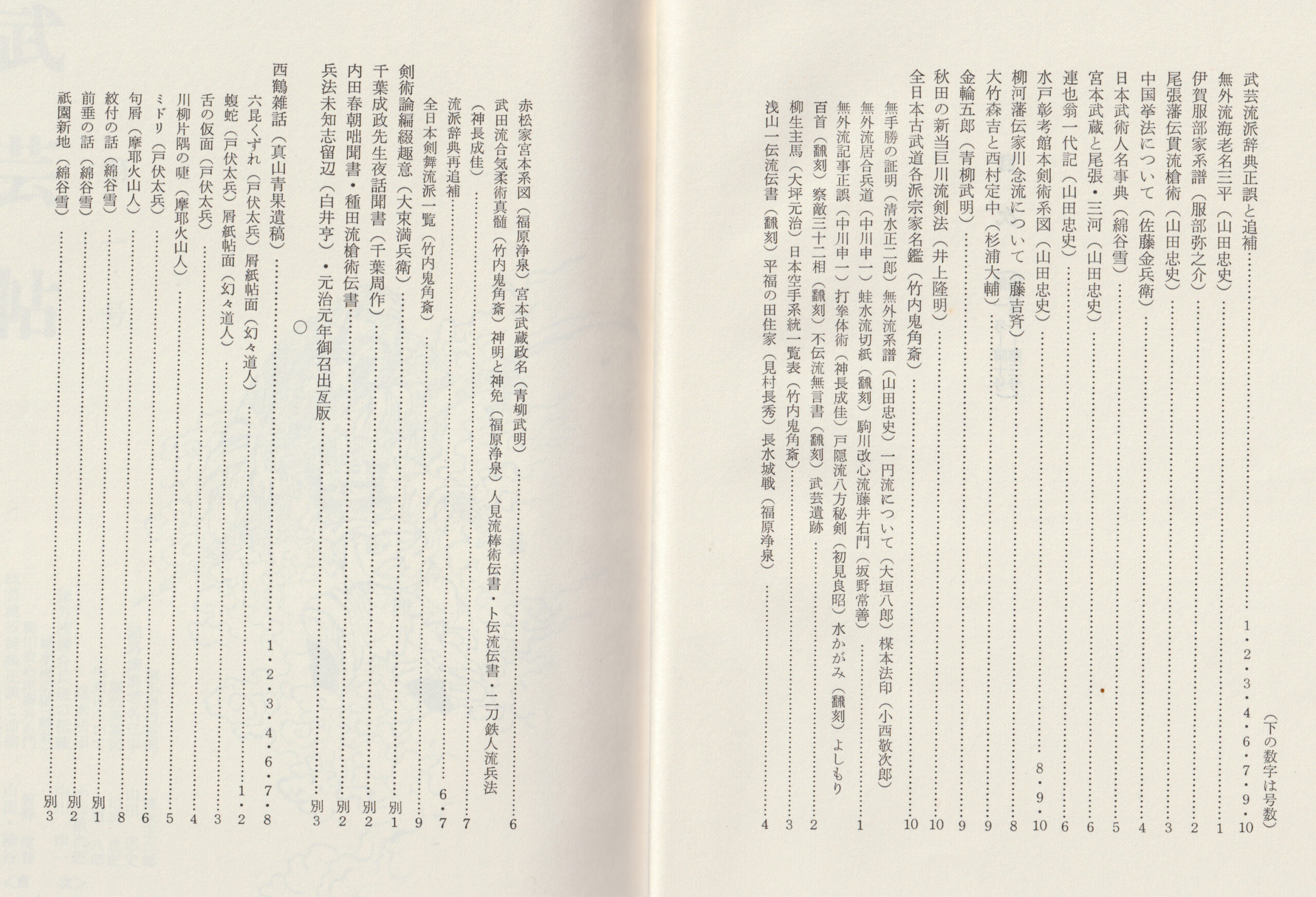
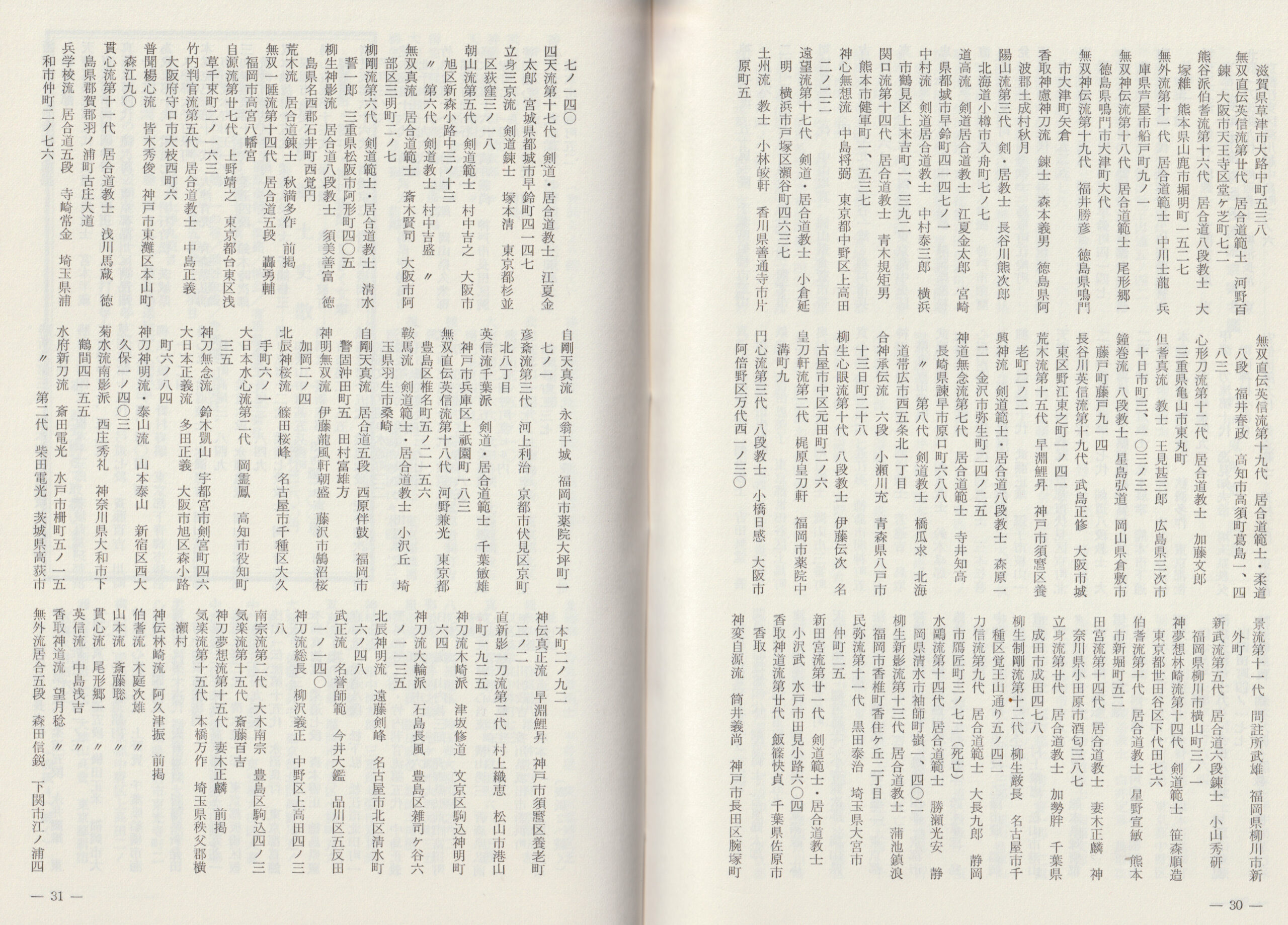
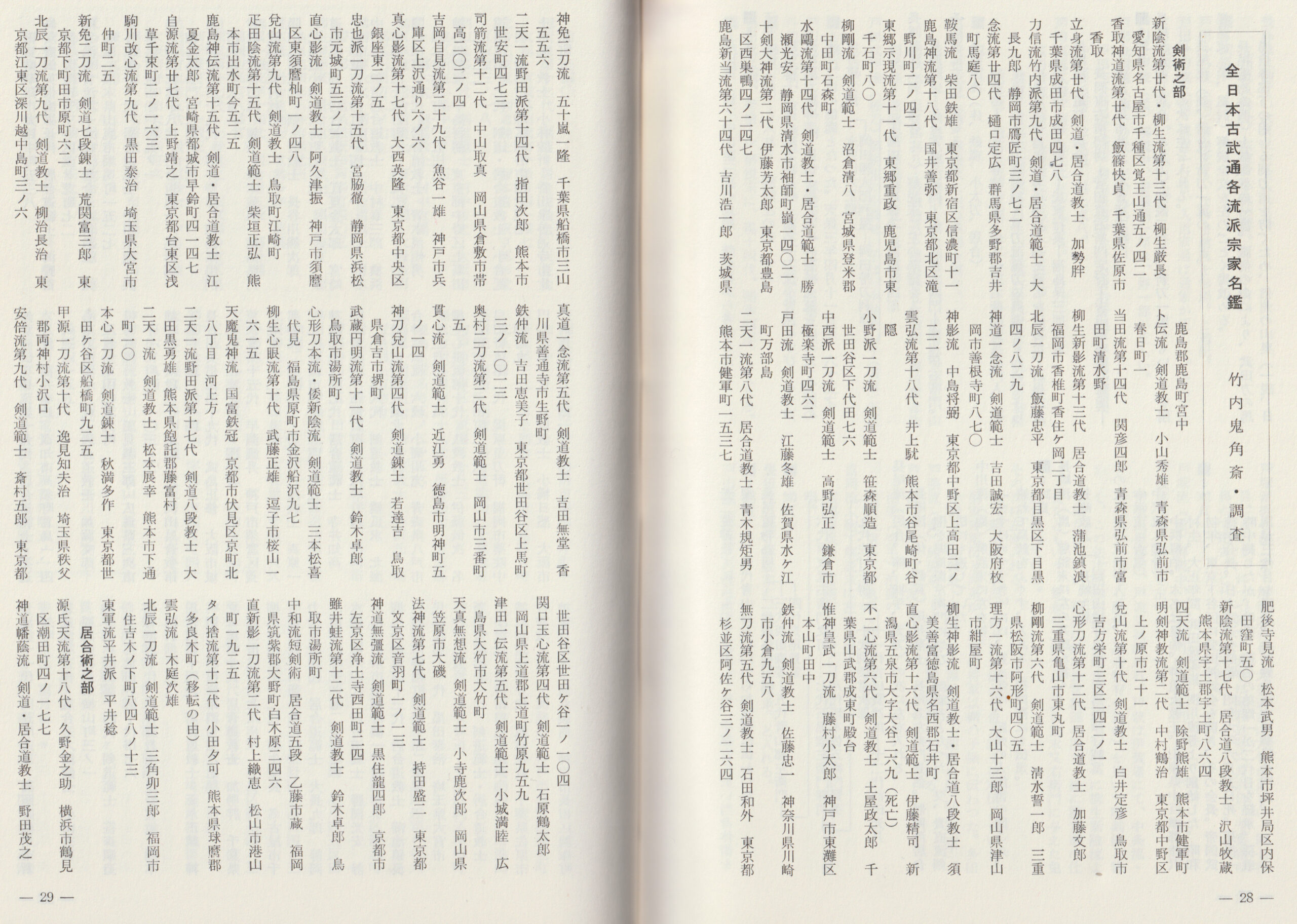
- Primary Documentation of the Hatsumi Ninjutsu Lineage: This volume serves as an invaluable contemporary historical record for the Bujinkan community, offering direct primary evidence from its investigative historical registries. It formally catalogs Hatsumi Masaaki (初見良昭) operating out of Chiba Prefecture, Noda City (千葉県野田市). The registry preserves his technical standing during the early post-war era, explicitly listing him directly alongside his teacher, Takamatsu Toshitsugu (高松寿嗣), who is registered out of Nara Prefecture, Kashihara City (奈良県橿原市).
- The Togakure & Iga Registries: The volume entries formally document Hatsumi’s authority and transmission lineages, specifically linking his name to the authentic tracks of Togakure-ryū Happō Hiken (戸隠流八方秘剣) and Iga-ryū Ninjutsu (伊賀流忍術). This provides concrete academic proof validating the baseline tracking of these traditions prior to the global ninja boom of the 1970s and 1980s.
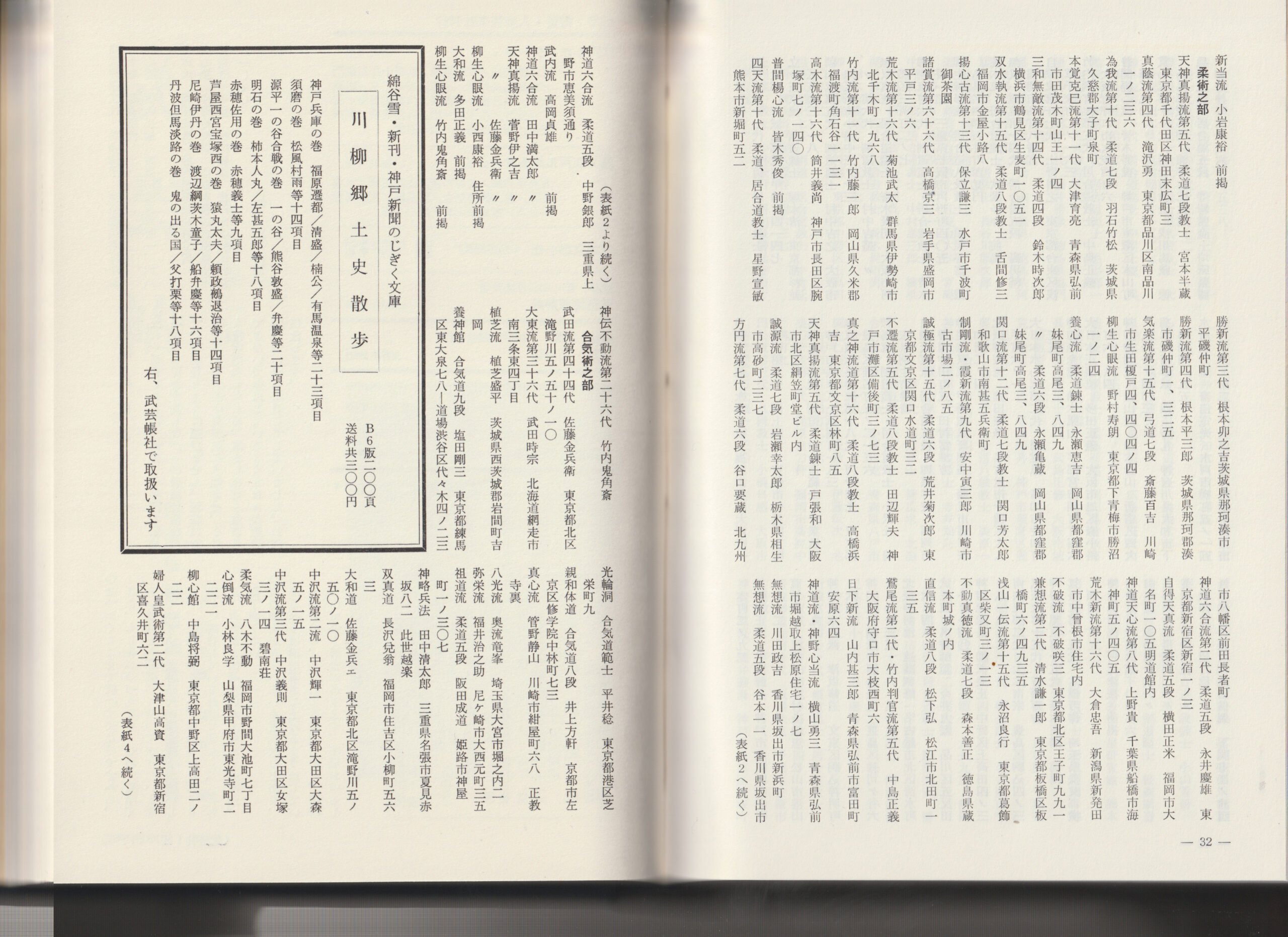
- The All-Japan Classical Martial Arts Master Registry (全日本古武道各流派宗家名鑑): This is the core reference feature spanning pages 28 through 31 of the volume. It is a highly scrutinized, county-by-county master directory documenting every living Sōke (Headmaster) and Menkyo Kaiden (Grandmaster) active in Japan during the mid-1960s. Rather than just names, it catalogs the exact physical addresses of their personal dojos, their active student numbers, and the precise geographic regions where rare traditions were surviving.
- The Secret Transmission Scroll Transcriptions (流派辞典再追補): An extensive dictionary supplement that directly transcribes the archaic text of hidden scrolls (densho). It includes structural analysis of the Asayama Ichiden-ryū (浅山一伝流) lineage scrolls, the Tenshin Shōden Katori Shintō-ryū (天真正伝香取神道流) tactical files, and the specialized battlefield grappling methods of the Takenouchi-ryū (竹内流).
- The Edo Period Gunsmith & Artillery Manuals (尾張藩伝賀流通信海流 • 加賀藩伝馬術): Due to Watatani’s direct ancestral lineage as a master gunsmith instructor, this volume includes a massive technical deep-dive into the Owari Clan’s secret firearms traditions (Shinkai-ryū Teppō) and the Kaga Clan’s combat horsemanship tactical scrolls.
- The Chinese Martial Arts Connection (中国拳法について): Authored as a guest research supplement by Kanbei Satō, this chapter traces the physical migration of mainland Chinese boxing and grappling techniques (Kenpō) into the Ryukyu Islands (Okinawa) and mainland Japan during the late Ming and early Qing dynasties, identifying the exact historical crossover points that influenced traditional Japanese jujutsu.
- The Lost Traditions of Countryside Combat (辺境 • 在郷武芸流派の追跡): A fascinating specialized study focusing heavily on Inaka-Bujutsu—obscure martial styles that were strictly practiced by regional farming communities, village guards, and low-ranking local law enforcement (Dōshin). It catalogs technical quirks of rural staff fighting (Bōjutsu) and sickle-and-chain methods (Kusarigamajutsu) that completely dissolved from existence during the Meiji Restoration.
Unusual Facts About the Author
Dismantling the Mythos: Disillusioned by how historical martial arts were romanticized and heavily distorted by pre-war nationalism and pop-culture fiction, Watatani pivoted completely to objective, archival analysis. He dedicated the latter half of his life to a single mission: auditing ancient scrolls to separate legendary folklore from documented historical military techniques.
Artisan Multi-Generational Legacy: Watatani Kiyoshi’s obsessive eye for detail was deeply rooted in his own ancestry; he was the direct grandson of Yoshikawa Gengobe, a legendary Edo-period master and master iron-gunsmith instructor (Teppō Shihan) for the historical Kishū Clan. This heritage granted Watatani exclusive access to generational private collections and rare scroll networks that typical postwar authors could never reach.
Watatani Kiyoshi’s Double Life: Author Watatani Kiyoshi did not write under his real name early in his career. He was heavily famous across Japan as a popular novelist and cultural satirist under the pen name Tobushi Tahei (十風沙平). His transition into a strict, zero-nonsense martial arts encyclopedia compiler shocked the mid-century Japanese literary scene.
Edition details
- Published:
- 11/01/1966
- Publisher:
- Bugeicho-sha
- Edition:
-
- Published: 11/01/1966
- Publisher: Bugeichō-sha
- Edition: • Edition Status: First Edition (初版)
- • Specific Release Date: November 1, 1966 (昭和41年11月1日)
- • Note on Rarity: Limited edition compilation run. Numbered copy 59 of only 110 total copies printed (限定110部 / 第59号).
- • Content Scope: Consolidated archival volume compiling the initial run of 'Bugeichō' magazine issues 1–10 and specialized supplements 1–3.
- • Key Contents: Features 'Zen Nihon Kōryū Bujutsu Kakurhū Sōke Meikan' (All Japan Classical Martial Arts Sōke Directory), comprehensive lineage deep-dives into Ninjutsu traditions, and specialized studies on historical weapon systems.
- • Production Crew: Edited by Kiyoshi Watatani (綿谷雪 編)
- Condition: Excellent
- Dust jacket: No (Comes with original Slipcase)
- Condition:
- Excellent
- Slipcase:
- Yes