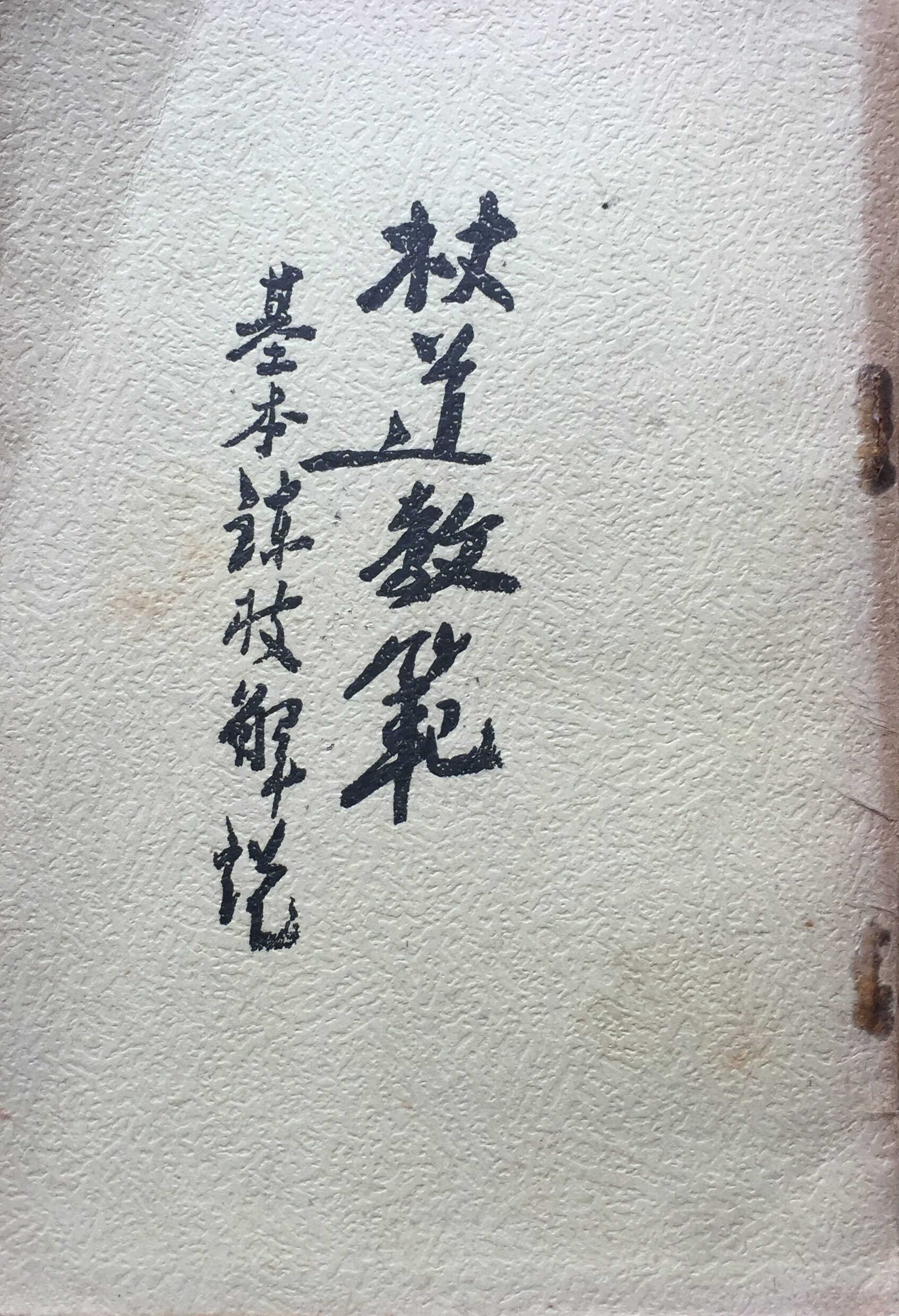
杖道教範
Kihon Kajo Kaisetsu: Jodo Kyohan
- Author:
- Shimizu Takaji (清水隆次)
- Category:
- Martial Arts, Weapons
- Collection:
- Robert C. Gruzanski Collection
Description
DESCRIPTION
Jōdō Kyōhan (杖道教範): A Rare Pre-War Record of Shintō Musō-ryū
This historical martial arts manual stands as a vital primary source for twentieth-century Budō scholarship. Printed under the auspices of the Dai Nippon Jōdōkai Honbu (Greater Japan Jōdō Association Headquarters), this text acts as a definitive link mapping the evolution of traditional battlefield stick fighting into a structured, modern combative system. The work captures the exact historical moment classical wood-staff methodology was adapted to meet twentieth-century civil security and military training requirements.
The text systematically charts specialized defensive tactics utilized by a staff practitioner when targeted by an aggressive swordsman armed with a traditional blade (tachi). By presenting explicit fighting commands alongside detailed physical breakdowns, this manual offers a clear look into a shifting martial era.
Lineage Signatures and Institutional Endorsements
Far from a generic commercial print, the introductory leaves and administrative metadata elevate this volume into a high-level official record, boasting direct ties to premier military and civilian leaders of the Shōwa era:
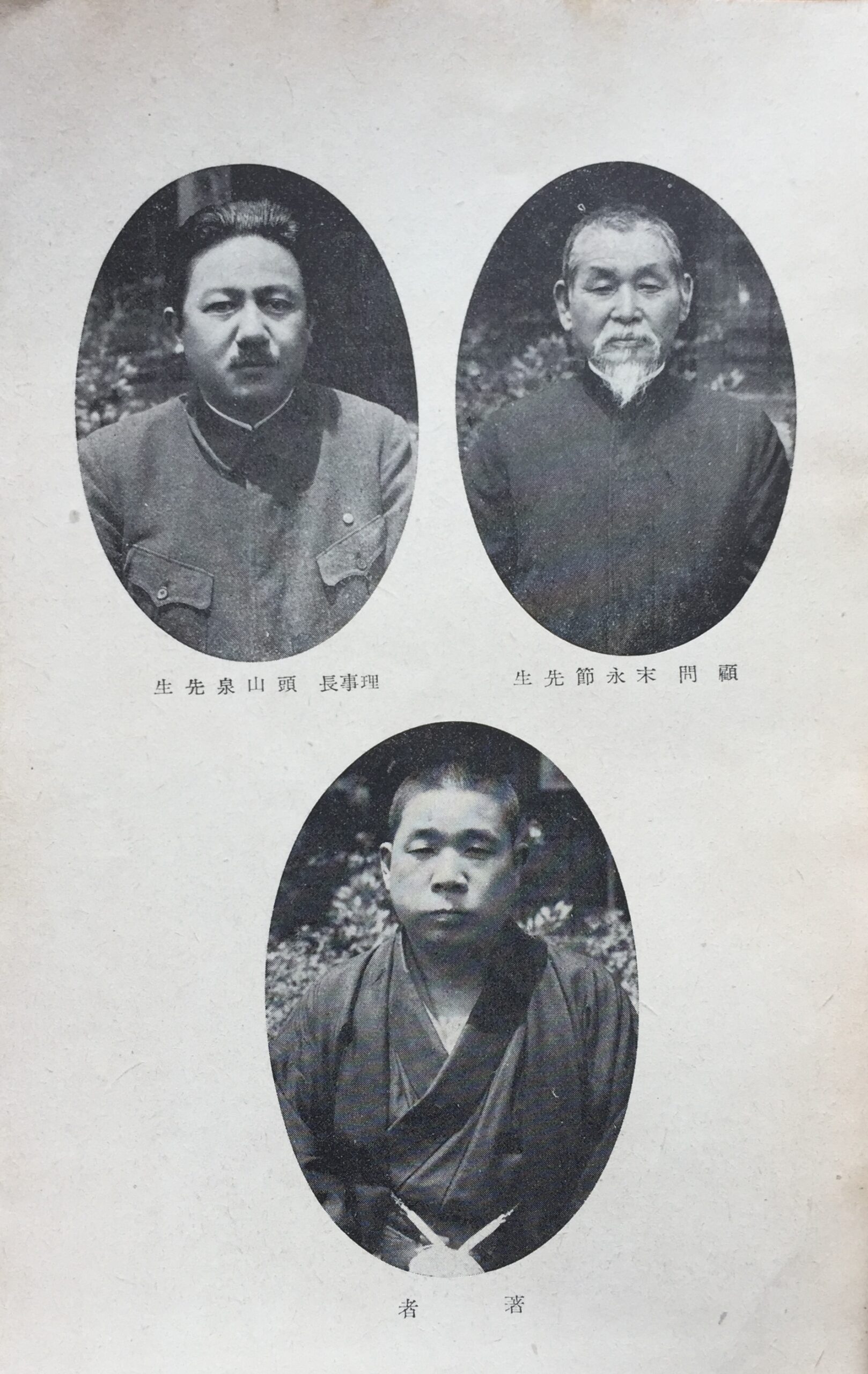
- Shimizu Takaji (清水隆次, 1896–1978): Writing under his original martial arts pen name Masami Shimizu (清水正味), this text serves as the personal technical testament of the 25th headmaster of Shintō Musō-ryū. His direct oversight ensures that every depicted combat stance reflects the unadulterated combat lineage.
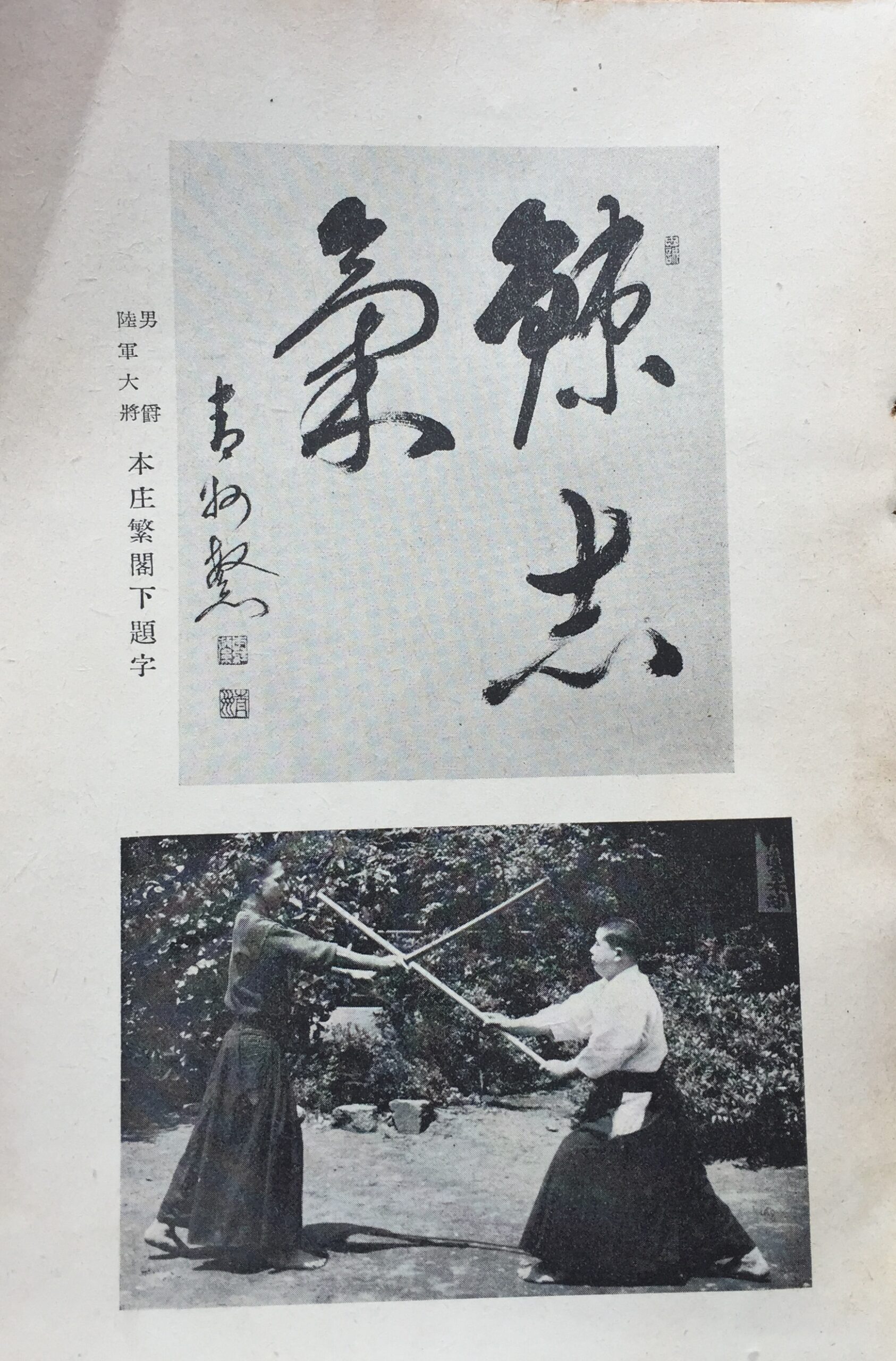
- General Baron Honjō Shigeru (本庄繁, 1876–1945): The striking frontispiece calligraphy page featuring the phrase “Ren Shi Ki” (練志氣 – Cultivating Spirit and Intent) was directly brushed by this legendary Imperial Japanese Army General and former Commander of the Kwantung Army, complete with his personal authentication stamps.
- Tōyama Izumi (頭山泉, 1903–1960s+): Serving as the organization’s Board Chairman (Rijichō), he was the influential second son of pan-Asian political broker Tōyama Mitsuru. He later acted as a major steward of postwar martial arts recovery, heading the early All Japan Jōdō Federation.
- Suenaga Setsu (末永節, 1869–1960): Listed as the association’s Advisor (Komon). A prominent political activist, continental operative (tairiku rōnin), and senior Gen’yōsha member, he was also a highly accomplished martial artist who went on to fund the All Japan Shōrin-ken Butokukai.
Tactical Micro-Analysis: Gyakute-Tsuki (Reverse-Hand Thrust)
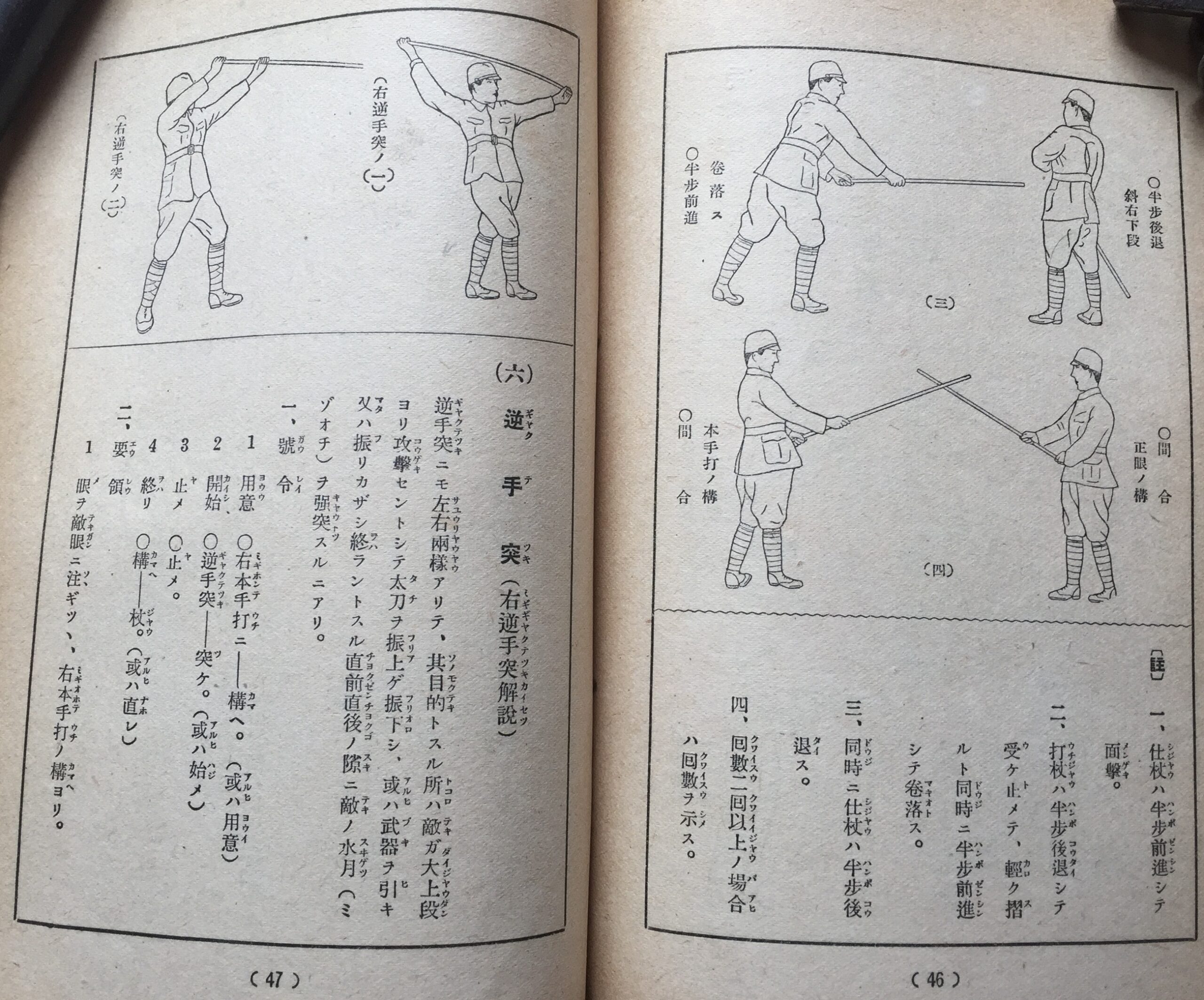
A close examination of pages 46 and 47 reveals the rigid, disciplined pedagogical framework used to instruct practitioners in weapon dynamics:
- Four-Part Command Matrix: Drills are executed via a highly controlled command structure: Yōi (Preparation), Kaishi (Execution), Yame (Cessation), and Owari (Conclusion).
- Biomechanical Mechanics: The illustrations dissect defensive movement against an overhead downward strike (tachi-furi-oroshi). The text instructs the defender to utilize a rearward evasion step to neutralize the blade’s velocity before instantly shifting weight forward to drive the tip of the jō directly into the attacker’s solar plexus (suigetsu).
Hidden History & Contextual Anomalies
• The Birth of “Dō” and Technical Distillation: This text was published during the literal transition period where the art changed its nomenclature from jōjutsu to jōdō. Fascinatingly, this 1940 manual preserves the early 15-technique fundamental matrix, capturing the school’s structure just prior to Shimizu distilling the curriculum down into the modern 12 basic kihon practiced today.
• The Survival of the GHQ Bans: Author Shimizu Takaji (writing as Masami Shimizu) famously engineered the survival of his style through the turbulent post-war occupation. Because he adapted these techniques into a non-lethal stick-fighting curriculum (Keijō-jutsu) specifically for the Tokyo Metropolitan Police, the Allied Supreme Command (GHQ) spared his training programs from the sweeping prohibitions placed on other weapon-based samurai traditions.
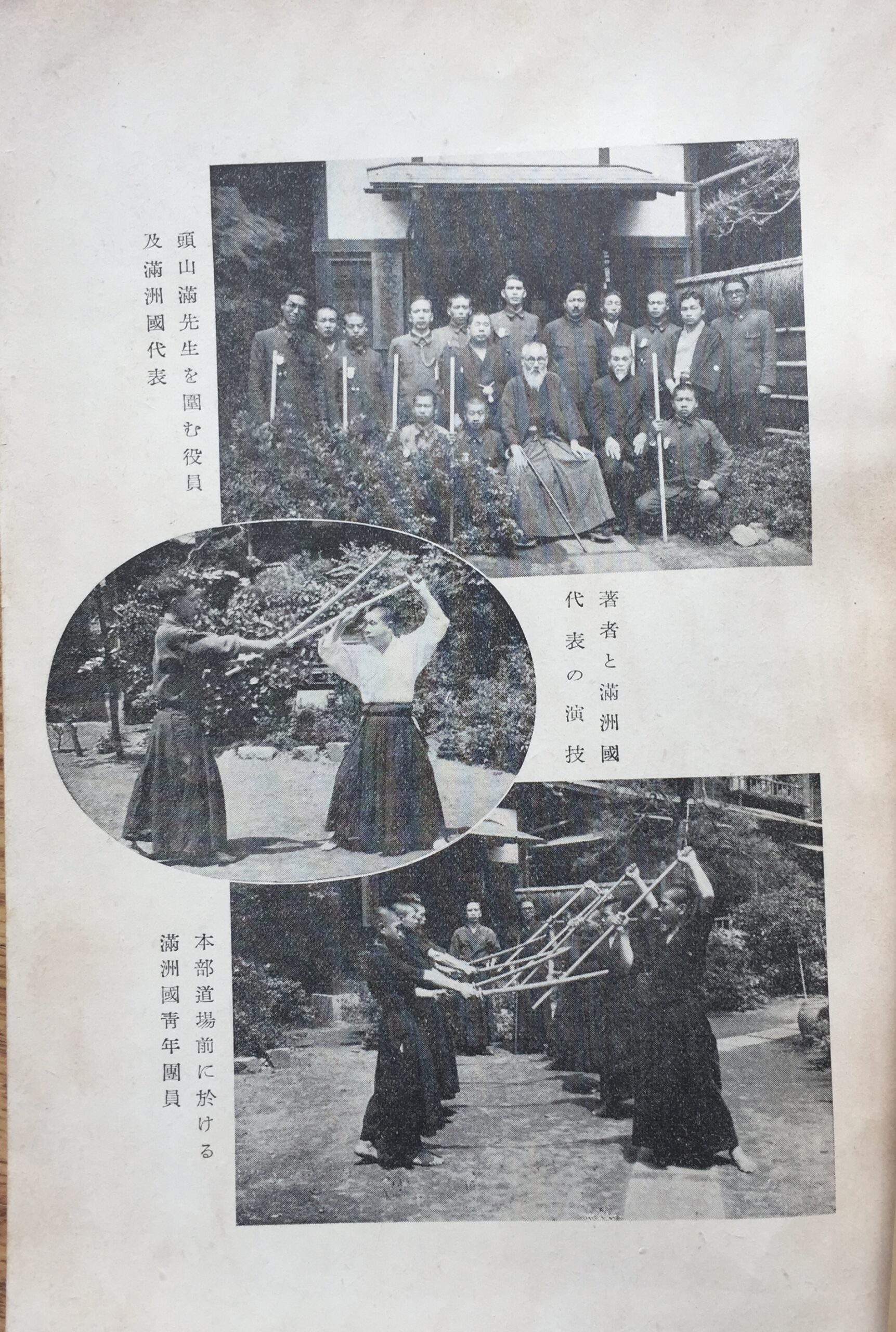
• The Manchurian Axis Photo: An extraordinary archival image titled “Tōyama Sensei を囲む役員及満洲國代表” documents a historical meeting between the dojo leadership and an official state youth delegation from Manchukuo. This visual proof documents how martial arts institutions were integrated into continental geopolitical diplomacy during the mid-twentieth century.
• Political Underground Links: The group photograph features a rare appearance by Tōyama Mitsuru (頭山満, 1855–1944), the legendary political mastermind behind the Gen’yōsha and Black Dragon Society. His presence at the Toyama Dōjō reveals the deep-seated ideological ties between classical martial arts preservation and ultra-nationalist political factions.
Edition details
- Published:
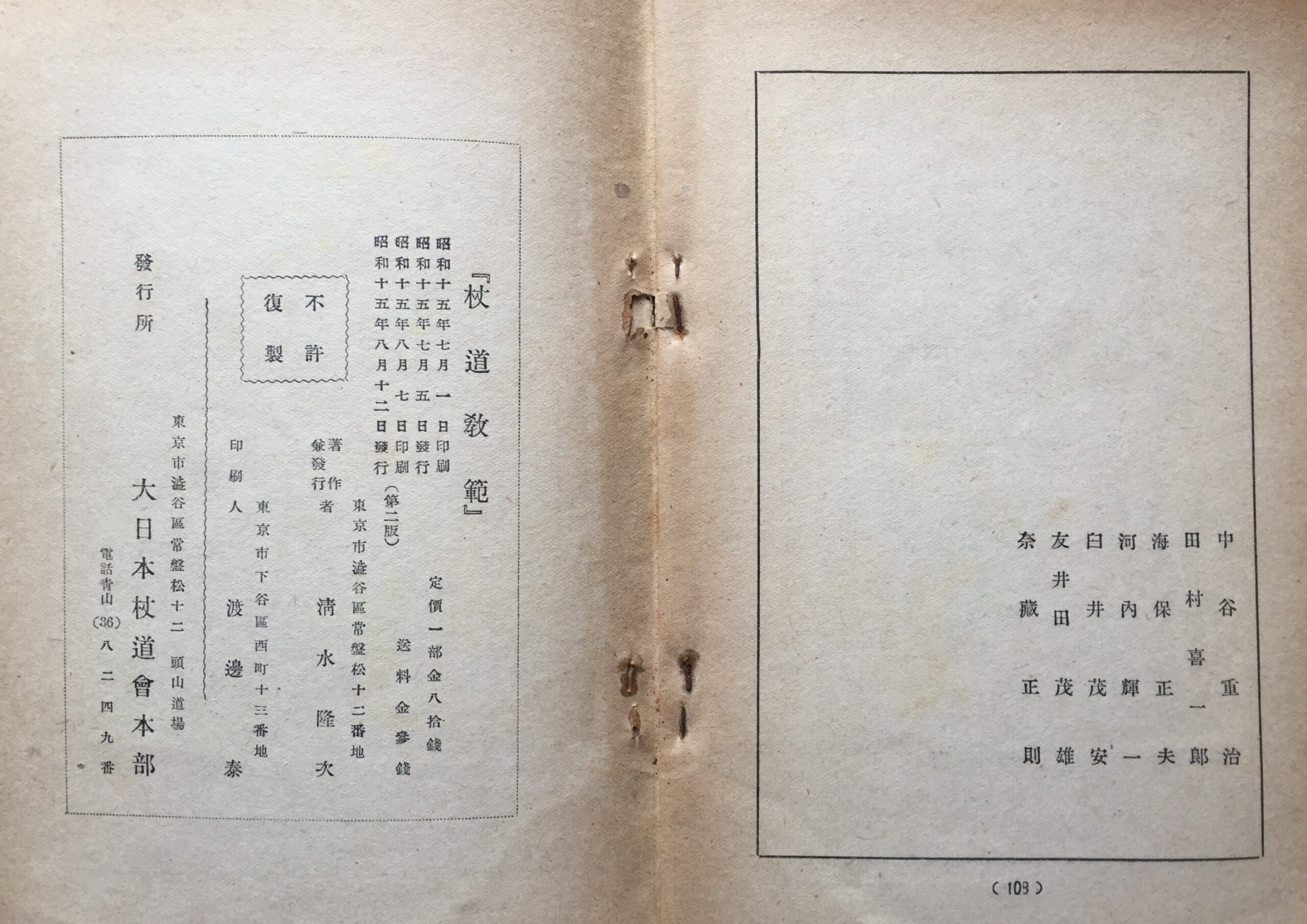
- 08/12/1940
- Publisher:
- Dai Nippon Jodo Kai Honbu
- Edition:
-
- • Full Title: Jōdō Kyōhan (杖道教範)
- • Subtitled: Kihon Kajō Kaisetsu (基本課杖解説)
- • Release Date: August 12, 1940 (Shōwa 15) [Original First Edition: July 5, 1940]
- • Availability: Rare Historical Commercial Edition (Second Printing)
- • Format: Standard Japanese A5-ban size layout (21 x 15 cm)
- • Content Scale: Complete breakdown of foundational short-staff (jō) martial techniques, featuring step-by-step command structures (Yōi, Kaishi, Yame, Owari), instructional illustrations, and exclusive historical photography.
- • Headquarters: Issued from the Greater Japan Jōdō Association Headquarters (Dai Nippon Jōdōkai Honbu), operating out of the historic Toyama Dōjō in Shibuya, Tokyo (東京市渋谷区常盤松十二番地 頭山道場).
- Condition:
- Good