

杖道教範
Jodo Kyohan
- Author:
- Shimizu Takaji (清水隆次)
- Category:
- Martial Arts, Weapons
- Collection:
- Robert C. Gruzanski Collection
Description
Jōdō Kyōhan (杖道教範): A Mid-Century Record of Standardized Staff Combat
This Shōwa-era instructional manual serves as an essential primary document for tracking the mid-twentieth-century reorganization of classical Japanese weapon arts. Administered via the Renbukan headquarters in Tokyo, this text charts the specific historical window where ancient samurai stick methodologies were systemized into a universal public curriculum under the All Japan Kendo Federation.
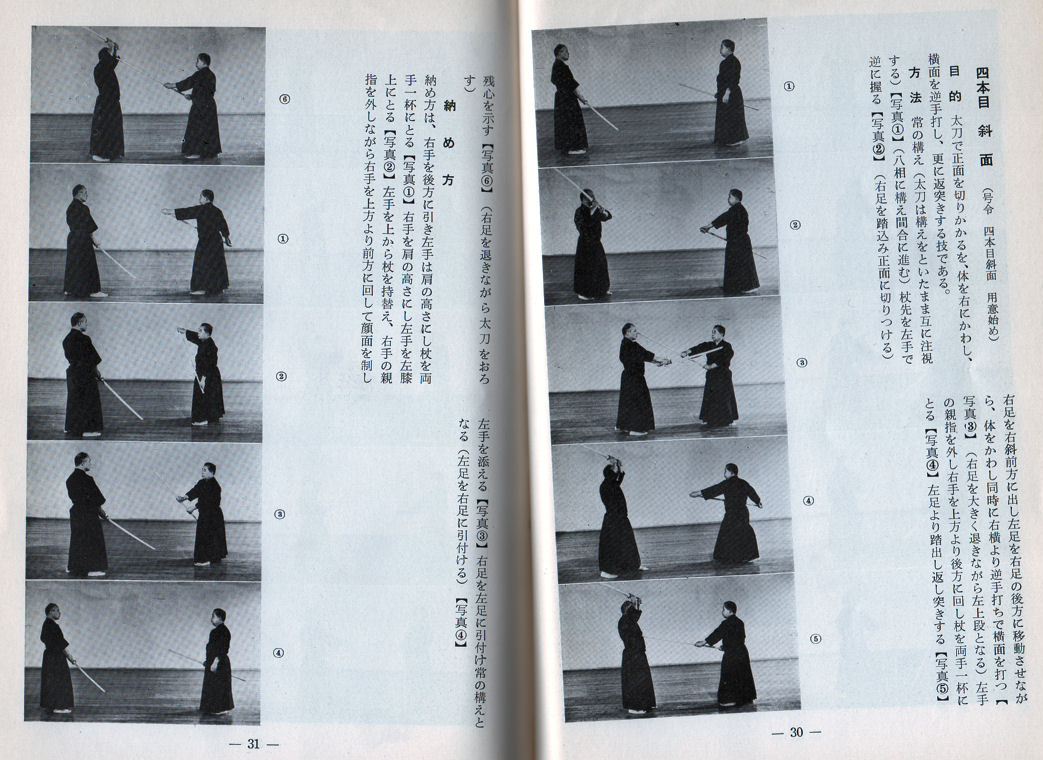
The core materials map out the defensive geometric strategies used by a staff practitioner when managing an encounter against an opponent armed with a katana. Rather than showcasing casual sports techniques, the manual preserves a highly structured pedagogical curriculum rooted in real combative dynamics.
Lineage Signatures and Sacred Geographies
Far from an unverified printing, the opening leaves and historical photographs secure the book’s institutional authority, linking it directly to elite martial practitioners and the geographic birthplace of the system:
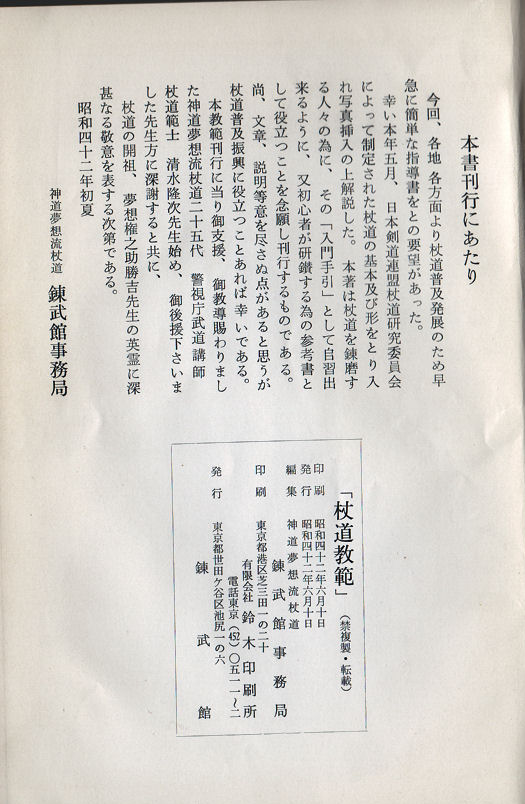
- Shimizu Takaji (清水隆次, 1896–1978): The manual functions as the mid-career technical testament of the style’s 25th supreme custodian. His personal ink calligraphy and authentication stamp seal the inner cover leaf, confirming his role as the master inspector overseeing the work.
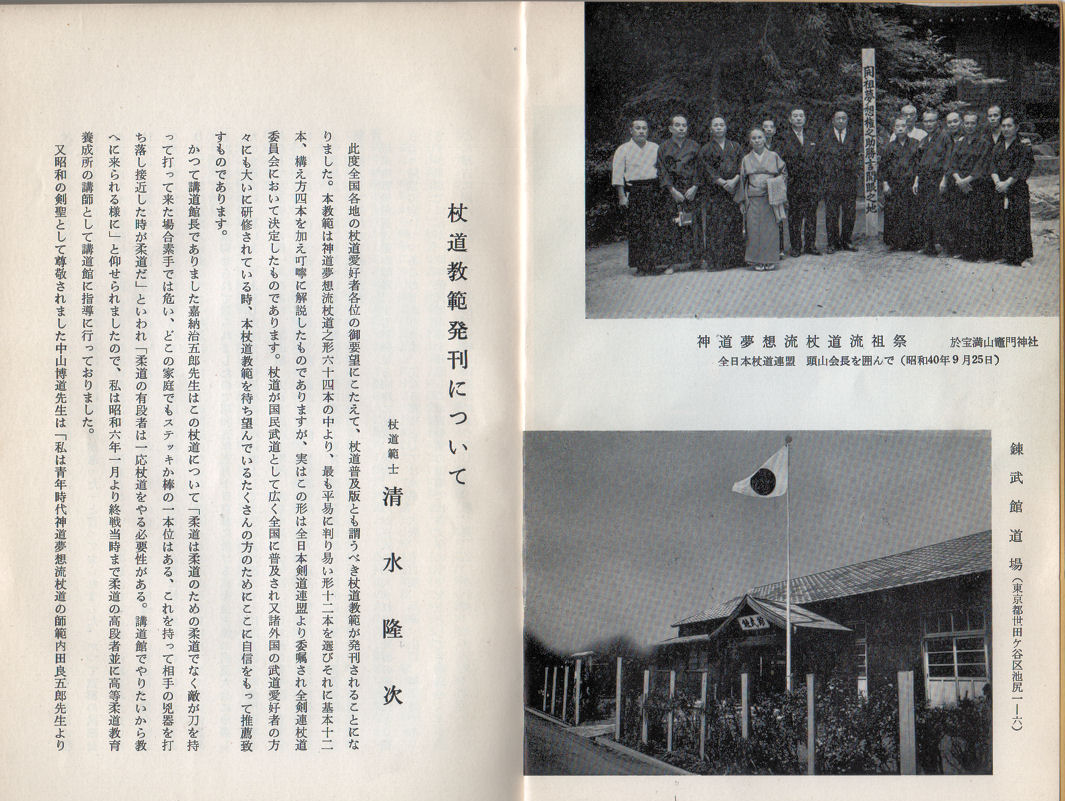
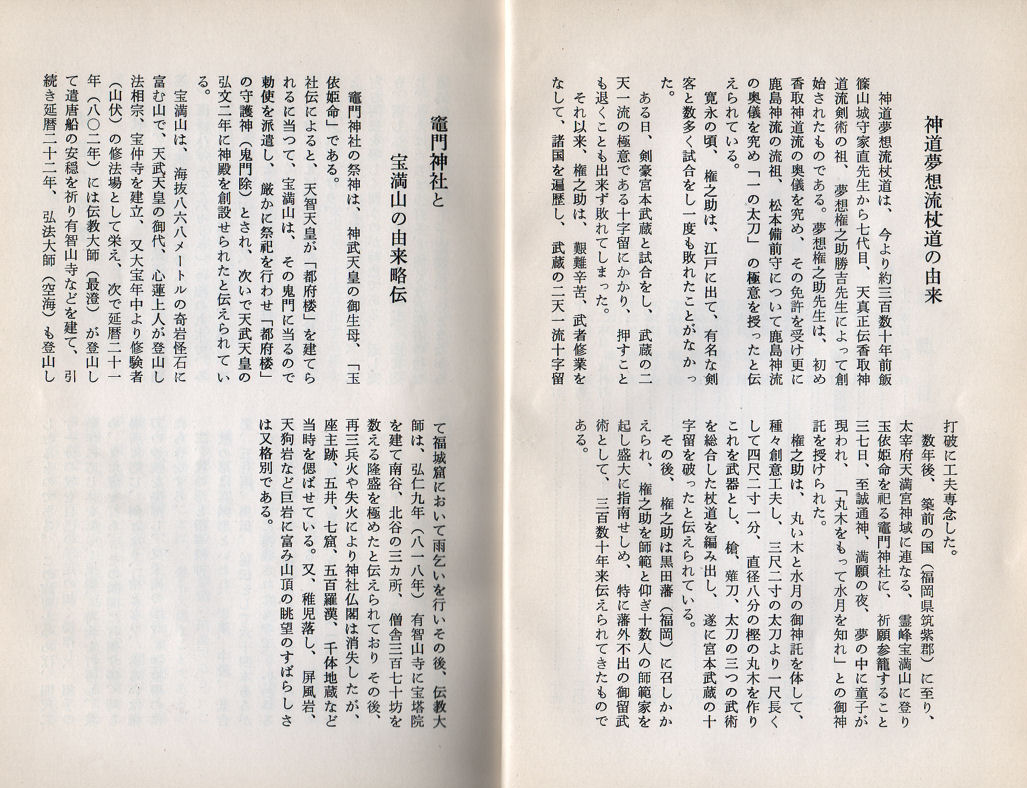
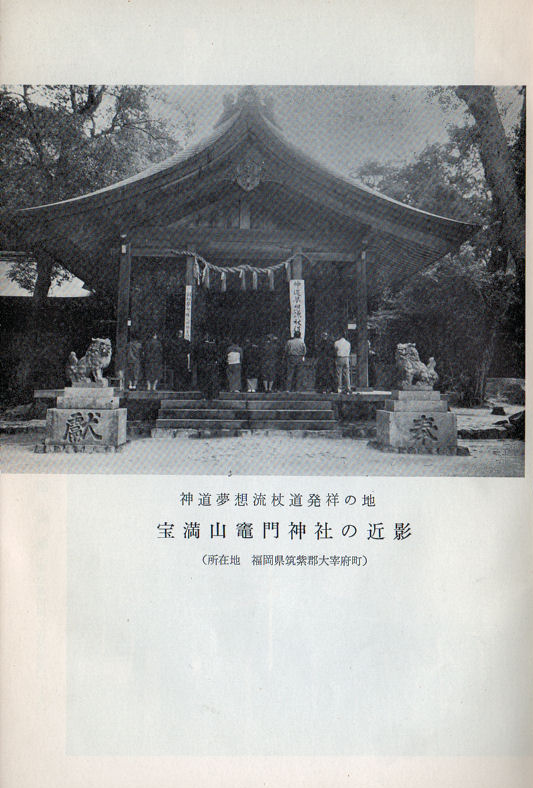
- The Cradle of the Lineage: The text preserves an environmental plate of Hōmanzan Kamado Shrine (宝満山竈門神社) in Fukuoka Prefecture. This officially chronicles the sacred landscape where the school’s founder, Musō Gonnosuke, completed his legendary month-long meditation retreat before engineering the stick fighting system.
- The 1965 Memorial Summit: An archive photograph records the Autumn 1965 ancestral gathering at the shrine grounds, capturing headmaster Shimizu standing alongside regional fencing directors and elite national federation representatives.
Tactical Micro-Analysis: Calisthenics and Vulnerable Targets
The technical core of this 1967 volume highlights a deeply structured educational methodology designed to condition practitioners and map out high-value target areas:
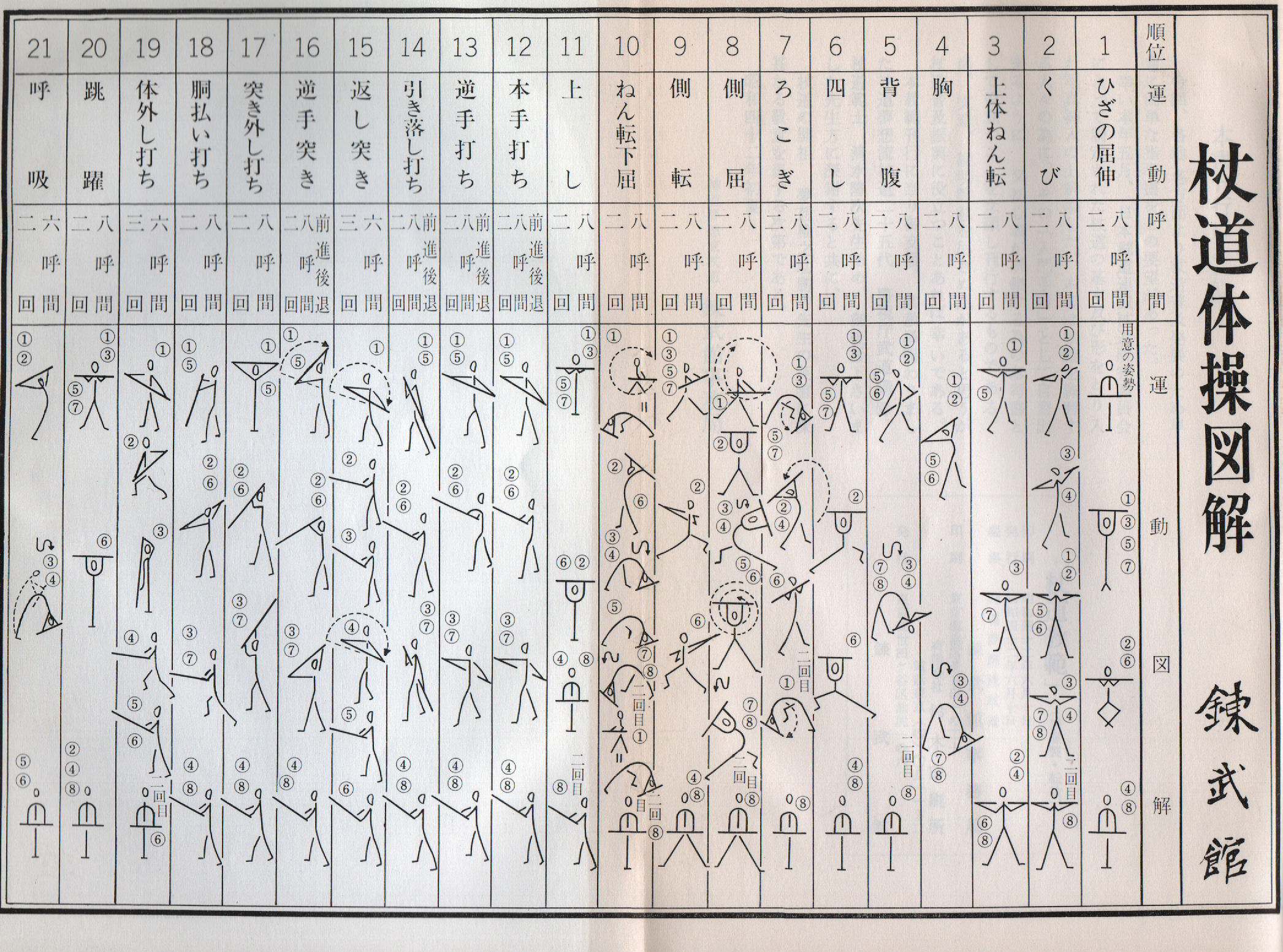
- The 21-Movement Training Matrix (杖道体操図解): A sprawling, fold-out style technical chart outlines twenty-one specialized preparatory exercises using stylized minimalist line figures. The map catalogs directional movement paths, structural body shifts, and conscious breath regulation cues (Ni-kai Iki) to program proper physical alignment before weapon training begins.
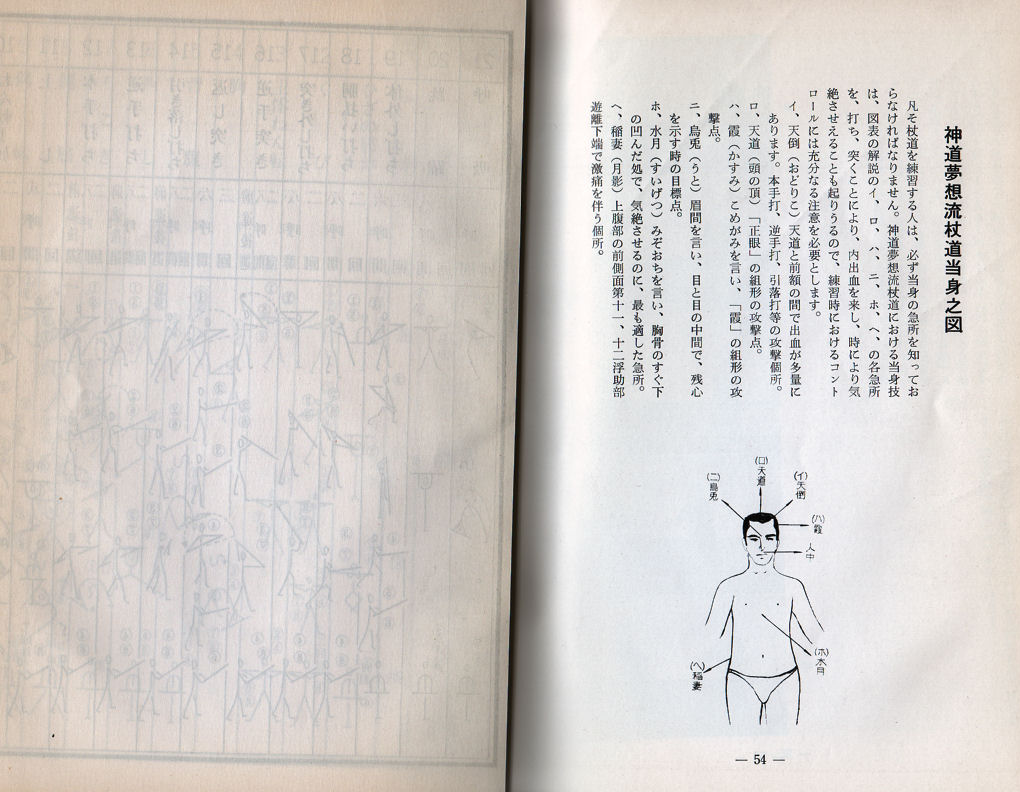
- Neurological Strike Mapping (当身之図): Page 54 features an intricate head-and-torso target schematic tracking the human body’s acute pressure zones (Kyūsho). It explicitly highlights vital centers like the upper vertex (Tenten), nasal bridge (Uto), temple axis (Kasumi), and celiac plexus (Suigetsu), describing the physical mechanics of disabling an adversary through targeted blunt-force impact.
Hidden History & Contextual Anomalies
- The Renbukan Post-War Sanctuary: This text was published by the Renbukan Dojo in Setagaya, a legendary multi-disciplinary post-war combat compound. By re-framing traditional samurai battlefield strikes into structured public physical fitness programs, the administrators successfully preserved ancient weapon arts under strict post-war civil oversight.
- The 64 to 12 Curriculum Condensation: The book serves as a primary witness to the creation of Seitei Jōdō (standardized federation forms). It captures the exact historical moment the vast, multi-tiered 64-kata classical school curriculum was distilled into an accessible 12-form core, facilitating mass instruction across civilian clubs.
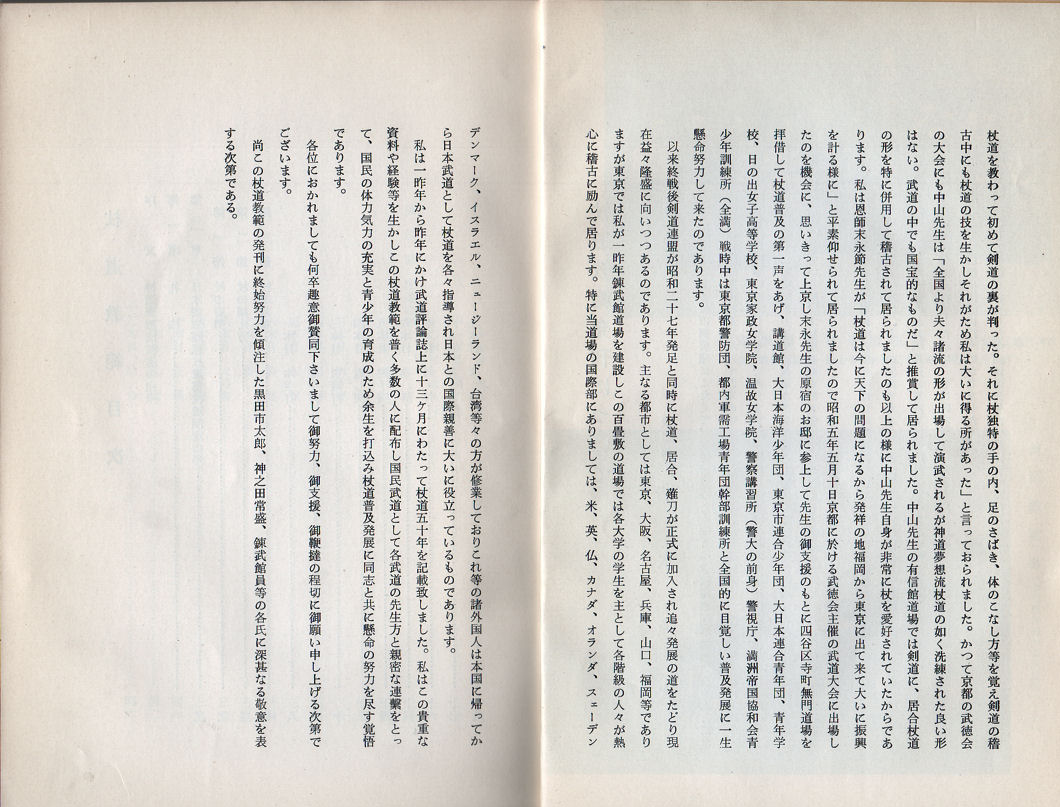
- The Dawn of Global Dissemination: The concluding textual columns preserve early records of international expansion initiatives. The log explicitly names practitioners travelling from Denmark, Israel, New Zealand, and Taiwan to study at the Renbukan Dojo, proving that this manual served as an instructional guide during the initial globalization of traditional Japanese stick fighting.
Edition details
- Published:
- 06/10/1967
- Publisher:
- Renbukan Jimukyoku
- Edition:
-
- • Full Title: Jōdō Kyōhan (杖道教範)
- • Release Date: June 10, 1967 (Shōwa 42)
- • Availability: Post-War Standardized Training Manual / Renbukan Office Private Issue
- • Format: Standard Japanese A5-ban size layout (21 x 15 cm)
- • Content Scale: Comprehensive curriculum covering Zen Nihon Kendo Renmei Jōdō Kata (12 forms), Shindō Musō-ryū Omote Kata (12 forms), anatomical vital strike points (Kyūsho), and full-page stick-figure calisthenics diagrams (Jōdō Taisō).
- Condition:
- Good