甲冑拳法 柳生心眼流
Yagyu Shingan Ryu Heihoshutsu
- Author:
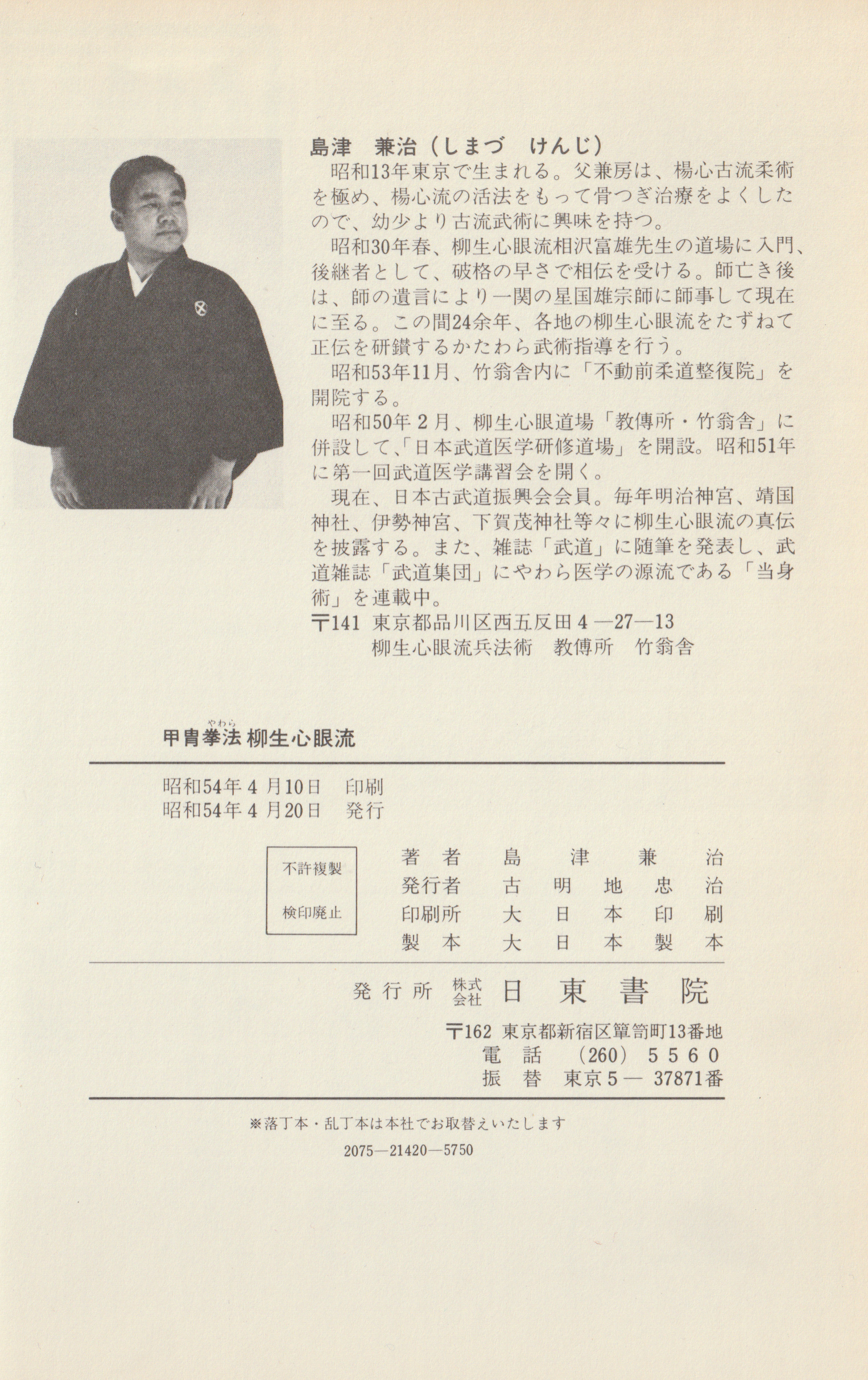
- Shimazu Kenji (島津兼治)
- Collection:
- Robert C. Gruzanski Collection
Description
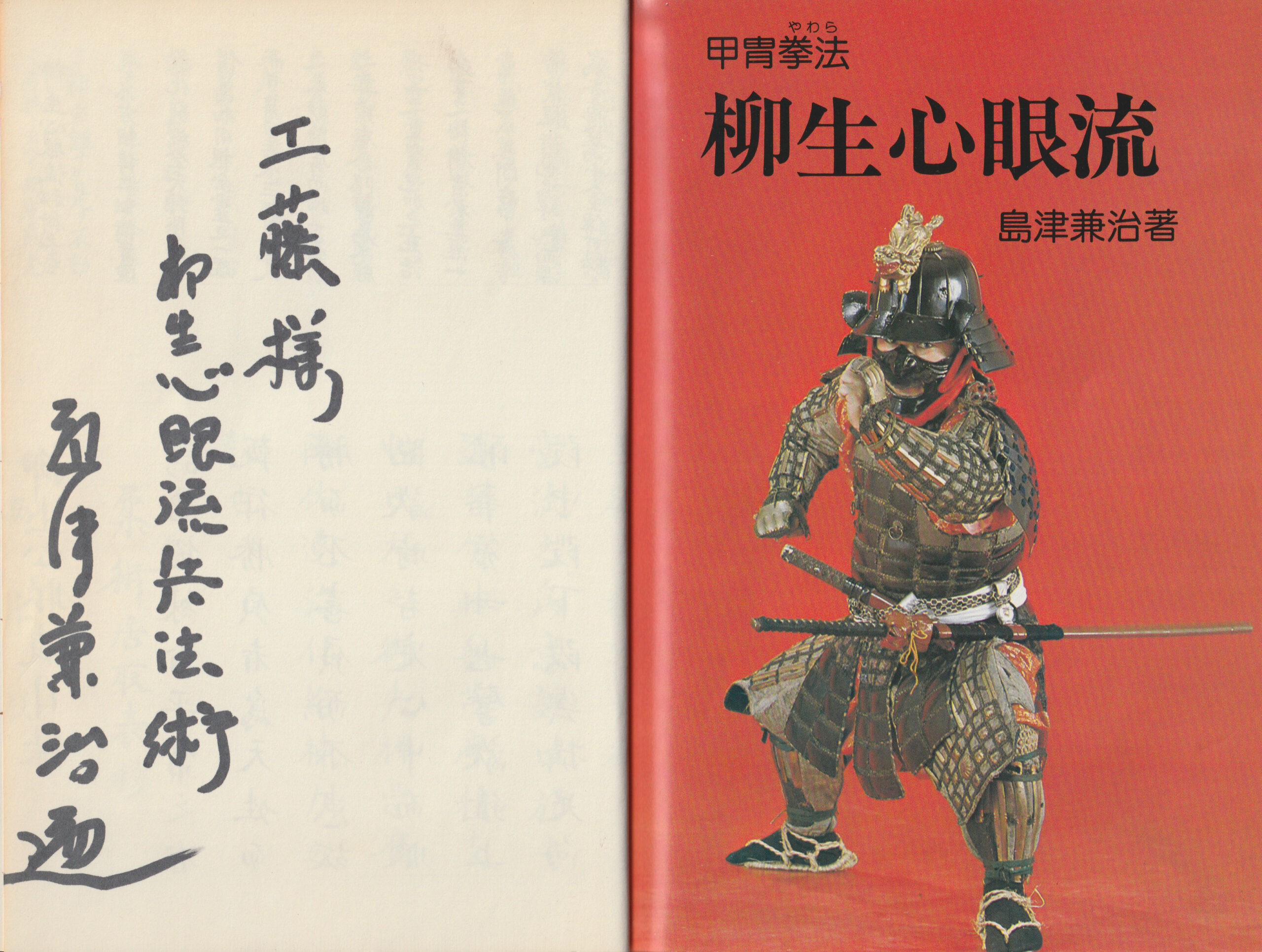
Association Copy & Inscription
This copy of Yagyu Shingan Ryu Heihoshutsu features a rare, handwritten presentation inscription executed in traditional ink calligraphy by the author, Shimazu Kenji (島津兼治). The dedication is addressed directly to Mr. Kudo (工藤様) and records the title “Yagyu Shingan-ryu Heihōjutsu” (柳生心眼流兵法術) along with the author’s signature and personal kao (stylized monogram).
About the Yagyu Shingan Ryu Heihoshutsu Book
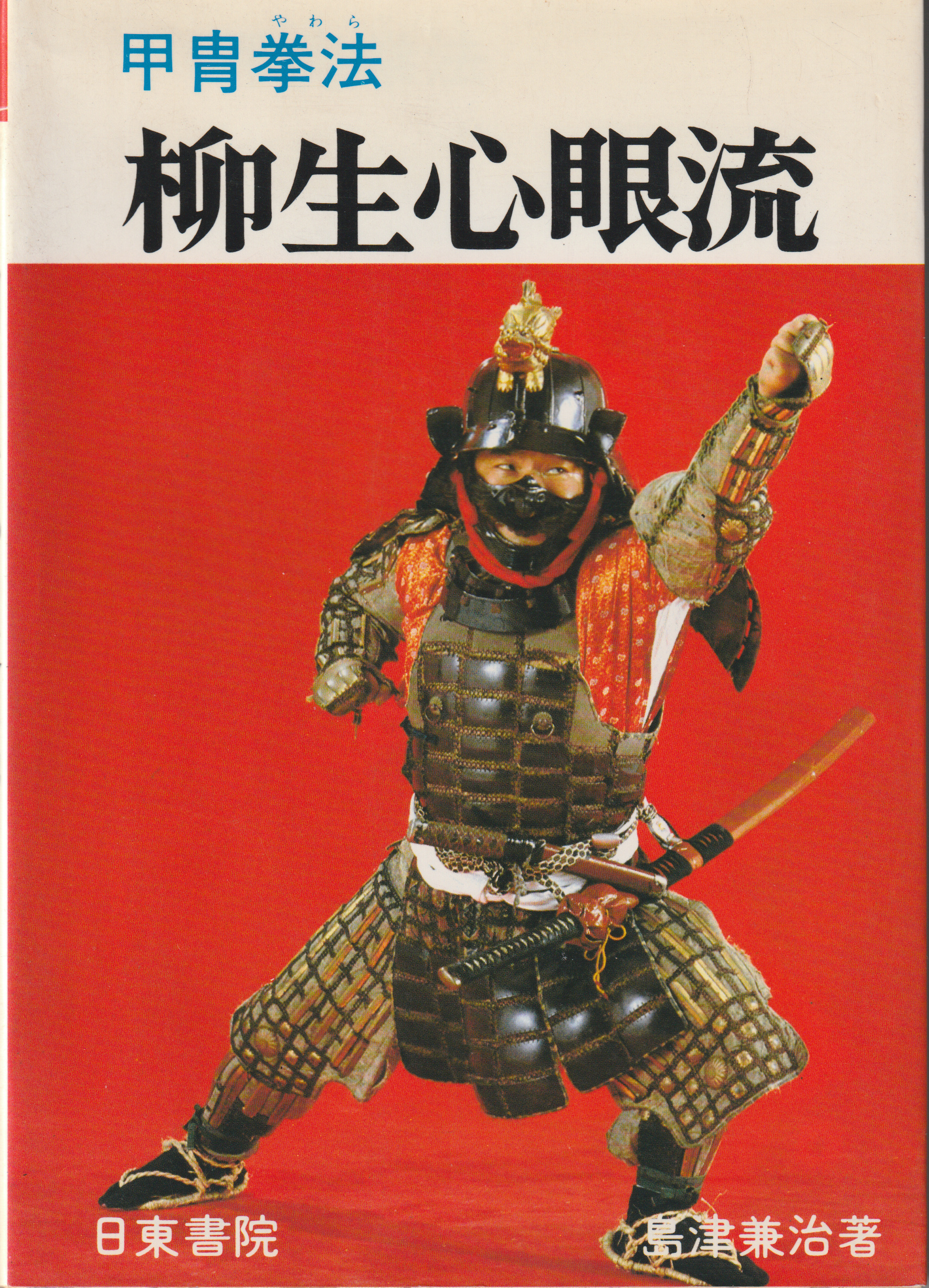
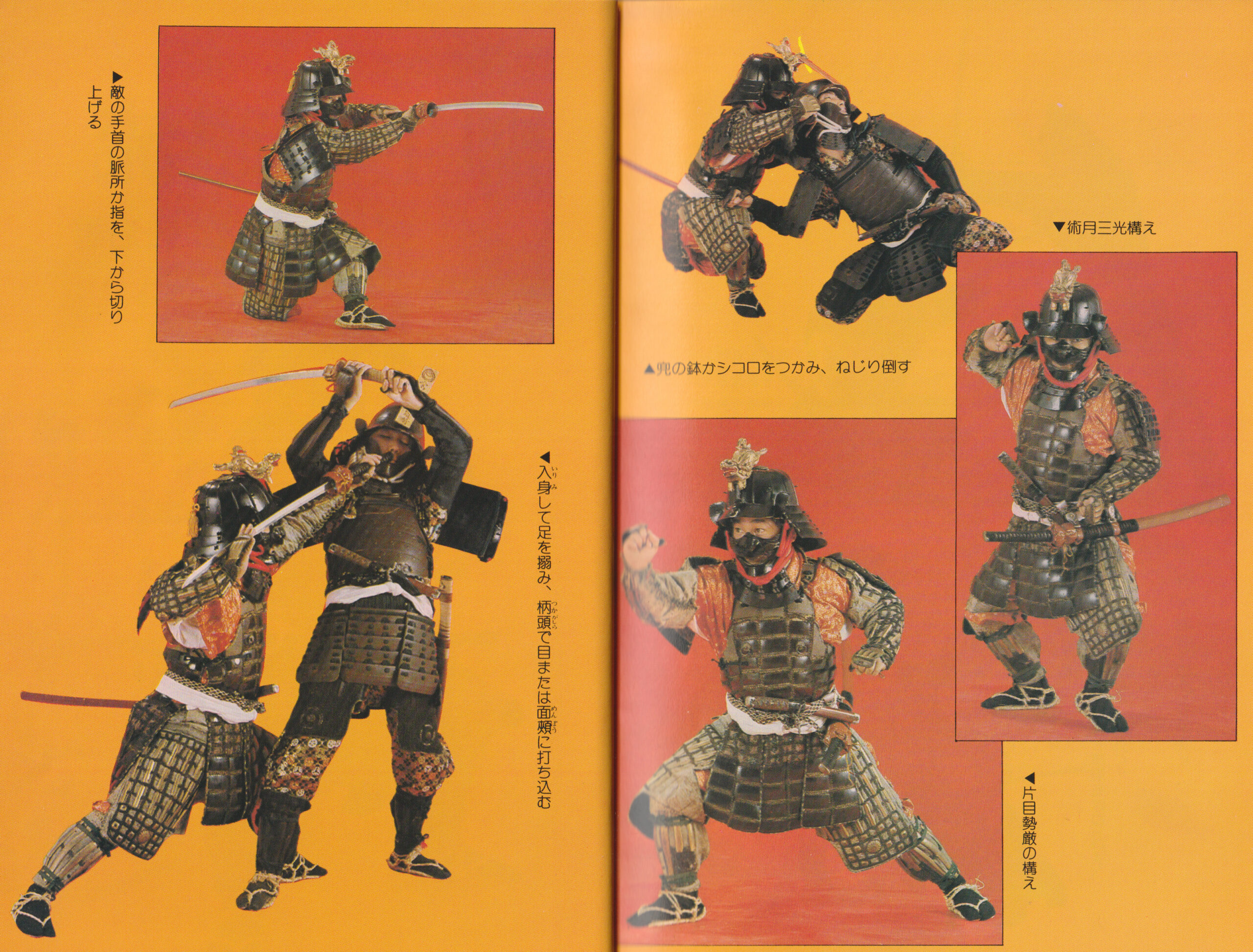
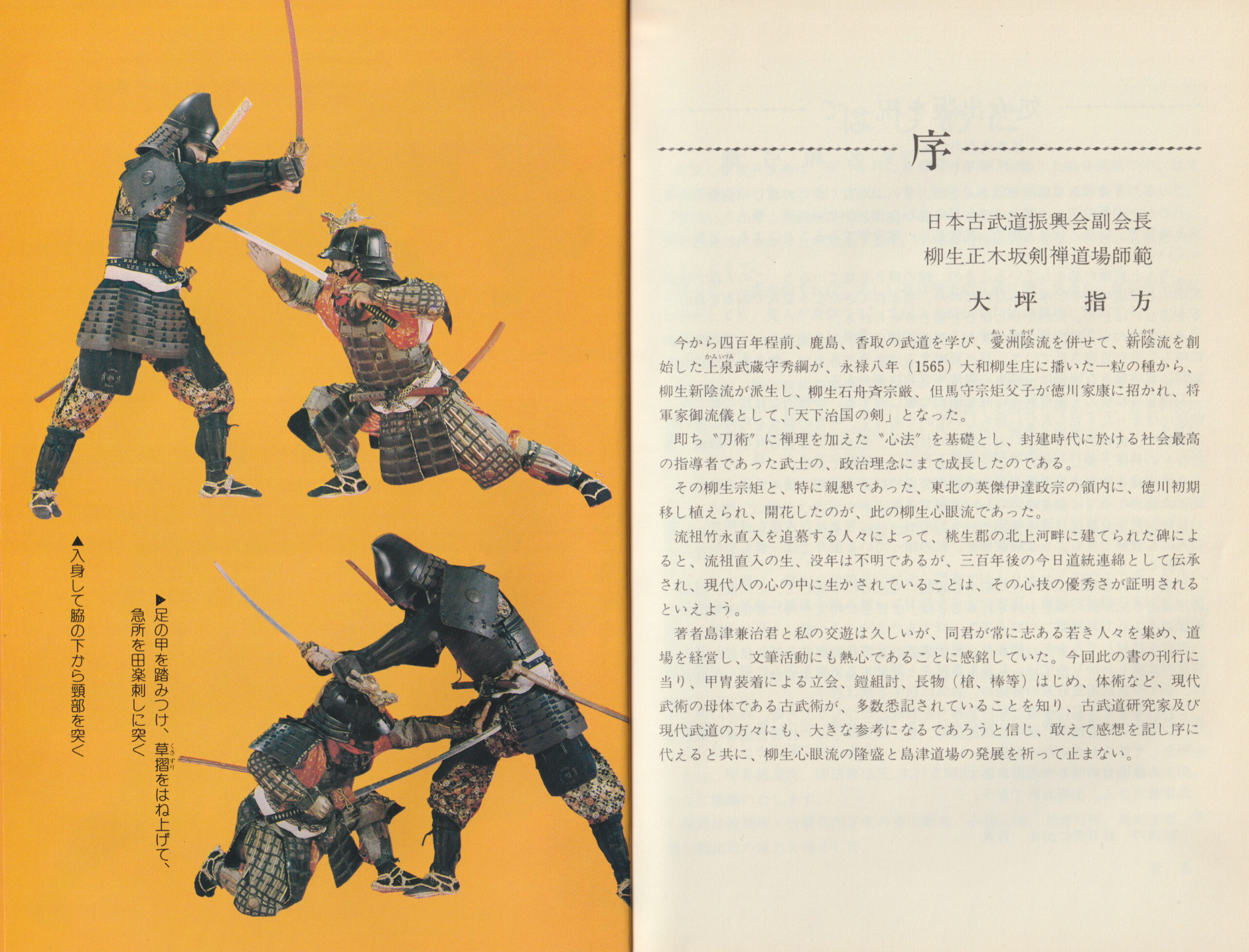
This definitive Japanese-language reference text focuses on the comprehensive combat systems and historical techniques of Yagyu Shingan-ryu. The book features extensive, instructional black-and-white photography demonstrating specific forms, movements, and strategies executed while wearing traditional samurai armor.
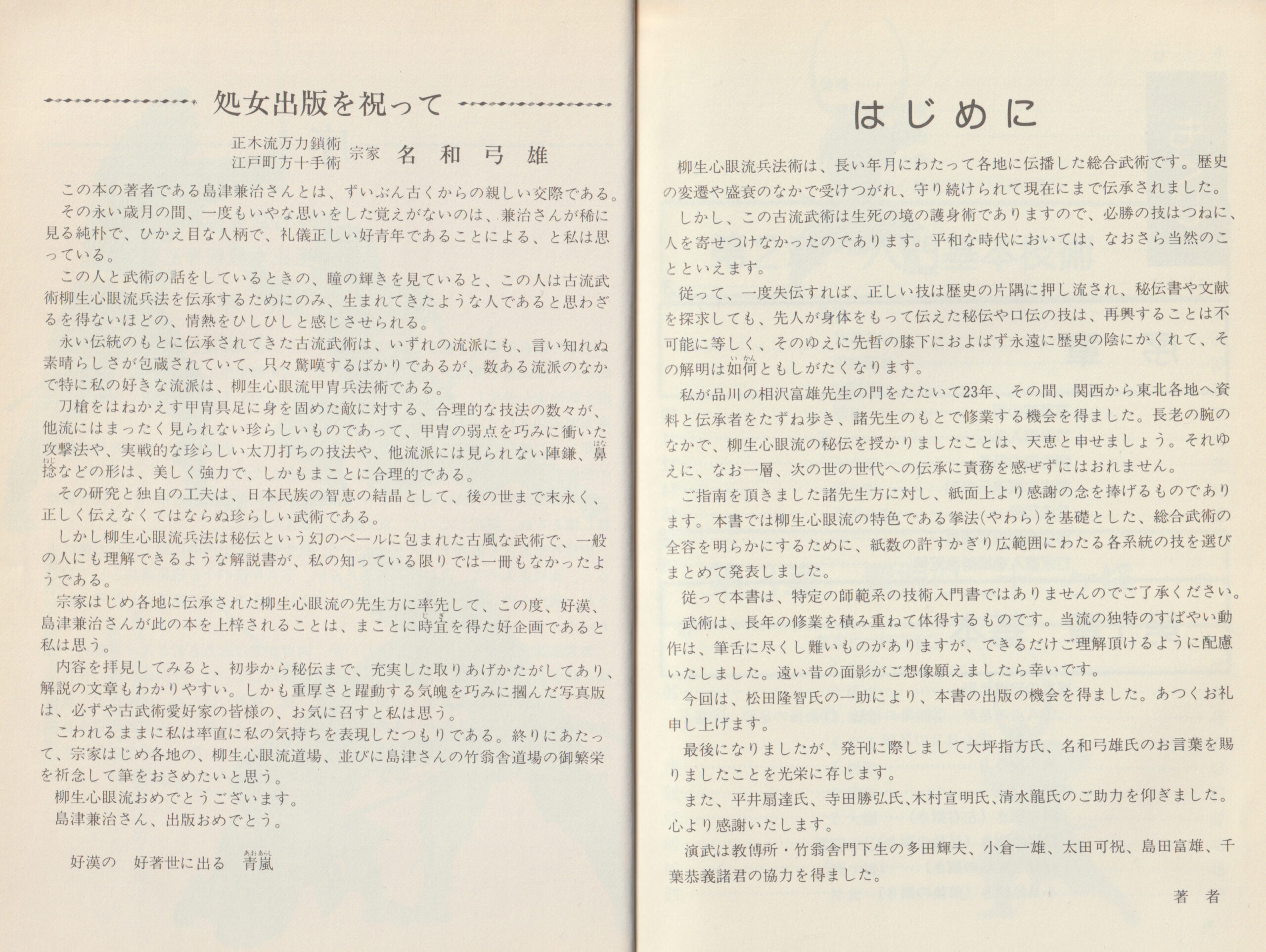
The opening pages feature a celebratory preface titled “Celebrating the First Publication” (処女出版を祝って) written directly by Nawa Yumio (名和弓雄)—the grandmaster (Sōke) of Masaki-ryu Manrikisurijutsu and a prominent martial arts historian. In this foreword, Nawa praises the author, Shimazu Kenji, as a polite and exceptionally passionate young man dedicated to preserving traditional martial arts. He highlights Yagyu Shingan-ryu Katchu Heihō (armored combat techniques) as a powerful system featuring rare striking and sword techniques designed to overcome armored opponents, commending the book for providing clear explanations that break through the historical secrecy of the art.
The right page contains the formal “Introduction” (はじめに) written by the author, Shimazu Kenji. Shimazu explains that Yagyu Shingan-ryu is a comprehensive combat system transmitted across various regions over centuries, noting that classical survival arts risk fading into obscurity in peaceful times if lineages are broken. He shares his 23-year journey since joining the dojo of Tomio Aizawa in Shinagawa, which led him to travel through the Kansai and Tohoku regions to research historical documents and train under various masters. He notes that this book is not an introductory guide to one specific sub-lineage, but a broader effort to document the full scope of Yagyu Shingan-ryu based on its foundational Yawara (grappling/fist) techniques.
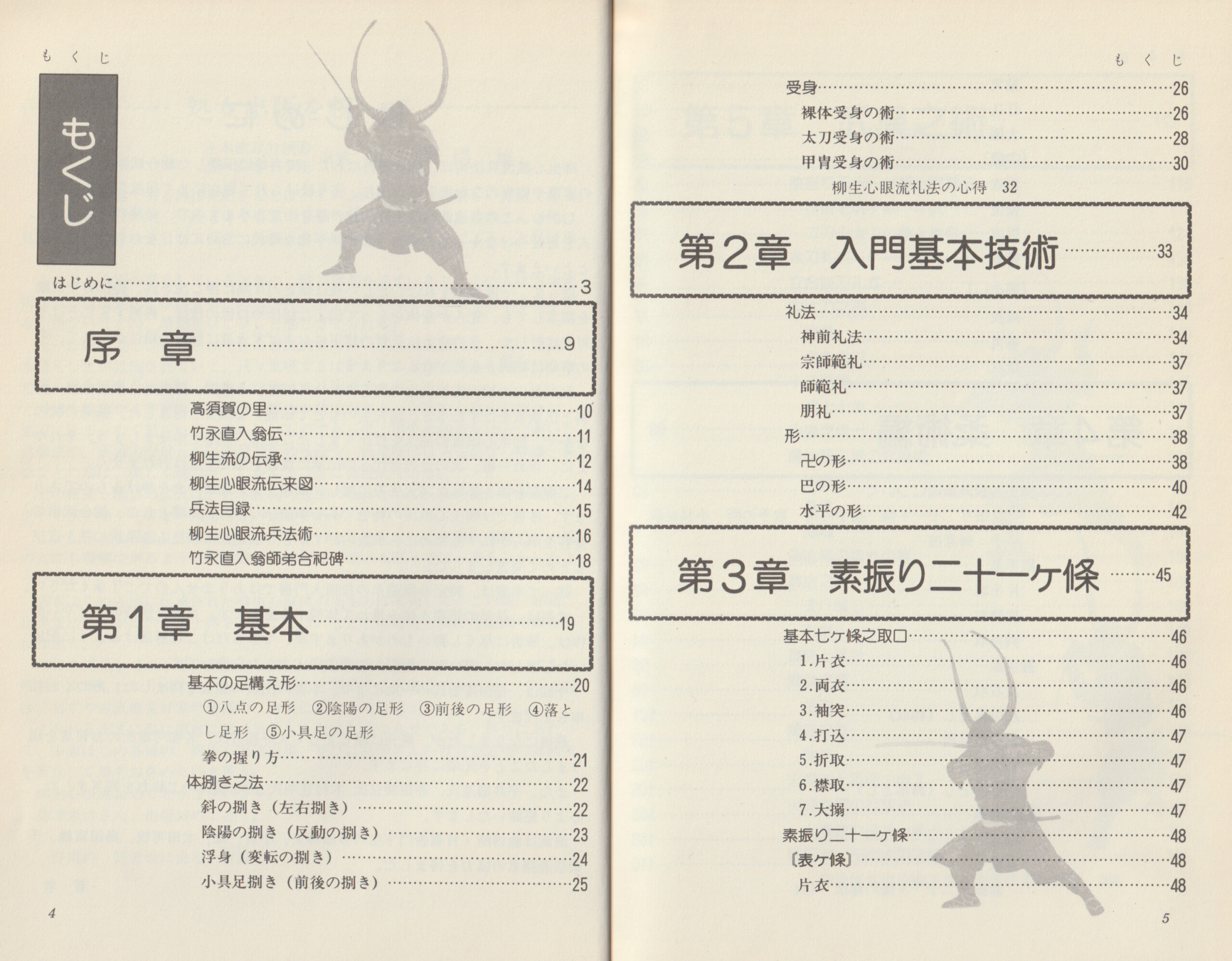
Core Chapters and Contents
Chapter 1: Basics (基本 – Kihon)
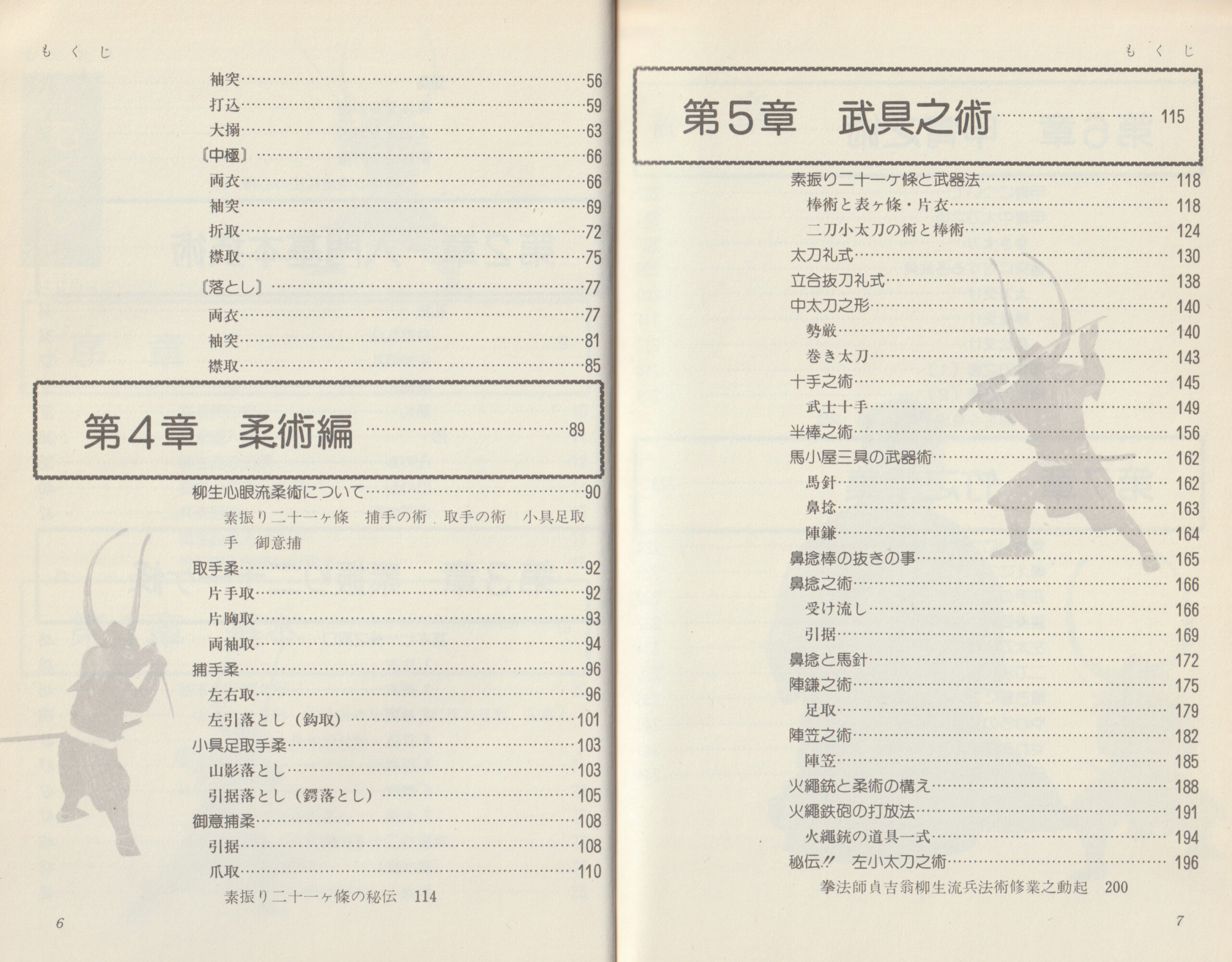
Detailing fundamental footwork patterns (Ashigamae), fist formations, body evasion methods (Tai-sabaki), and unarmed, weapon-countering, and armored falling methods (Ukemi).
Chapter 2: Introductory Basic Techniques (入門基本技術)
Covering traditional etiquette (Reihō) for shrines, grandmasters, and peers, alongside fundamental pre-arranged combat forms (Kata) such as Manji, Tomoe, and Suihei.
Chapter 3: 21 Articles of Solo Swinging (素振り二十一ヶ條)
Outlining fundamental gripping principles, the seven basic opening entries (Torikuchi), and solo conditioning exercises.
Chapter 4: Jujutsu Section (柔術編)
Focusing on grappling, joint locks, unbalancing techniques, hand capture methods (Te-goyai-dori), and specialized Kogusoku (lightly armored) wrestling tactics.
Chapter 5: Weaponry Arts (武具之術)
Covering a wide range of traditional weapons including staff fighting (Bōjutsu), short-stick methods (Hanbōjutsu), short sword (Kodachi) vs. staff tactics, iron truncheon (Jutte), battlefield sickle (Jingama), matchlock firearm stances (Hinawajū), and longsword forms.
Chapter 6: Armored Combat Techniques (甲冑之術)
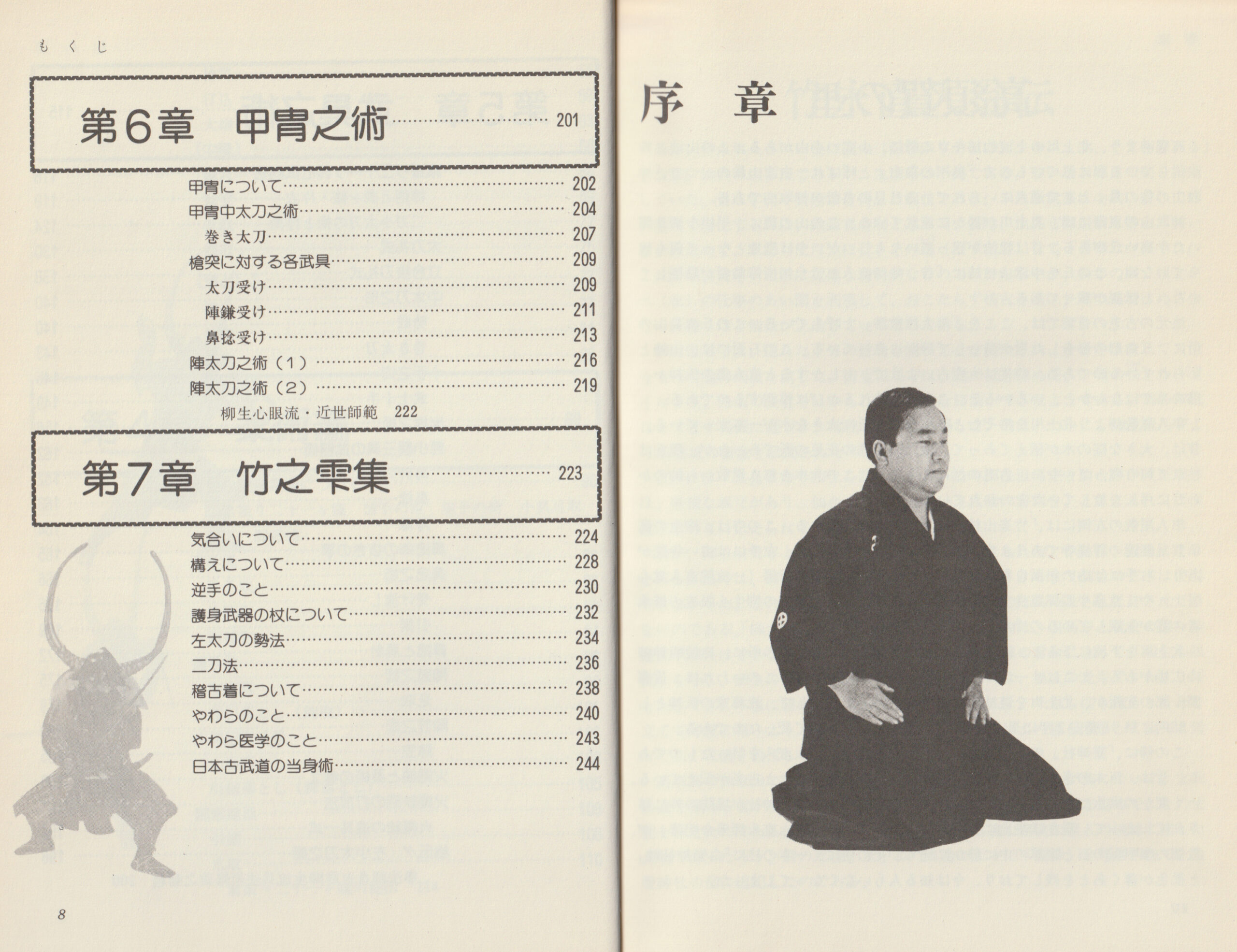
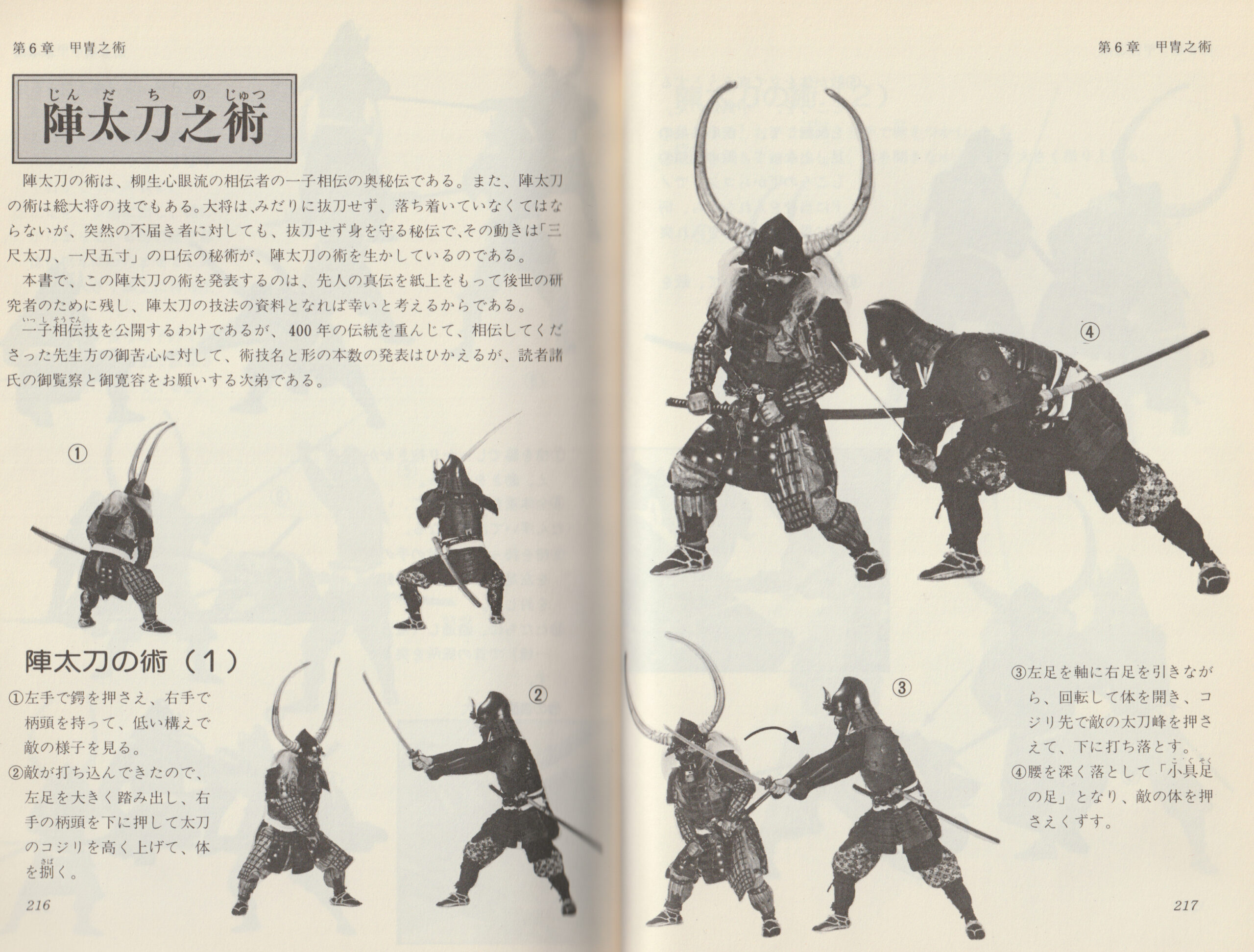
Illustrating active combat applications while wearing full armor. This section features a step-by-step physical breakdown of traditional Yagyu Shingan Ryu Heihoshutsu longsword forms known as Jindachi no Jutsu (陣太刀之術).
Chapter 7: Compilation of the Bamboo Chapter (竹之雫集)
Concluding technical notes regarding martial stance frameworks, breath/spirit control (Kiai), the tactical advantages of left-handed longsword combat, and traditional battlefield medicine concepts (Yawara Igaku).
Technical Applications & Combat Breakdowns
- Battlefield Sword Methods (陣太刀之術 – Jindachi no Jutsu): A complete physical breakdown of high-level secrets (Okuden) passed down through a single-lineage transmission system, specifically designed for battlefield commanders (Taisho).
- Step-by-Step Tactical Sequence:
- Preparation: Press down on your scabbard with your left hand. Grip the sword hilt with your right hand. Adopt a low, stable posture and closely observe the enemy’s movements.
- Evade & Redirect: As the enemy lunges or strikes, take a large step forward with your left foot. Forcefully push down on the enemy’s hilt with your right hand while pulling the tip (Kojiri) of your scabbard high upward to evade and redirect the body.
- Pivot & Intercept: Pivot on your left foot while pulling your right foot back, rotating your body to open up. Use the tip of your scabbard to pin down the spine of the enemy’s long sword, redirecting their striking force downward.
- Neutralization: Drop your hips deeply into a Kogusoku stance. Firmly suppress and crush the enemy’s structure to completely immobilize them.
Notable Curiosities & Author Lore
- The “Secret Gate” Release (外門伝 – Gaimonoden): For generations, the highest tactical tiers of Yagyu Shingan-ryu were kept hidden as Gaimonoden (secret techniques closed to outsiders). Master Shimazu Kenji deliberately chose to declassify these restricted operational parameters within this text, providing the public with its first authentic look at the style’s guarded inner frameworks.
- The 400-Year Armor Evolution: The photographic references in the book preserve exact Sengoku-period combat dynamics. Unlike modern martial arts modified for safety, the technical body movements (Tai-sabaki) documented here are strictly calculated to accommodate the weight, balance shifts, and joint restrictions of heavy iron samurai armor.
- Medical Lineage Fusion: The text features deep insights into Yawara Igaku (battlefield resuscitation and bone-setting). Shimazu’s unique background—combining his father’s Yoshin-ryu medical traditions with his 23-year deep dive into Yagyu Shingan-ryu under Tomio Aizawa—allowed him to document how combat damage and physical restoration therapies coexist within a single family lineage.
Book Features & Material Identity
- The “Akamoto” Legacy (赤本): Among serious martial arts collectors and koryu historians, this text is reverently referred to as the “Akamoto” (The Red Book). Highly coveted due to its limited print run and the depth of its primary source materials, it remains a heavily sought-after artifact that commands a premium in out-of-print markets.
- Anatomical Photo-Mapping: Rather than using speculative stylistic drawings, the text relies on raw, non-consecutive sequential darkroom contact photographs. This format tracks exact physical placements, demonstrating exactly how a warrior can step, drop, and leverage their body to unbalance and crush an opponent on a feudal battlefield.
Final Verdict & Reference Value
This 1979 publication remains a foundational pillar for martial arts researchers, historians, and collectors of rare Japanese military history. Because Shimazu Kenji integrated primary source materials and declassified techniques directly from restricted family scrolls, the structural schematics and historical contexts preserved within these pages cannot be found in modern commercial releases. It is highly recommended for anyone studying the hidden tactical arts of Koryu Budo and the structural legacy of Yagyu Shingan Ryu Heihoshutsu.
Edition details
- Published:
- 04/20/1979
- Publisher:
- Nitto Shoin
- Edition:
-
- • Publisher: Nitto Shoin (株式会社日東書院)
- • Format: B5 Softcover volume
- • Accompaniment: Original dust jacket
- • Dimensions: 18.5 cm x 25.7 cm
- • Edition: First Edition, First Printing (初版 - Shohan)
- • Publisher: Nitto Shoin (株式会社日東書院)
- • Technical Art: Historical black-and-white instructional photographs
- • Additional Graphics: Traditional lineage charts and technique diagrams
- • Author Lineage: Master Shimazu Kenji (Chikūsha Dojo)
- • Price: ¥1,200 (Original Retail)
- Condition:
- Good
- Signed:
- Signed copy
- Dust jacket:
- Yes