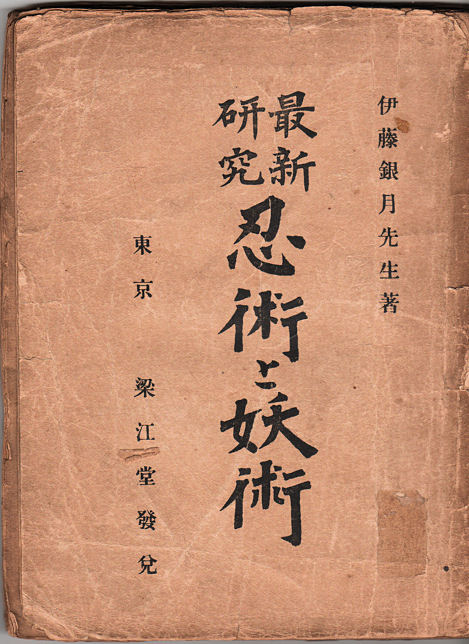
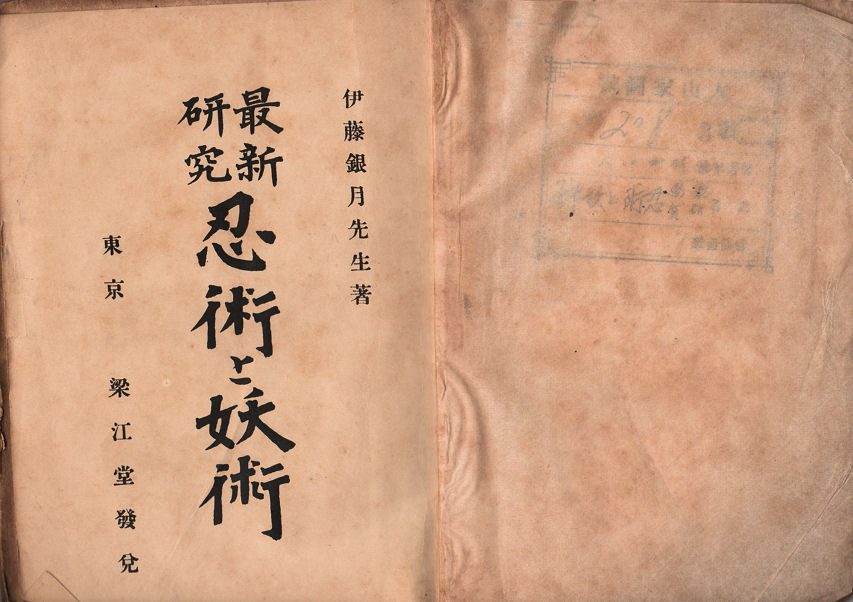
最新研究 忍術と妖術
Ninjutsu to Yōjutsu
- Author:
- Itoh Gingetsu (伊藤銀月)
- Category:
- Ninjutsu
- Collection:
- Robert C. Gruzanski Collection
Description
Itoh Gingetsu’s Saishin Kenkyū: Ninjutsu to Yōjutsu
Historical Overview
Published in 1909 (Meiji 42), Saishin Kenkyū: Ninjutsu to Yōjutsu (最新研究 忍術と妖術, Modern Research into Ninjutsu and the Arts of Illusion) stands among the earliest and most influential modern studies of Japanese ninjutsu. Written by the distinguished journalist, author, and cultural commentator Itoh Gingetsu (伊藤銀月, 1871–1944), this landmark work represents a turning point in the evolution of ninja literature. Rather than presenting ninjutsu through theatrical folklore, sensational legends, or romantic fiction, Gingetsu approached the subject as one worthy of serious historical investigation, combining documentary research, firsthand observation, psychology, physiology, and practical experimentation into one of the most comprehensive studies of the ninja tradition produced during the Meiji era.
Originally serialized in the Asahi Shimbun before being collected into book form, the work introduced thousands of readers to ninjutsu as a legitimate historical subject rather than simply a source of entertainment. Published during Japan’s rapid modernization following the Meiji Restoration, the book reflects an era when scholars sought to preserve traditional Japanese knowledge while reexamining it through modern historical inquiry and scientific reasoning.
Inside the Book
The volume is divided into two principal sections that together form a carefully structured progression of study.
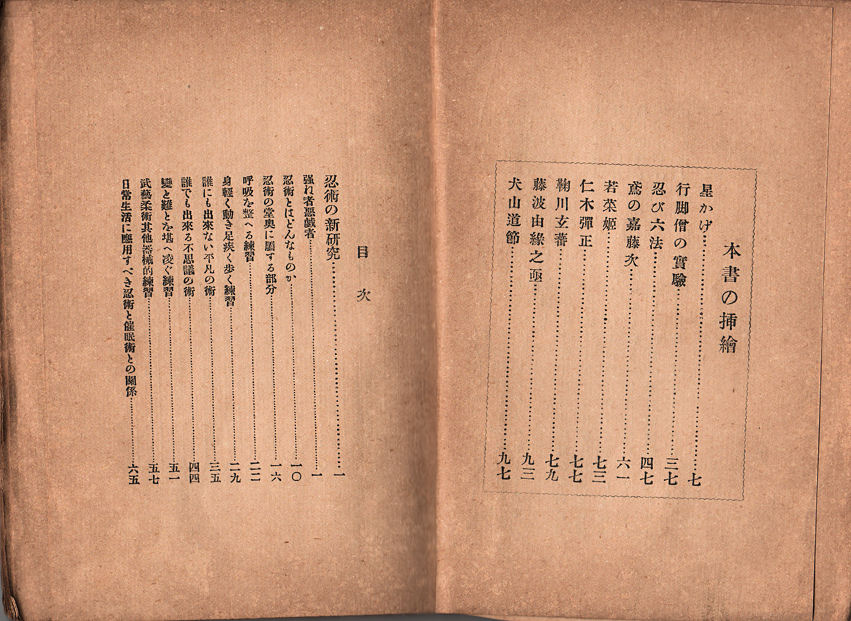
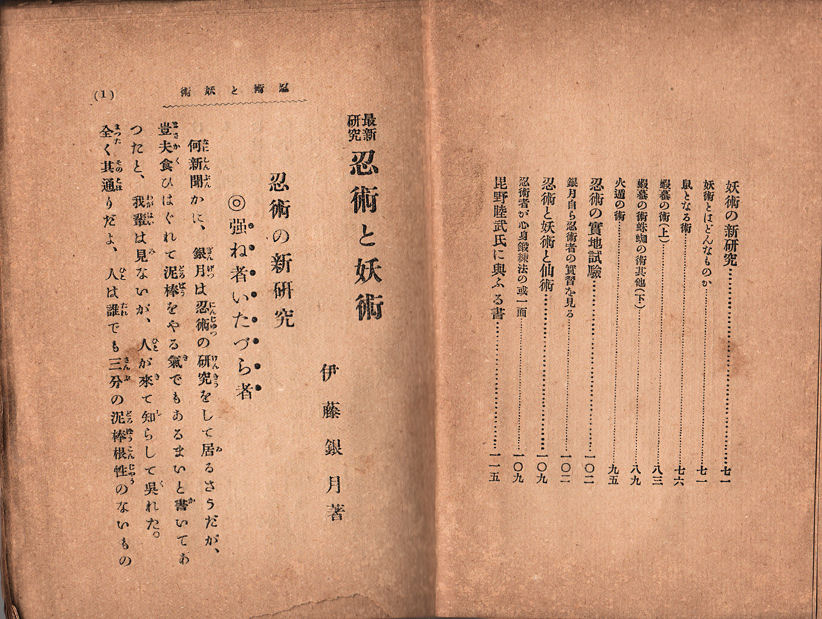
The opening portion examines ninjutsu as a practical discipline built upon mental and physical development. Gingetsu discusses concentration, breathing methods, posture, balance, physical conditioning, observation, awareness, footwork, endurance, concealment, disguise, stealth, infiltration, and tactical movement. Rather than treating these skills as mysterious secrets, he analyzes them through biomechanics, disciplined practice, and efficient use of the human body.
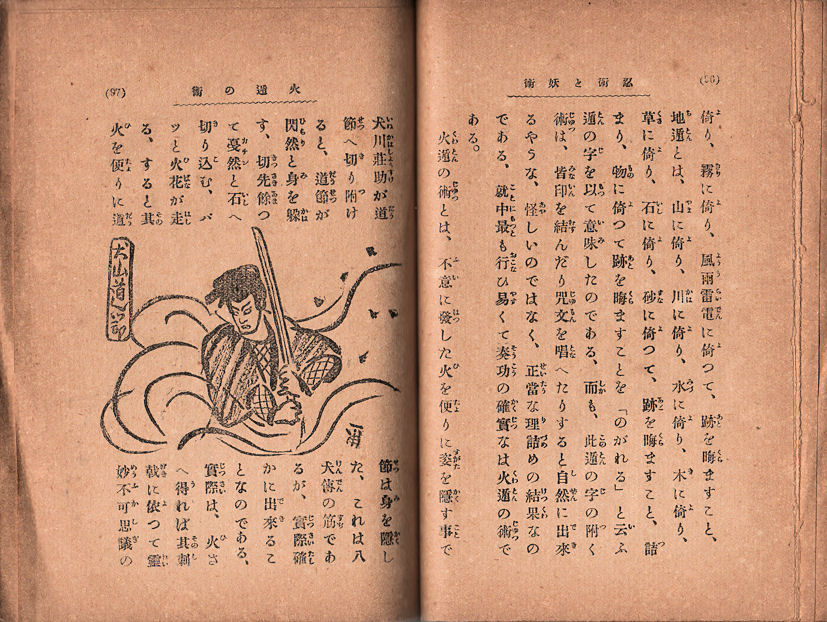
Only after establishing this practical foundation does the book move into yōjutsu (妖術)—the legendary arts of illusion traditionally associated with the ninja. Here Gingetsu investigates invisibility, transformation, hypnotic influence, disguise, misdirection, fire techniques, environmental adaptation, and psychological deception. Rather than dismissing these traditions or accepting them uncritically, he examines how many may have originated from practical skills, human perception, suggestion, stage illusion, and environmental awareness.
This progression from physical training to psychological understanding reveals Gingetsu’s belief that mastery of the fundamentals must precede any discussion of legendary abilities.
Itoh Gingetsu’s Research Methodology
One of the book’s most remarkable achievements is its investigative methodology.
Unlike many earlier martial arts works that simply repeated inherited traditions, Gingetsu consistently compares historical documents, evaluates competing accounts, interviews contemporary martial artists, records his own observations, and encourages practical experimentation.
Throughout the volume he repeatedly urges readers to question extraordinary claims, compare historical evidence, observe carefully, and distinguish authentic martial knowledge from folklore, theatrical illusion, religious belief, and popular exaggeration. When certainty is impossible, Gingetsu openly acknowledges the limitations of the evidence rather than forcing conclusions.
For a martial arts publication of 1909, this approach was remarkably progressive and reflects the influence of modern journalism and historical scholarship.
Why This Book Was Revolutionary
Saishin Kenkyū: Ninjutsu to Yōjutsu occupies a unique place in the history of Japanese martial arts literature.
Rather than functioning solely as a manual of techniques, the book combines:
- Historical research
- Martial arts
- Psychology
- Physiology
- Physical culture
- Folklore
- Observation
- Practical experimentation
- Comparative analysis
This interdisciplinary approach was exceptionally uncommon during the late Meiji period and helped establish a new model for studying Japan’s martial traditions.
Instead of asking readers simply to believe traditional stories, Gingetsu repeatedly asks a different question:
“How did these traditions develop, and what practical principles lie behind them?”
That question defines the entire book.
The Arts of Ninjutsu and Yōjutsu
One of the book’s greatest strengths is the way it distinguishes between ninjutsu and yōjutsu while demonstrating that the two are closely related.
The chapters devoted to ninjutsu emphasize practical skills such as breathing, concentration, posture, movement, observation, concealment, disguise, and efficient body mechanics.
The chapters devoted to yōjutsu investigate the legendary “arts of illusion” through psychology, suggestion, visual perception, environmental awareness, and deception.
Rather than presenting magic as supernatural fact, Gingetsu examines how many legendary ninja abilities may have developed from practical techniques that appeared extraordinary to those who witnessed them.
Original Illustrations
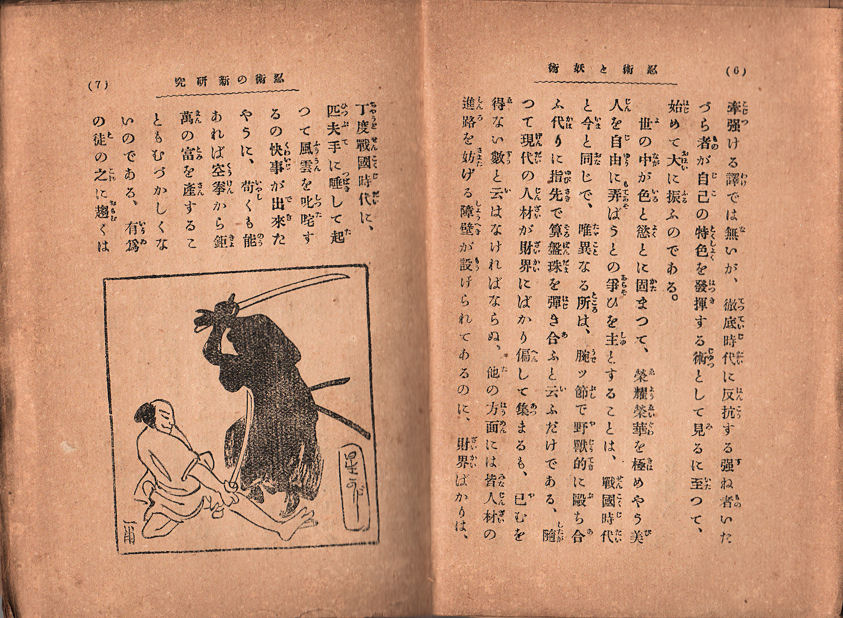
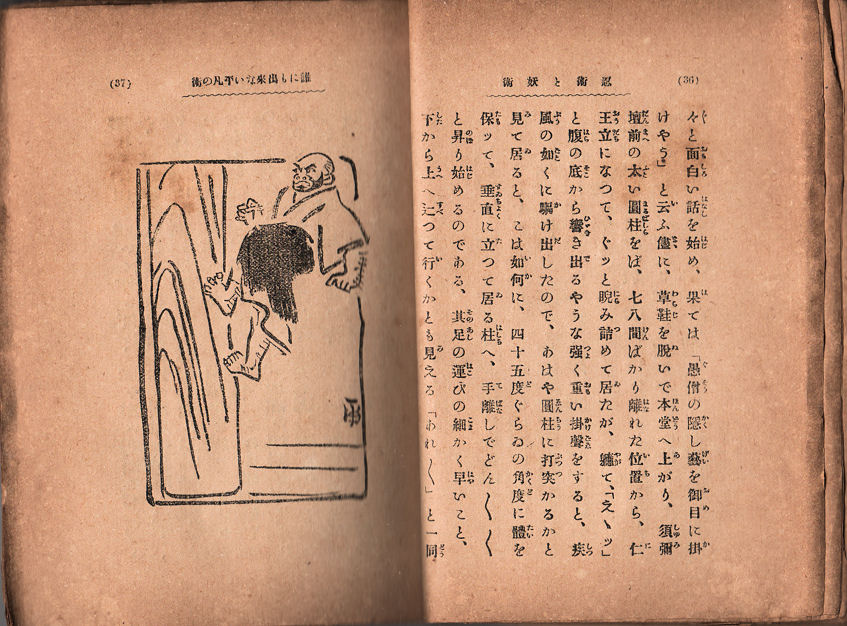
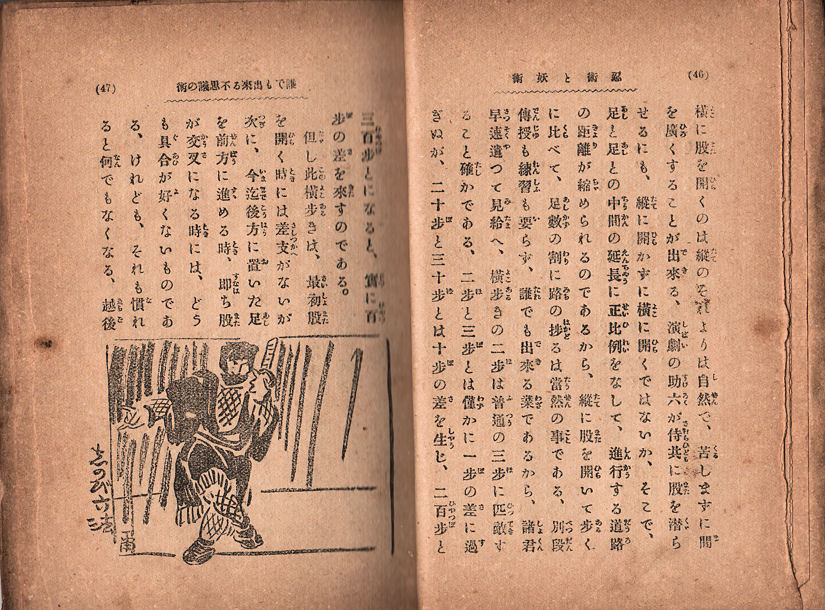
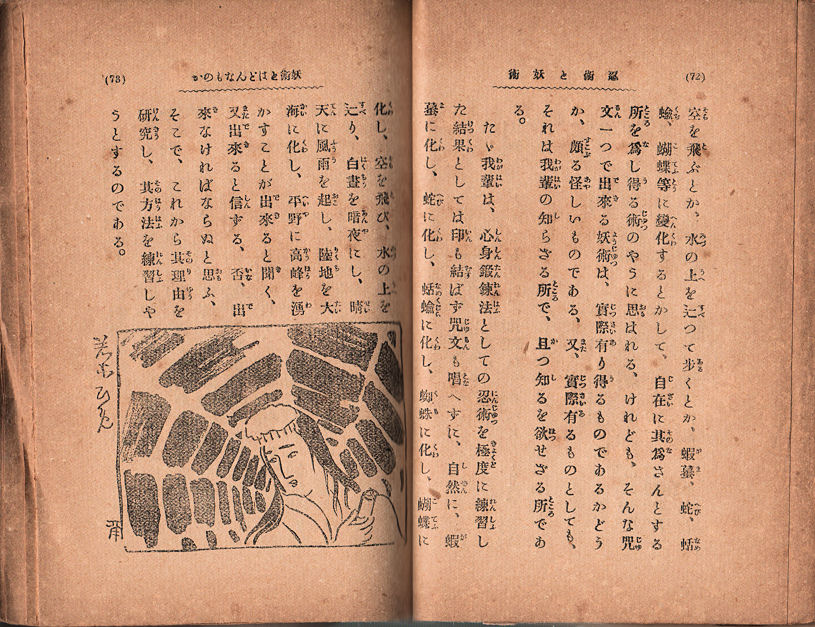
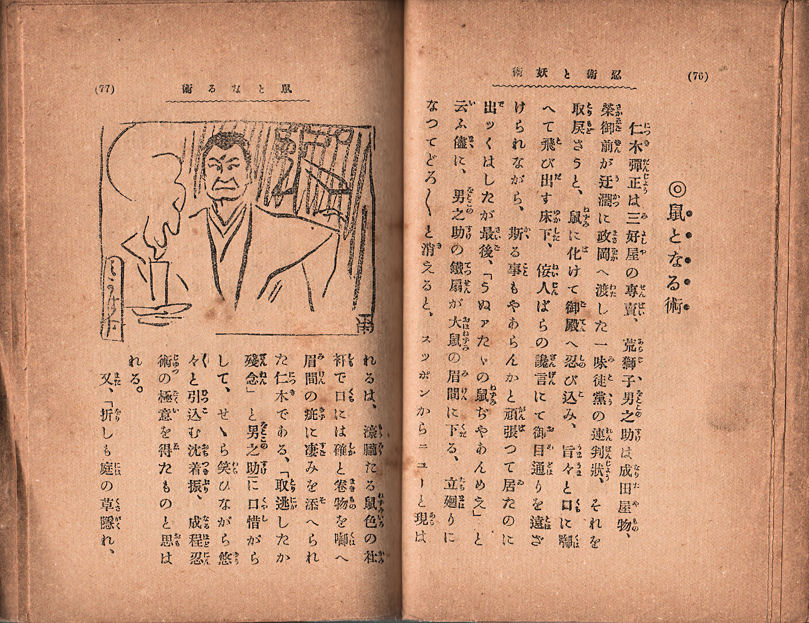
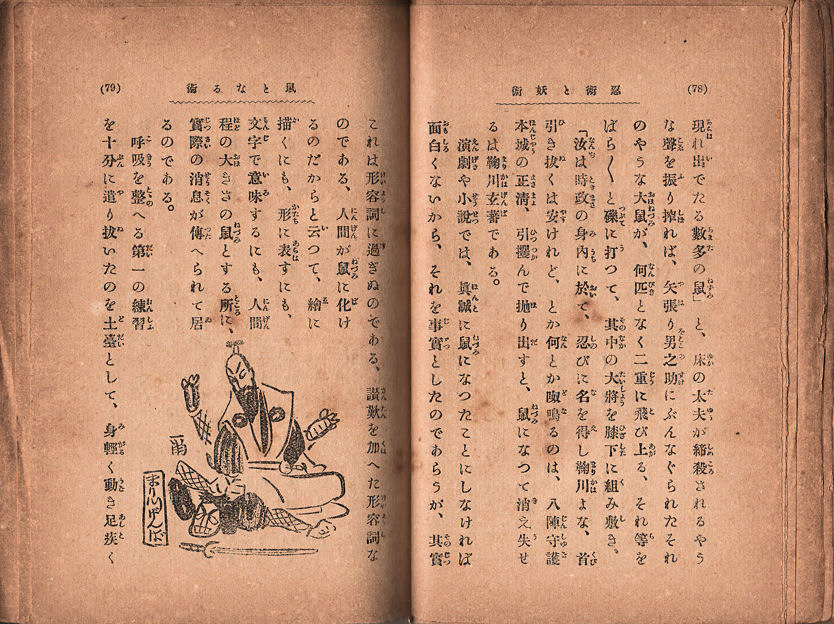
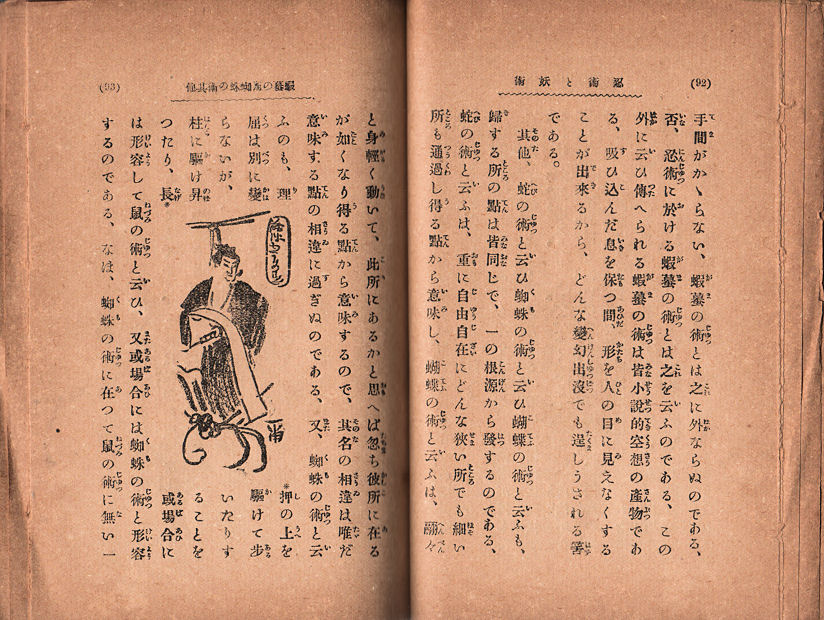
The book contains numerous illustrations by the artist Issei (一雨).
These illustrations are not merely decorative.
They function as instructional diagrams supporting discussions of movement, posture, concealment, disguise, demonstrations, tactical positioning, and legendary traditions. Together they provide invaluable visual documentation of how ninjutsu was interpreted during the early twentieth century and remain one of the defining characteristics of this first edition.
Rare & Unusual Historical Facts
- Much of the material first appeared as serialized articles in the Asahi Shimbun, introducing ninjutsu to a broad national audience before publication in book form.
- Itoh Gingetsu identifies Tanimura Ihachirō of Echigo Province as an important source of information on traditional ninjutsu. Whether Tanimura was an actual practitioner, a pseudonym, or a composite source remains one of the enduring mysteries surrounding the book.
- Gingetsu records firsthand observations and discussions with contemporary martial artists, including Kumano Rikibu, preserving valuable information from living practitioners during the late Meiji period.
- The concluding appendix examines contests between Japanese jujutsu practitioners and Western boxers, including a detailed analysis of Mr. Abbott (アボット氏). This rare discussion documents early Japanese views of cross-style martial competition decades before the emergence of modern mixed martial arts.
- The extensive chapters devoted to breathing, posture, body mechanics, and efficient movement distinguish this book from many later ninja publications, revealing Gingetsu’s belief that mental discipline and physical conditioning form the true foundation of ninjutsu.
- Rather than treating legendary abilities as unquestionable truths, Gingetsu consistently compares folklore with psychology, observation, suggestion, physiology, and practical experimentation, making this one of the earliest modern attempts to analyze ninjutsu through critical inquiry.
Itoh Gingetsu: The Author
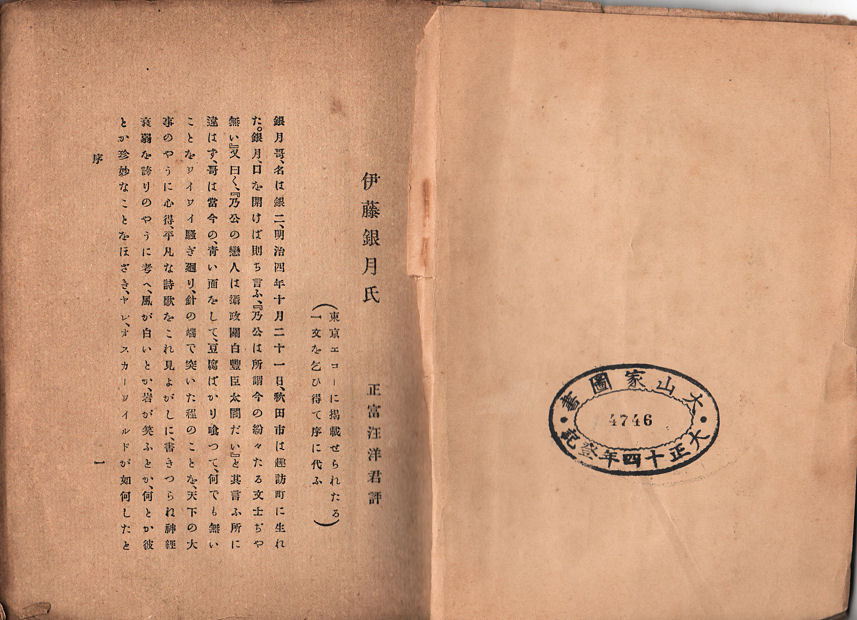
Itoh Gingetsu (伊藤銀月, 1871–1944) was one of the most prolific journalists, authors, and cultural commentators of the late Meiji, Taishō, and early Shōwa periods. Born in Akita Prefecture, he began his career in journalism during Japan’s rapid modernization, writing for major newspapers including the Yorozu Chōhō before contributing to the Asahi Shimbun. His investigative style, combined with a broad interest in Japanese history and culture, established him as a respected popular writer whose work reached a nationwide audience.
During a career spanning more than four decades, Gingetsu authored or edited well over one hundred books covering an extraordinary range of subjects. His publications explored folklore, poetry, maritime history, pirates, military affairs, political biography, philosophy, psychology, physical culture, traditional customs, and Japanese cultural history. Rather than limiting himself to a single field, he sought to make complex historical and cultural subjects accessible to the general public while encouraging readers to question accepted traditions through observation, comparison, and investigation.
Published in 1909, Saishin Kenkyū: Ninjutsu to Yōjutsu represents one of Gingetsu’s earliest and most ambitious attempts to apply this investigative approach to the study of Japan’s ninja traditions. Instead of presenting ninjutsu solely as a collection of secret techniques or legendary stories, he examined historical documents, interviewed contemporary practitioners, recorded firsthand observations, and compared folklore with practical experience. His work reflects the influence of modern journalism and the growing scholarly movement of the Meiji era, when traditional Japanese knowledge was increasingly being reexamined through historical inquiry and scientific reasoning.
Although later researchers have debated some of Gingetsu’s interpretations and conclusions, his influence on the development of modern ninjutsu literature is undeniable. Saishin Kenkyū: Ninjutsu to Yōjutsu remains one of the earliest comprehensive studies to treat ninjutsu as a serious subject of historical investigation, making Itoh Gingetsu one of the most important figures in the evolution of modern ninja scholarship.
Collector’s Perspective
For collectors of prewar Japanese martial arts literature, Saishin Kenkyū: Ninjutsu to Yōjutsu occupies a position of exceptional importance.
This 1909 first edition represents one of the earliest dedicated printed studies of ninjutsu published during the author’s lifetime. Its complete original illustrations, extensive discussions of both practical ninjutsu and yōjutsu, firsthand observations, and analytical methodology distinguish it from later popular works on the subject.
As both a historical artifact and a cornerstone of modern ninjutsu scholarship, it remains one of the most desirable and influential books in the field of Japanese martial arts collecting.
Legacy & Historical Significance
More than a century after its publication, Saishin Kenkyū: Ninjutsu to Yōjutsu continues to stand as one of the foundational primary sources for the historical study of Japan’s ninja traditions.
Serving as a bridge between classical martial knowledge and modern scholarship, the book preserves rare oral traditions, documents firsthand observations of contemporary practitioners, records one of the earliest systematic attempts to interpret legendary ninja practices through psychology and human perception, and captures a pivotal moment when centuries-old martial traditions were being reexamined through the lens of historical research and scientific inquiry.
Far more than a rare martial arts manual, this remarkable volume is an enduring document of Japanese intellectual history. For historians, collectors, martial artists, and researchers alike, it remains one of the most significant and influential works ever published on the subject of ninjutsu, preserving a unique perspective that continues to inform scholarship more than one hundred years after its first appearance.
Edition details
- Published:
- 08/20/1909
- Publisher:
- Ryokodo (梁江堂)
- Edition:
-
- • Author: Itoh Gingetsu (伊藤銀月)
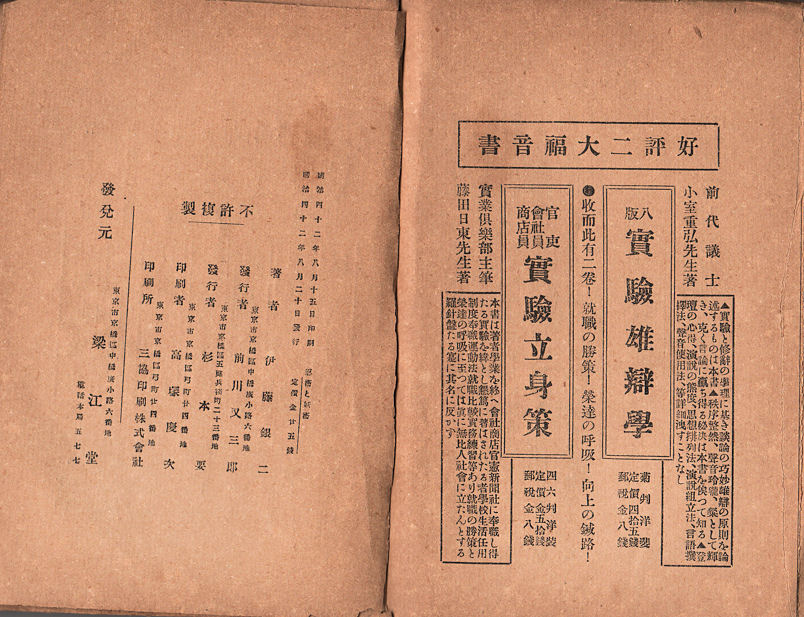
- • Publisher: Ryōkōdō (梁江堂)
- • Printer: Mitsuwaki Printing Co., Ltd. (三協印刷株式会社)
- • Publication Date: 08/20/1909 (明治42年8月20日発行)
- • Printed Date: 08/15/1909 (明治42年8月15日印刷)
- • Retail Price: 45 Sen (定価金四十五銭)
- • Note: Features text illustration pages by artist Issei (一雨)
- Condition:
- Average