
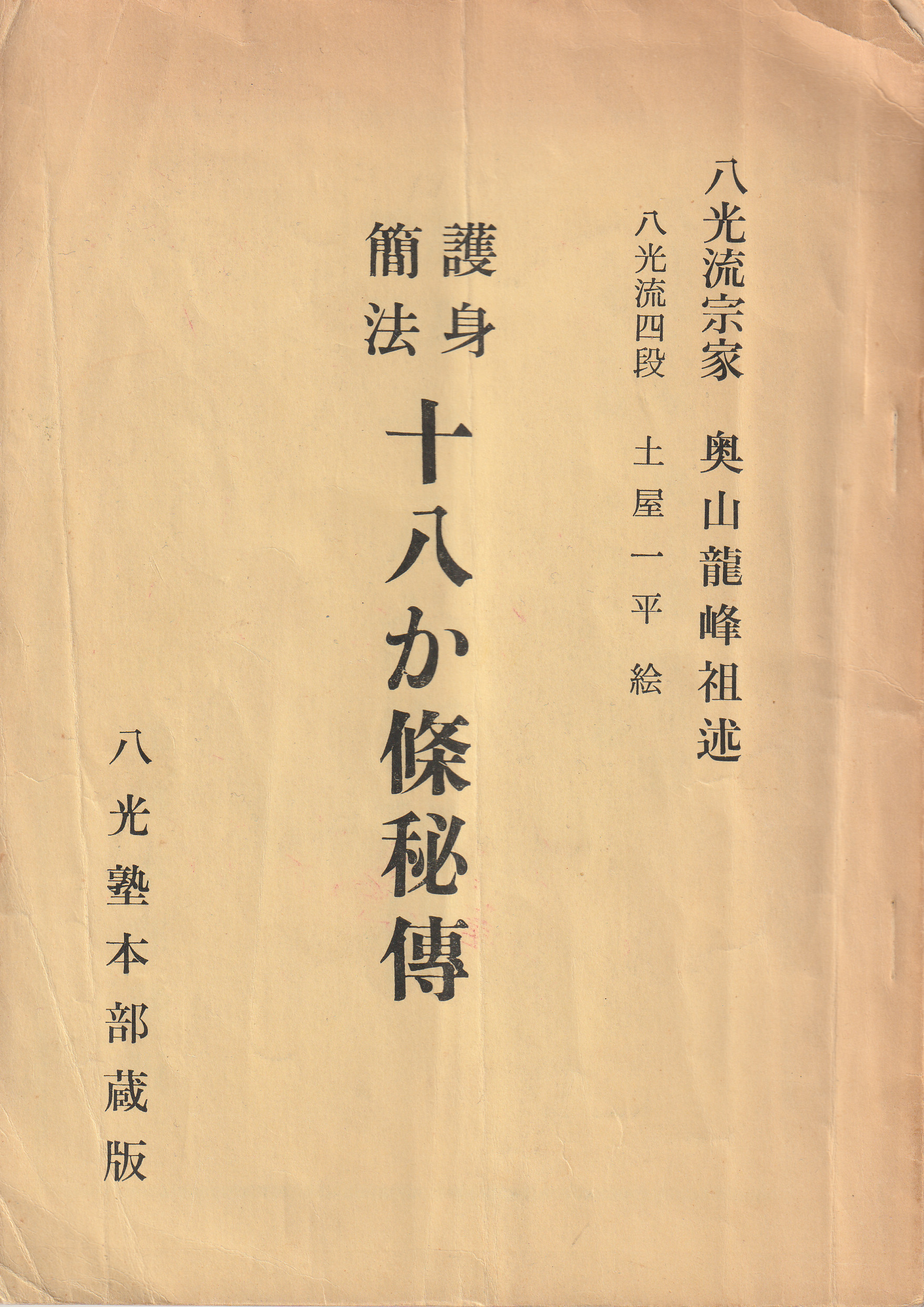
護身簡法十八か条秘伝
Goshin Kanpo Juhachi Kajo Hiden
- Author:
- Okuyama Ryuho (奥山龍峰)
- Category:
- Martial Arts
- Collection:
- Robert C. Gruzanski Collection
Description
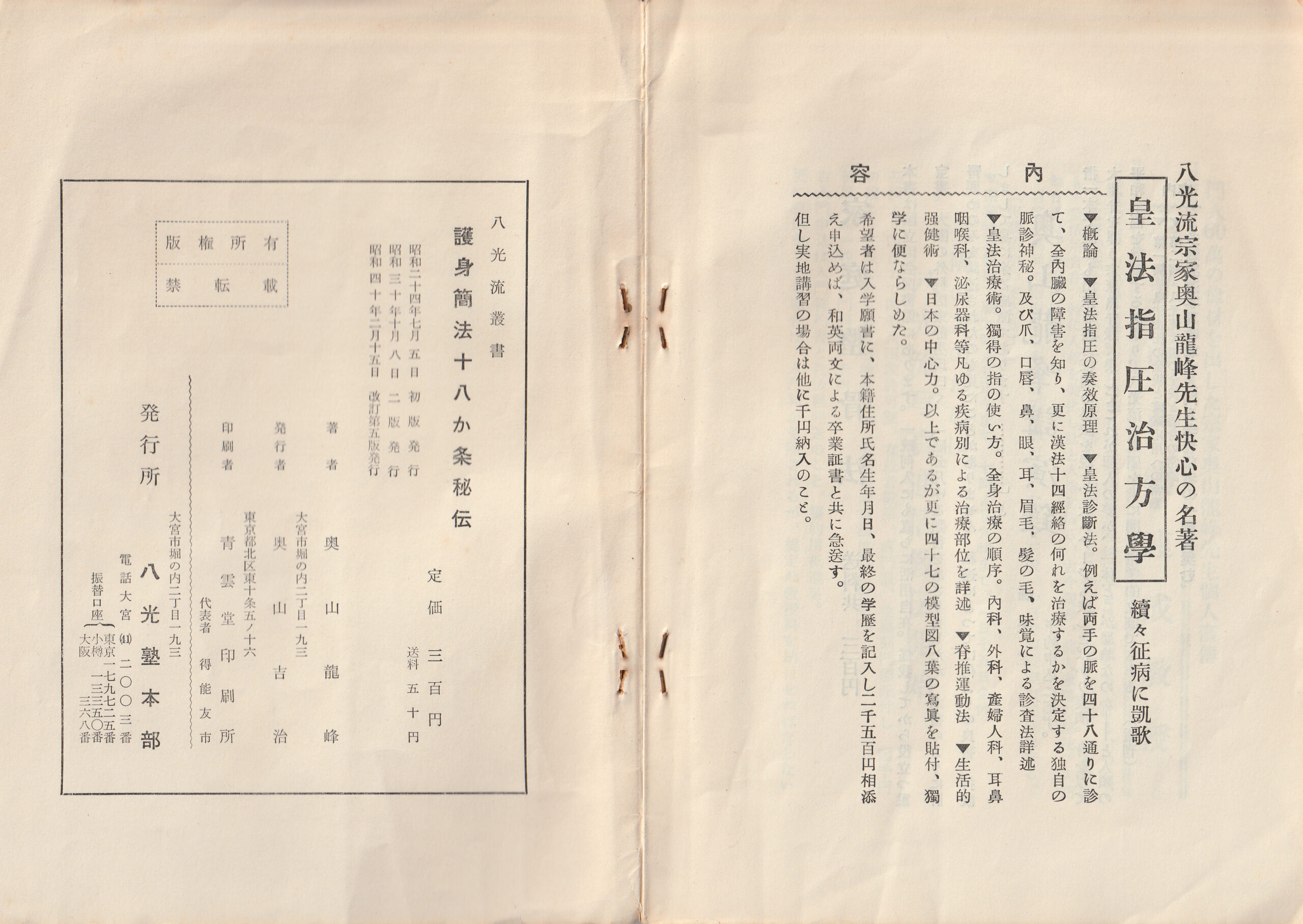
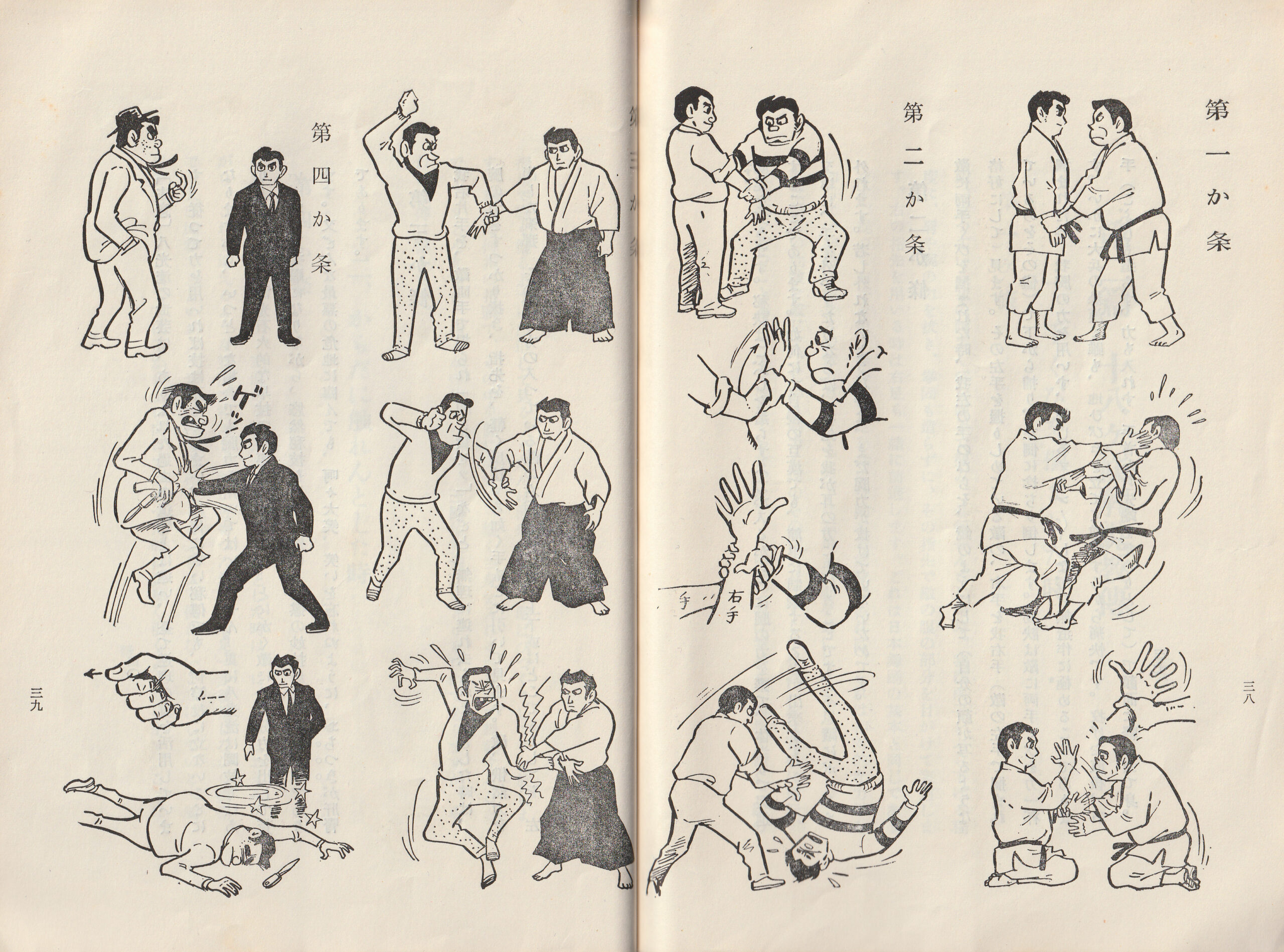
The book, Goshin Kanpō Jūhachi Kajō Hiden (18 Secrets of Simple Self-Defense), is a concise 76-page technical manual authored by the school’s founder, Okuyama Ryūhō. It was published by the Hakkōjuku Headquarters in Saitama, Japan. This 1965 printing is a revised edition specifically designed for portability and quick reference for students.
Core Manual Attributes
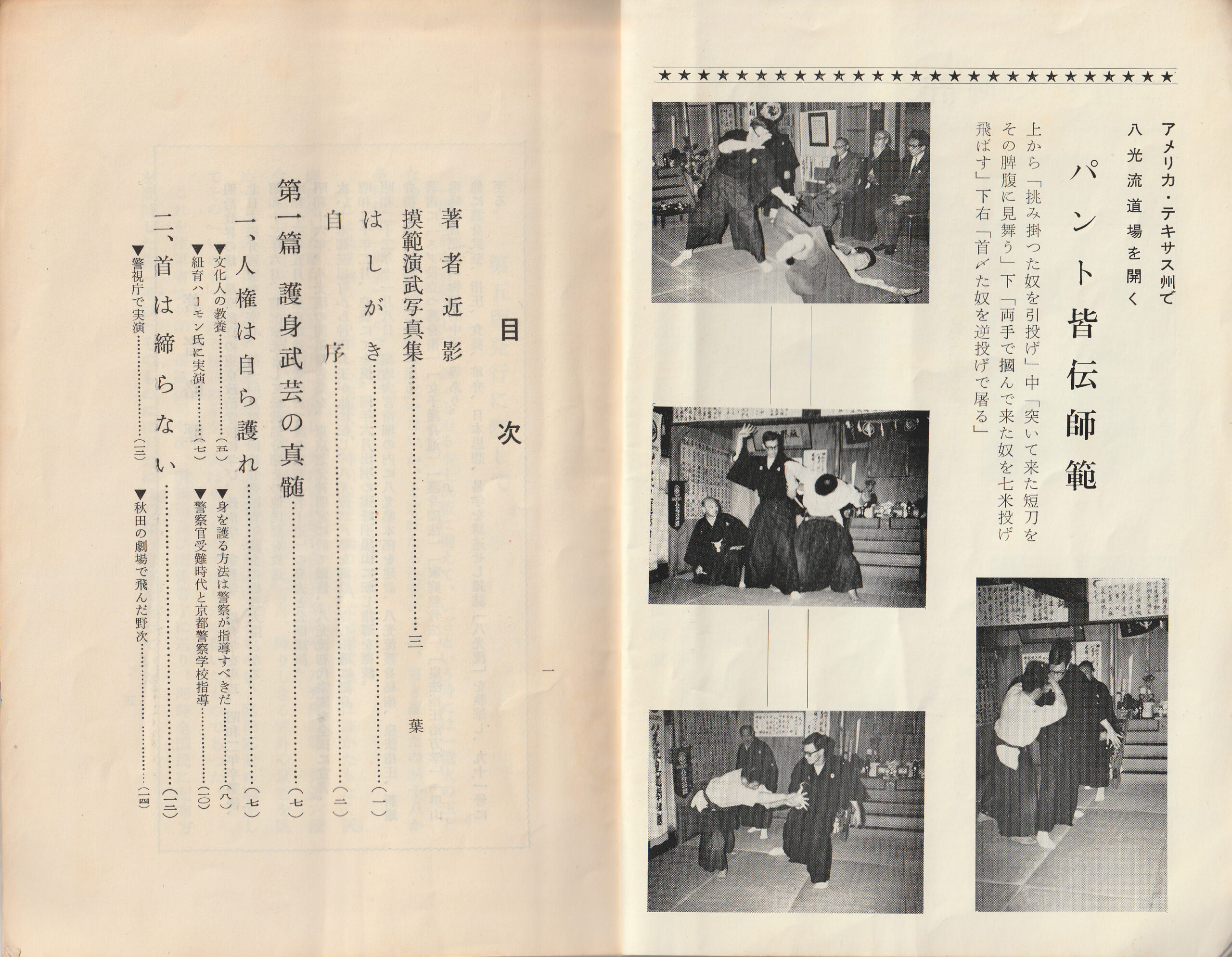
- Technical Structure: It outlines the 18 core techniques (Jūhachi Kajō) that form the foundational mechanical structure of the art’s modern self-defense curriculum.
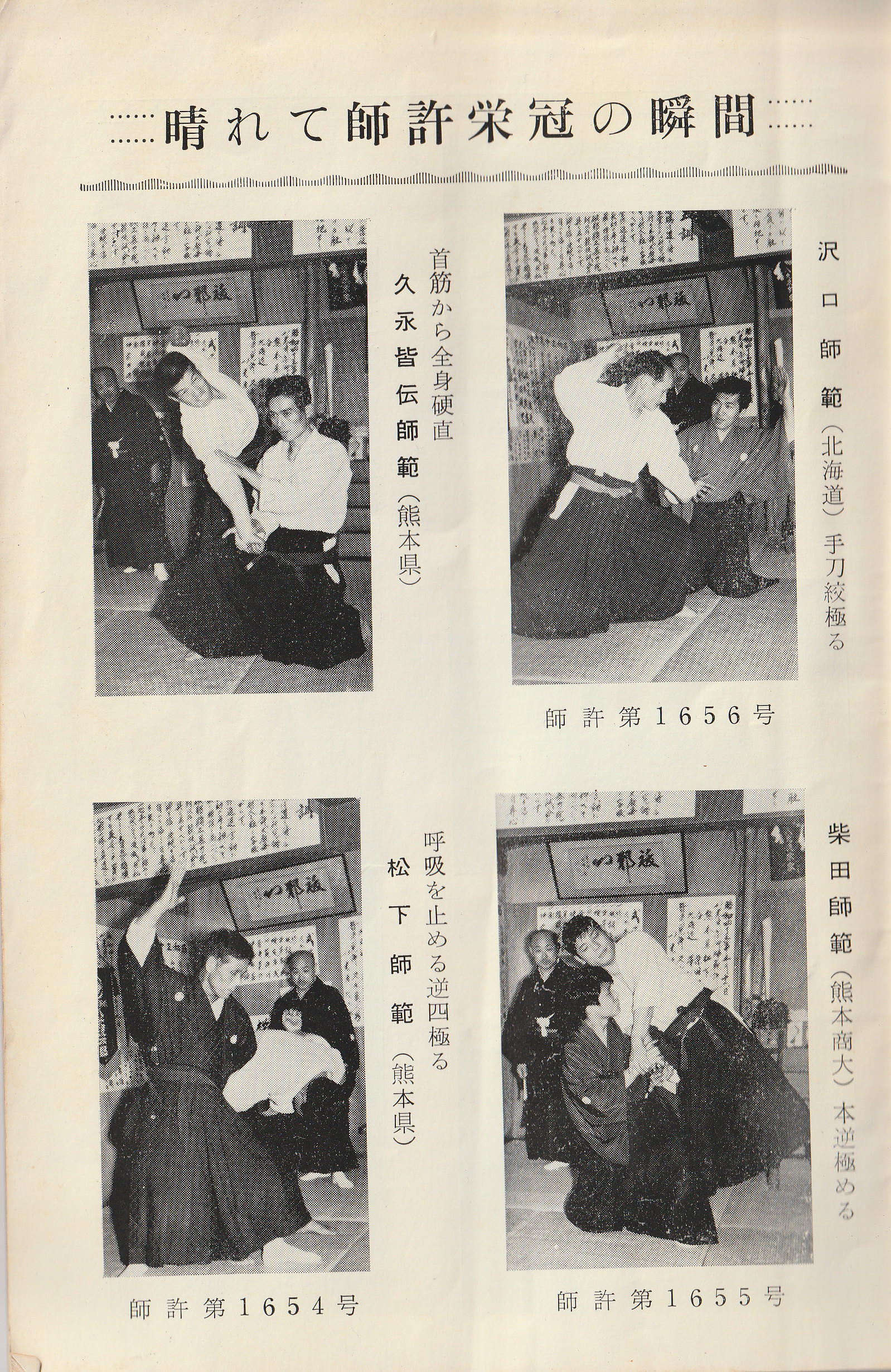
- Visual Style: It is renowned for its early “action shots” showing the founder and pioneer masters performing physical techniques against active attackers, frequently highlighting the use of only one or two fingers to control a target through pain-sensitive pressure points (tsubo).
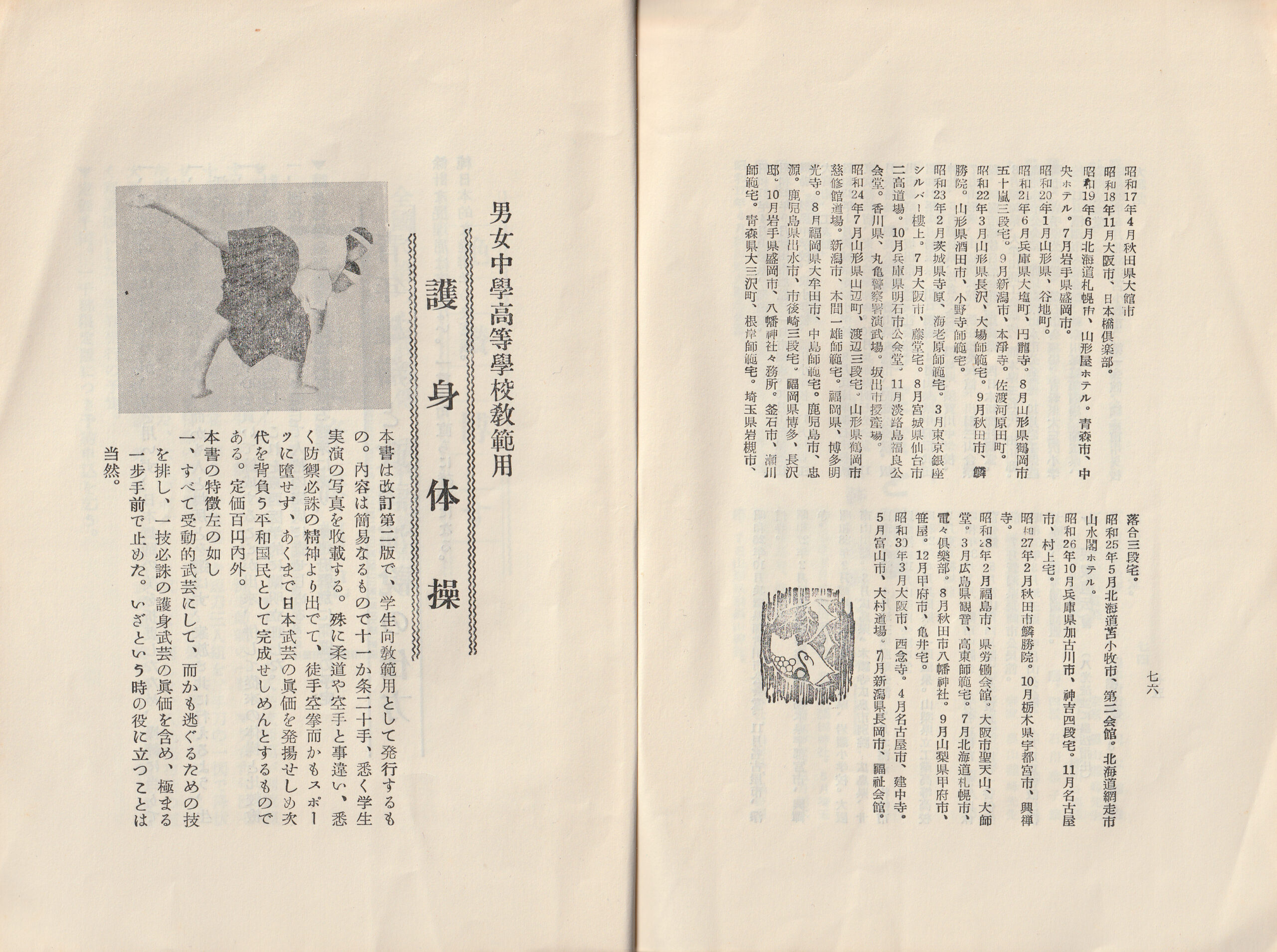
- Medical Component: The back sections of the manual contain advertisements and reference frameworks for Kōhō Shiatsu, the founder’s distinct medical system of finger-pressure therapy which serves as an integral part of the core curriculum.
Rare and Unusual Information
- The “Invisible” Name: The title “Hakkō-ryū” translates directly to “The Style of the Eighth Light.” In the traditional Japanese understanding of the color spectrum, the eighth shade represents infrared or ultraviolet—a light that remains invisible to the naked human eye but possesses extreme power, mirroring the subtle but devastating techniques shown in the manual.
- The Lemon Metaphor: One of the most unusual conceptual sections in the text discusses the “birth of Hakkō-ryū from a lemon.” Okuyama utilized this culinary metaphor to explain that his self-defense adjustments should feel “sharp, fresh, and refreshing.” He taught that the pain inflicted should be sudden and intense but leave no lasting tissue damage—just like the sharp, clean sting of lemon juice.
- Pre-Boom Rarity: Early printed manual variants like this 1965 edition are highly scarce because they pre-date the major international martial arts boom of the 1970s. They often contain localized licensing registries of specific individuals who stood as the only authorized instructors within their territories at that time.
About the Author: Okuyama Ryūhō
The One-on-One Tradition: Unlike many mass-market martial arts properties that utilize large group classes to generate revenue, Okuyama strictly insisted on private, one-on-one transmission for master-level students. He firmly believed this was the only valid method to ensure the uncorrupted transfer of secret medical and tactical knowledge.
Wartime Exile: During the heavy Allied bombings of Tokyo in WWII, his original urban dojo burned down completely. He fled to the rugged mountains of Yamagata, where he lived as a mountain ascetic (Shugendo practitioner) and reportedly survived on a single piece of tofu per day while continuing to refine his physical techniques.
The Dragon Spine moniker: “Ryūhō” was a stylized pen name he officially adopted upon founding his school; it translates directly to “Spine of the Dragon.”
A “Toothless” Legend: In his developmental years, Okuyama was a direct personal student of Takeda Sōkaku, the legendary and fearsome founder of Daitō-ryū. Okuyama once colorfully described the aging Takeda in his journals as “completely toothless, but remarkably robust for a man of his advanced age.”
Edition details
- Published:
- 02/25/1965
- Publisher:
- Hakkōjuku Headquarters
- Edition:
-
- • Historic First Publication: December 8, 1949 (Shōwa 24)
- • Major Iteration Variant: Revised 4th Edition released on August 8, 1956 (Shōwa 31)
- • Current Printing Date: February 25, 1965 (Shōwa 40)
- • Editorial Legal Profile: Authored under the direction of Okuyama Ryūhō (奥山龍峰) and registered legally under his birth name, Okuyama Yoshiji (奥山吉治).
- • Technical Production House: Printed locally by Saitama Insatsu (Saitama Printing) to reflect the operational school base in Omiya City, Saitama.
- Condition:
- Good