
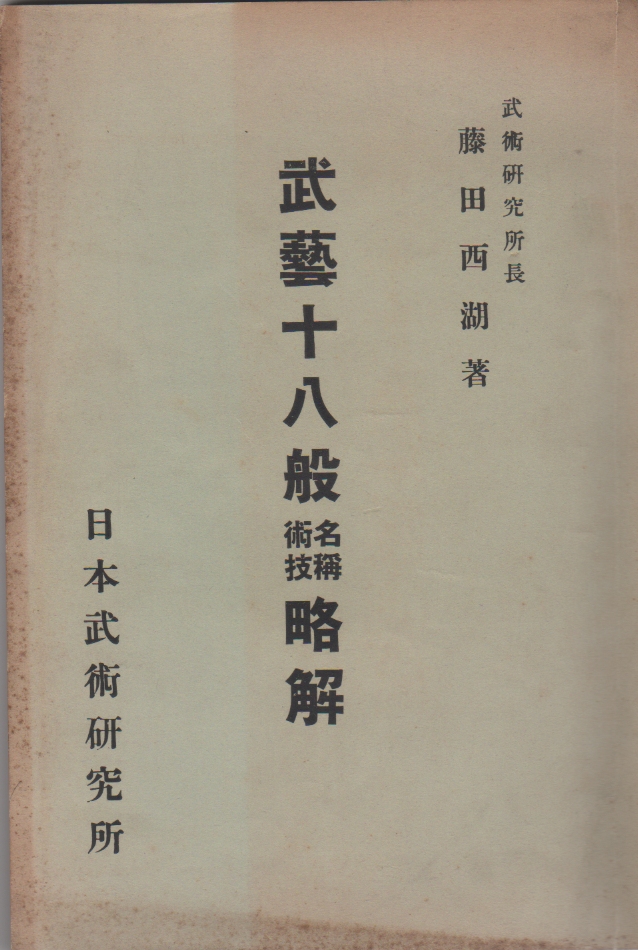
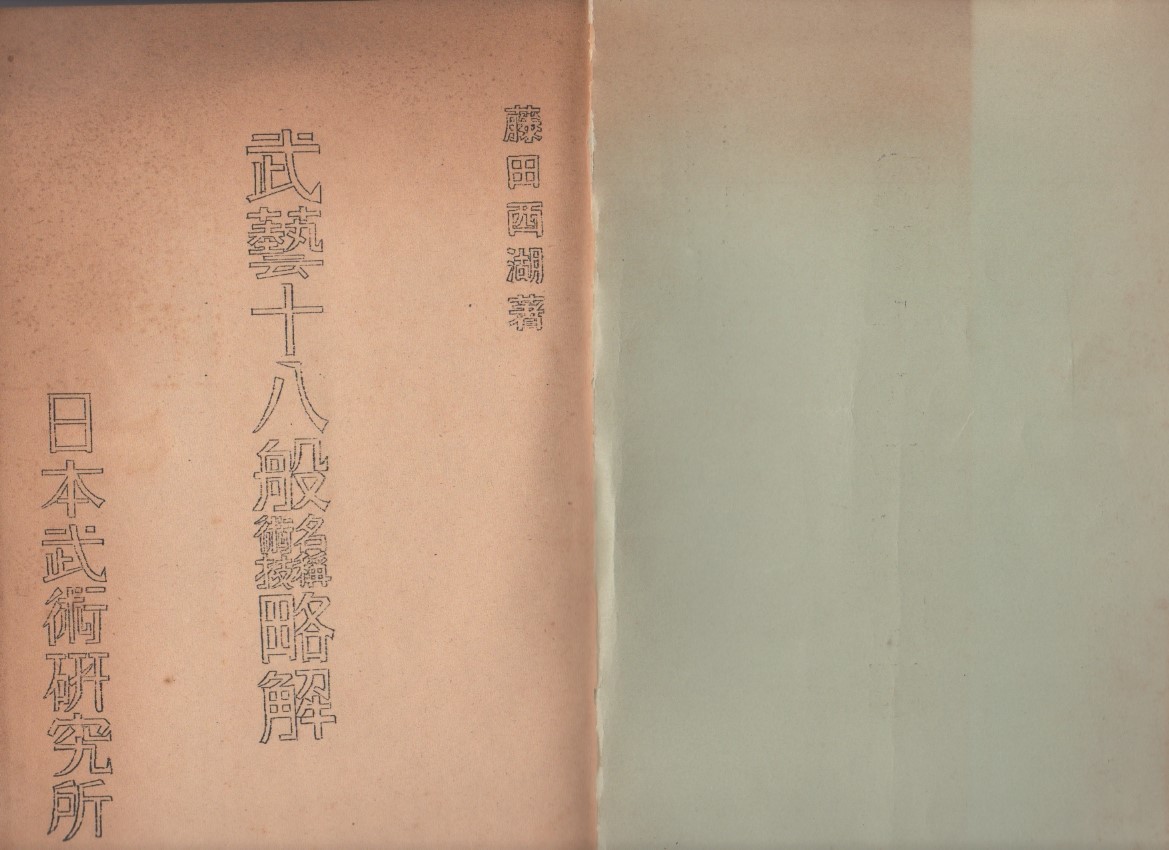
武藝十八般名称技術
Bugei Juhappan Meisho Gijutsu Ryakkai
- Author:
- Fujita Seiko (藤田西湖)
- Category:
- Martial Arts
- Collection:
- Robert C. Gruzanski Collection
Description
Bugei Juhappan Meisho: Core Themes and Content
- Historical Evolution: Fujita Seiko traces the origins of these eighteen disciplines from their roots in China to their eventual adaptation in Japan.
- The Edo Legacy: The book highlights the work of Edo-era master Hirayama Gyozo (1759–1828), who standardized the list for Japanese warriors.
- The 18 Disciplines: While the specific list evolved over time, it generally encompasses:
- Core Combat: Swordsmanship (Kenjutsu), Archery (Kyujutsu), and Spearmanship (Sojutsu).
- Auxiliary Skills: Horse riding (Bajutsu), swimming in armor (Suiren), and grappling (Jujutsu).
- Tactical Arts: Firearms (Hojutsu), stealth and espionage (Ninjutsu), and rope-tying (Hojojutsu).
- Stealth and Strategy: Fujita includes specialized sections on In-jutsu (stealth), detailing methods like Tanuki-gakure (badger hiding) to evade enemies in various terrains.
Purpose of the Book
As a dedicated researcher and recognized historical authority widely cited as the “last ninja” of the Koga-ryu tradition, Fujita Seiko compiled this Bugei Juhappan Meisho technical manual to preserve authentic, unrevised martial knowledge during a mid-century era when traditional arts were rapidly modernizing or being forgotten. It serves simultaneously as an objective historical record and a practical technical guide to a holistic system that integrated physical weapon prowess with macro combat strategy and mental discipline. The volume ensures that the underlying mechanics of feudal espionage and samurai training programs survived without being diluted by contemporary commercialization.
Technical Interior Analysis of Bugei Juhappan Meisho
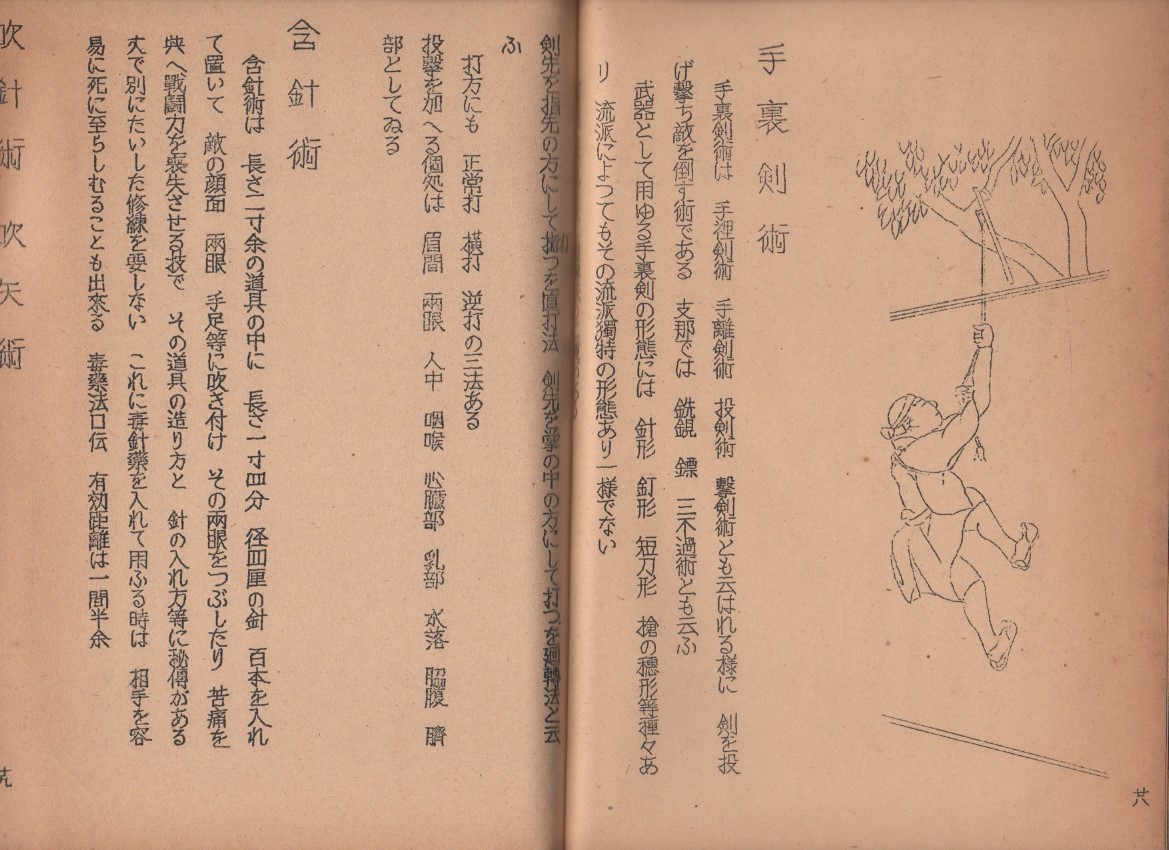
The handwritten and illustrated internal pages reveal a forensic inventory of weapon variations and specialized tactical arts meticulously preserved by the author. In the section tracking projectile throwing arts, the manual deeply explores standard Shurikenjutsu alongside the highly secretive art of Fukushinjutsu (含針術), which teaches operatives to conceal and spit lethal needles directly from the mouth. The technical documentation specifies needle measurements ranging from one sun and four bun to over two sun in length, outlining exact instructions for blinding and incapacitating opponents by launching these projectiles at close range to target precise physiological vital spots including the miken (between the eyebrows), ryōgan (both eyes), jinchū (philtrum), inkō (throat), shinzōbu (heart region), nyūbu (chest), mizuochi (solar plexus), wakibara (the flank), and heso (the navel).
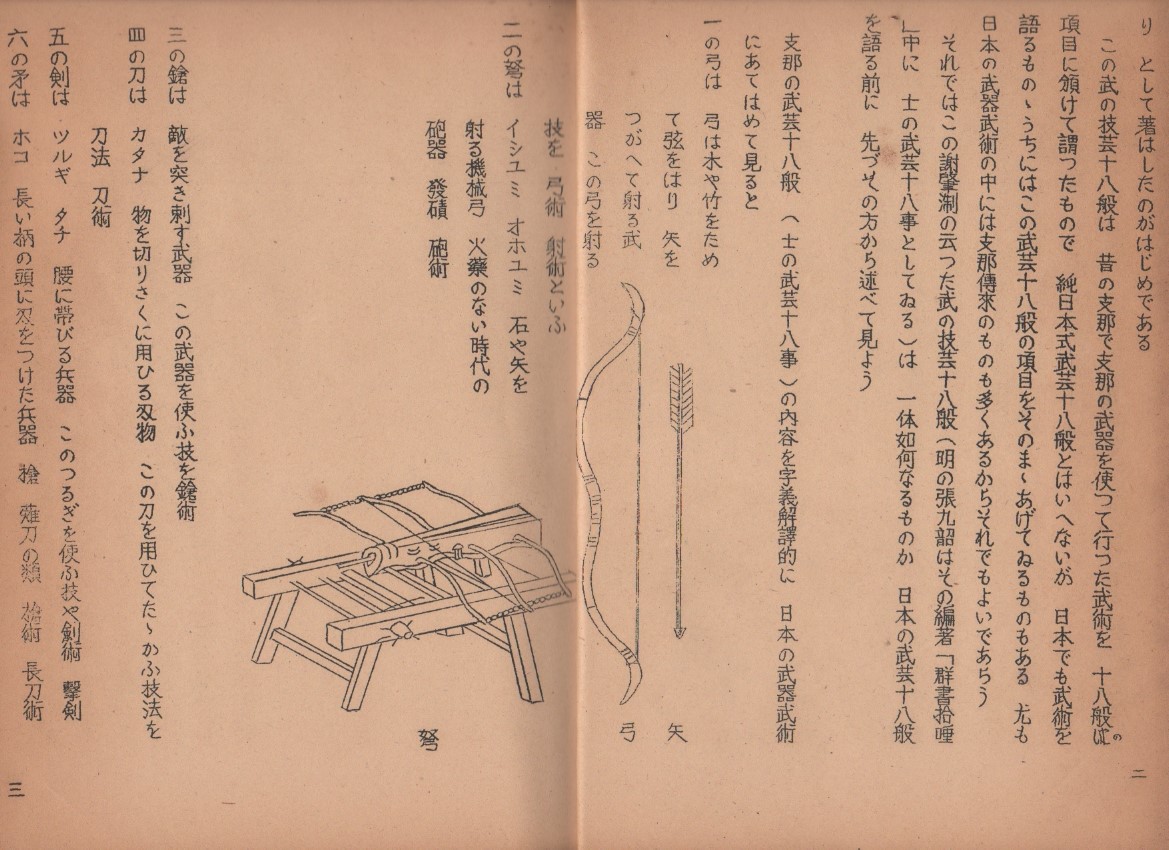
Furthermore, the infantry weapon listings contrast Chinese traditional classification models with native Japanese battlefield adaptations. The text details specialized longbow parameters (Yumi) and breaks down the mechanical components of wooden siege crossbows (Ishiyumi or Oyumi), categorizing sub-assemblies into mechanical components like Kiki (bow machinery), Hōki (gun-like triggers), Hatsukei (launched missiles), and Dosha (flint or stone arrows). These projectile platforms are systematically matched with physical specifications for heavy battlefield armor (Yoroi), combat spears (Sojutsu), single-edged swords (Katana), straight double-edged blades (Tsurugi), long battlefield spears (Hoko), and long-bladed polearms (Naginatajutsu).
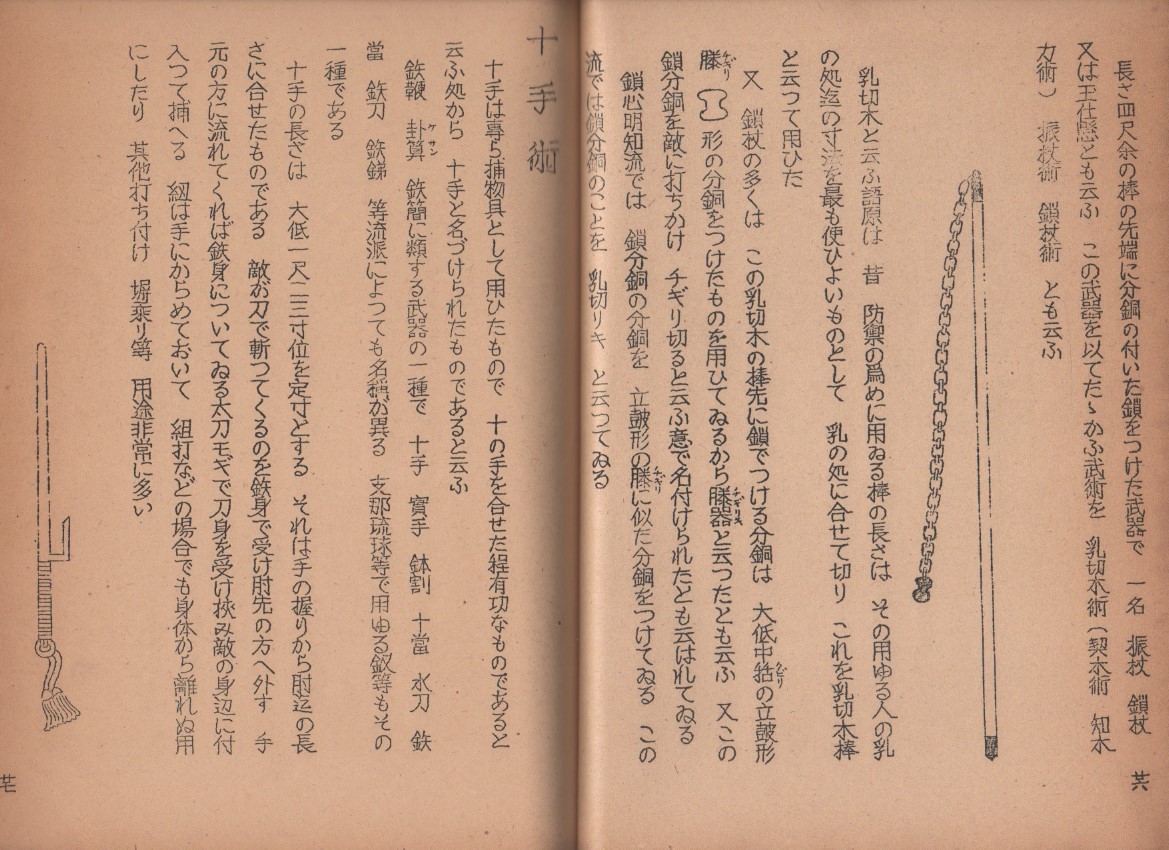
For close-quarters defensive operations, the manual diagrams the structural application of the standard iron truncheon or Jutte (十手), specifying an authentic tool length of roughly one shaku and two or three sun. The manual breaks down how its signature parrying hook is mechanically deployed to trap sword blades, combining this defensive framework with jointed striking weapons and custom flails like the Chigiriki (乳切木), which the text notes must be custom-cut to match the user’s precise breast height for absolute tactical leverage during a physical arrest.
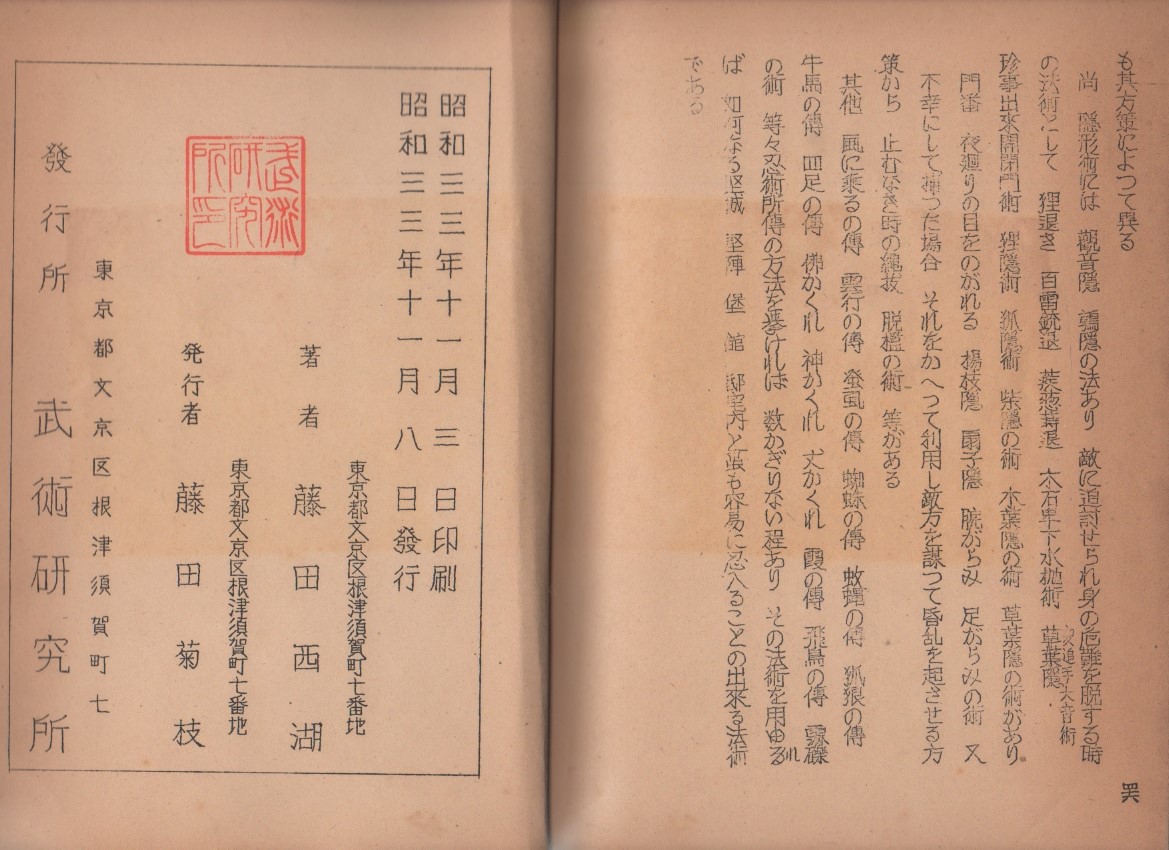
Finally, the text preserves highly classified concealment and escape methodologies printed alongside the publishing details. The text explicitly outlines dynamic battlefield camouflage strategies used by historical agents to compromise enemy tracking patterns, documenting step-by-step instructions for Kannon-gakure (Goddess of Mercy hiding), Sakaya-gakure (liquor shop hiding), Tanuki-gakure (badger hiding), Kitsune-gakure (fox hiding), Konohagakure (tree-leaf hiding), and Ashimoto no Jutsu (specialized footstep techniques) to completely evade defensive military search loops.
The Publishing Background of Bugei Juhappan Meisho
A significant bibliographic aspect of this 85-page softcover manual involves the administrative data recorded in its publishing history. The official colophon sheet establishes that the formal printing process concluded on November 3, Showa 33 (1958), followed immediately by its distribution on November 8. Fujita Kikue is explicitly listed as the operational publisher in the archival gallery image records. As the dedicated wife of Fujita Seiko, she handled the complex administrative, corporate, and private publishing operations of the Nihon Bujutsu Kenkyujo (Japan Martial Arts Research Institute) press based out of the family estate located at Tokyo-to, Bunkyo-ku, Nezu Sugacho 7-banchi. Her executive oversight ensured that her husband’s comprehensive research papers successfully reached the public sphere during the late 1950s. This administrative detail cements the manual’s status as an authentic private press artifact produced directly from the master’s personal estate research records.
Edition details
- Published:
- 11/08/1958
- Publisher:
- Nihon Bujutsu Kenkyujo (Japan Martial Arts Research Institute)
- Edition:
-
- • Publication Date: November 8, 1958 (Showa 33)
- • Physical Specs: A5-sized softcover (approx. 14.8 x 21 cm), 85 pages with standard paperback binding typical of mid-century Japanese academic publications.
- • Content Scope: Features the 18 classical martial disciplines (Bugei Jūhappan), including a full transcription of Edo-era master Hirayama Gyozo's Bugei Jūhappan Ryakusetsu followed by Fujita's own brief explanations.
- Condition:
- Good