
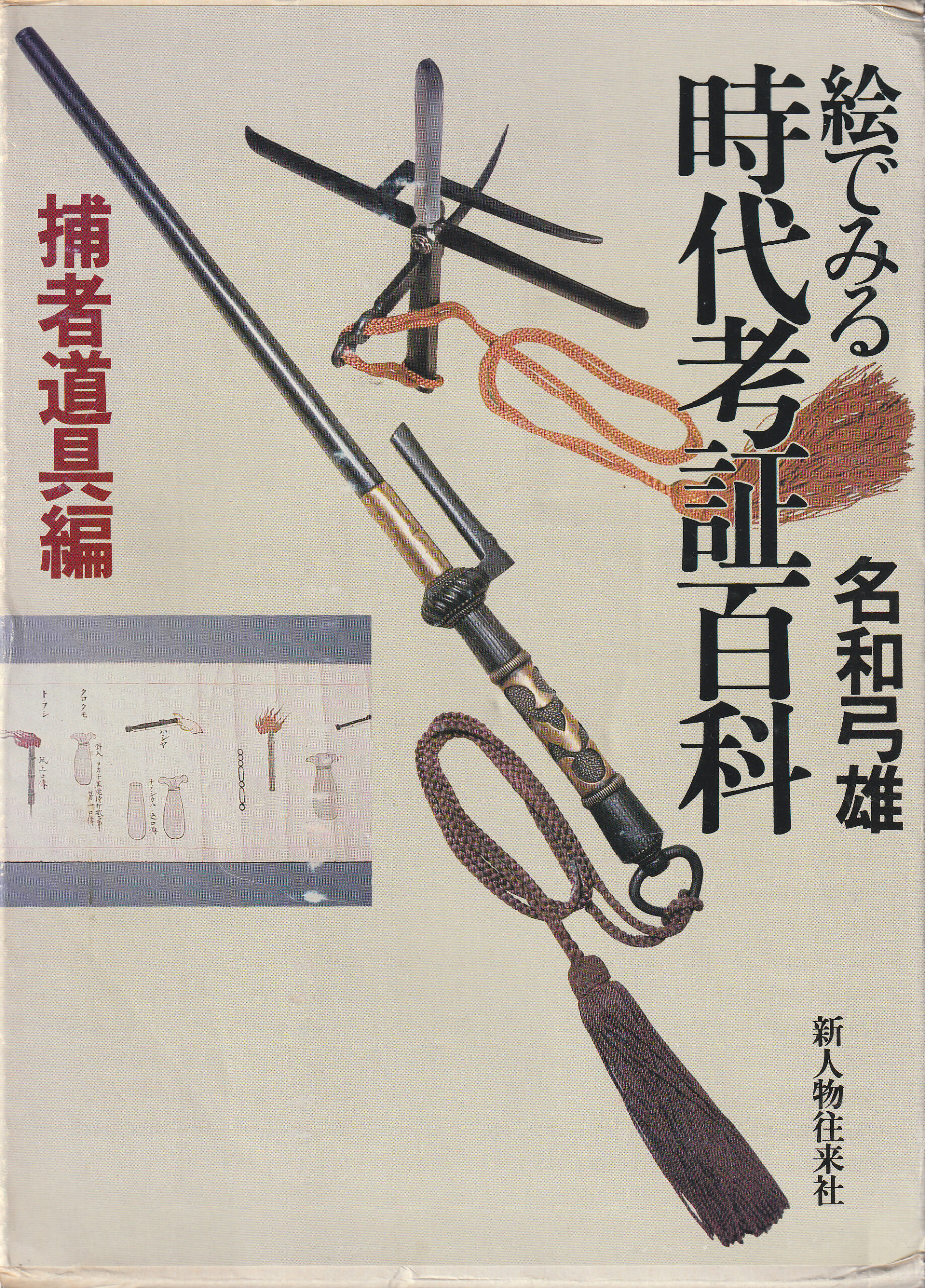
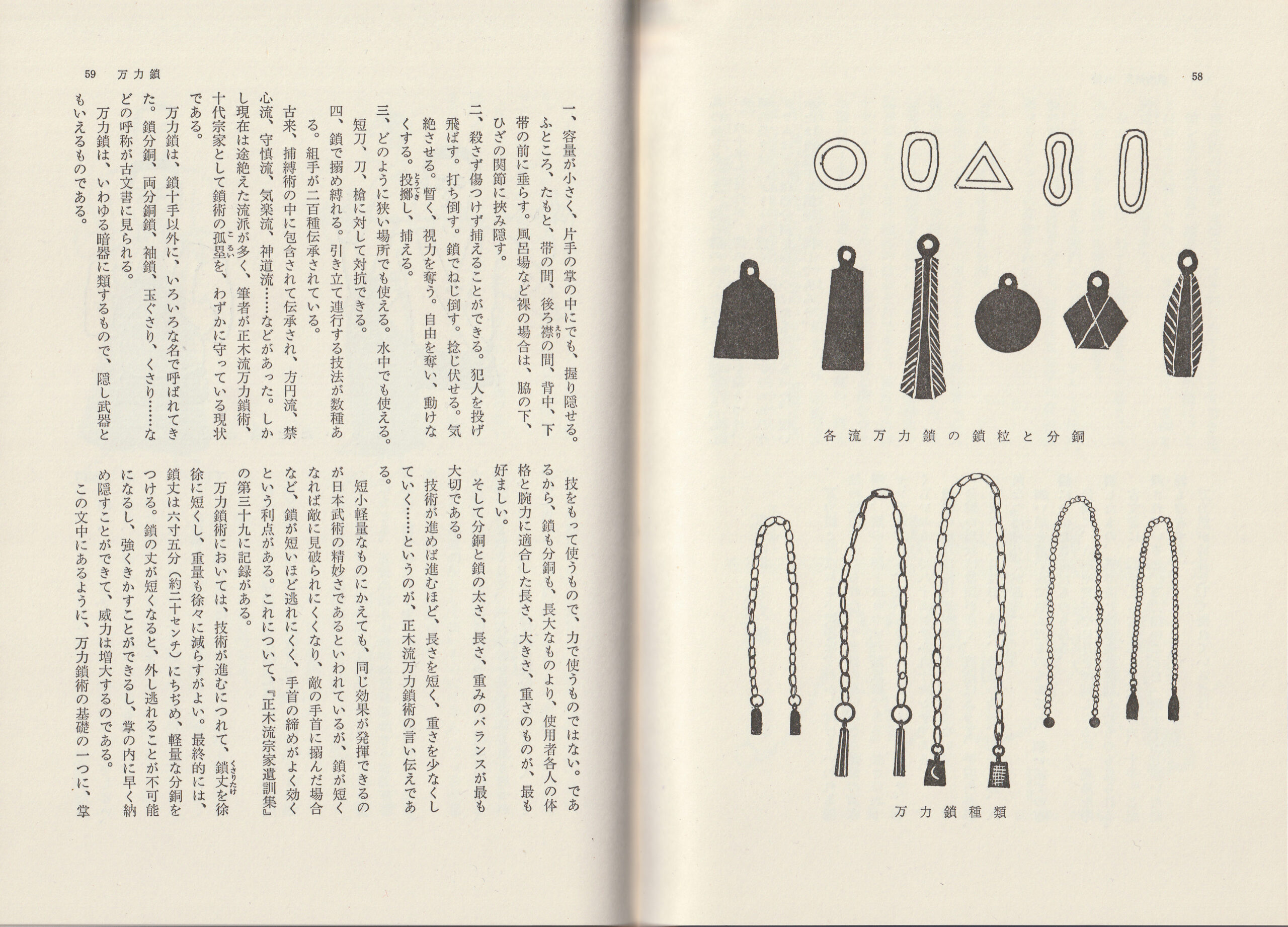
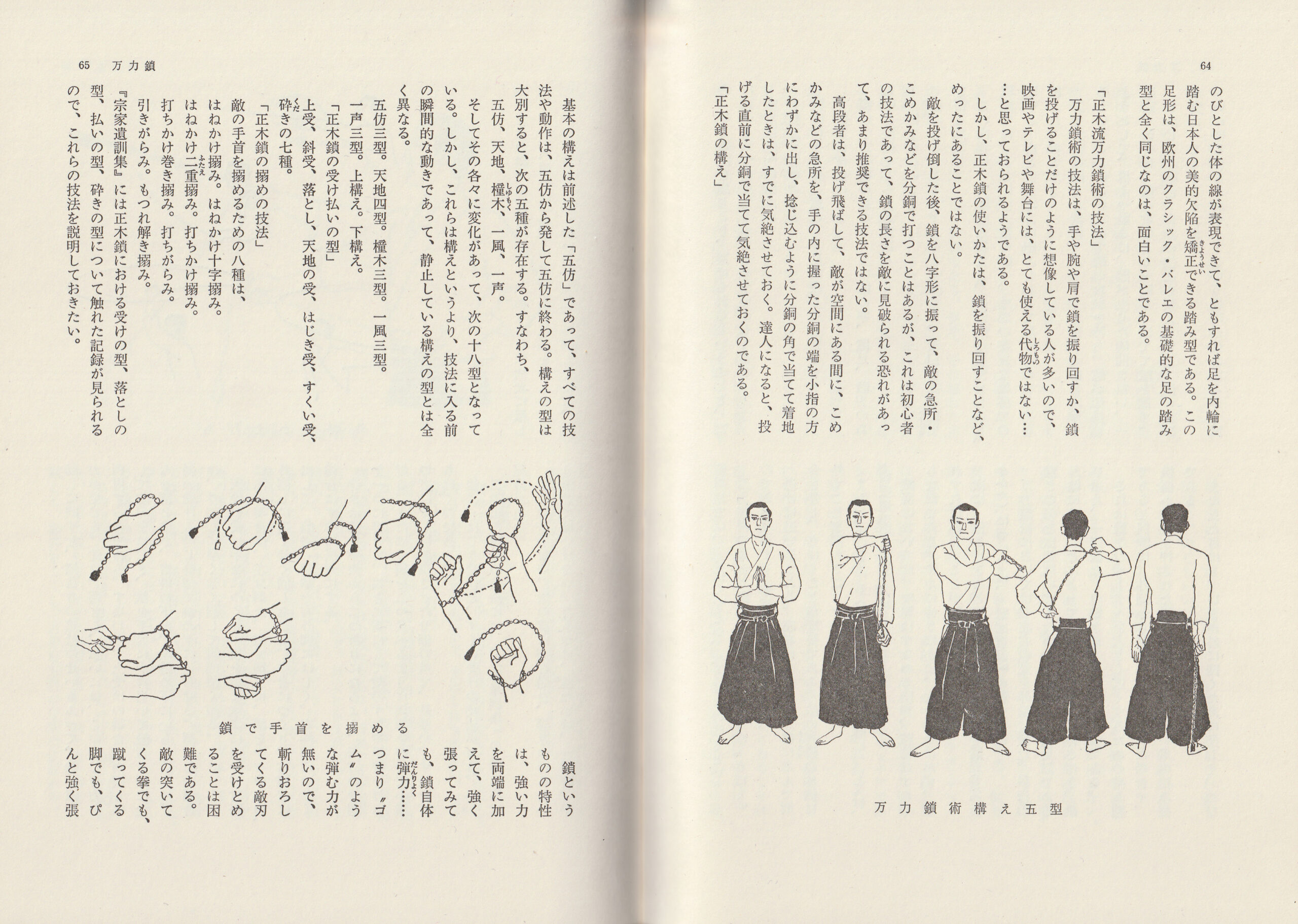
絵でみる時代考証百科:捕者道具編
E de Miru Jidai Kosho Hyakka: Torimono Dogu Hen
- Author:
- Nawa Yumio (名和弓雄)
- Category:
- Martial Arts, Weapons
- Collection:
- Robert C. Gruzanski Collection
Description
E de Miru Jidai Kosho Hyakka Volume Overview
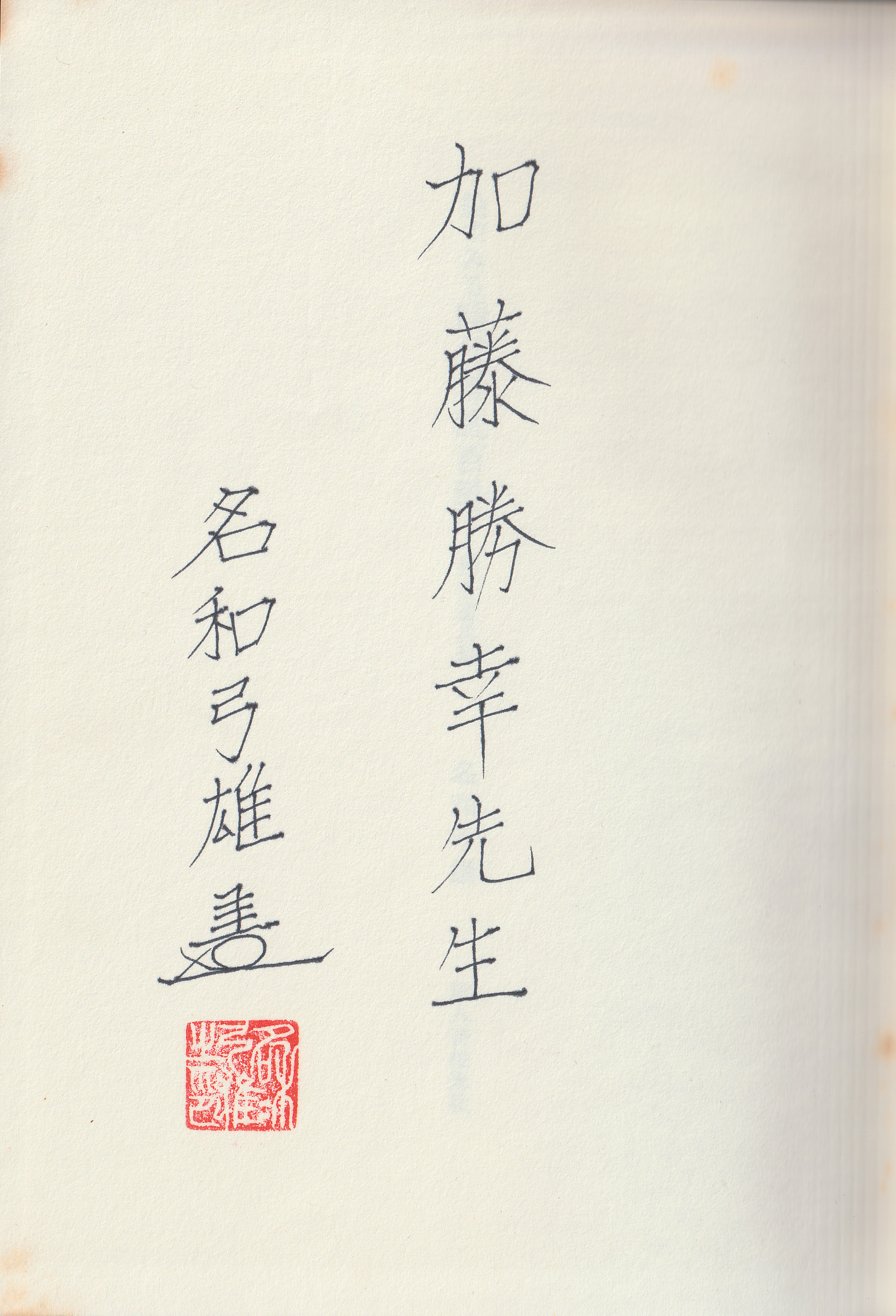
The Rare Signature & Provenance
This copy bears an authentic handwritten presentation inscription by the author, Nawa Yumio (名和弓雄), together with his personal signature and red seal (hanko). The volume was inscribed to Katō Katsuyuki (加藤勝幸), making it an association copy rather than an ordinary signed example.
The dedication employs the respectful honorific 先生 (sensei), a formal Japanese title traditionally used to address a teacher, mentor, or highly respected authority. Nawa’s choice of wording reflects a relationship of professional respect and distinguishes this inscription from a routine autograph.
Presentation copies of this nature are considerably scarcer than standard signed books and provide valuable evidence of the author’s personal and professional associations. As such, the inscription significantly enhances both the historical importance and documented provenance of this volume.
Historical Significance
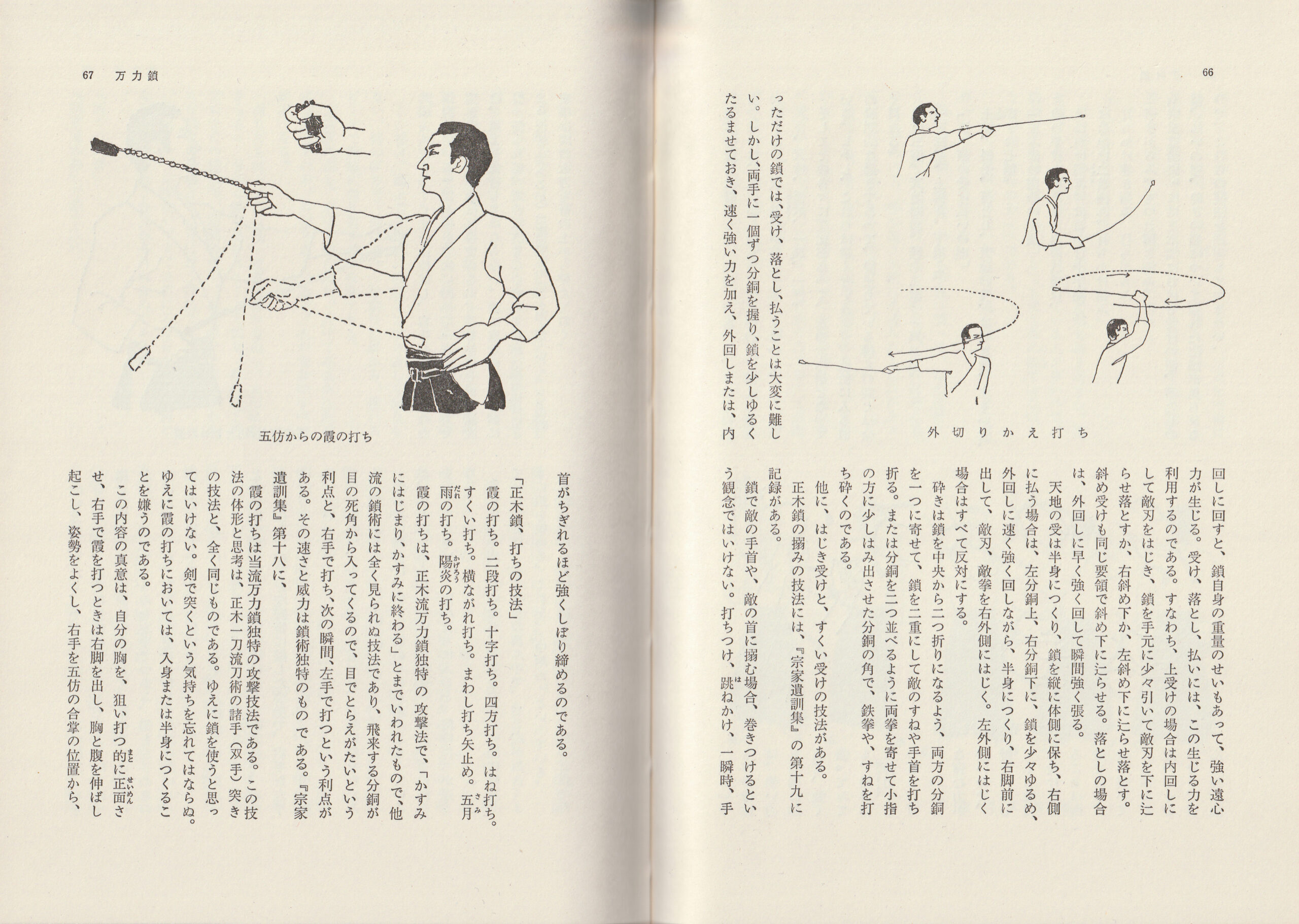
E de Miru Jidai Kōshō Hyakka: Torimono Dōgu Hen is an illustrated reference devoted to the specialized capture, restraint, and investigative equipment used during Japan’s Edo period. Combining historical research with detailed technical illustrations, Nawa Yumio documents the construction, identification, and historical function of law-enforcement implements that are seldom treated in comparable depth.
Rather than relying on legend or theatrical interpretation, the work approaches the subject through the study of surviving artifacts, historical documentation, and traditional martial knowledge. The result is an important reference for researchers interested in Edo-period policing, classical Japanese weapons, and historical material culture.
As both an accomplished researcher and a licensed practitioner of classical martial traditions, Nawa sought to preserve historically accurate information concerning these specialized implements. His detailed drawings and technical commentary continue to make this volume a respected reference for collectors, historians, and students of traditional Japanese martial arts.
Edition Details
- Title: E de Miru Jidai Kōshō Hyakka: Torimono Dōgu Hen (Illustrated Encyclopedia of Historical Research: Arrest and Capture Tools Volume)
- Author: Nawa Yumio (名和弓雄)
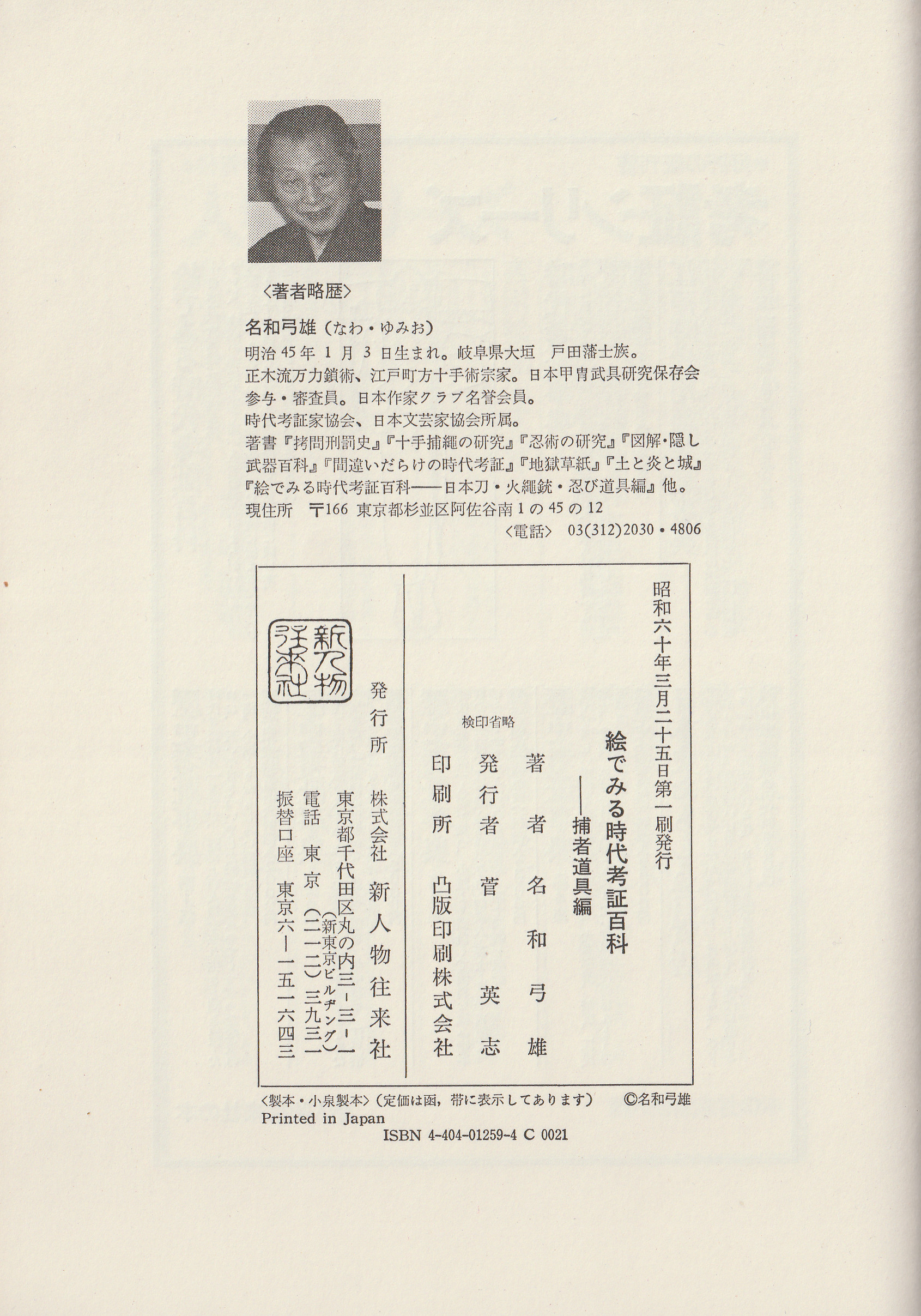
- Publisher: Shinjinbutsu Ōraisha (新人物往来社)
- Publication Date: March 25, 1985
- Format: A5 hardcover with original publisher’s slipcase
- Dimensions: 14.8 × 21.0 cm (5.8 × 8.3 in.)
- Length: 248 pages
- Illustrations: Extensive technical drawings prepared by the author
- Association Copy: Handwritten presentation inscription to Katō Katsuyuki (加藤勝幸), signed and sealed by Nawa Yumio
Reference Value
This first edition occupies an important place within Nawa Yumio’s body of research on traditional Japanese weapons and law-enforcement equipment. Its detailed illustrations and historical commentary provide valuable documentation of Edo-period restraint systems, arresting devices, and related equipment that are rarely illustrated in comparable detail.
For collectors, historians, museum researchers, and practitioners of classical Japanese martial traditions, the volume serves as a significant reference source for the study of historical police equipment and traditional Japanese material culture. The author’s signed presentation inscription further elevates this example beyond an ordinary first edition, preserving a tangible connection to Nawa Yumio’s scholarly and professional circle.
Summary of E de Miru Jidai Reference Value
Published in 1985, E de Miru Jidai Kōshō Hyakka: Torimono Dōgu Hen is an important reference for the study of Edo-period law enforcement equipment and Japanese historical material culture. Through detailed illustrations and technical commentary, Nawa Yumio documents specialized arresting and restraint implements that are seldom treated in comparable depth within English-language scholarship.
The volume combines historical research with careful examination of surviving artifacts, providing valuable documentation of the design, construction, and historical use of traditional capture tools. It continues to serve as a useful resource for collectors, historians, museum researchers, and practitioners interested in classical Japanese martial traditions.
This association copy, personally inscribed, signed, and sealed by Nawa Yumio, further enhances the historical significance of the volume by preserving a documented connection between the author and one of his professional associates.
Edition details
- Published:
- 04/25/1981
- Publisher:
- Shinjinbutsu Oraisha
- Edition:
-
- • Shinjinbutsu Ōraisha (新人物往来社)
- • Format: A5 Hardcover with original slipcase
- • Dimensions: 14.8 cm x 21.0 cm (Approx. 5.8" x 8.3")
- • Page Count: 248 pages of main content
- • Technical Art: Thousands of technical, hand-drawn illustrations
- • Lineage Status: 14th Grandmaster of Masaki-ryū Document Selection
- • Association Inscription: Dedicated peer-to-peer gift to Katō Katsuyuki-sensei
- Condition:
- Good
- Signed:
- Signed copy
- Slipcase:
- Yes