
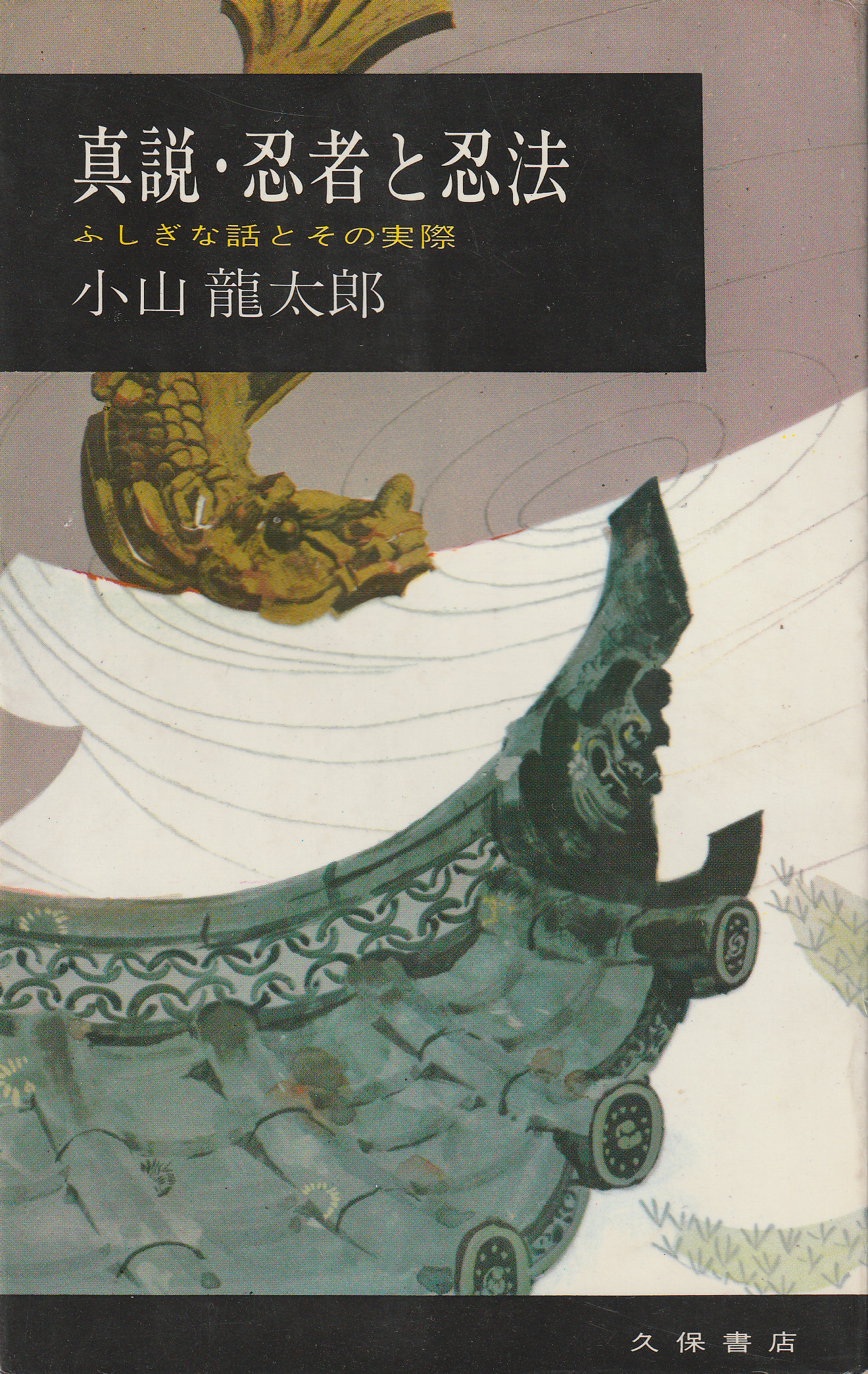
忍者と忍法 - ふしぎな話とその実際
Shinsetsu: Ninja to Ninpo – (Fushigi na Hanashi to sono Jissai)
- Author:
- Koyama Ryuūtaro (小山 龍太郎)
- Category:
- Martial Arts
- Collection:
- Robert C. Gruzanski Collection
Description
Shinsetsu: Ninja to Ninpō (1965) by Koyama Ryūtarō
The “True Story” Memorial Edition
This 1965 first edition is a cornerstone of the “forensic” era of ninja research. Published by Kubo Shoten, it belongs to Koyama Ryūtarō’s famous Shinsetsu (True Story) series, which was dedicated to stripping away the “magic” of the 1960s Ninja Boom to reveal the actual military and sociological history of the Iga and Koka clans.
The Fujita Seiko Connection: A Legacy Document
This book is a critical “legacy” artifact. Published in July 1965—it is one of the very last books published during Fujita’s lifetime—it represents the scholarly community’s immediate effort to preserve his research. Because Fujita died just six months after this book was published, this volume represents the finalized, definitive “state of the art” as Fujita Seiko wanted it known to the public before he passed.
Key Historical Investigations
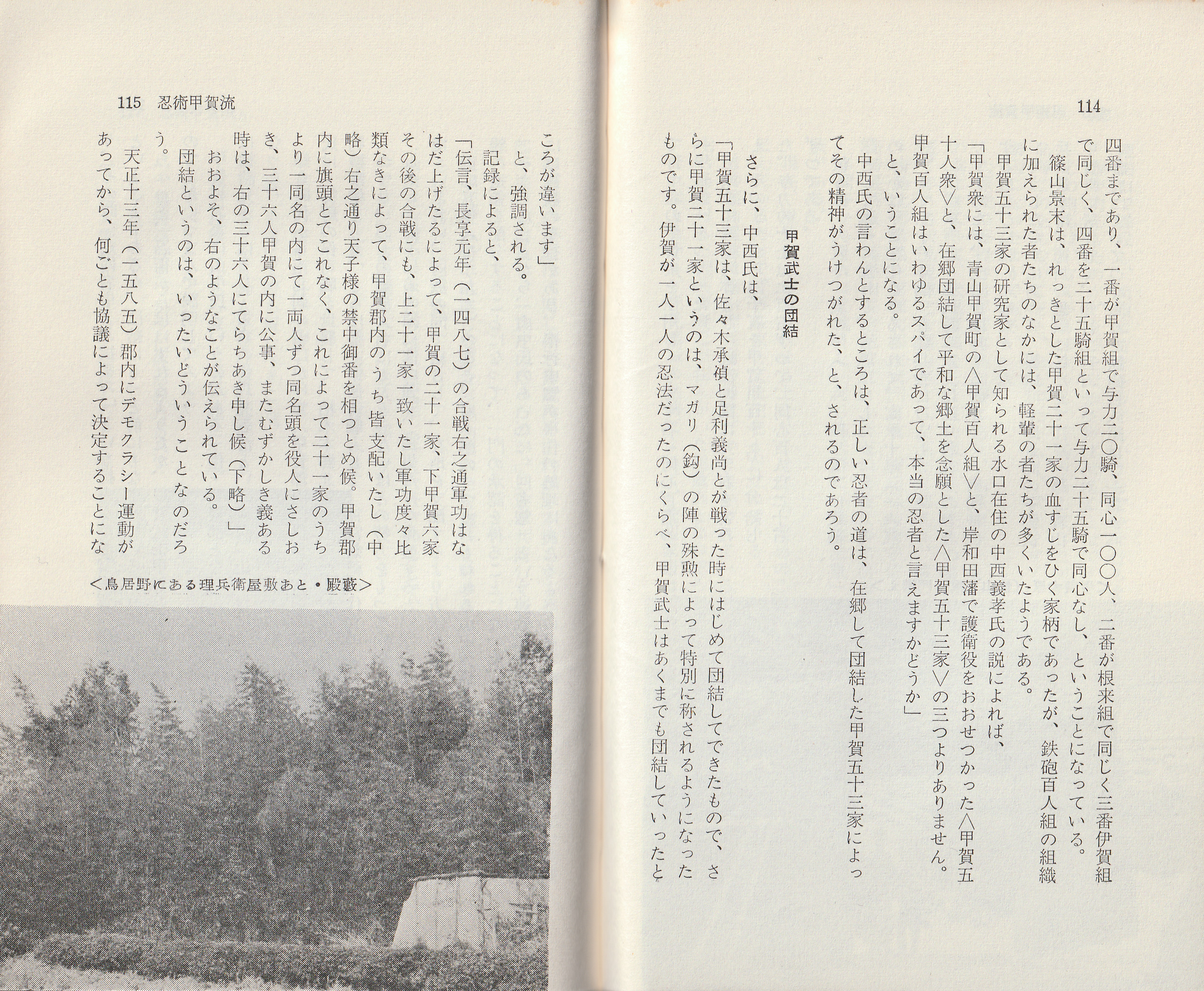
- The Wada Lineage Verification (p. 112): Koyama provides an academic “reality check” on Fujita’s heritage. He discusses the Wada Mansion (Wada-Yashiki) ruins in Koka, identifying the Wada Iga-no-kami lineage as the historical foundation for the Kōga-ryū Wada-ha that Fujita headed.
- The Elite Twenty-One (p. 114): The book explicitly lists the Wada family as part of the elite “Inner Circle” of the Koka alliance, proving Fujita was the heir to a high-ranking military governing body, not just a martial arts tradition.
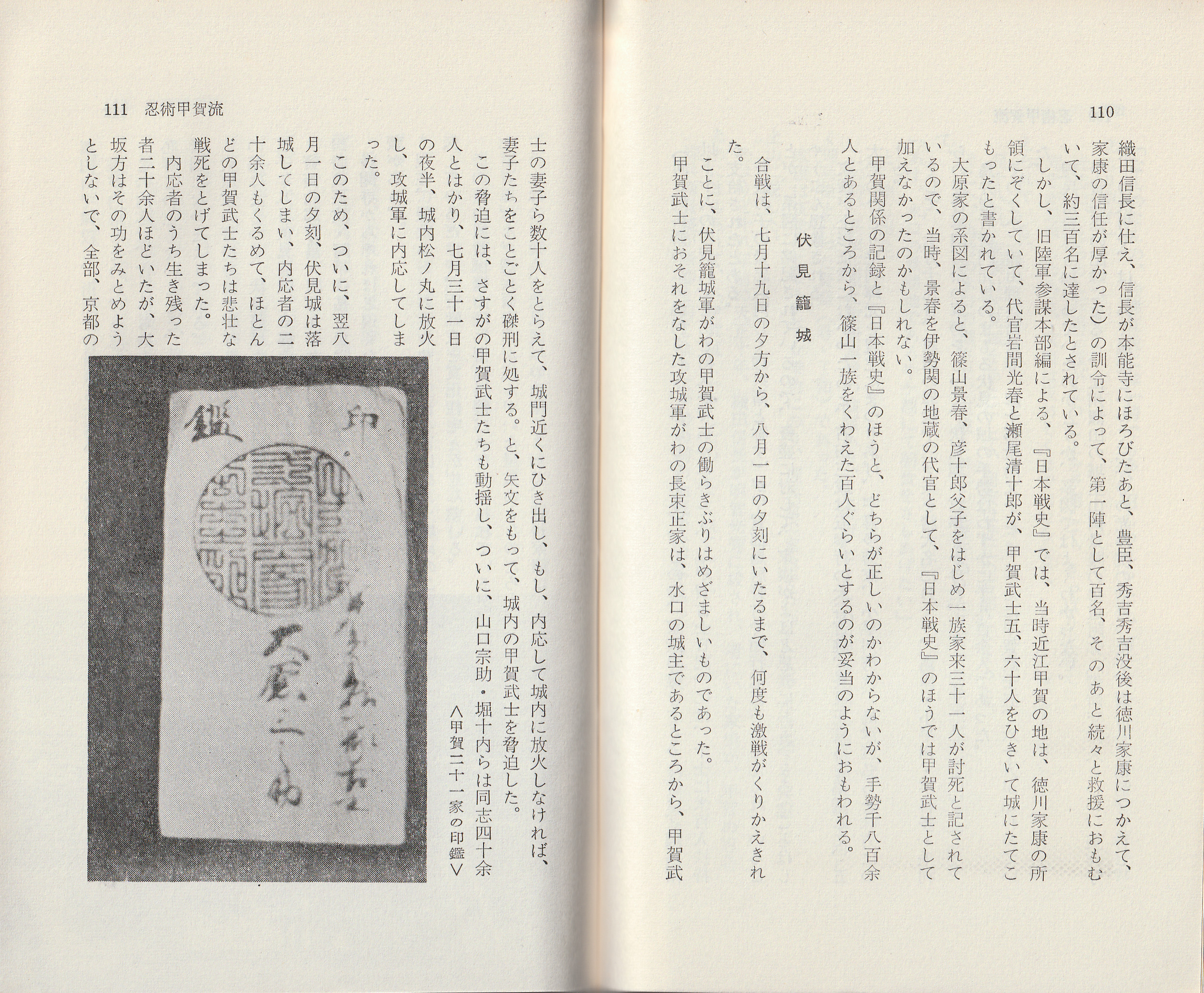
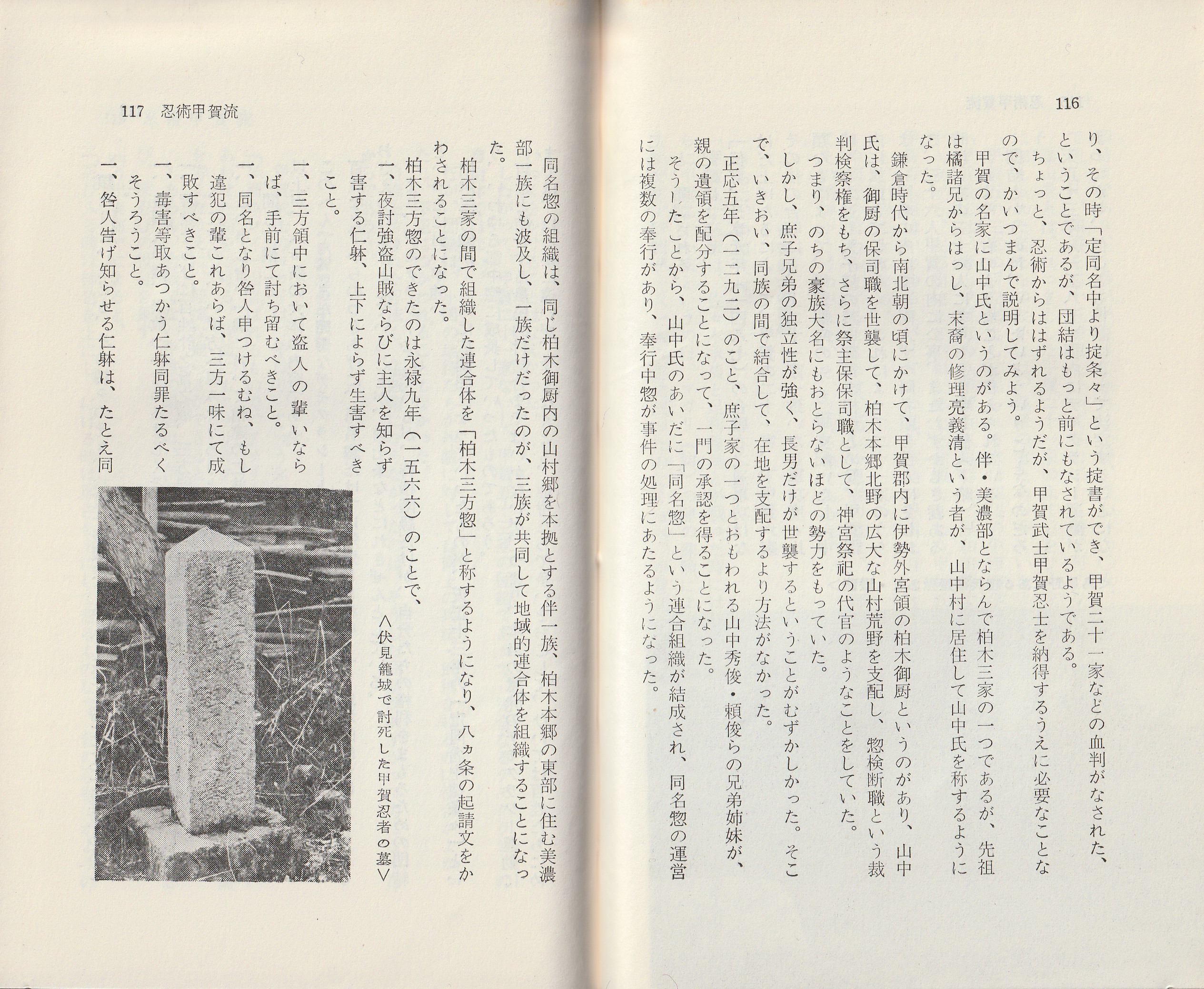
- The Shogunal “Blood Oath” (pp. 111, 117): Features transcriptions and photos of the Kishōmon (Blood Oaths). These documents prove that Fujita’s ancestors were formally employed as Shogunal Dōshin (security/police), grounding his personal history in the recorded administrative history of the Tokugawa Shogunate.
- The Memorial Tribute (p. 210): In the afterword, Koyama provides a respectful tribute to Fujita, acknowledging him as the “bridge” between ancient feudal Japan and modern scholarship.
The Author: Koyama Ryūtarō (小山龍太郎)
Koyama was a prolific researcher known for his “detective-like” approach to history. He didn’t just study scrolls; he studied people and places. He was a close contemporary of both Fujita Seiko and Okuse Heishichirō, often acting as the bridge that brought their high-level academic findings to the general public in an accessible “pocket-book” format.
Rare and Unusual Facts
Lost Postwar Maps: Pages 94 and 95 feature a specialized, hand-drawn geographical overlay charting the escape routes used by Iga refugees following Oda Nobunaga’s brutal invasion. Because these maps include landmarks and private estate boundaries that were leveled or cleared during urban development in the late 1970s, this 1965 layout serves as an irreplaceable historical map used by modern archaeological preservationists.
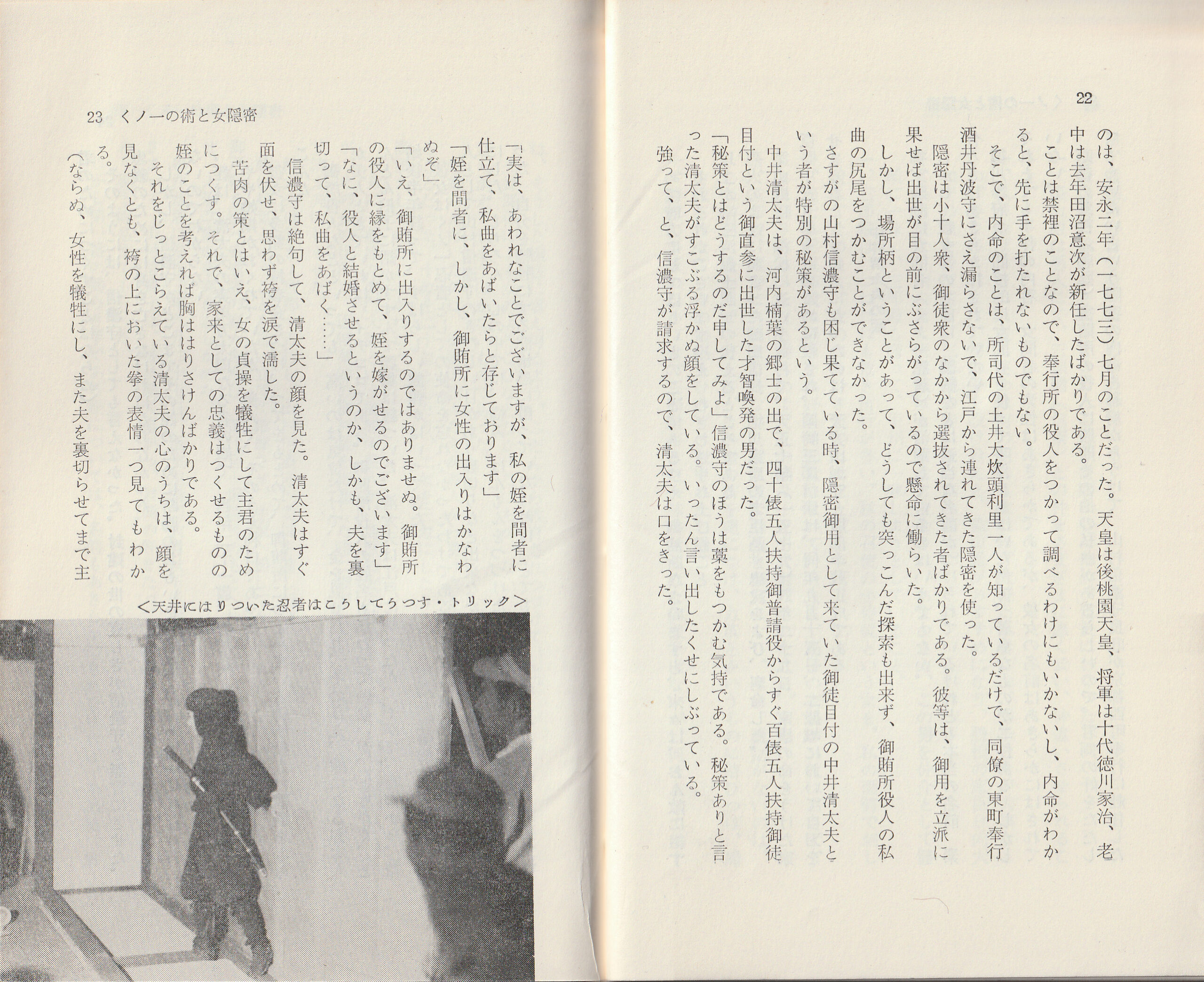
The “Trick” Photography (p. 23): In a rare move for a 1960s book, Koyama includes “behind-the-scenes” photos to expose cinematic tricks. He shows how the “ceiling-clinging ninja” was a theatrical illusion, reinforcing Fujita’s message that real Ninjutsu was based on physics and psychology, not magic.
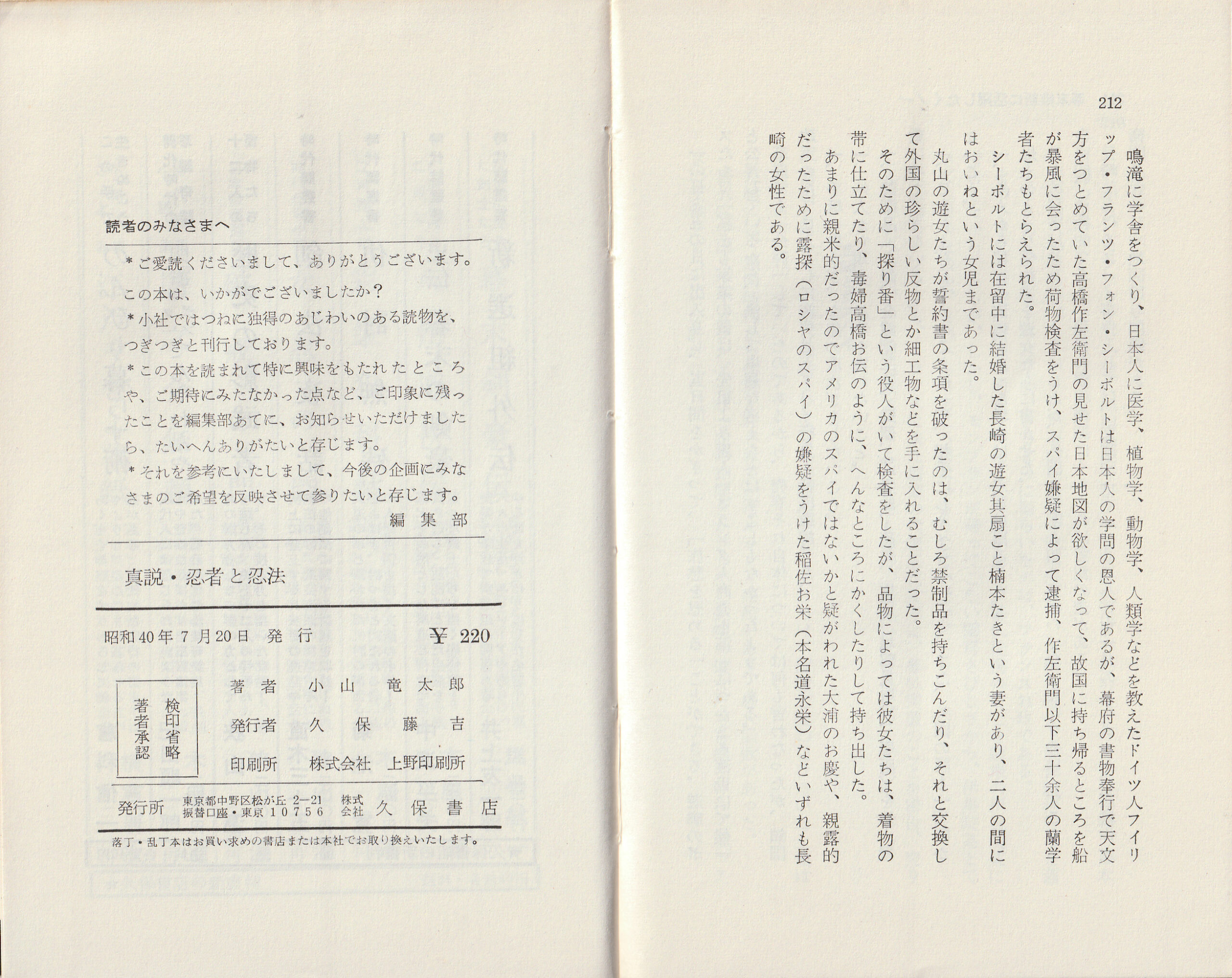
The “Siebold” Spy Theory: Koyama includes a rare analysis of the 1828 Siebold Incident, arguing that it was the first “modern” espionage case in Japan. He uses it to show how traditional Koka/Iga skills were repurposed for international intelligence long before WWII.
The “Kunoichi” Specialist: Koyama was one of the first researchers to treat female agents (Kunoichi) as serious political and military figures rather than romanticized characters, using his access to private temple records to find their actual names and missions.
Physical Artifact as Proof: Unlike earlier books that relied on illustrations, this 1965 edition uses archaeological photography of earthen walls and foundations to prove that the “Ninja Houses” were actually fortified military manors.
The “Missing Publisher” Anomaly: While the copyright page attributes distribution properties to Kubo Fujikichi, the actual logo printed on the cover layout spine reads “Hoshi Shoten” (保書店). This reveals a chaotic post-war distribution split where regional Mie prints had to be rushed through local countryside book agencies to avoid being blocked or heavily delayed by the major commercial print syndicates in Tokyo.
Edition details
- Published:
- 07/20/1965
- Publisher:
- Kubo Fujikichi
- Edition:
-
- • Publishing Line: Part of Koyama Ryūtarō's famous "Shinsetsu" (True Story) investigative book series.
- • Release Configuration: First Edition, First Printing | Release Date: July 20, 1965 (Shōwa 40)
- • Production Framework: Printed locally by the regional Ueno Printing Office (株式会社 上野印刷所) in Iga-Ueno for Kubo Fujikichi / Hoshi Shoten (保書店).
- • Historical List Price: ¥220 Yen
- Condition:
- Good
- Dust jacket:
- Yes