昭和天覧試合 & 武道寶鑑
Showa Tenran Shiai & Budo Hokan
- Author:
- Dai-Nippon Yubenkai Kodansha (嘉納治五郎・中山博道)
- Category:
- Martial Arts
- Collection:
- Robert C. Gruzanski Collection
Description
Detailed Breakdown of the Two Volumes
Volume 1: Showa Tenran Shiai (1,045 Pages)
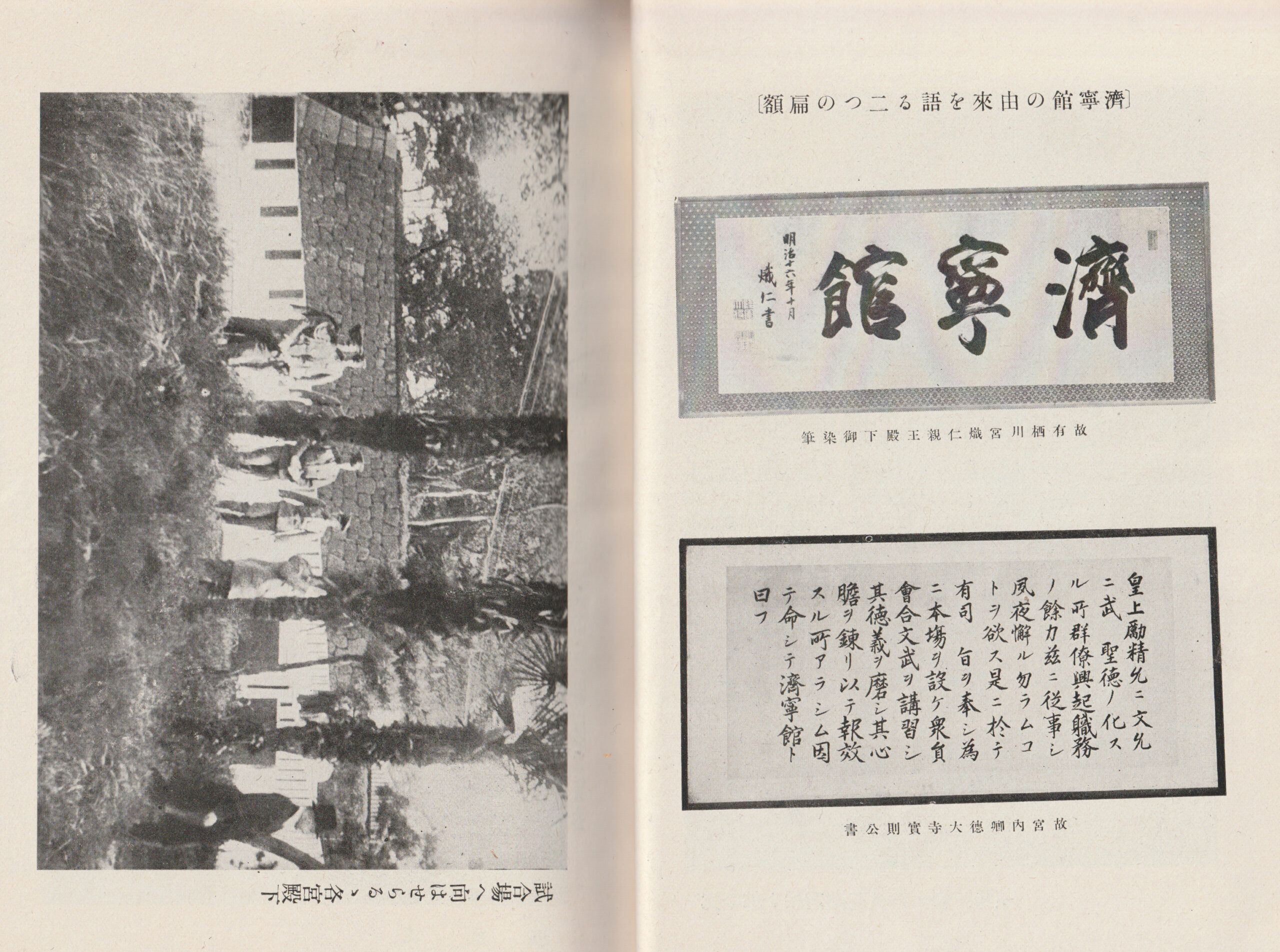
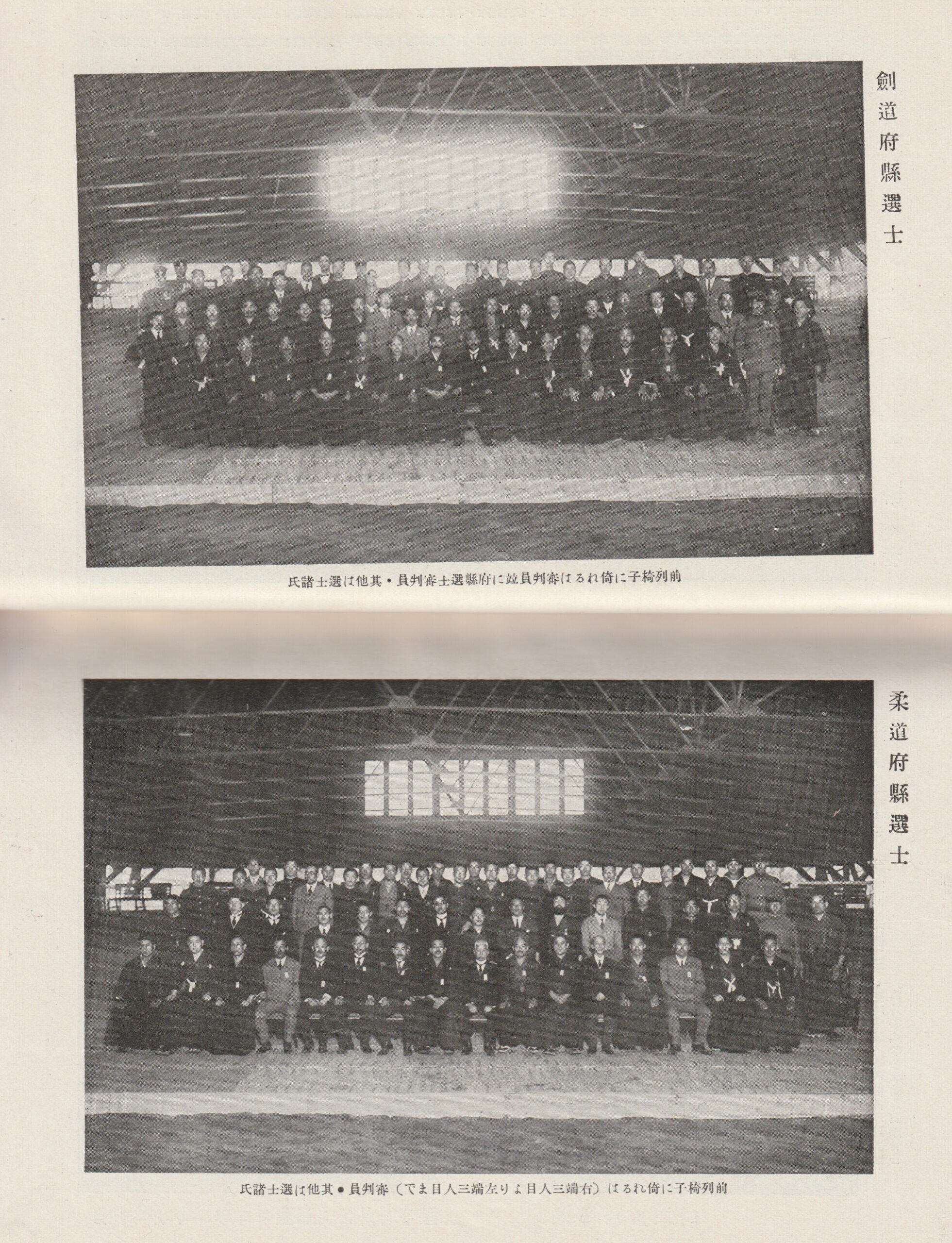
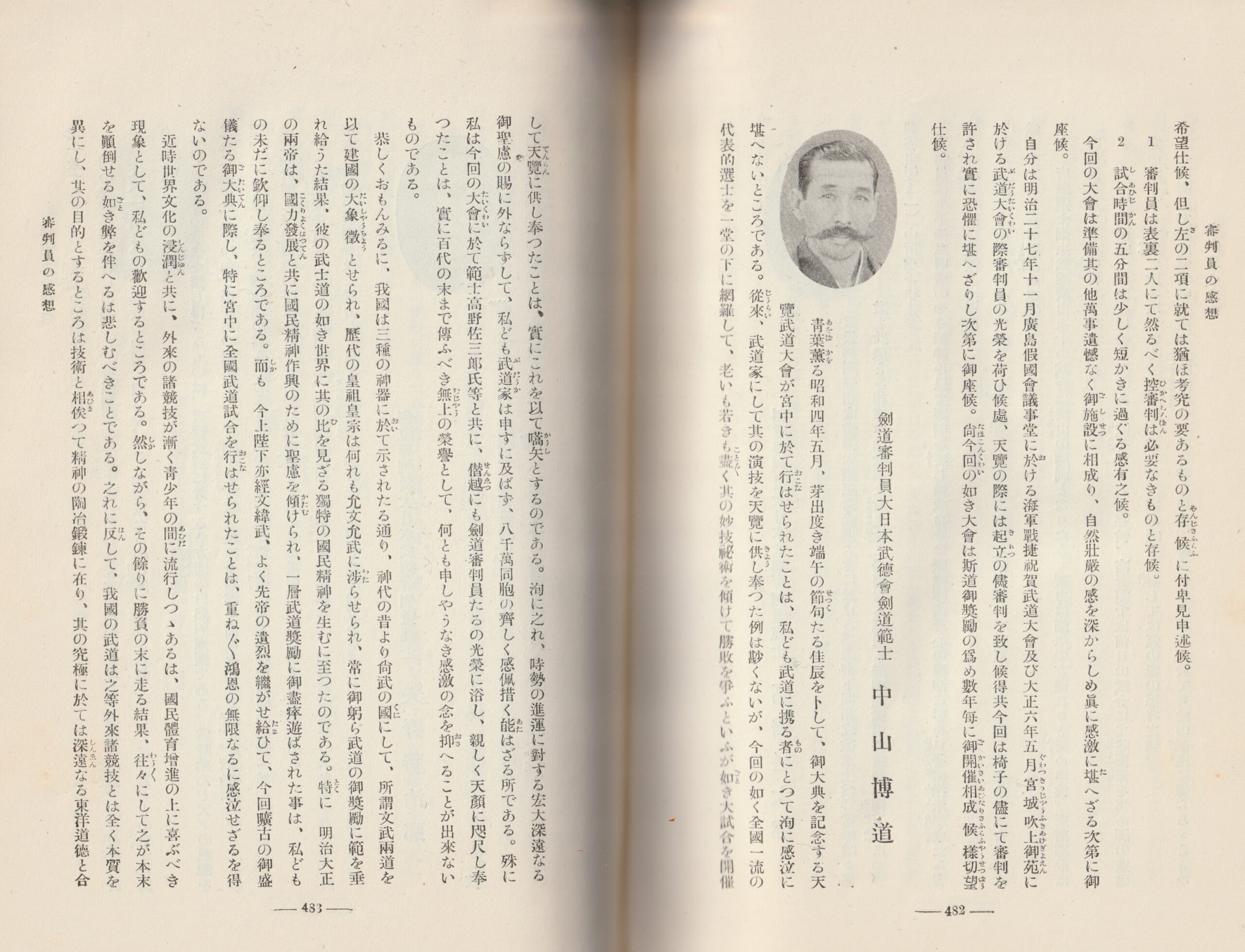
- Core Contents: Full match data, scores, tournament brackets, and technical combat logs from the historic tournament held at the Saineikan Palace Dojo on May 4–5, 1929. Features reflective technical essays written directly by the tournament referees.
- Graphics: 16 independent glossy photo-gravure plates featuring portraits of the Emperor, attending royalty, final-round action photos, and award ceremonies.
Volume 2: Budo Hokan (494 Pages)
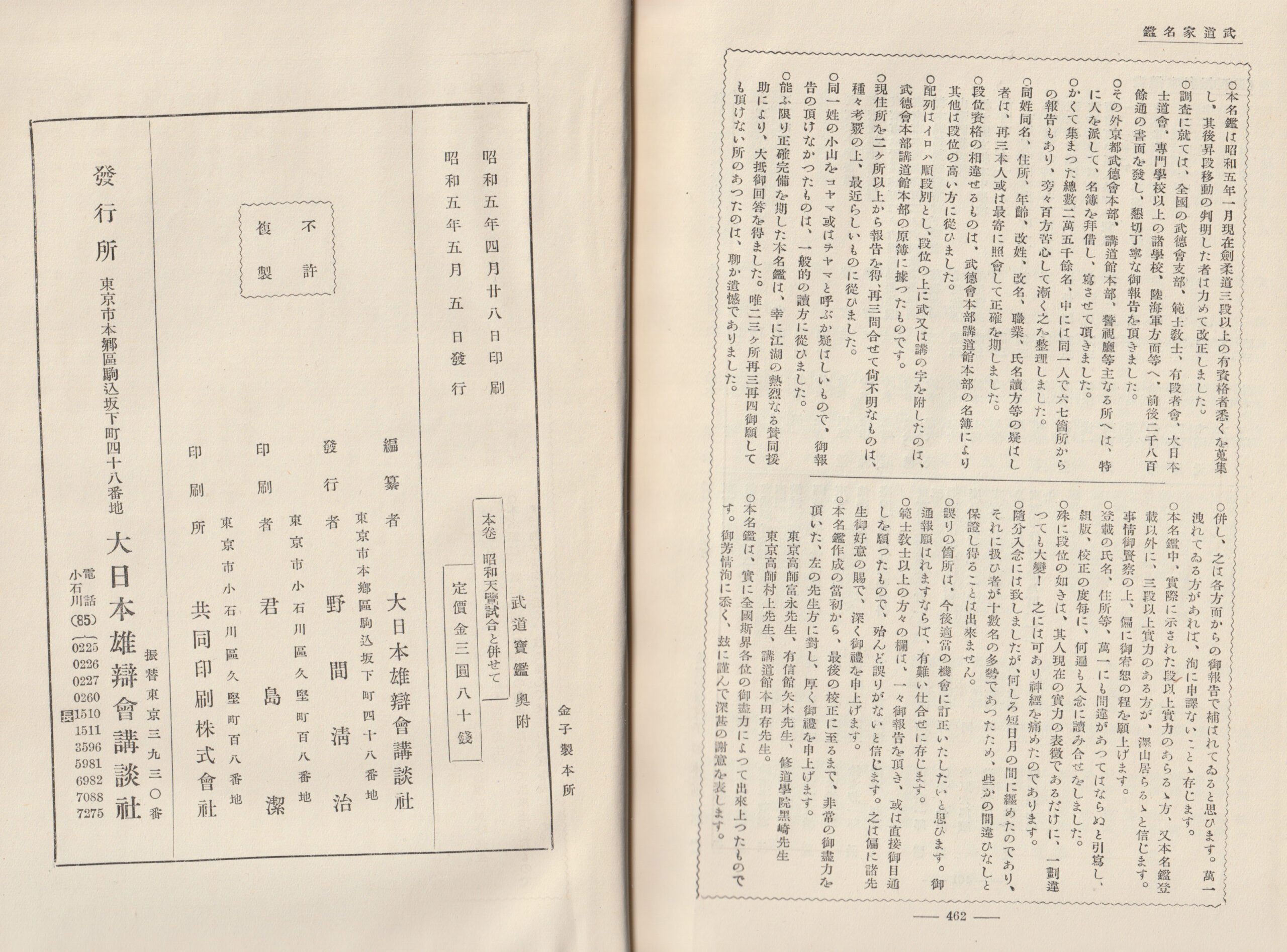
- Core Contents: A master census registry documenting every elite martial arts practitioner alive in Japan as of May 1929 holding the rank of Kyoshi (教士) or higher. Details their lineages, regional dojos, combat records, and ancestral backgrounds.
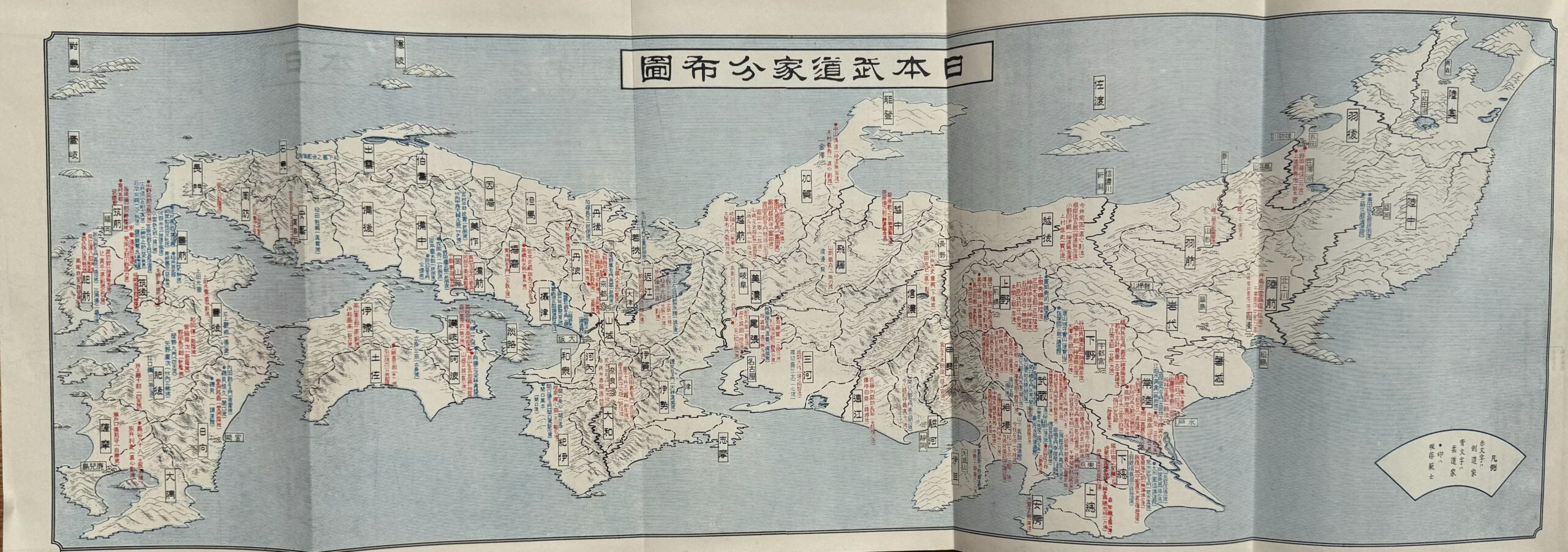
- Insert Map: 日本武道家分布圖 (Distribution Map of Japanese Martial Artists). A multi-panel folding color lithograph mapping the locations of elite masters, color-coded by rank (Black text for Hanshi, Red text for Kyoshi, and Blue text for Renshi/Monjin).
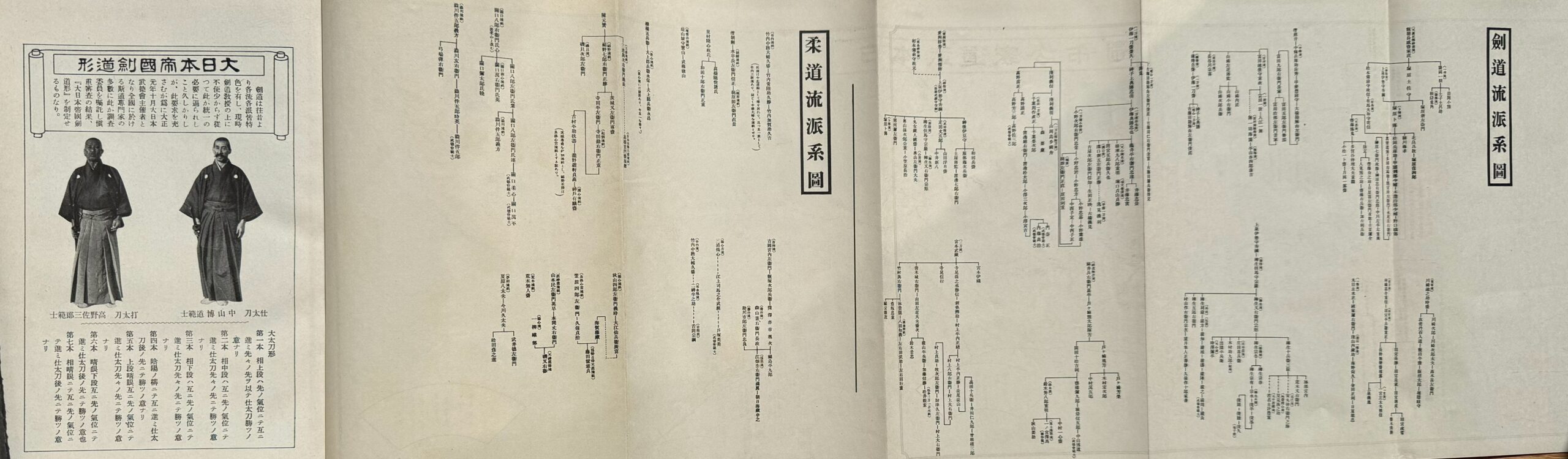
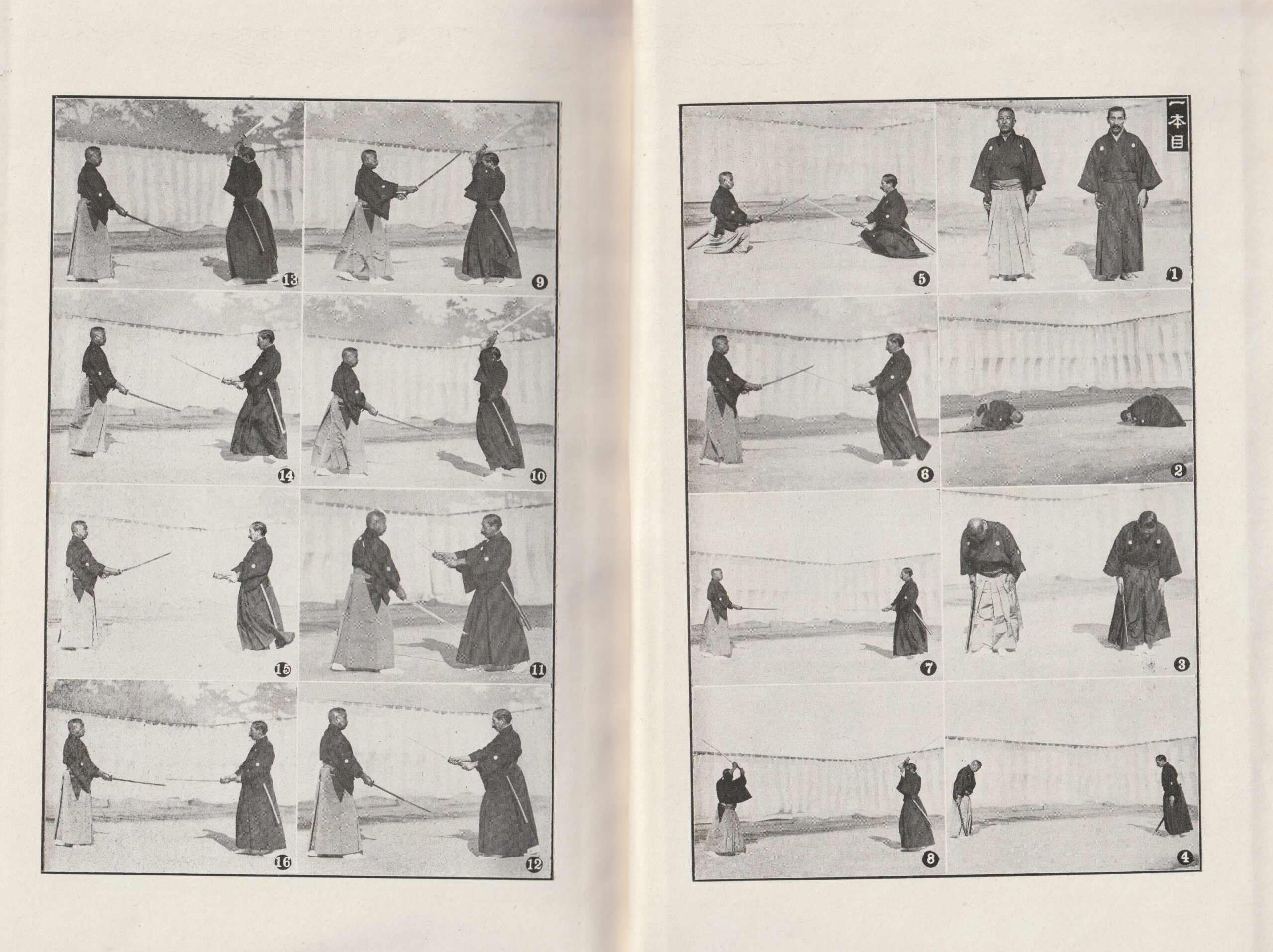
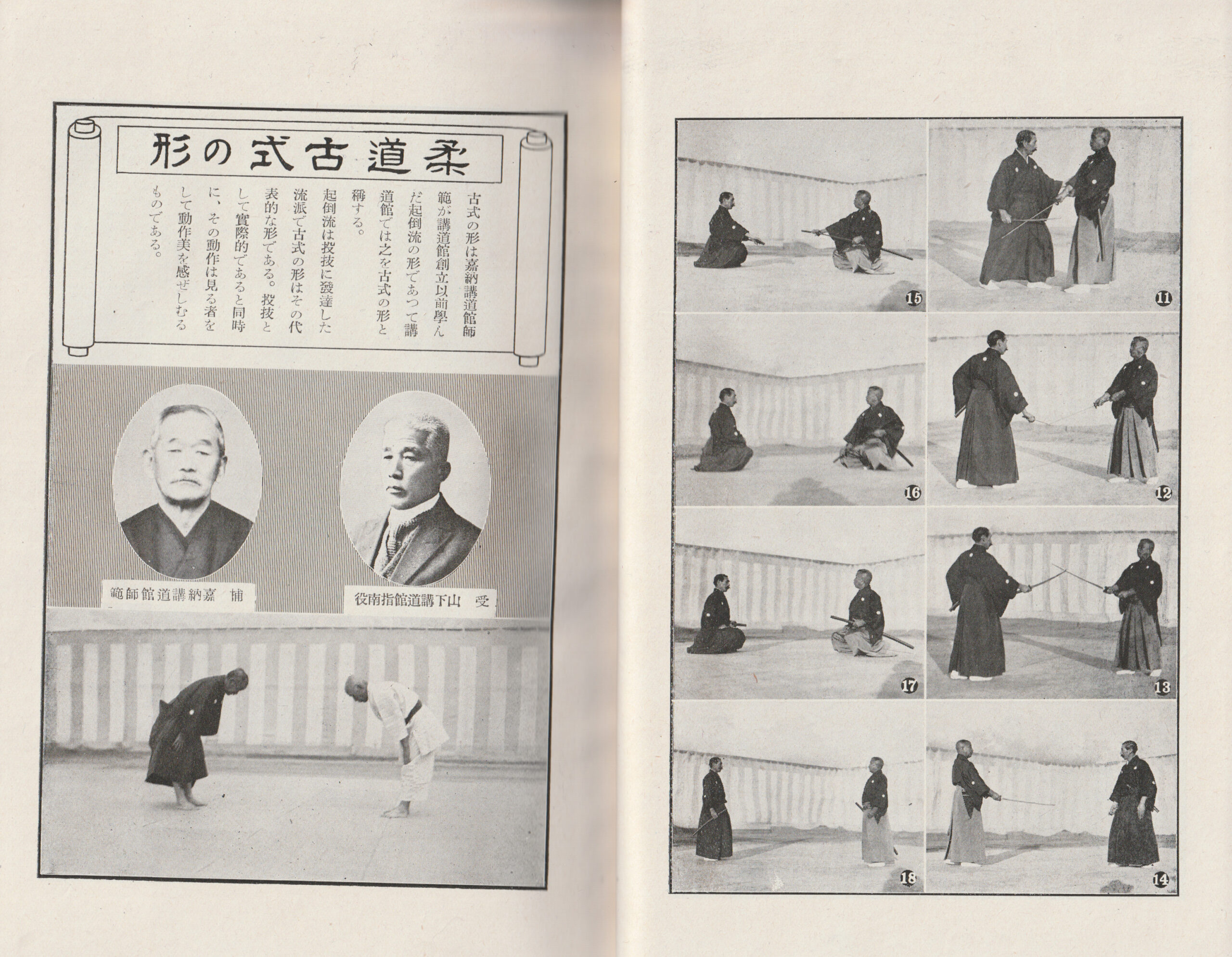
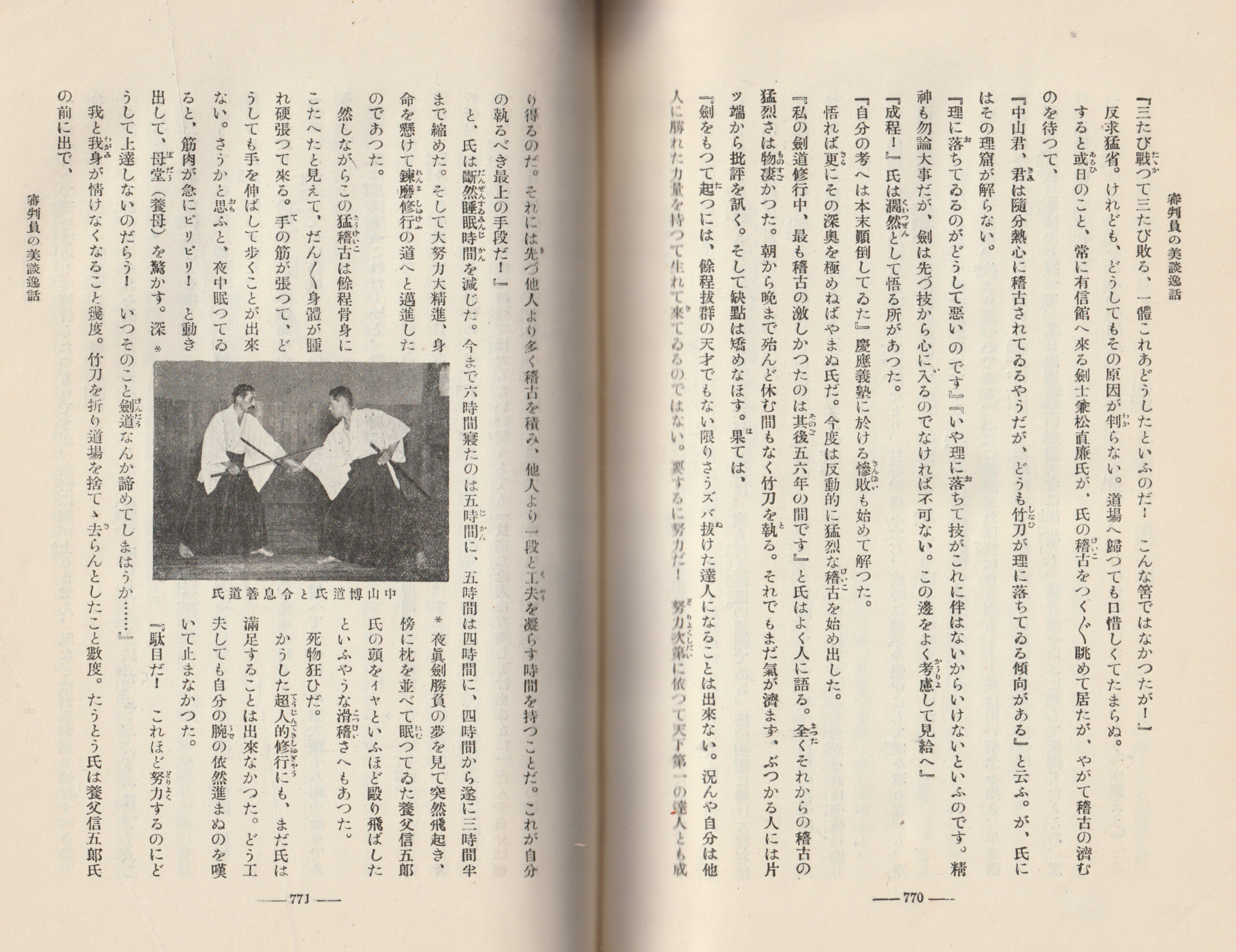
- Insert Chart: 大日本帝國劍道形 (Kendo & Martial Lineage Webs). A giant multi-panel fold-out sheet mapping the historic evolution of classical Jujutsu schools merging into Kodokan Judo, and traditional sword arts establishing modern Kendo. Features technical instructional photos modeled by grandmasters Takano Sasaburo and master Mochida’s borrowed shinai miracle. The tournament’s grand champion in the designated master category, Moriji Mochida, famously won the entire Kendo competition using a mismatched, borrowed bamboo sword. After his primary shinai splintered during initial practice bouts, he grabbed a random spare from a peer. He proceeded to win the imperial title without a single point scored against him.
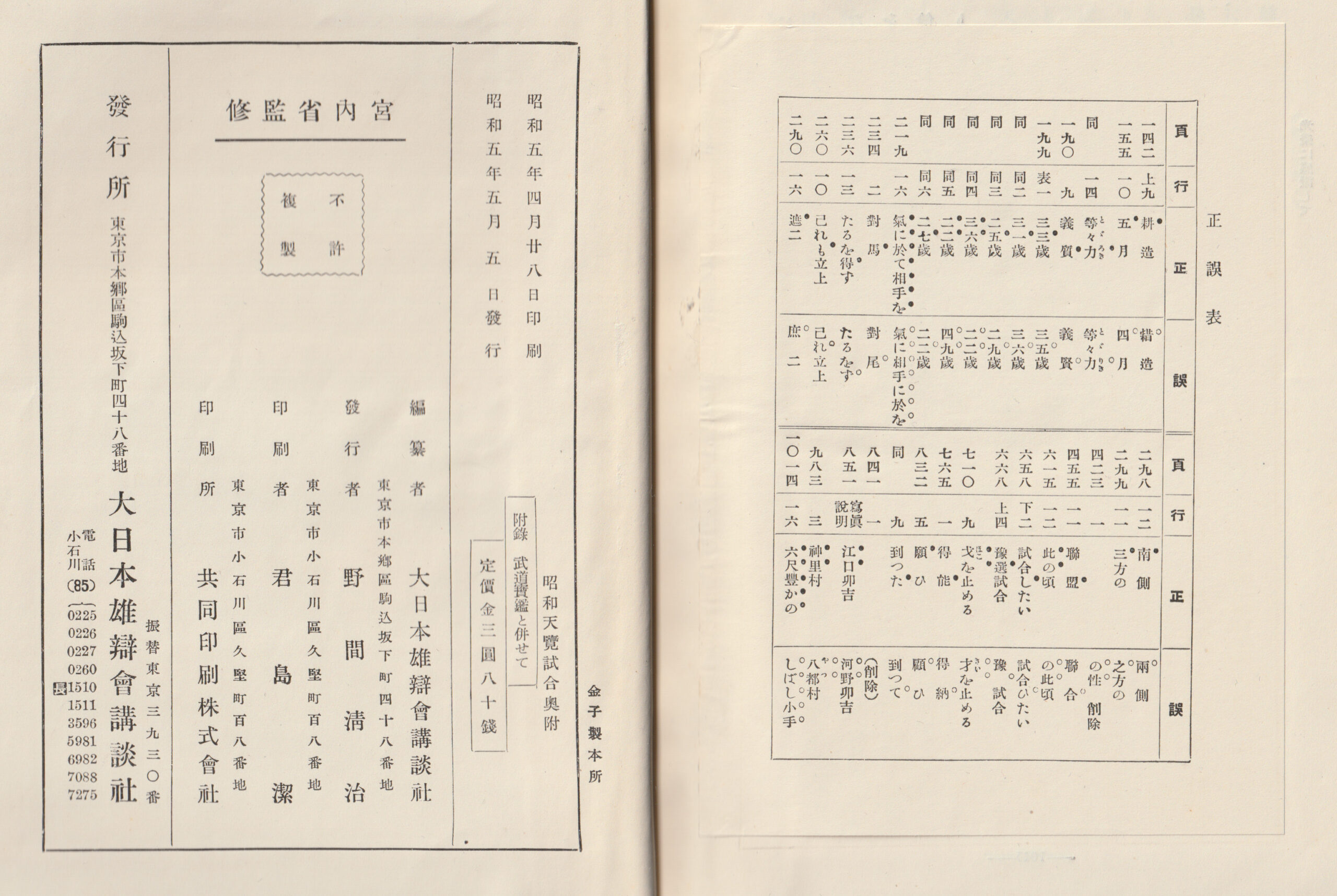
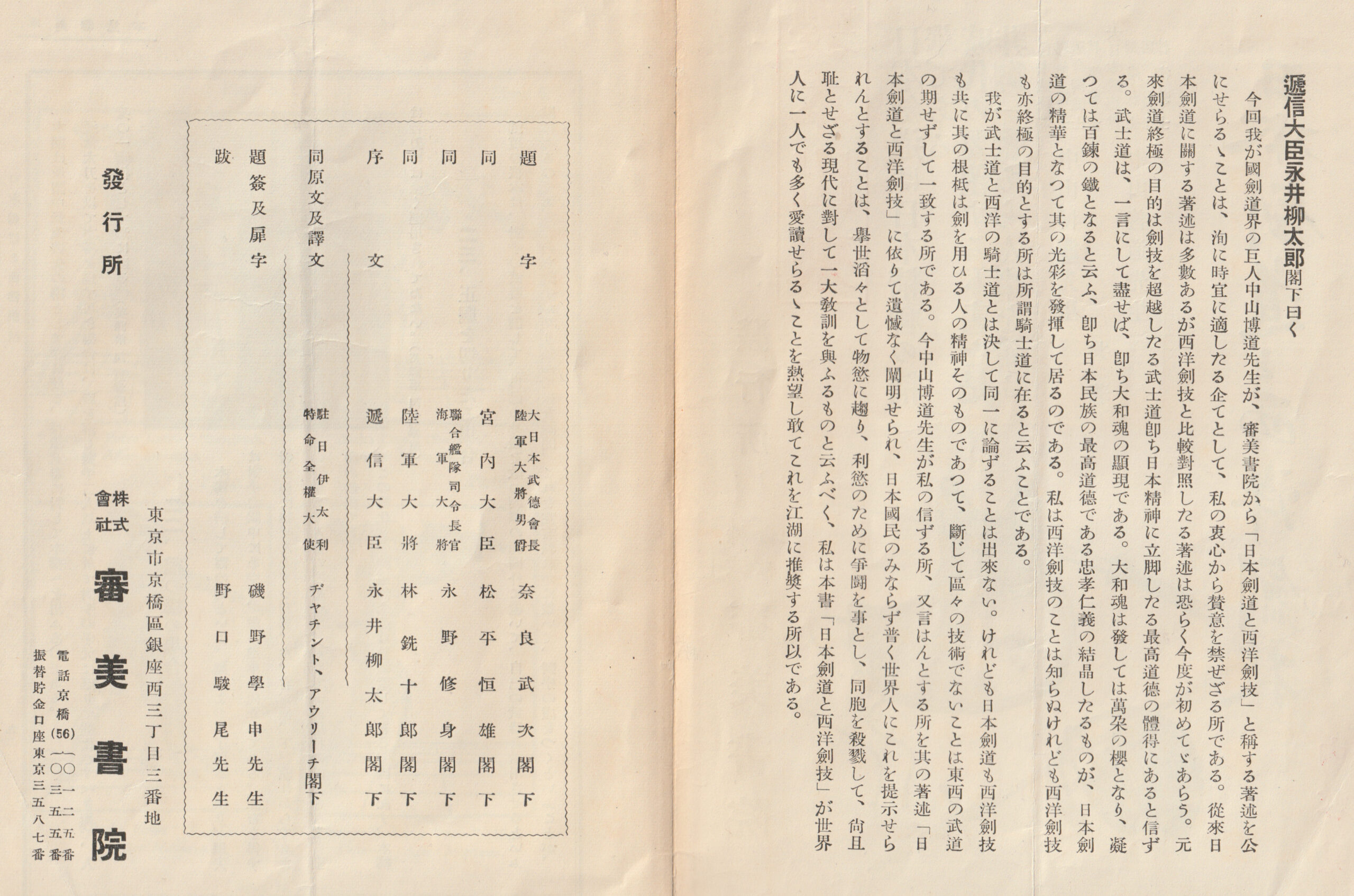
- The High-Stakes Errata Scandal: The extensive multi-page errata list (Seigo-hyo) pasted onto the inner colophon page reveals a tense editorial crisis. Because the text listed the ancestral lineages and exact current addresses of highly conservative samurai families and imperial military advisors, misprinted kanji characters were considered a severe insult. To avoid destroying the expensive print run, Kodansha’s editorial representative, Mitsuji Noji, had to delay distribution to personally inspect and paste this correction sheet into the deluxe copies.
Edition details
- Published:
- 05/05/1930
- Publisher:
- Dai-Nippon Yubenkai Kodansha
- Edition:
-
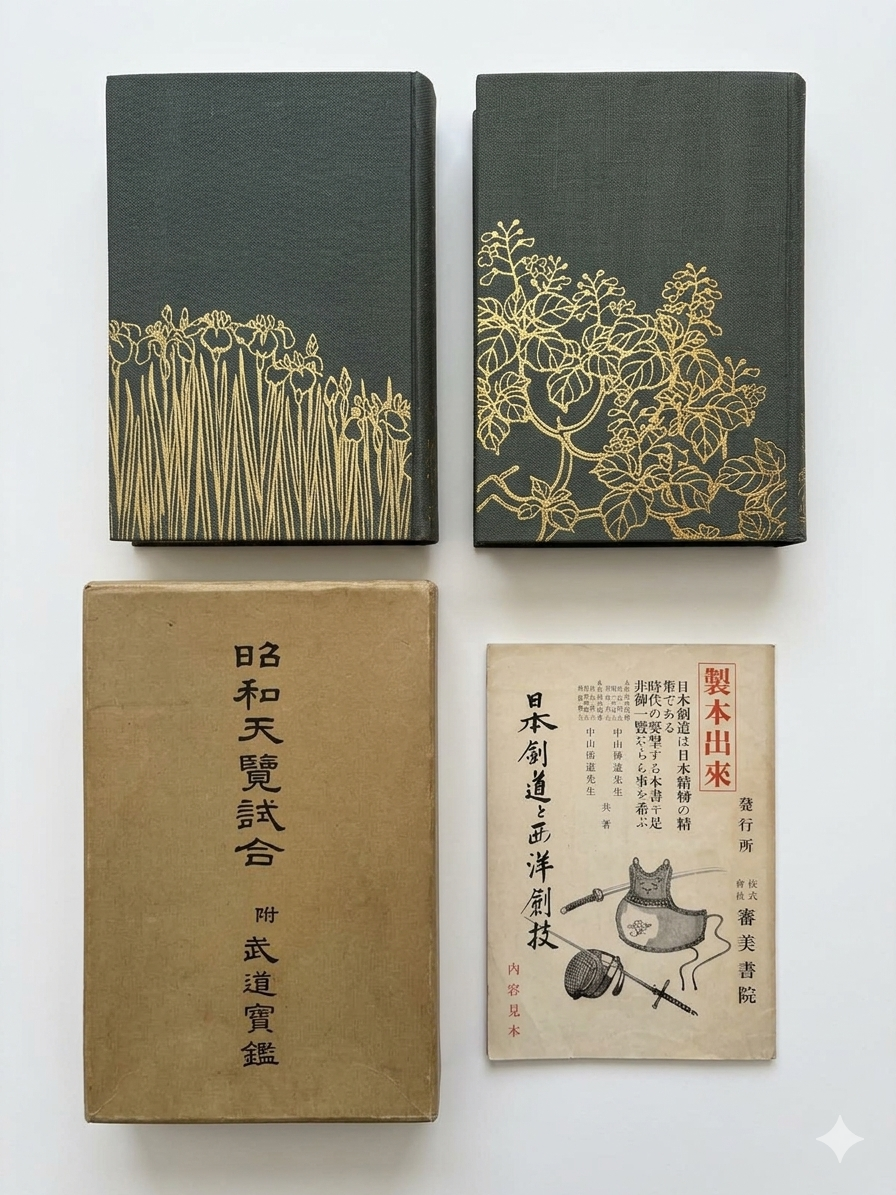
- • Housing: Enclosed in a heavy, tan cardboard protective slipcase featuring structurally reinforced cloth joints.
- • Bindings: Bound in premium forest-green silk bookcloth featuring full-bleed botanical gilt-work across the covers.
- • Edge Finish: Top edges finished in heavy gold leaf gilding (Tenkin / 天金), a treatment reserved for Imperial palace archives.
- • Total Scope: Approximately 1,539 pages across both books, utilizing premium photo-gravure insert plates and heavy, permanent charcoal ink formulated by Kyodo Printing to resist high dojo humidity.
- • Volume 1 Artwork: Stamped gold Irises (Ayame), the traditional samurai symbol of martial spirit.
- • Volume 2 Artwork: Stamped gold Paulownia Leaves (Kiri), the historic crest of the Japanese government.
- Condition:
- Good
- Slipcase:
- Yes