
あなたも忍者になれる
Anata mo Ninja ni Nareru
- Author:
- Nawa Yumio (名和 弓雄)
- Category:
- Ninjutsu
- Collection:
- Robert C. Gruzanski Collection
Description
An unusual and strikingly scarce artifact of post-war Japanese pop-culture, Anata mo Ninja ni Nareru (You Can Become a Ninja) is a fascinating cultural bridge where deep-rooted martial lineages collide with the hyper-modernity of mid-Showa era Tokyo.
Far from the generic, highly fictionalized ninja media that would later saturate the global market in the 1980s, this 248-page manual treats ninjutsu not as cinematic fantasy, but as a practical, rigorous form of survival science. The author skillfully reframes medieval infiltration tactics, sensory awareness, and psychological warfare as actionable self-defense mechanisms for contemporary urban citizens navigating the high-stress landscape of 1960s corporate Japan.
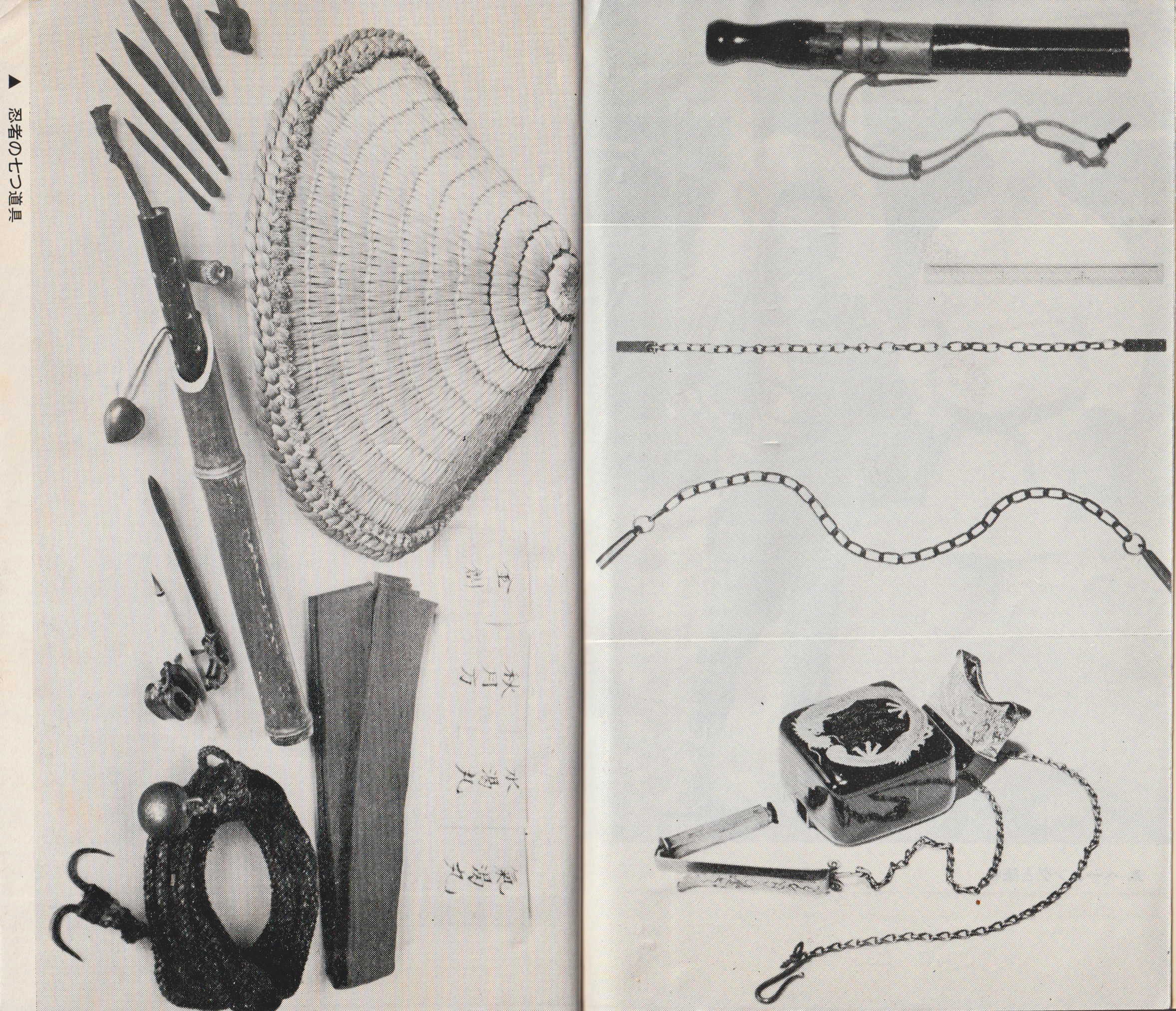
The text is divided into two distinct sections: an exhaustive 53-chapter deep-dive into historical shinobi methods, followed by a specialized 18-chapter “Modern Self-Defense Lecture” course. Topics range from classical guerrilla chemistry (including field-cooking gunpowder recipes and manufacturing landmines) to esoteric wilderness survival habits, such as estimating time from a cat’s dilated pupils (Neko no Me-dokei) and bypassing castle guard dogs (Aikenjutsu). The final third of the book focuses heavily on urban evasion, joint manipulation, and bladed weapon disarming.
Bibliographic Highlights & Curiosities
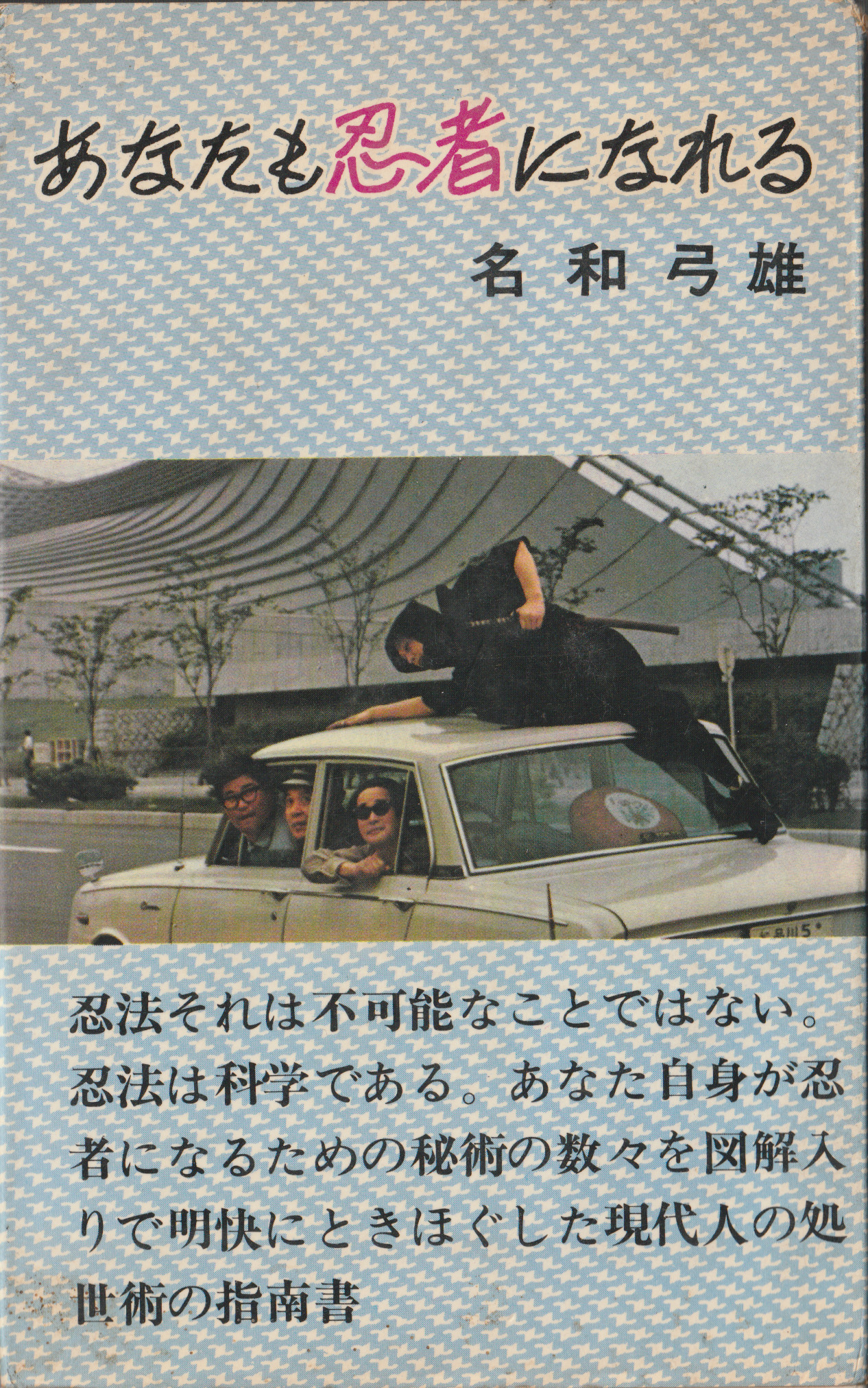
- The Staged Cover Publicity Stunt: The book’s iconic cover art captures a fully cloaked ninja in a low combat stance balanced atop a white Prince Gloria Super 6 (S41 series) sedan, parked outside Tokyo’s futuristic Yoyogi National Gymnasium. Rather than random commuters, the three “startled” faces peering out of the luxury vehicle’s windows are the book’s actual editorial production team from the publishing house Keibunkan. The driver wearing thick-rimmed glasses is the book’s lead publisher and editor, Iku Kenmoku (見目 育), who stepped into the shot for this playful publicity campaign just before the prestigious Prince Motor Company was merged into Nissan later that year.
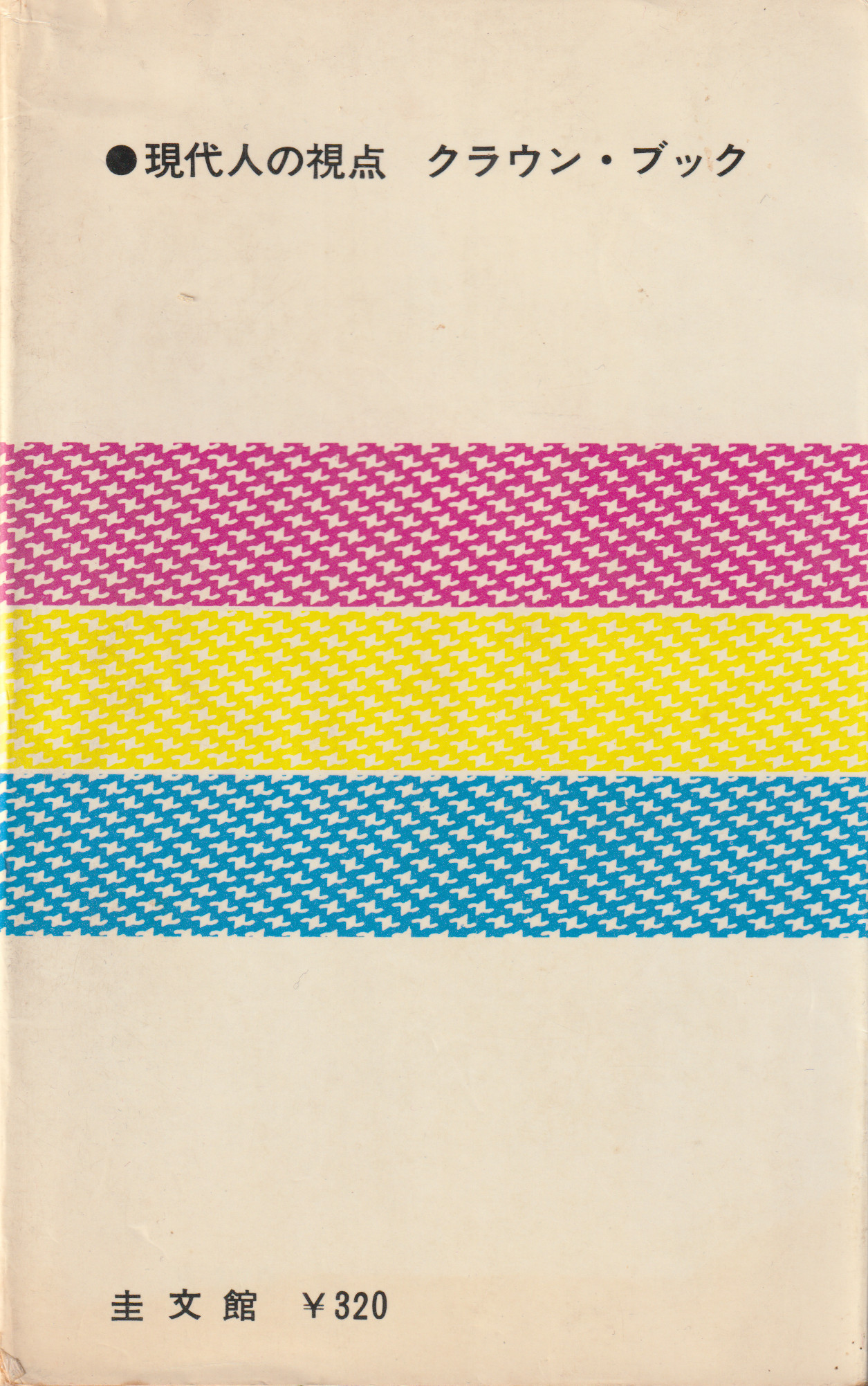
- Vintage Mid-Showa Design Elements: The back cover features a vibrant, repeating geometric zig-zag pattern in pink, yellow, and blue ink, quintessential of 1960s Japanese graphic design trends. It is topped by the series tagline: ●現代人の視点 クラウン・ブック (“Modern Person’s Perspective — Crown Book”), structurally driving home the author’s lifelong theme of adapting historical shinobi vigilance to the everyday struggles of the post-war Japanese populace.
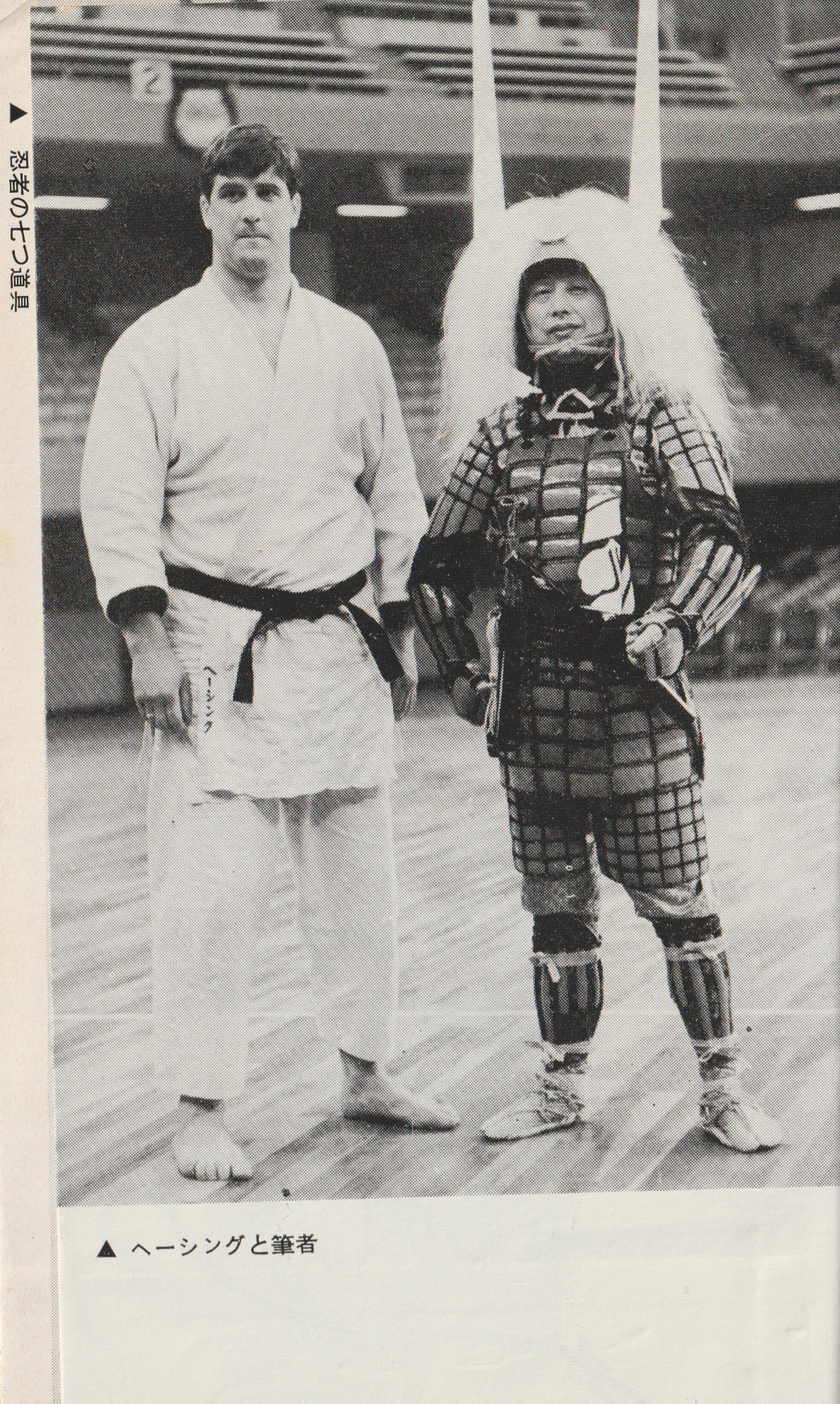
- The Historic Geesink Research Session: The opening photographic plates document an extraordinary, cross-cultural meeting between the author and Dutch Judoka Anton Geesink—the legendary giant who shattered Japan’s myth of martial invincibility by claiming the open-weight Gold Medal at the 1964 Tokyo Olympics. Eager to understand traditional Japanese combat roots (Koryu), Geesink spent time training with Nawa. The book features a rare photo from this session, for which Nawa explicitly donned restrictive, heavy samurai battlefield armor to demonstrate to Geesink how traditional armored leverage and tactical joint-striking differed from modern, sport-oriented grappling.
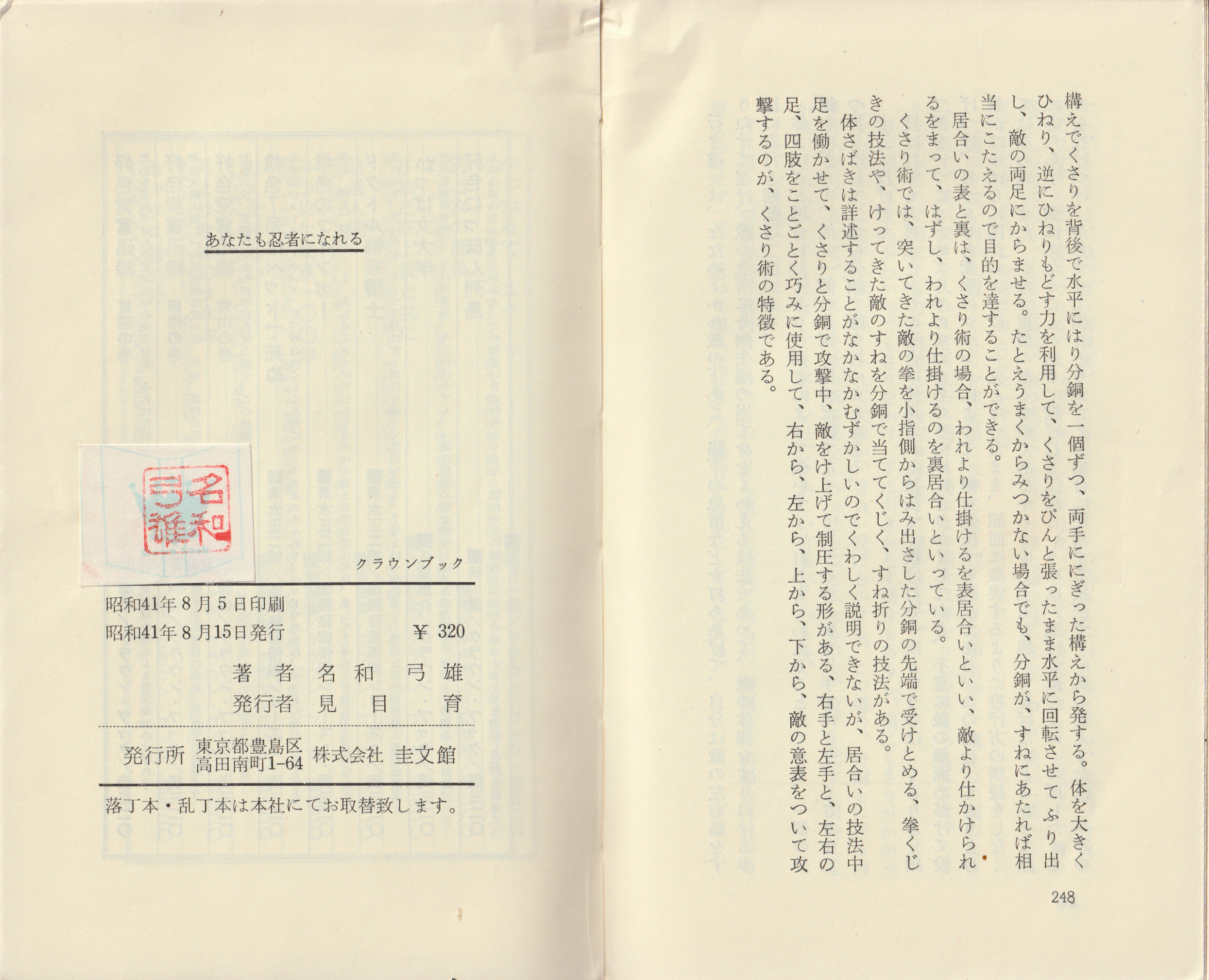
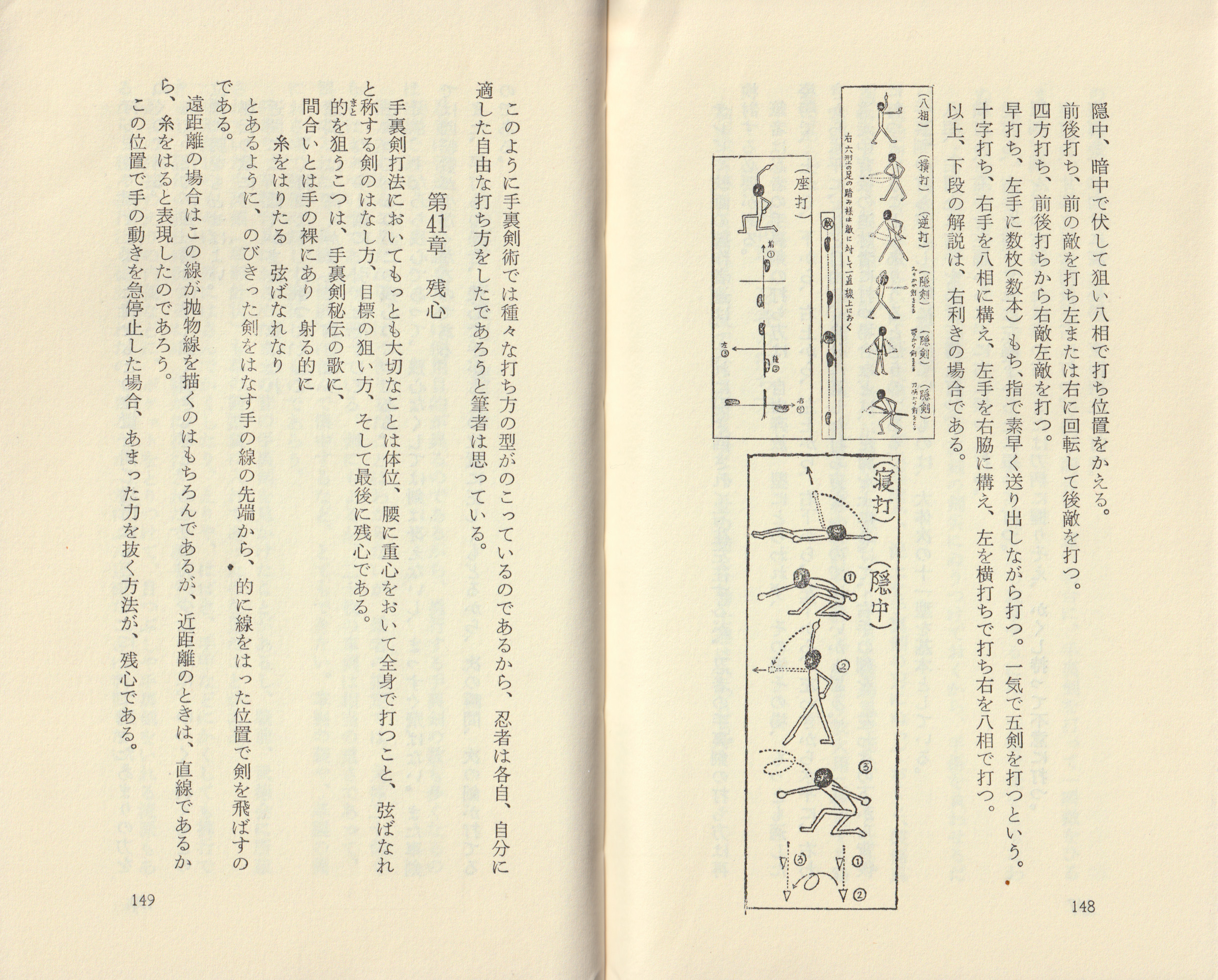
- The Hand of the 10th Grandmaster: The author, Yumio Nawa, was a prominent historical consultant for NHK television and held the legitimate lineage as the 10th Grandmaster of Masaki-ryū Manrikigusari (the art of the weighted chain). Because of his authentic heritage, every single combat posture, shurikenjutsu trajectory, and chain alignment diagram throughout the book was meticulously hand-drawn by Nawa himself to preserve exact, “martially correct” biomechanical accuracy that no commercial illustrator could replicate.
Edition details
- Published:
- 08/15/1966
- Publisher:
- Crown Books
- Edition:
-
- • Crown Book Series (クラウンブック)
- • Format: B6 Softcover with original dust jacket
- • Dimensions: 12.8 cm x 18.2 cm (Approx. 5.0" x 7.2")
- • Page Count: 248 pages of main content
- • Technical Art: Hand-drawn combat diagrams and instructional photo plates by the author
- • Lineage Status: Work by Yumio Nawa, renowned Edo-period weapon researcher and Grandmaster of Masaki-ryū Manrikigusari
- Condition:
- Good
- Dust jacket:
- Yes