
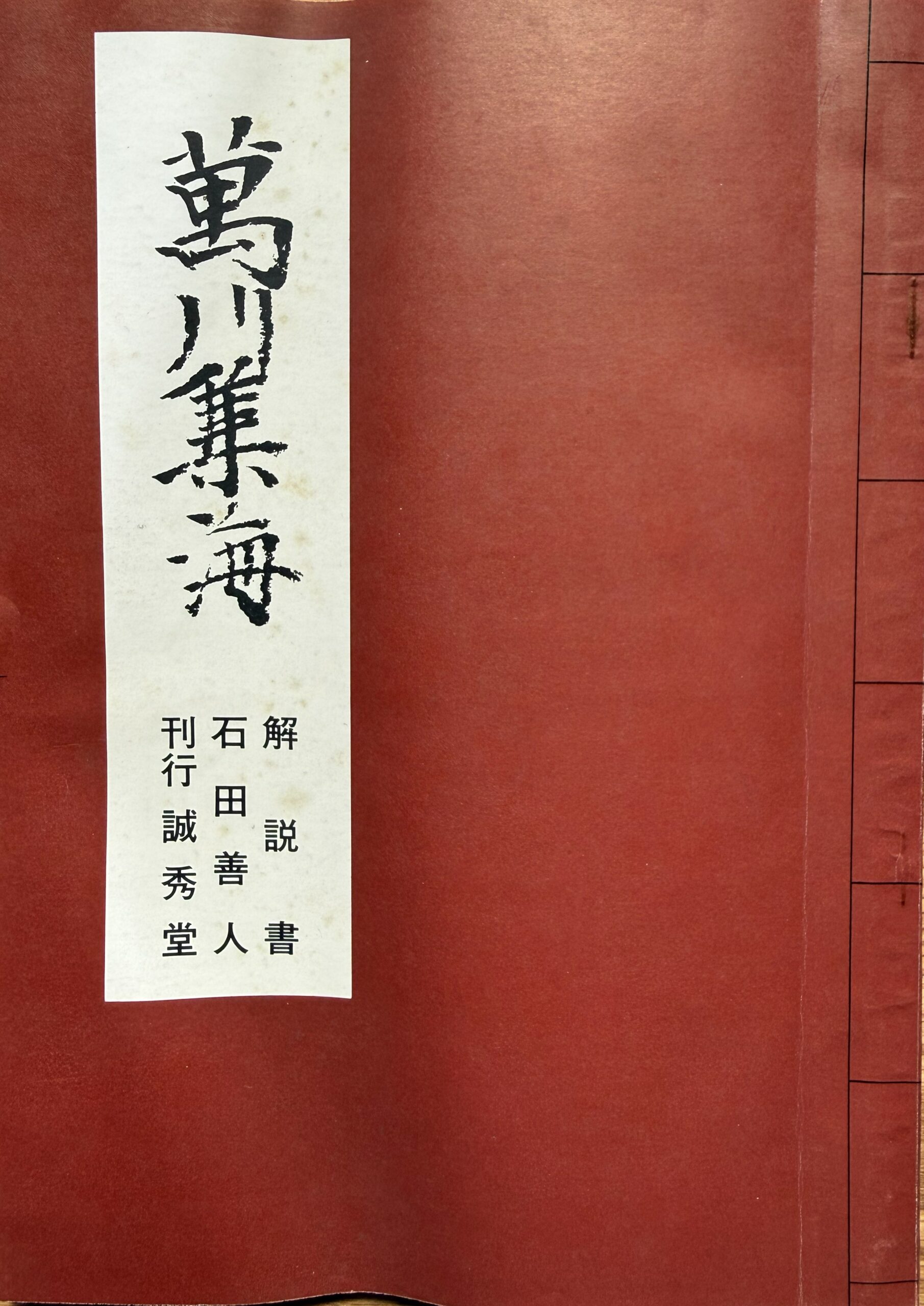
萬川集海
Bansenshukai
- Author:
- Fujibayashi Yasutake (藤林保武)
- Category:
- Ninjutsu
- Collection:
- Robert C. Gruzanski Collection
Description
1975 Seishūdō Bansenshūkai (萬川集海)
The Definitive “Katsui Manuscript” Facsimile Set
This is a museum-grade, archival reproduction of the world’s most famous ninjutsu manual. Published in 1975 (Showa 50) by Seishūdō, this edition was a landmark effort to preserve the authentic history of the Iga and Kōka regions.
Core Bansenshukai Edition Details
- Main Title: Bansenshūkai (萬川集海) – “Ten Thousand Rivers Meeting in the Sea.”
- Original Author: Fujibayashi Yasutake (1676).
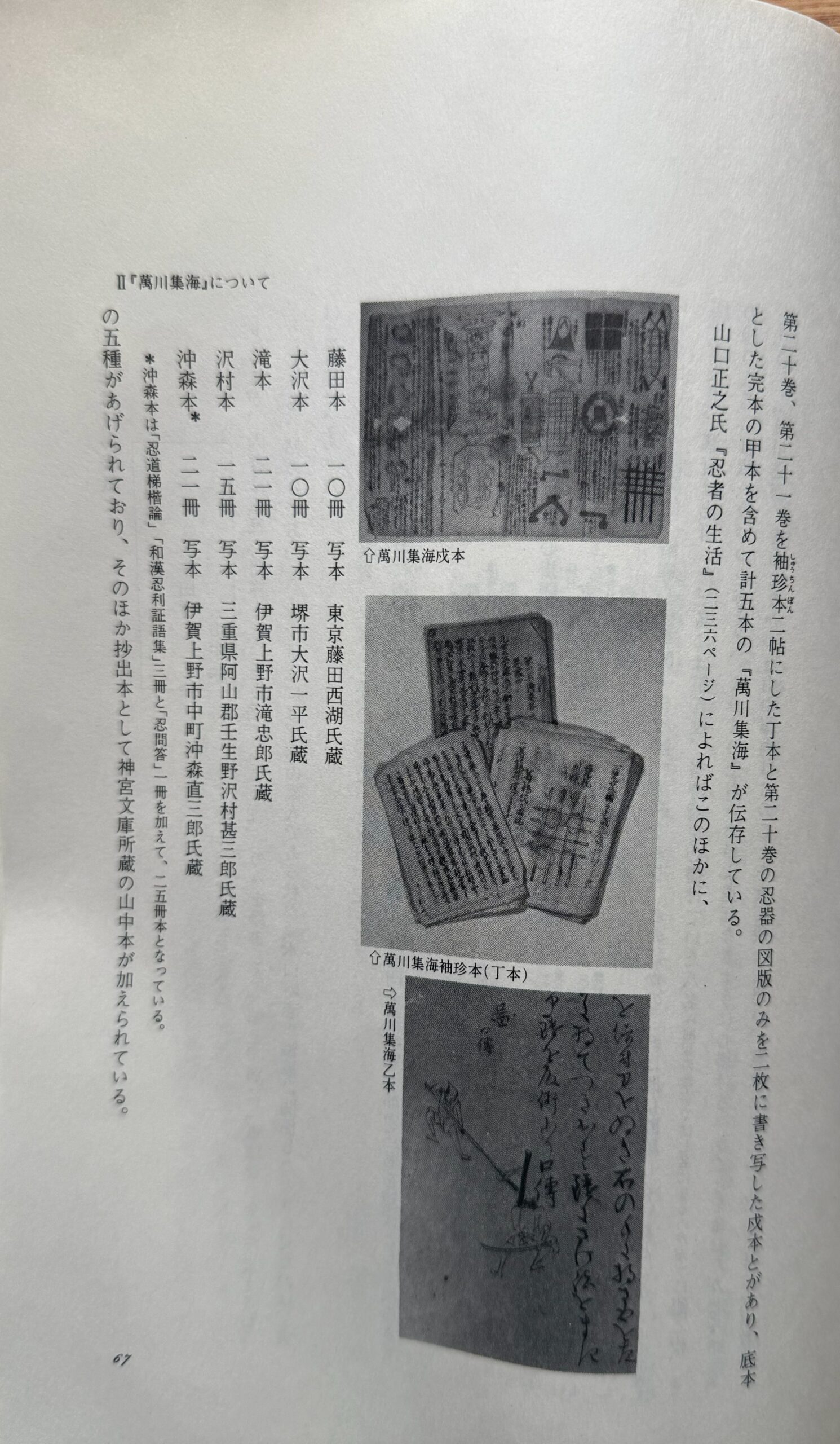
- Edition Type: Gensho Fukkokuban (原書復刻版) – A full-scale, high-fidelity reproduction of the Katsui Keiichi family manuscript.
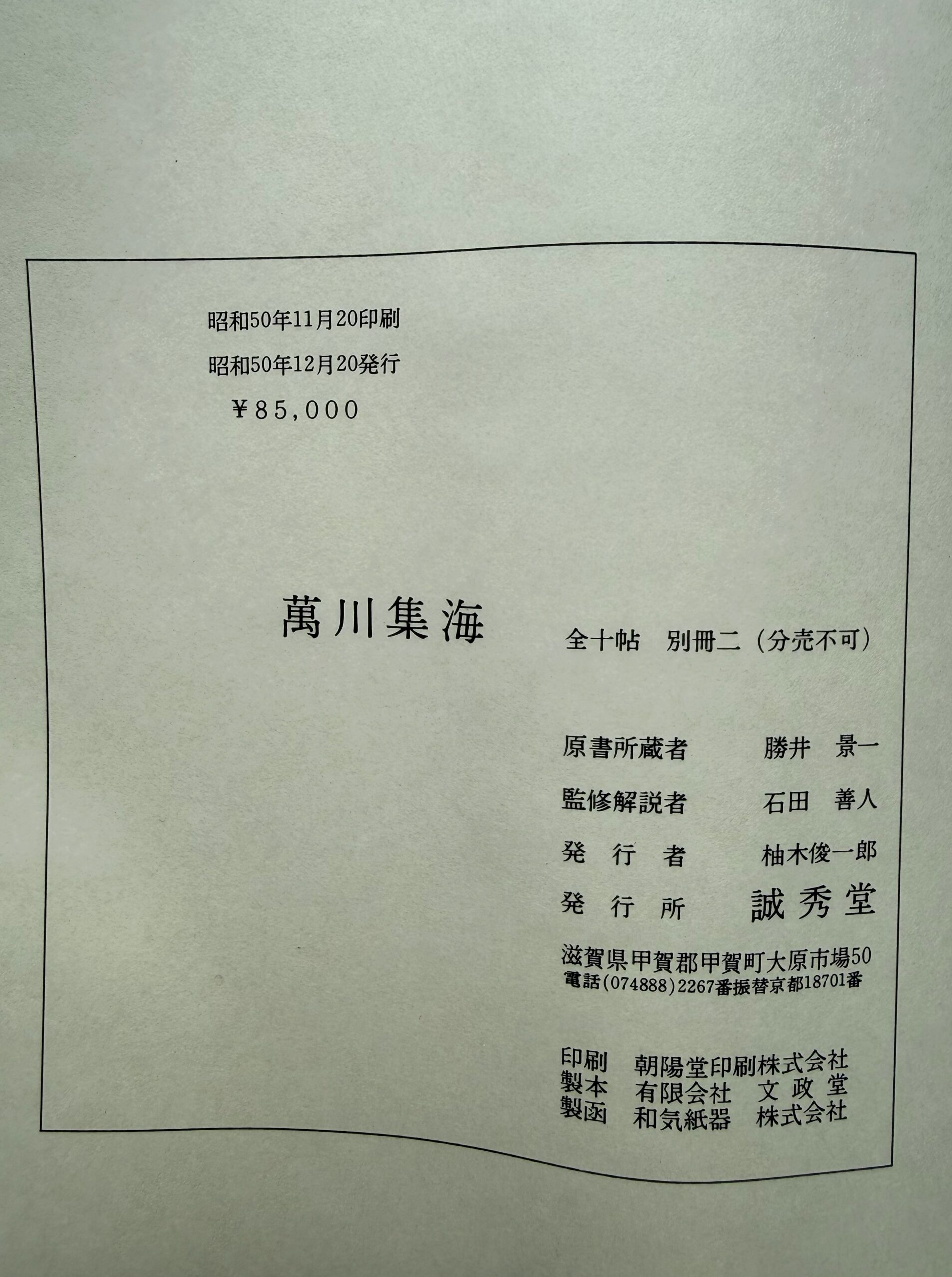
- Publication Date: Issued December 20, 1975.
- Original Price: ¥85,000 (An immense premium in 1975, signaling a very small, specialist print run for scholars and high-level collectors).
- Publisher: Seishūdō (誠秀堂), based in Kōka-chō, Shiga—the actual ancestral heartland of the Kōka ninja.
Physical Set Composition
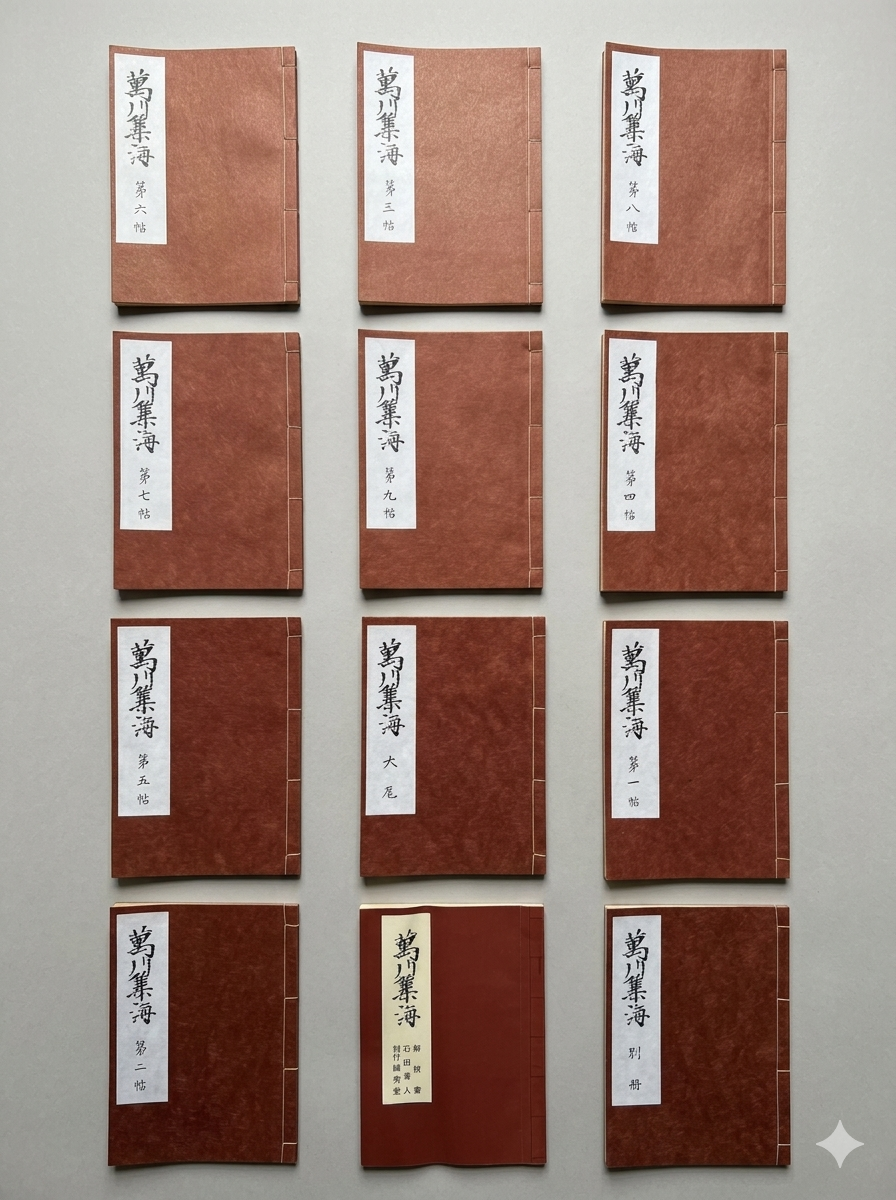
This complete collection is published as a comprehensive 12-volume boxed set (complete set sale only / Bun-uri Fuka)
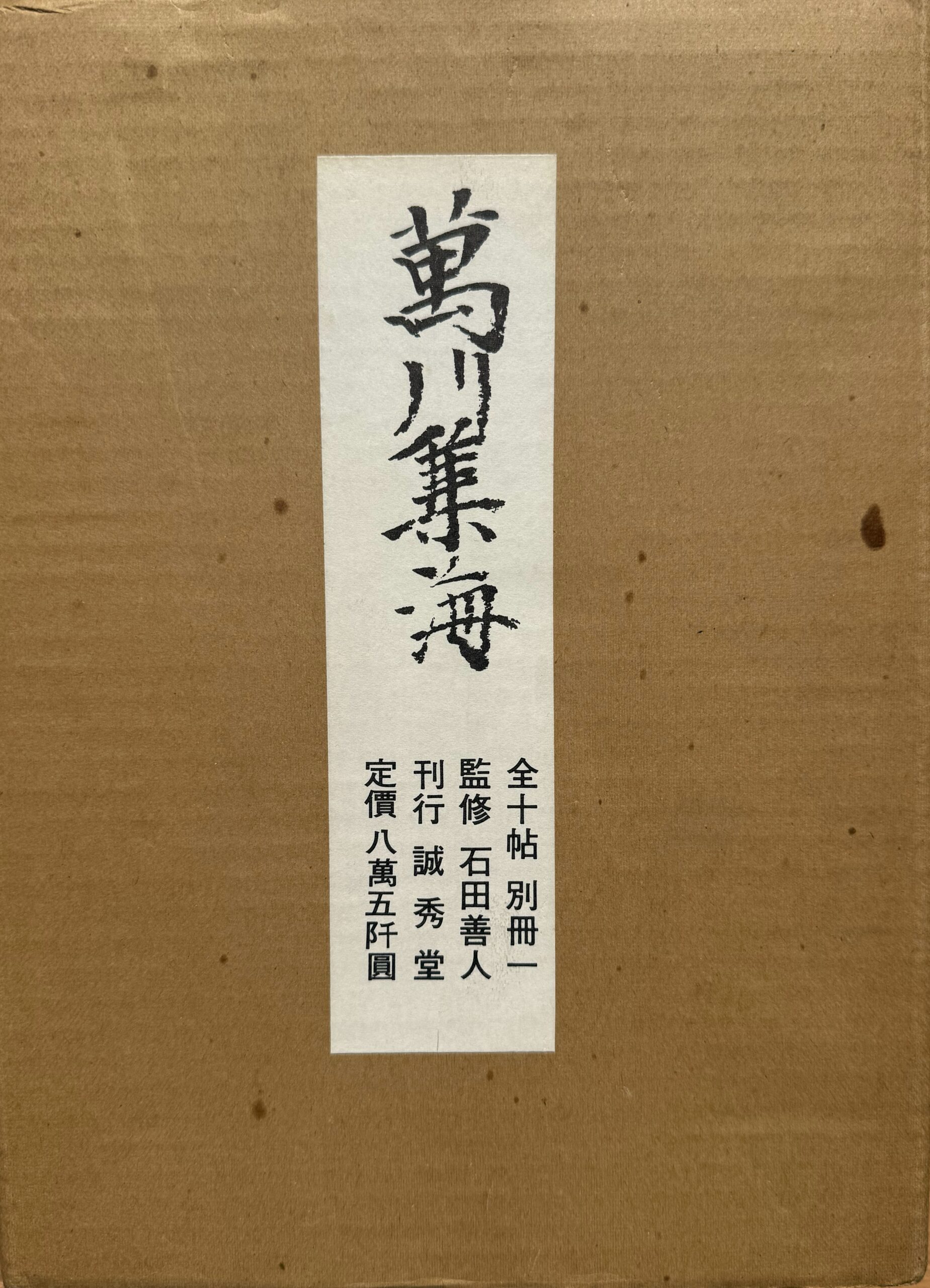
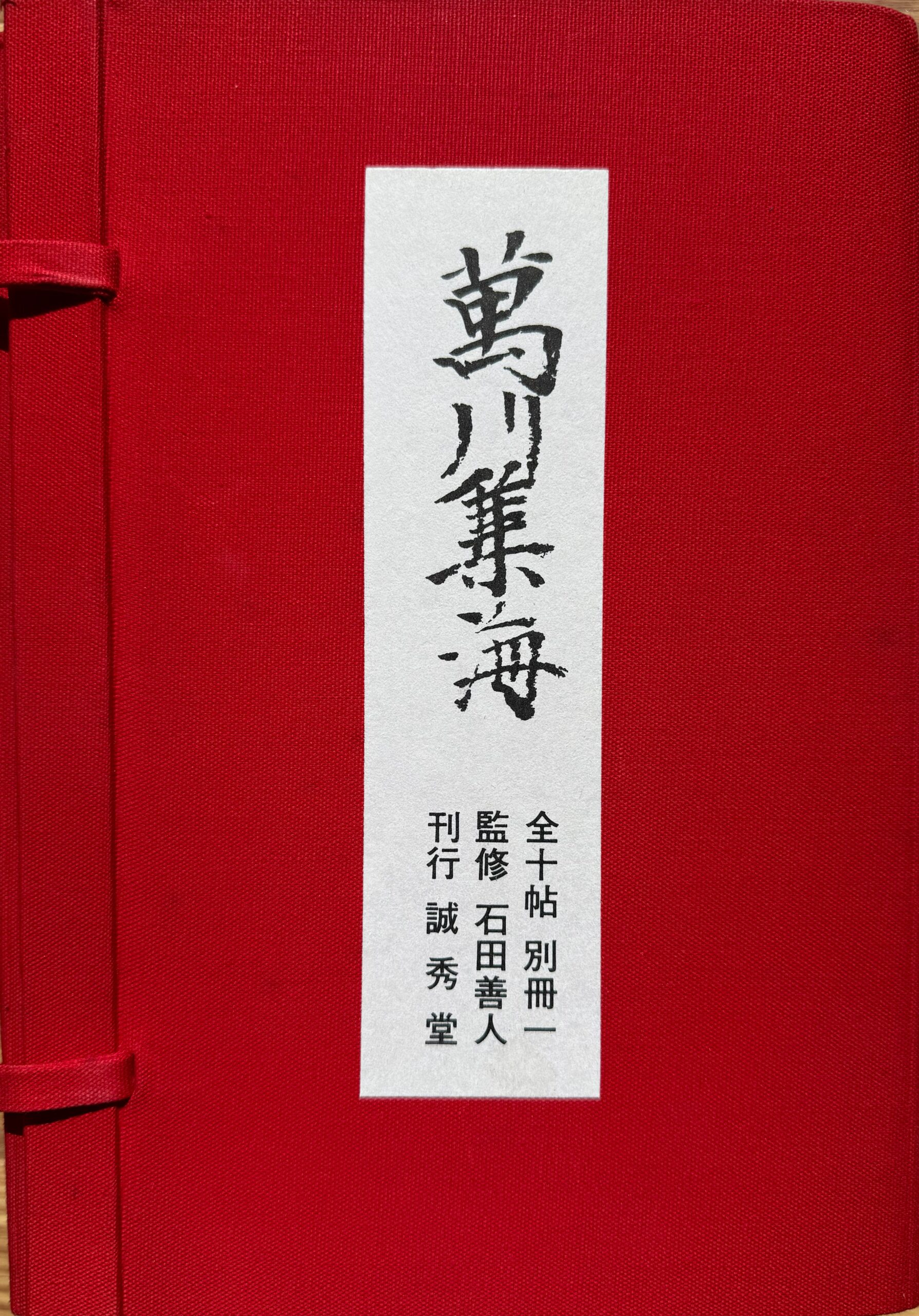
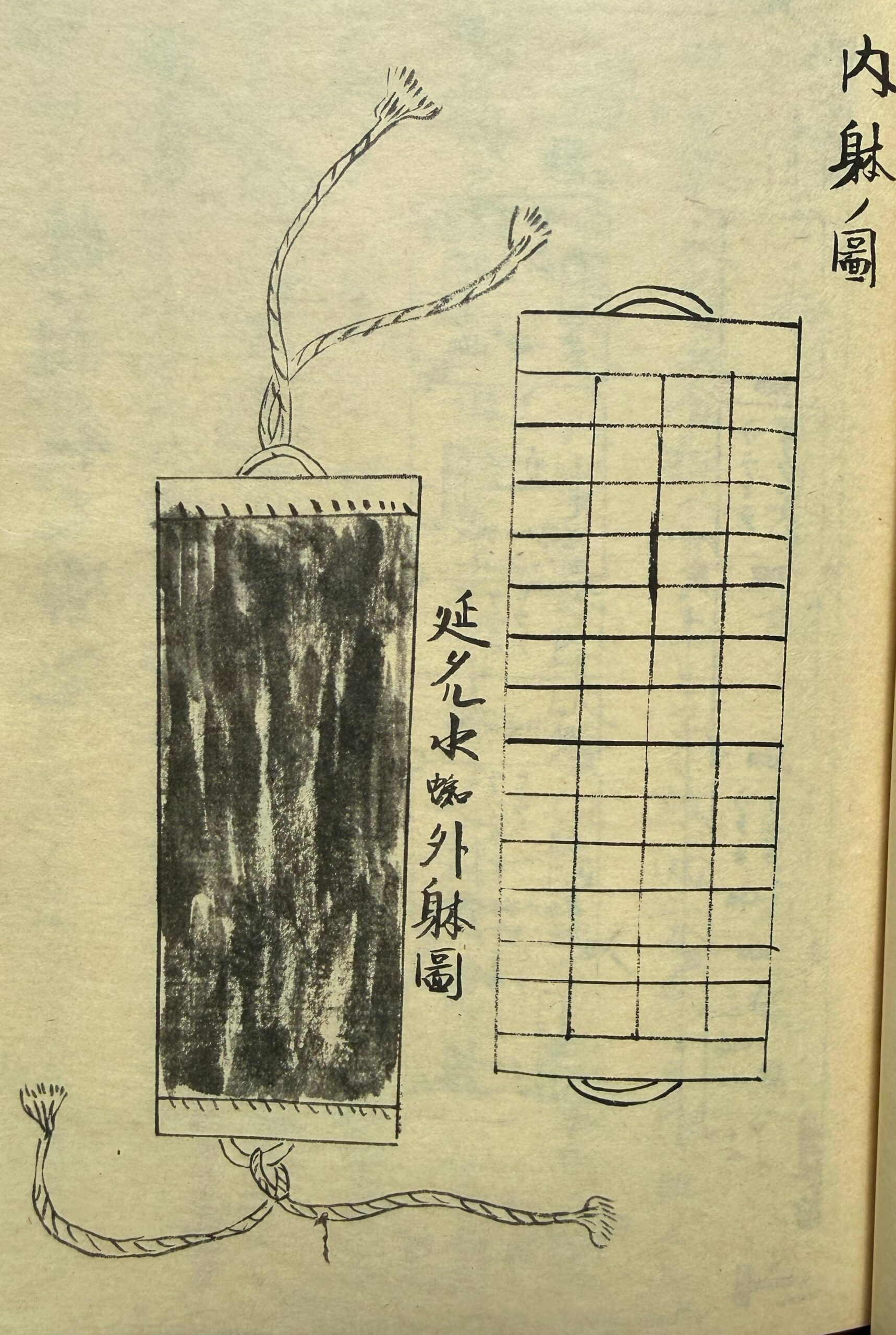
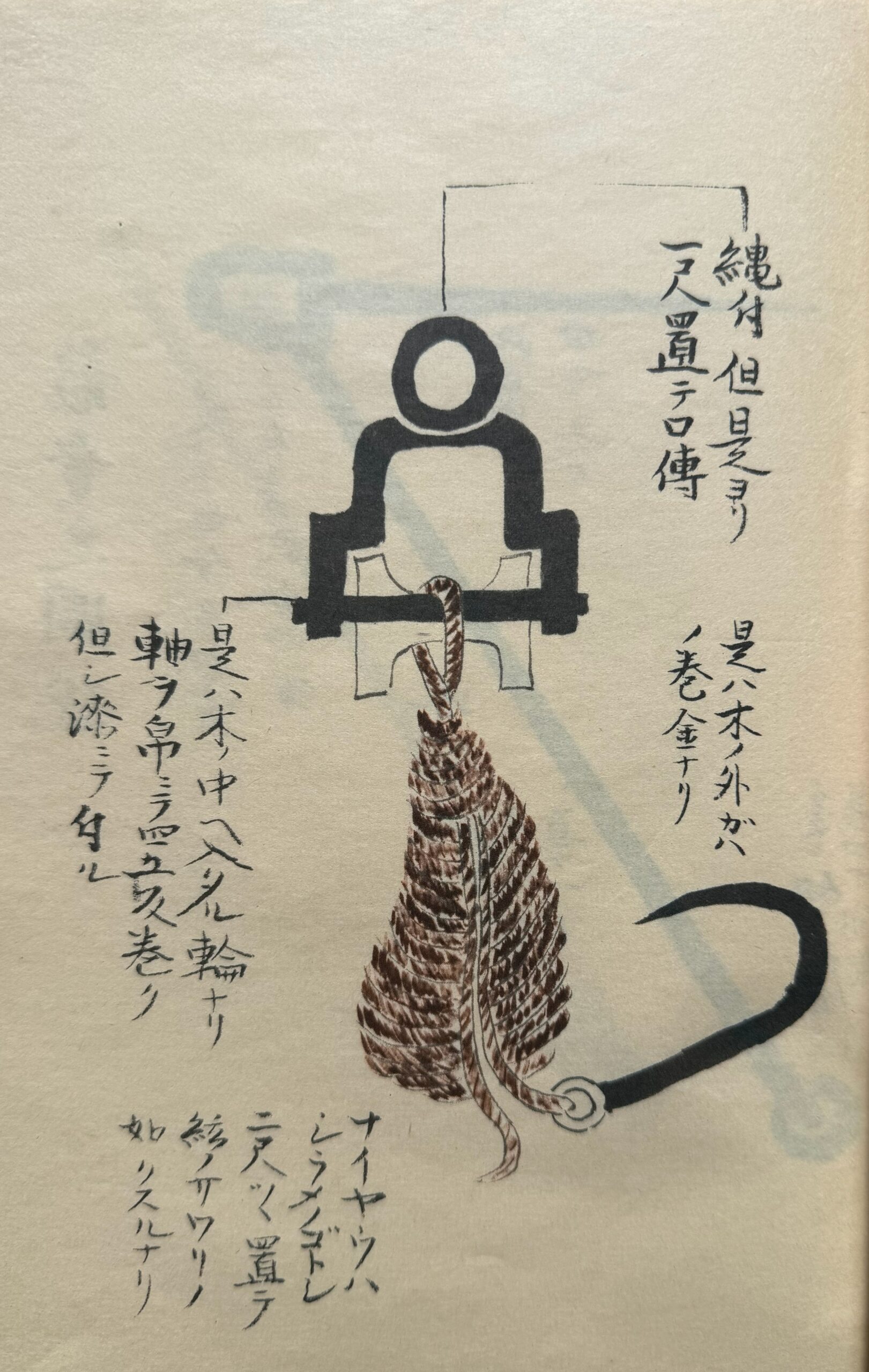
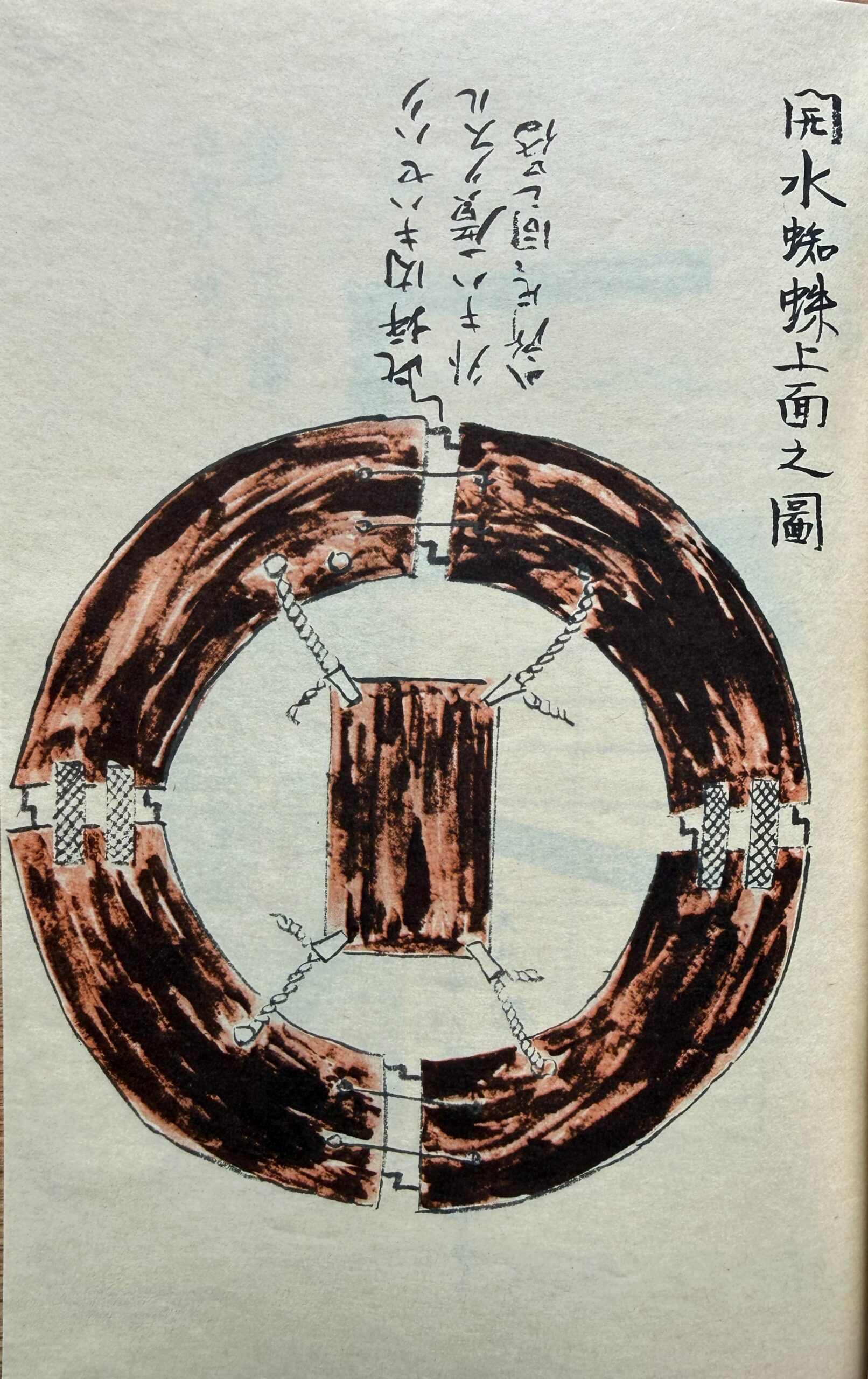
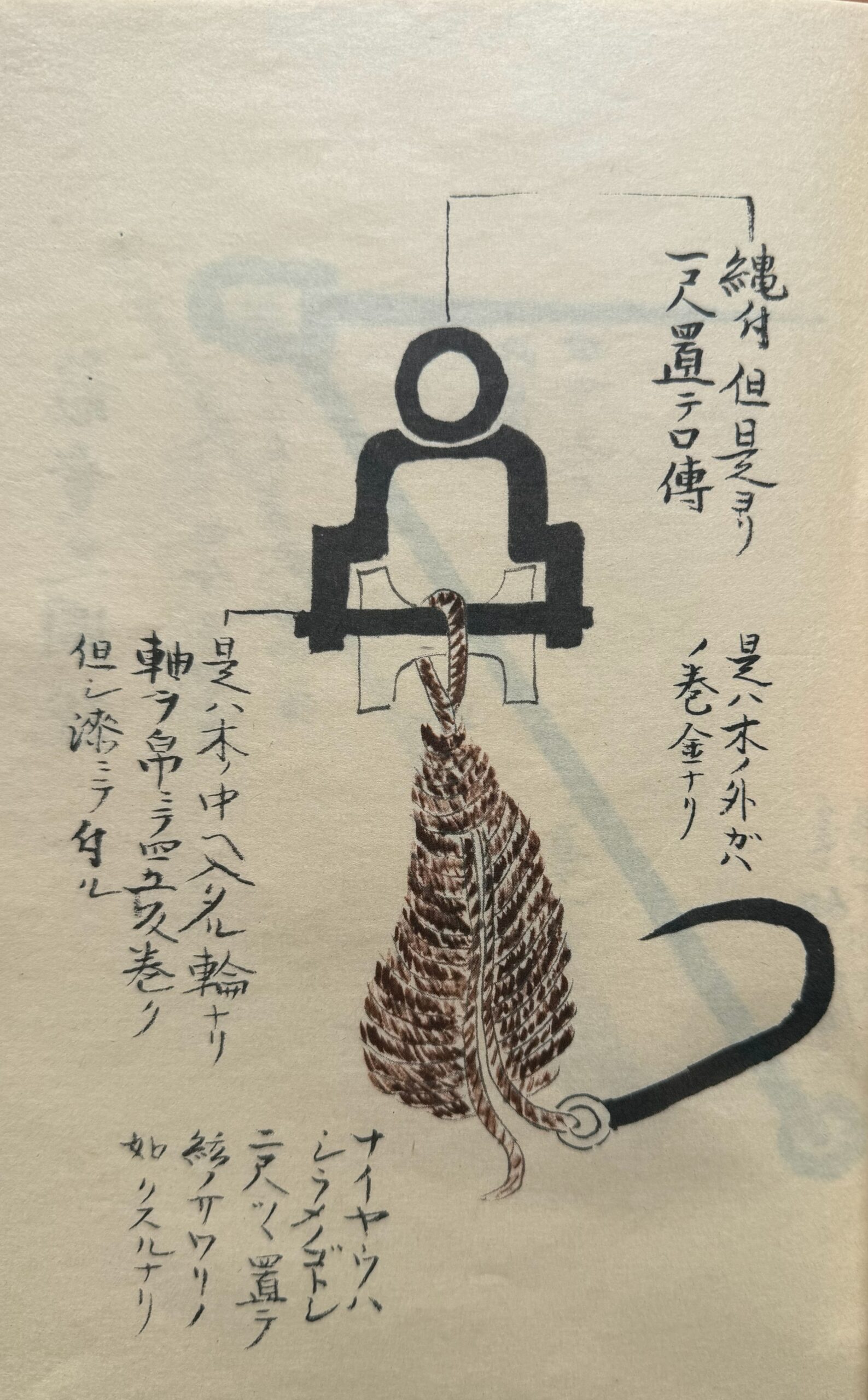
- 10 Primary Volumes: Bound in traditional Wahon (thread-bound) style with brown paper covers and vertical title slips. These replicate the original 17th-century calligraphy and diagrams.
- Supplement 1: The Bessatsu containing the Gun-yō-bikī (Military Essentials).
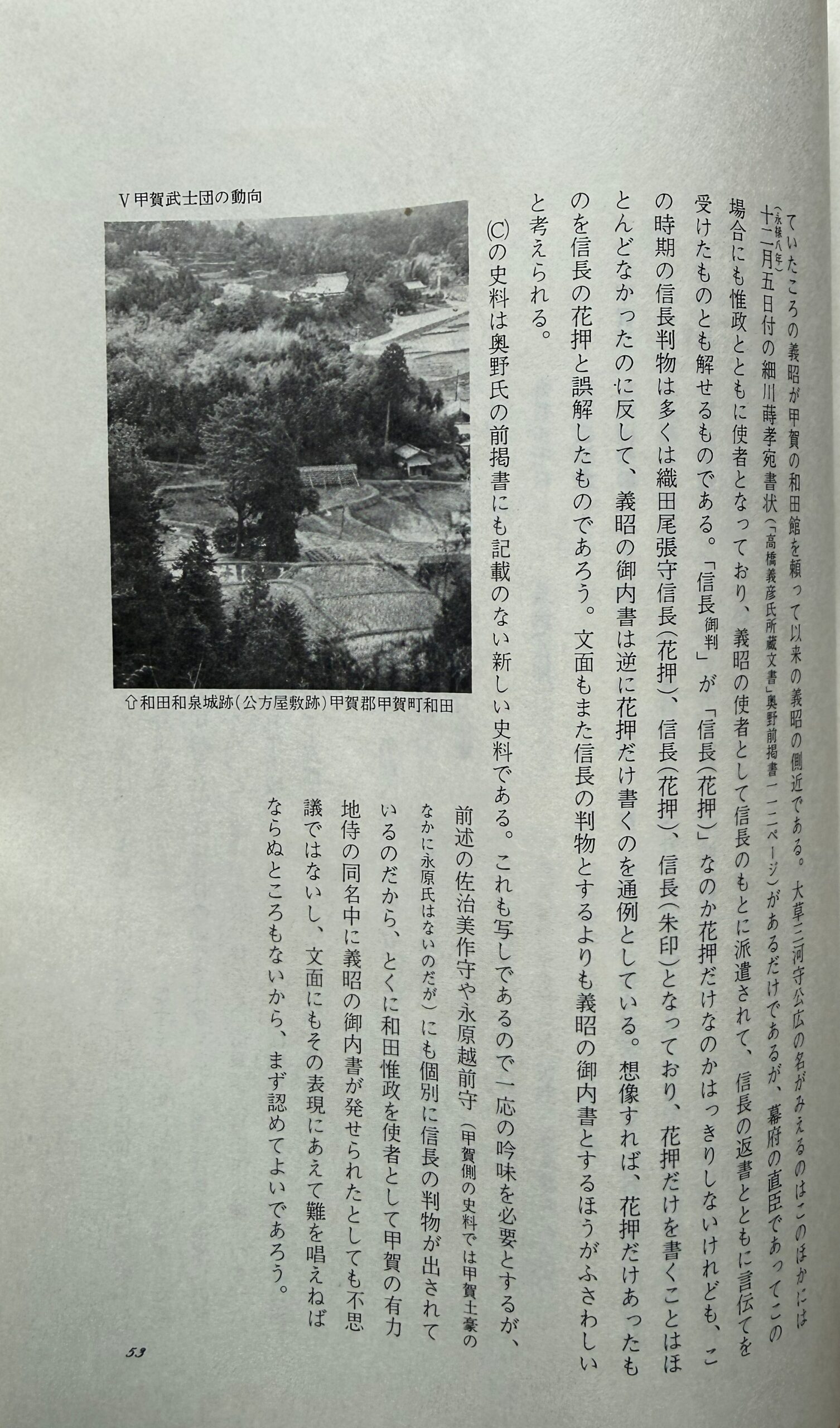
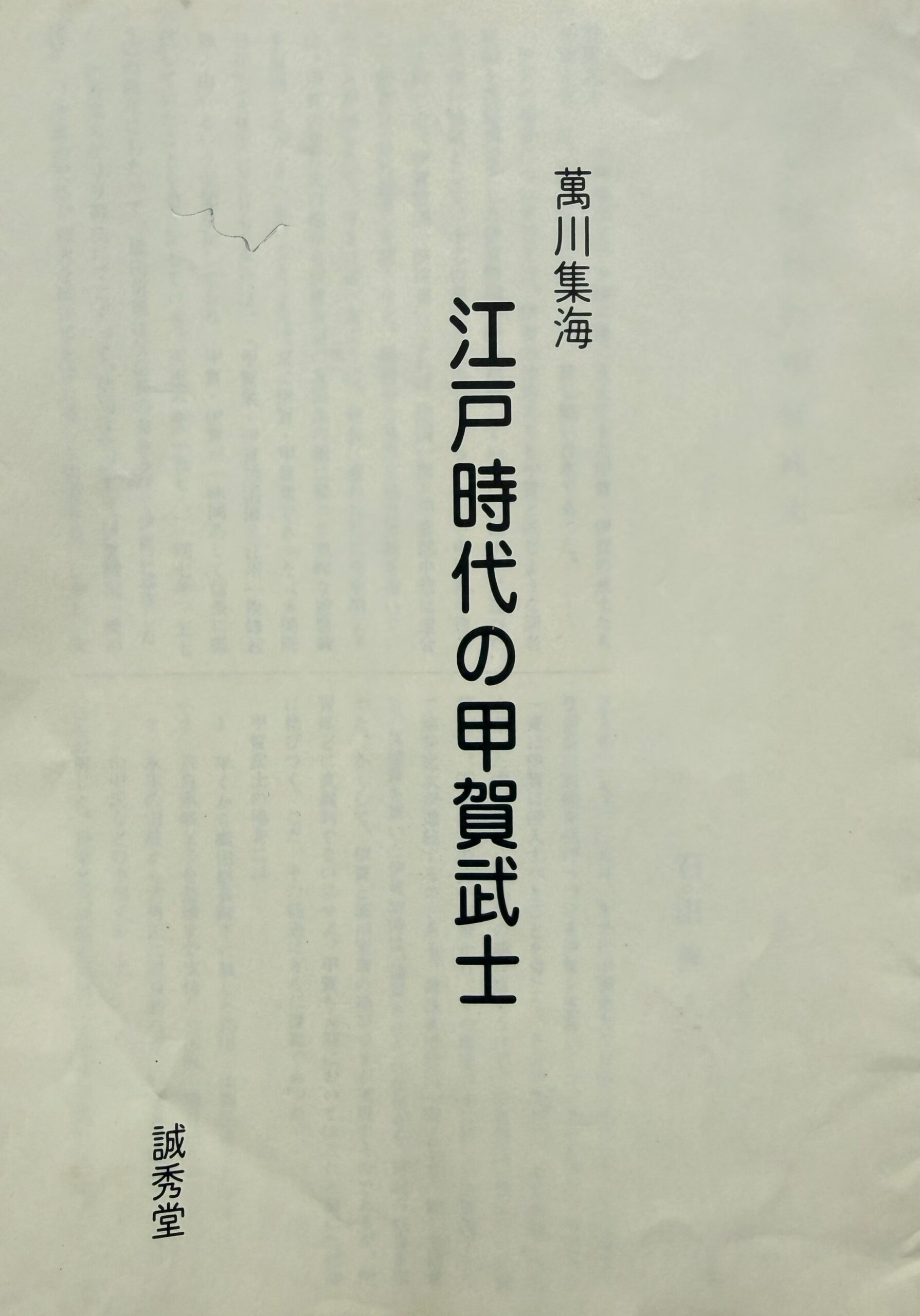
- Supplement 2 (The Commentary): The red-spined book titled Edo Jidai no Kōka Bushi (Kōka Warriors of the Edo Period) by historian Ishida Yoshito.
Rare & Archival Features of This Specific Set
What elevates this particular set to top-tier collector status are the “ephemeral” elements that have survived with it:
- The Original Cardboard Slipcase: Having the original publisher’s slipcase is exceptionally rare. It has served as the primary protection for the delicate thread bindings for 50 years, preventing the fading and wear common in sets where the box was lost.
- The “Not-for-Sale” Restricted Volume: The red-bound commentary book was published exclusively alongside the main text collection (Hibaihin / 非売品, meaning it was not sold separately as a standalone item). It could only be acquired by purchasing the complete ¥85,000 deluxe set—an immense financial investment in 1975 equivalent to roughly $278 USD at the time, or over $1,600 USD today when adjusted for inflation.
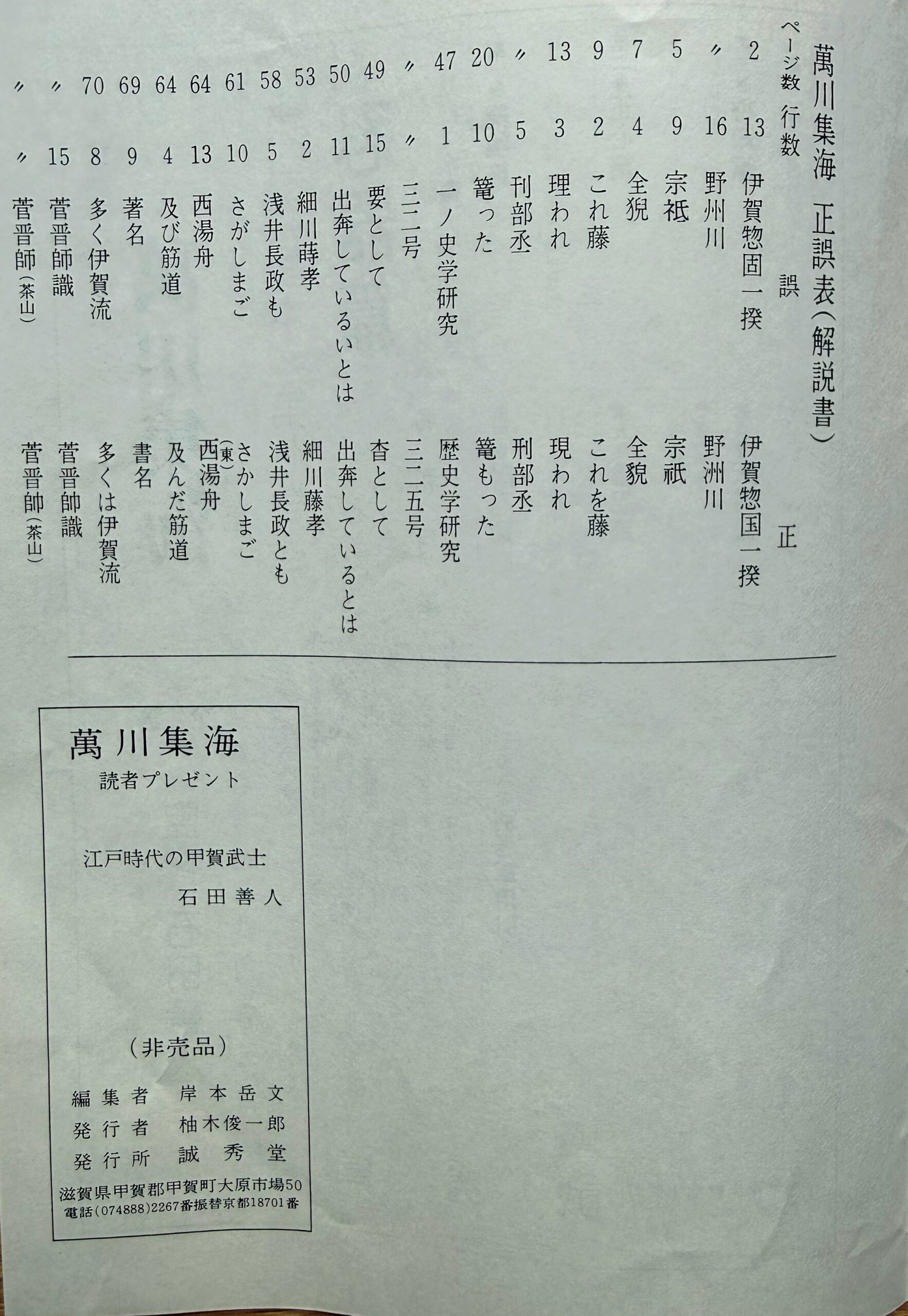
- The Loose Errata Sheet (Seigohyo): This set retains the original, loose correction sheet. In rare book collecting, these slips are almost always lost. Its presence confirms this is a complete, uninterrupted first-printing that has been curated with extreme care.
- Academic Integrity: Unlike modern mass-market versions, this set was produced in Kōka-gun by local historians using private family records. It represents a serious effort to document the ninja as a legitimate political and military class (Bushi).
1. The Interrupted Modern-Language Translation History
- This 1975 Gensho Fukkokuban (Facsimile) set was originally designed to be the foundational “Phase 1” of a massive publishing project by Seishūdō. The publisher intended to follow it up with a complete volume-by-volume modern Japanese translation (Gendai-go-yaku). However, after publishing only three translated segments over the next few years (Yōnin, Innin, and Ninki), the translation project permanently collapsed and was abandoned.
- It makes this original 1975 facsimile box set the only complete, unified monument of Seishūdō’s historical efforts.
2. The Great Pronunciation Debate (Bansenshūkai vs. Mansenshukai)
- For decades, this specific 1975 Seishūdō edition set the gold standard for how the book’s title was pronounced, officially registering and standardizing the reading as “Bansenshūkai.” While modern academic circles (specifically following a major 2015 definitive release by Kokusho Kankōkai) primarily prefer the pronunciation “Mansenshukai” today, explaining that this set serves as the historical anchor for the classical “B-pronunciation” tradition shows an elite level of bibliographical expertise.
3. The Physical Enclosure Style (Chitsu / 帙)
- The physical structure holding the 10 thread-bound volumes inside the box is traditionally known as a Chitsu (帙)—a classic Japanese protective cloth-and-board folding case secured with traditional bone or ivory-style pegs (Kohaze).
- Explicitly naming the Chitsu and confirming that the structural folding flaps and original toggles are fully intact drives up the “museum-grade” condition value exponentially.
Bansenshukai Summary for Collectors
This is an archival-grade, “complete survivor” set. Within classical espionage literature, the Bansenshūkai is universally revered alongside the Shōninki and Ninpiden as one of the three definitive “Ninja Bibles” (Three Great Ninja Manuals / 三大忍術伝書). This 1975 Seishūdō edition stands as the most prestigious and authoritative modern version of the text ever produced, engineered specifically to offer scholars the exact tactical, visual, and tactile experience of handling the 350-year-old original scrolls. Retaining its native protective slipcase, the standalone companion commentary supplement, and the easily lost original errata sheet, this set represents the absolute highest possible state of historic preservation available to institutions and premium collectors.
Edition details
- Published:
- 12/20/1975
- Publisher:
- Seishudo
- Edition:
-
- • Gensho Fukkokuban (原書復刻版) - Katsui Family Manuscript Facsimile
- • Seishūdō (誠秀堂) — Kōka-chō, Shiga (Heartland of the Kōka Ninja)
- • Issuing Agent: Yuzuki Riichirō (柚木利一郎)
- • Academic Supervisor: Ishida Yoshito (石田善人)
- • Technical Production/Printing: Chōyōdō Printing Co., Ltd.
- • Set Binding: Bunseidō Co., Ltd.
- • Set Box Construction: Waki Paper Box Co., Ltd.
- • 12-Volume Boxed Set (10 Primary Volumes, 2 Supplements)
- • Original Retail Price: ¥85,000 (1975 Premium Edition)
- Condition:
- Good
- Slipcase:
- Yes