
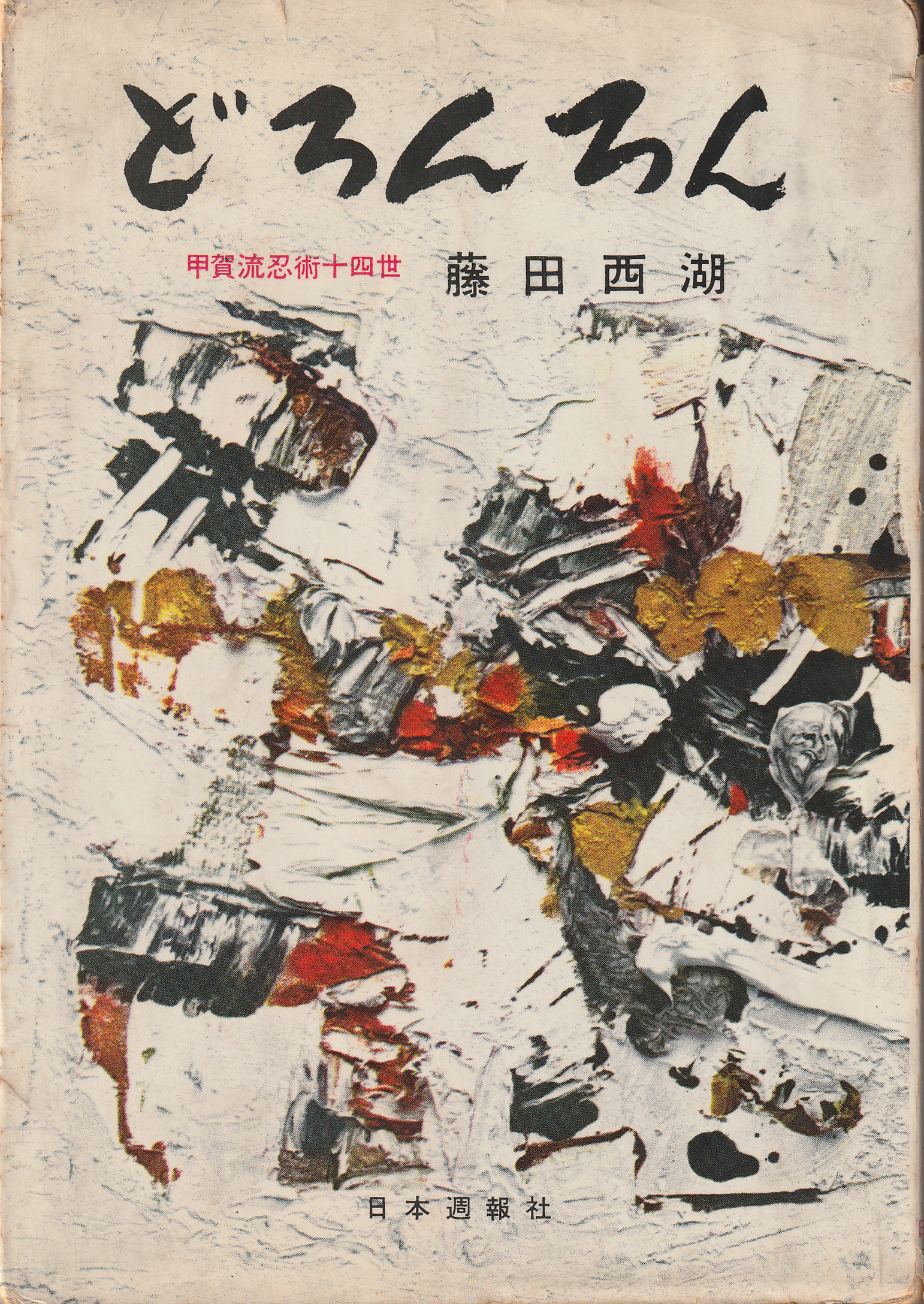
どろんろん —最後の忍者—
Doronron —Saigo no Ninja
- Author:
- Fujita Seiko (藤田西湖)
- Category:
- Ninjutsu
- Collection:
- Robert C. Gruzanski Collection
Description
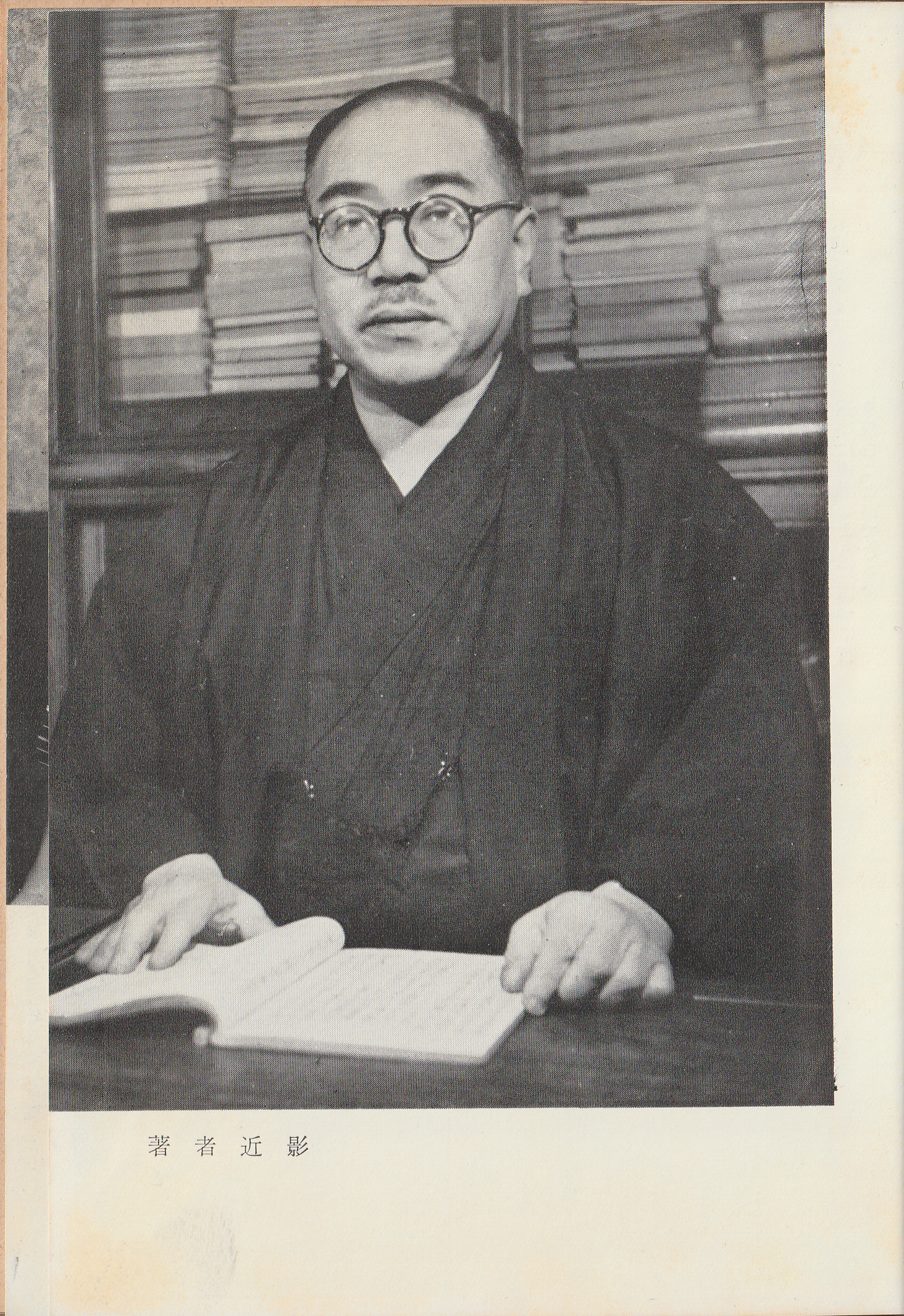
The book “Doronron: Saigo no Ninja” (どろんろん 最後の忍者) Doronron: The Last Ninja is the 1958 autobiography of Seiko Fujita (1899–1966), the 14th headmaster of the Koga-ryu Wada-ha ninjutsu lineage.
It is a foundational text that attempts to bridge the gap between ancient ninja traditions and the modern world, as Fujita famously claimed to be the “last true ninja” and chose not to pass on his school’s secrets to an heir.
Key Themes and Content
The book provides a chronological account of Fujita’s life, reflecting on his 50-year journey as a practitioner.
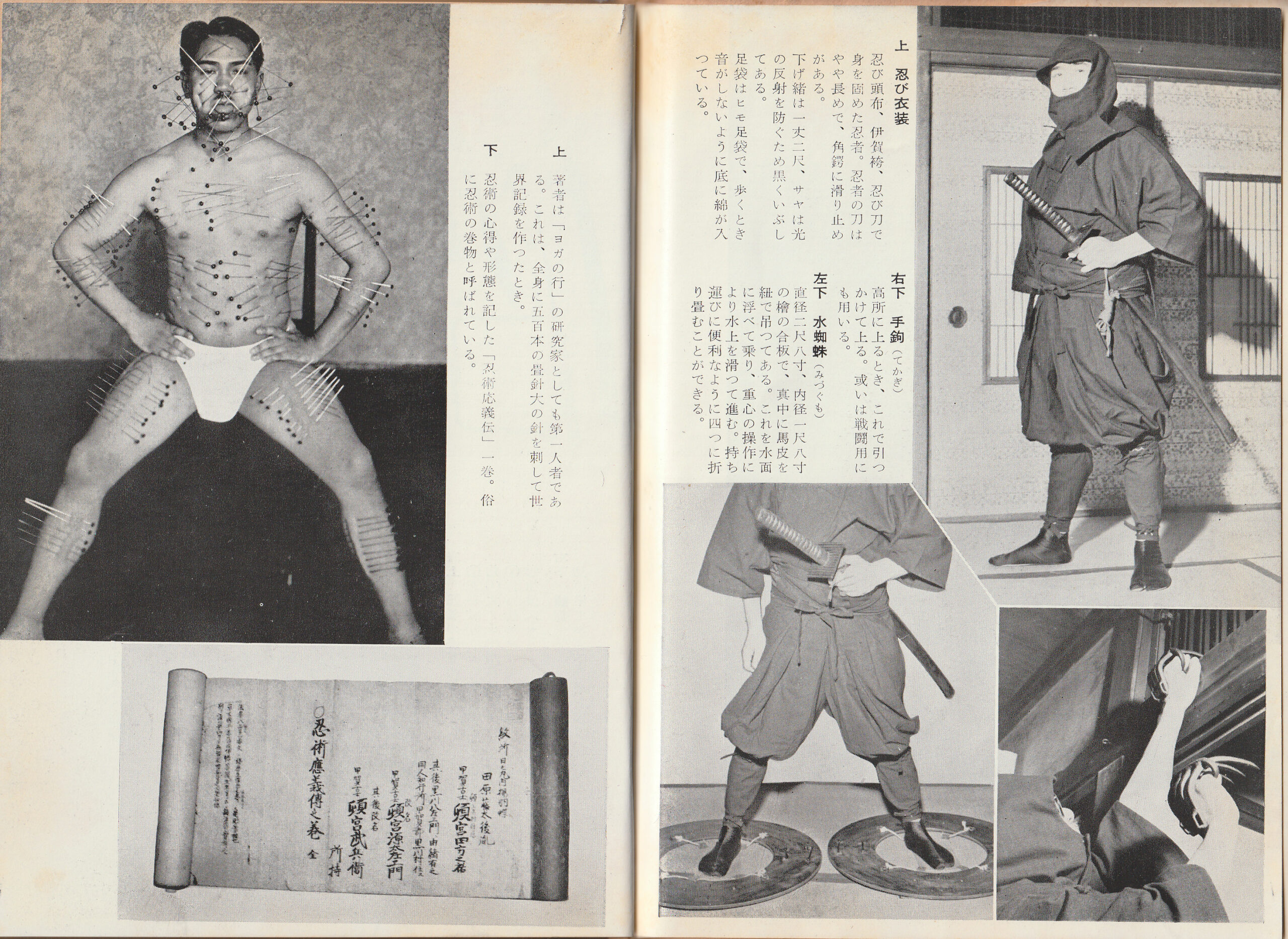
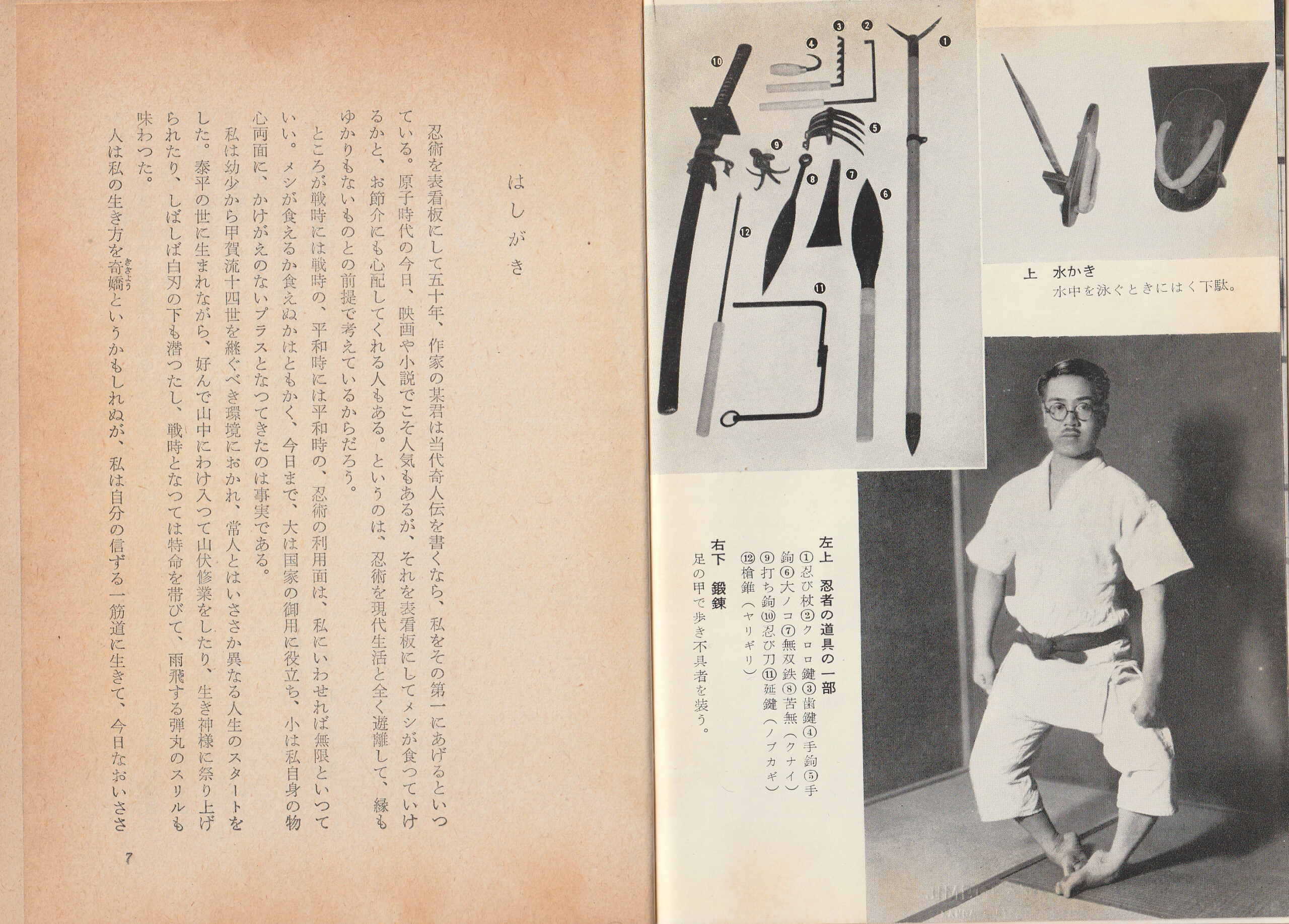
- Childhood & Early Training: Fujita recounts his rigorous initiation into ninjutsu by his grandfather, Shintazaemon. He details “inhuman” childhood feats, such as training to walk on the tops of his feet to disguise his tracks.
- Superhuman Physical Feats: A major part of the book explores his demonstrations of extreme bodily control, which he used to prove the scientific validity of ninjutsu. These include:
- Needle Piercing: Inserting hundreds of needles into his body without bleeding or pain.
- Dietary Endurance: Eating glass or large quantities of food without distress.
- Pain Tolerance: Techniques to endure extreme heat or cold.
- Scientific Perspective: Fujita, a graduate of Waseda University, sought to debunk “magic” myths about ninjas. He advocated for ninjutsu as a scientific and progressive system of psychology, endurance, and physical conditioning.
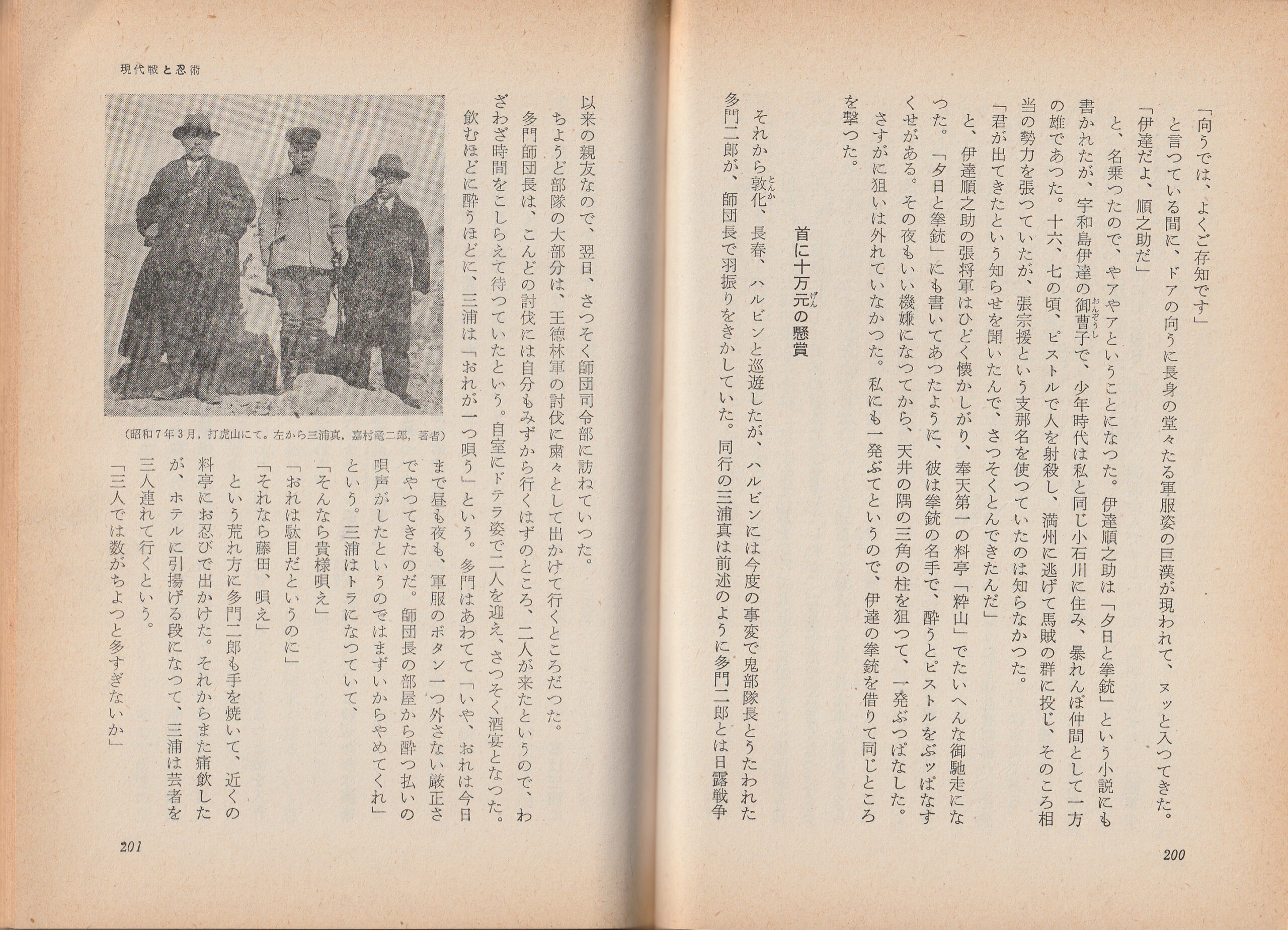
- Wartime Service: He details his role as a lead instructor at the elite Nakano Spy School during World War II, where he taught elite soldiers sabotage and reconnaissance techniques.
Significance of the 1968 Edition
- Authenticity: Unlike the posthumous 1968 edition, this 265-page original was published while Fujita was still alive and active in the martial arts community.
- Cultural Legacy: Fujita used this book to argue that the true ninjutsu tradition would end with him, making it his official record for future scholars.
Rare & Unusual Facts About the Book and Author
- The Meaning of “Doronron”: The title “Doronron” is an onomatopoeic Japanese theatrical term mimicking the sudden roll of kabuki drums used when a ghost, ninja, or magical entity vanishes into thin air. Fujita picked this title tongue-in-cheek to contrast the theatrical fantasy with the gritty reality of his physical life story.
- The Forbidden Autobiography: Upon its release in August 1958, certain conservative factions within surviving koryu martial lineages criticized the volume. They felt that an elite combat instructor shouldn’t expose close-quarters military backgrounds, psychological strategies, or personal survival protocols to a civilian commercial market.
- The Yukawa Editorial Safeguard: Editor Yoichi Yukawa spent months organizing Fujita’s spoken memories into a cohesive story structure. Fujita initially wanted the book to look like a dry historical text document, but Yukawa insisted on a narrative format to ensure it captured the human weight of being the final lineage holder.
- The Cover Art’s Hidden Meanings: The dynamic first-edition cover illustration was custom-commissioned to visually encapsulate the philosophy of kyojitsu (truth and illusion). The background art subtly weaves abstract smoke patterns alongside concrete physical weapon vectors, mirroring Fujita’s career transition from a secretive war-time operative into a modern, public-facing scientific researcher.
- Intellectual Property and the Widow’s Legacy: Following its initial August 1958 launch, this specific version became a crucial legal anchor for his family. When unauthorized publishers attempted to print cheap pulp spin-offs during the subsequent 1960s “Ninja Boom,” Fujita’s widow, Kikue Fujita, successfully utilized the copyright records of this original text to retain tight control over his authentic name, likeness, and intellectual property.
- A Pre-Boom Pioneer: Published years before pop-culture entertainment franchises like Shinobi no Mono popularized the ninja trope globally, this book stands as a primary historical time capsule. It caught the attention of early foreign researchers and military historians, making it one of the earliest source texts responsible for introducing authentic, non-theatrical Japanese espionage concepts to western martial arts collectors.
Edition details
- Published:
- 08/15/1958
- Publisher:
- Nihon Shuhosha
- Edition:
-
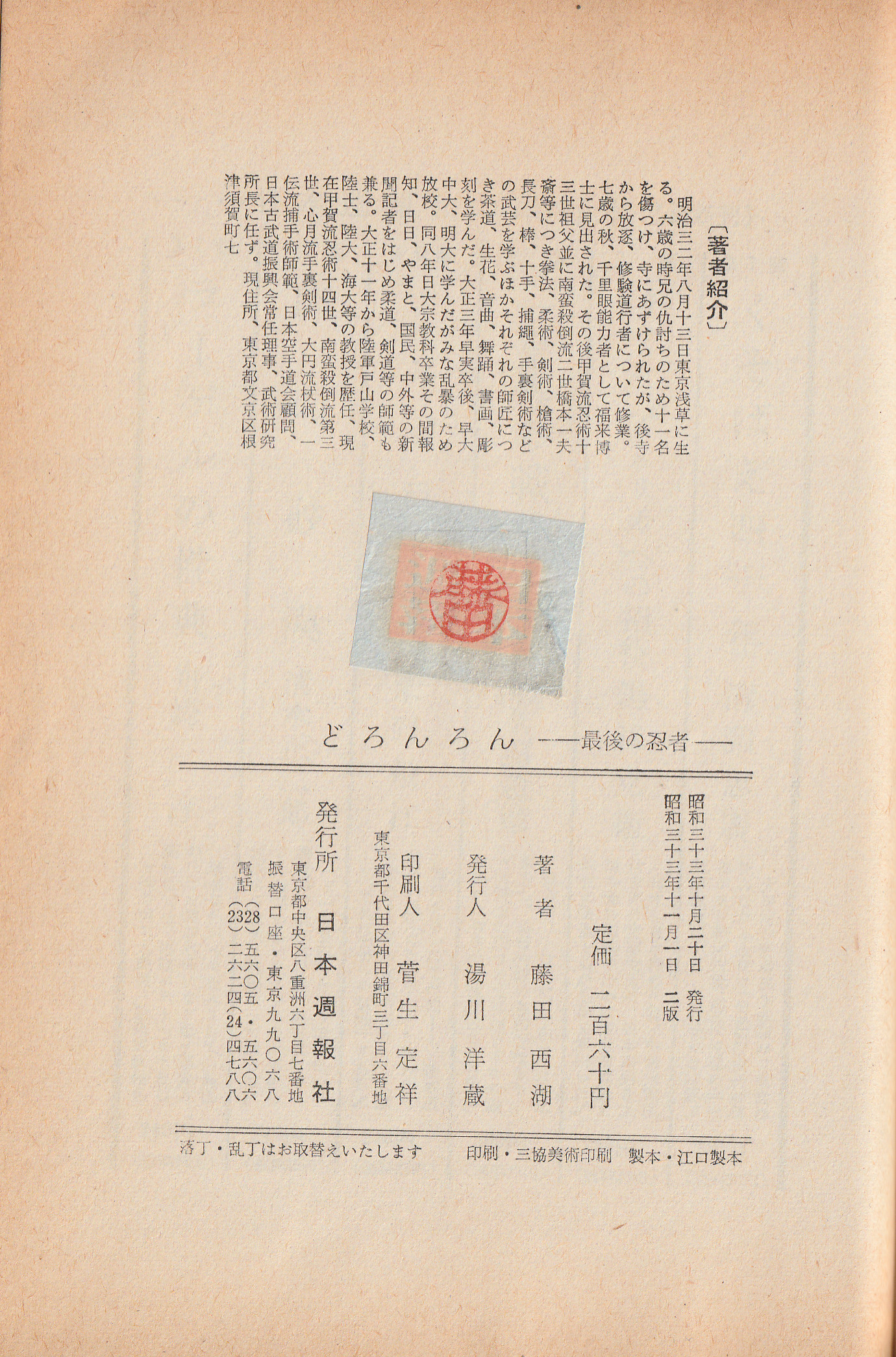
- • Publication Date: August 15, 1958 (Showa 33)
- • Representative: Yōzō Segawa (瀬川洋三)
- • Editor: Yoichi Yukawa (湯川洋一)
- • Original Price: 260 Yen
- Condition:
- Good
- Dust jacket:
- Yes