
伊賀流忍術
Iga-ryū Ninjutsu
- Author:
- Okuse Heishichirō (奥瀬平七郎)
- Category:
- Ninjutsu
- Collection:
- Robert C. Gruzanski Collection
Description
DESCRIPTION
Volume Overview:
Published on June 20, 1965, this fascinating vintage softcover manual serves as an authentic regional textual study of Iga-ryū Ninjutsu—the classical Japanese ninja lineage rooted in the mountains of Mie Prefecture.
The text acts as an elite regional synthesis, breaking down historical ninja methodology, traditional covert strategies, and weapon applications. Rather than utilizing a standard academic textbook format, this specific manual was printed exclusively as an uncommon, nearly square travel-sized guidebook, making it a highly prized item among international martial arts historians and rare publication collectors alike.
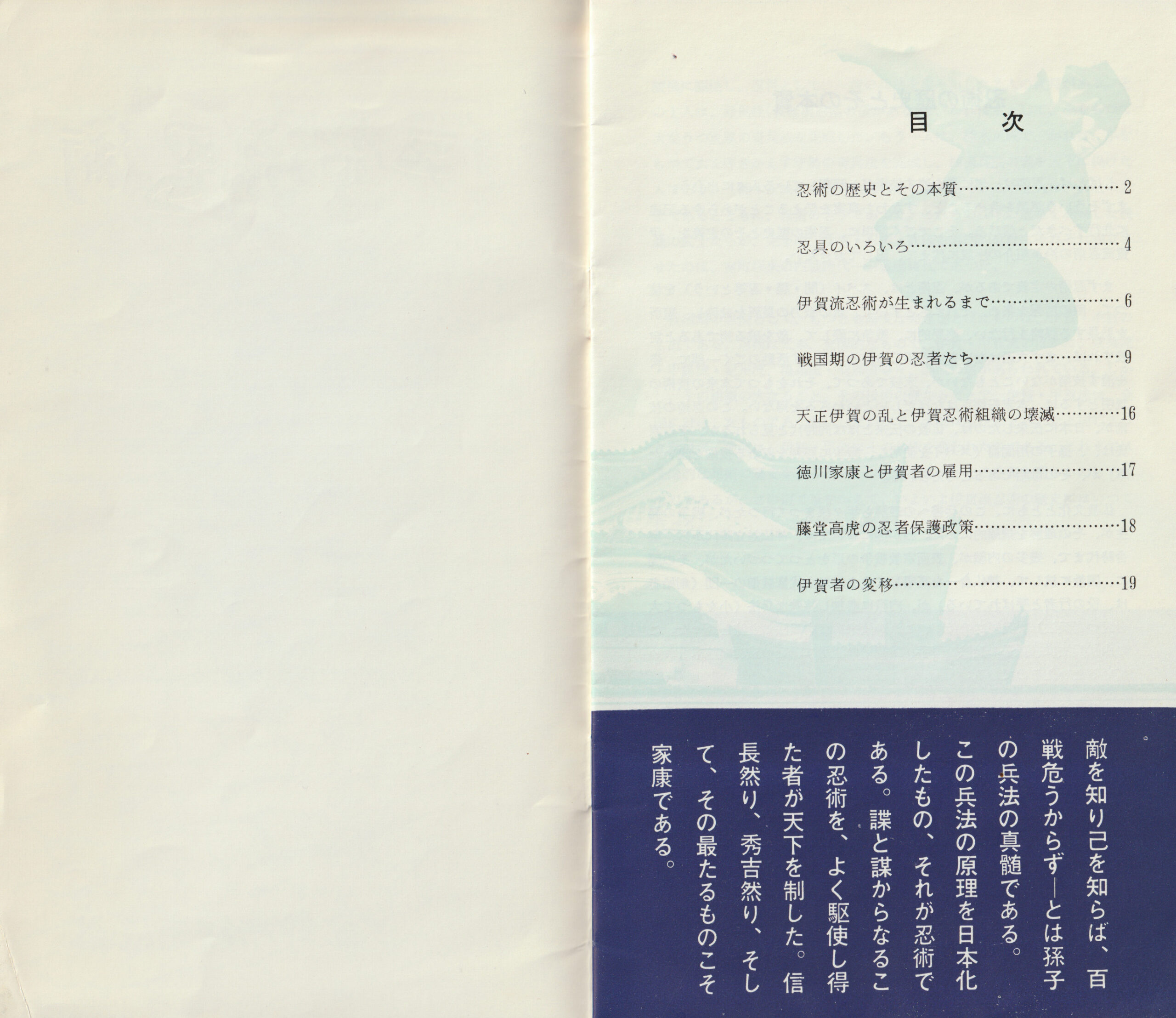
The volume features a comprehensive, chronological layout tracking the entire lifespan of the shadow trade, mapped out across its internal contents:
- History of Ninjutsu and its Core Essence
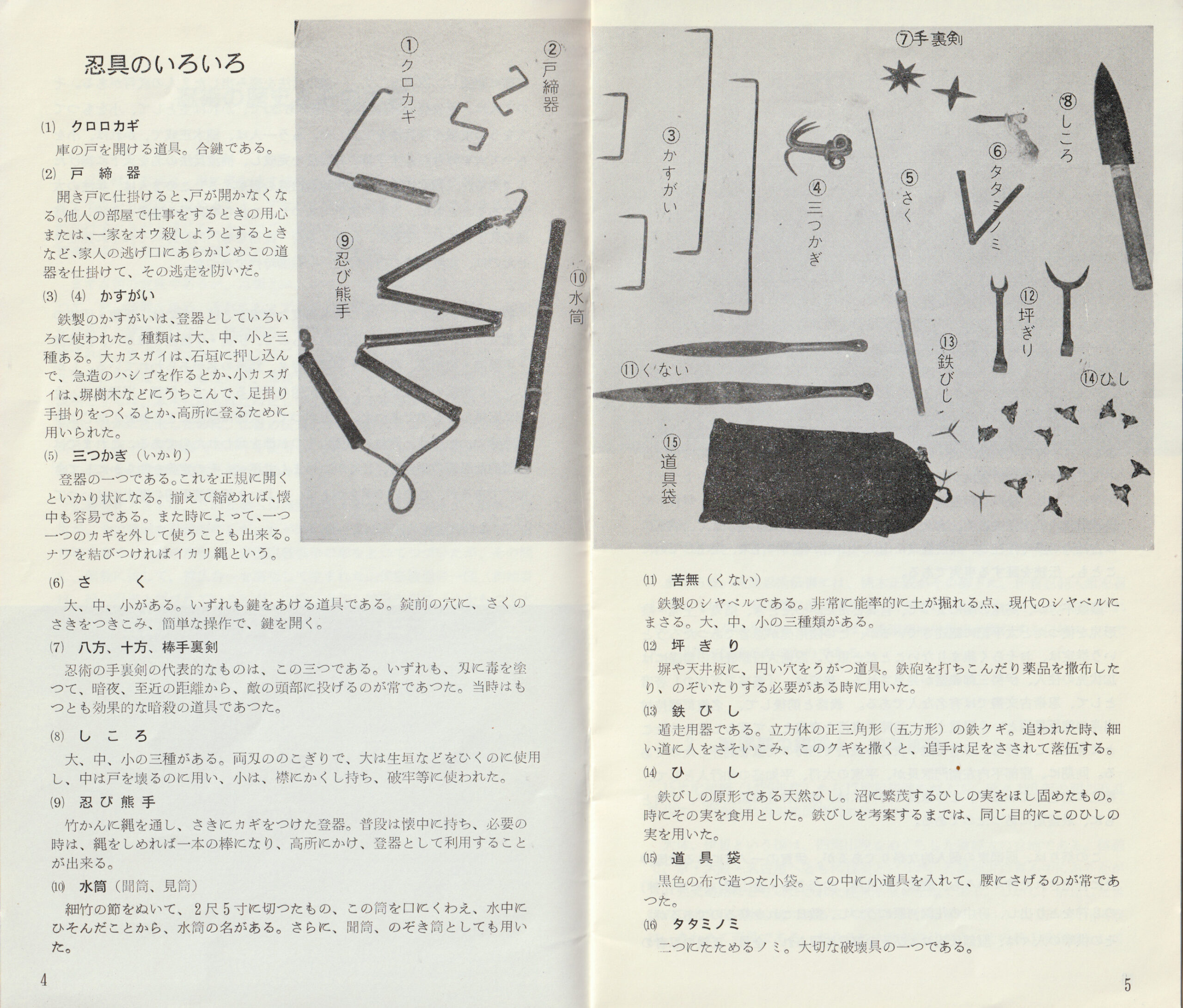
- Detailed Technical Inventory of Authentic Ninja Tools
- The Birth and Evolutionary Roots of the Iga Clan
- Profiles of the Sengoku-Period Iga Shinobi
- The Brutal Tenshō Iga War and the Annihilation of the Central Organization
- Post-War Survival: The Employment of Iga Operatives by Tokugawa Ieyasu
- Lord Tōdō Takatora’s Protective Asylum Policies for Former Spies
- The Early Modern Transformation and Ultimate Legacy of the Clan
Rare & Unusual Facts About the Author and Book:
The Mayor-Scholar Identity: The book’s author, Okuse Heishichirō (1911-1997), was far more than a standard historian; he served as the actual Mayor of Ueno City. His unique municipal leadership position granted him unparalleled administrative access to regional archives, family records, and historical locations, allowing him to spearhead the preservation of local ninja heritage.
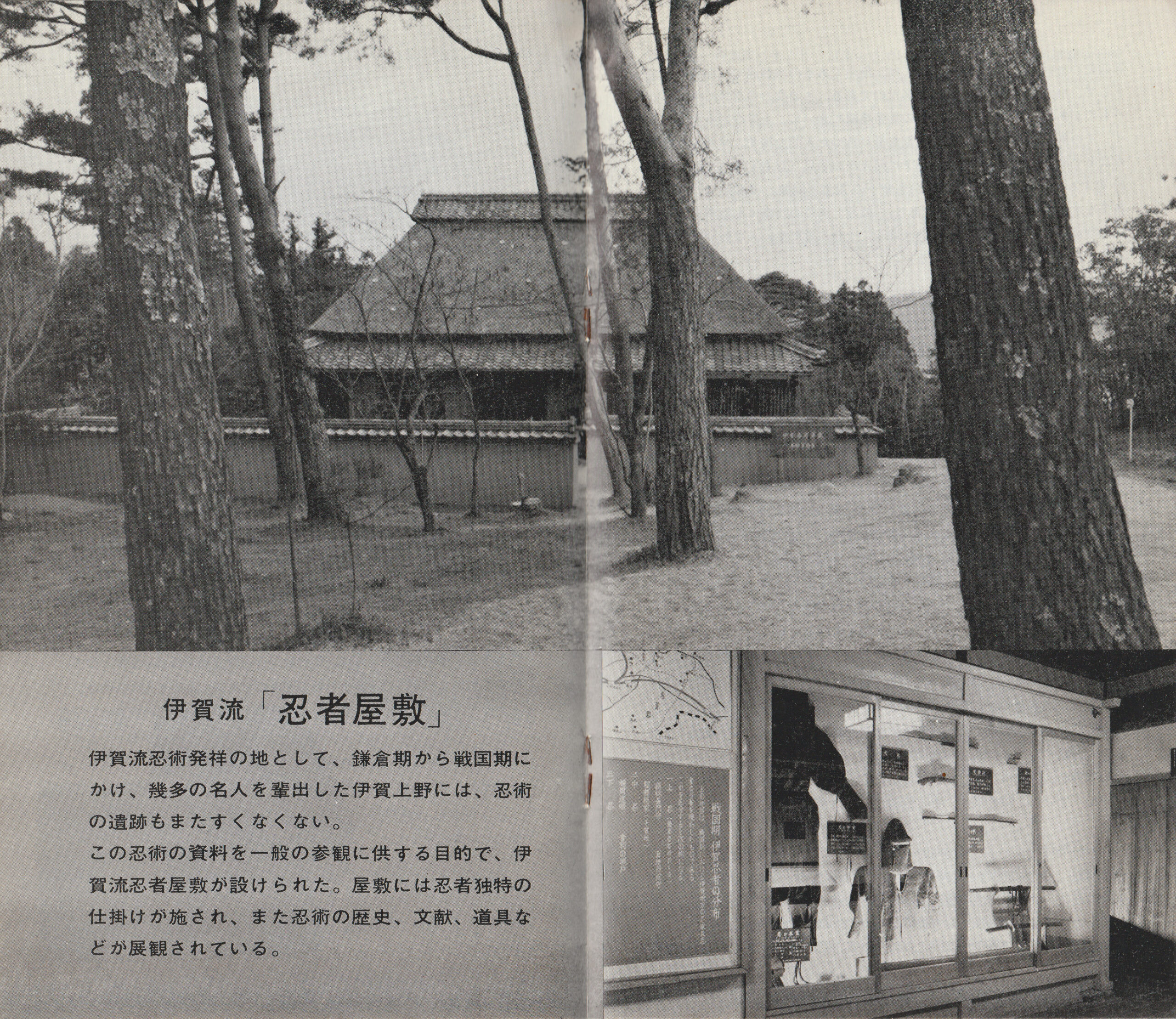
The 1964 “Ninja House” Time Capsule: This text features an invaluable photographic record of the newly opened Iga-ryū Ninja Museum. The thatched-roof “Ninja House” shown in the manual was originally a real, secretive ninja farmhouse belonging to the Takayama family in nearby Sanagu. Under municipal oversight, the structure was secretly dismantled and reassembled within the Ueno Castle grounds just one year prior to this booklet’s publication, cementing this text as one of the first official guides to the landmark site.
The Double-Edged Tool Schematics: The booklet displays rare, hand-inked technical diagrams of 16 highly specialized ninja tools (Ningū). This includes mechanical entry picks like the “Kurorokagi,” collapsible climbing gear like the bamboo “Shinobi-kumade,” and tactical caltrops. Intriguingly, the text highlights the “Hishi”—natural, dried water chestnut pods that served an ingenious double purpose as an organic tracking deterrent when dried, or as emergency edible rations when boiled.
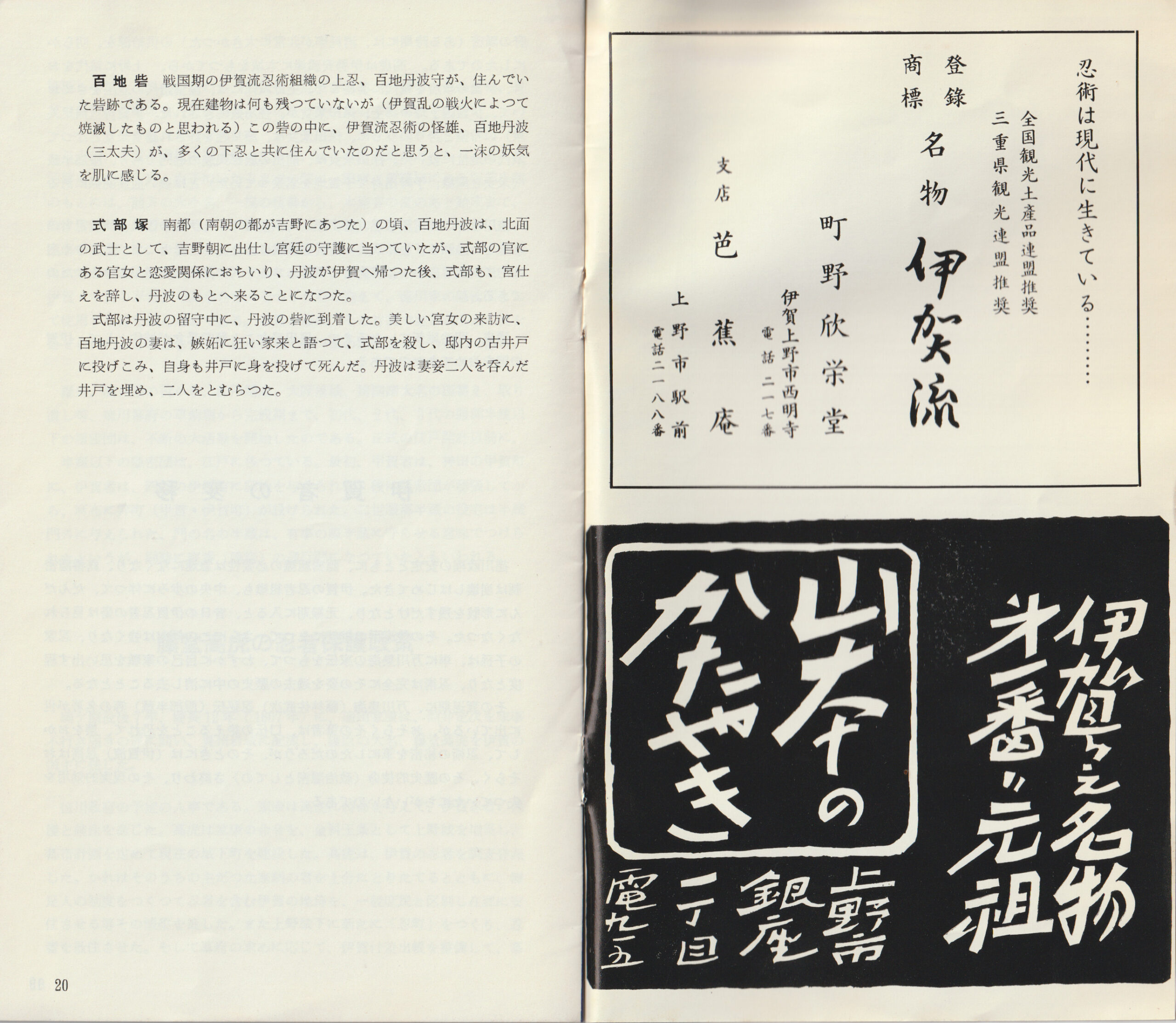
The Tragic Folklore of Shikibu’s Tomb: Tucked away in the family lineage records is a dark, localized clan legend regarding the ruins of the Jōnin commander Momochi Tanba’s fort. The text documents the “Shikibu-zuka” (Tomb of Shikibu), detailing a historical tragedy where a traveling Southern Court samurai named Shikibu was murdered inside the compound out of blind romantic jealousy by Momochi’s wife. The text records that she subsequently drowned herself in the courtyard well, which Momochi Tanba permanently sealed upon his return—creating an eerie, localized haunting tradition preserved only in these regional documents.
The Mid-Century “Katayaki” Ads: The final page features striking, stylized mid-century advertisements for local confections, specifically “Yamamoto’s Katayaki.” These rock-hard, unyielding crackers are sold under the tagline “Ninjutsu lives on in the modern era.” They are the direct culinary descendants of the high-calorie, long-lasting emergency rations (兵糧丸 – Hyōrōgan) carried by Iga operatives into enemy territory, marketed directly to 1960s domestic tourists.
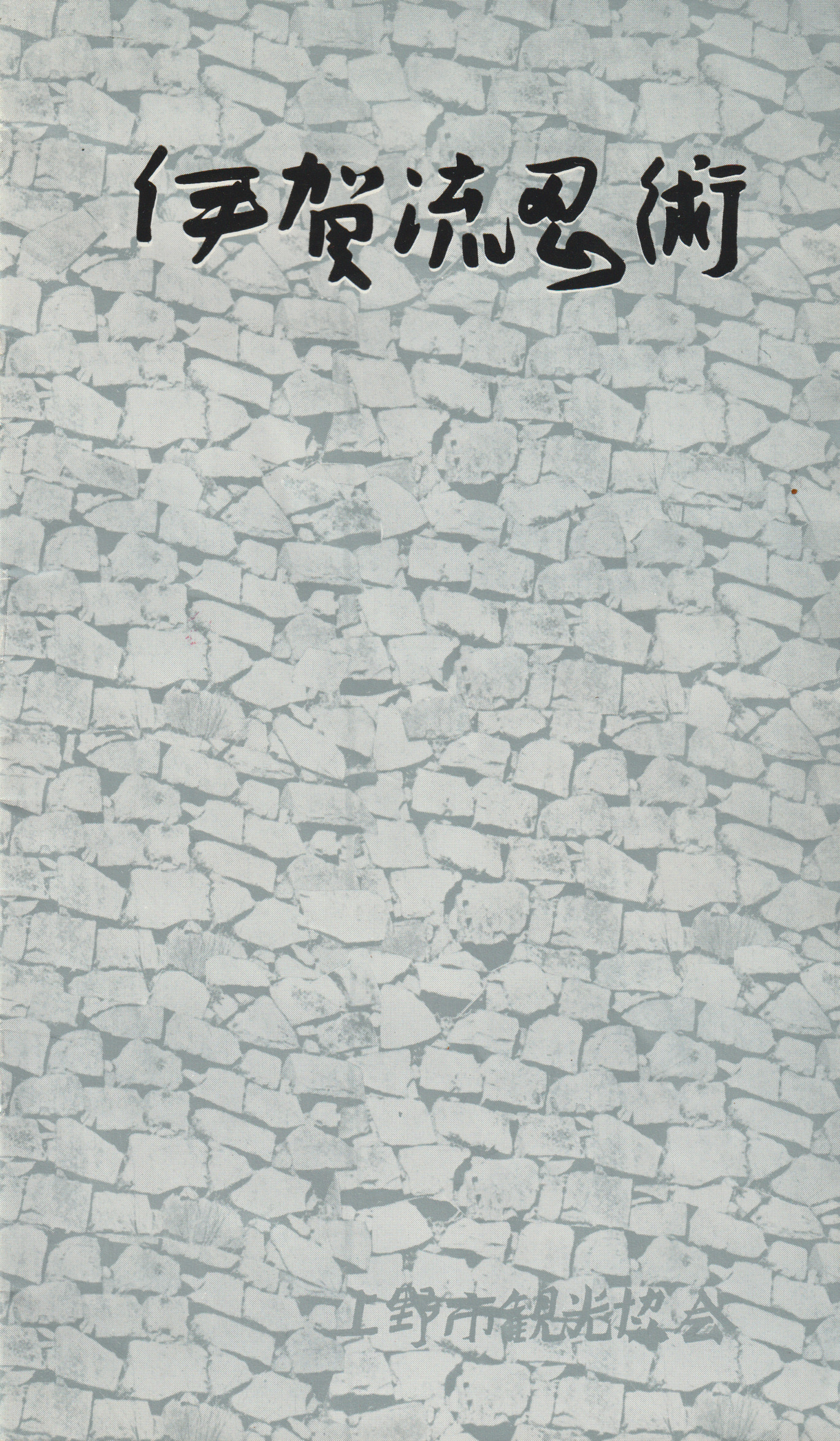
The Castle-Wall Visual Illusion: Because of the meticulous layout design commissioned by the tourism association, the booklet features a distinctive, heavily textured cover pattern. This specific aesthetic choice was engineered to perfectly mimic the unique geometric style of the “ishigaki” (protective stone walls) defending Iga Ueno Castle, giving the booklet a distinct tactile presence in a collector’s hands.
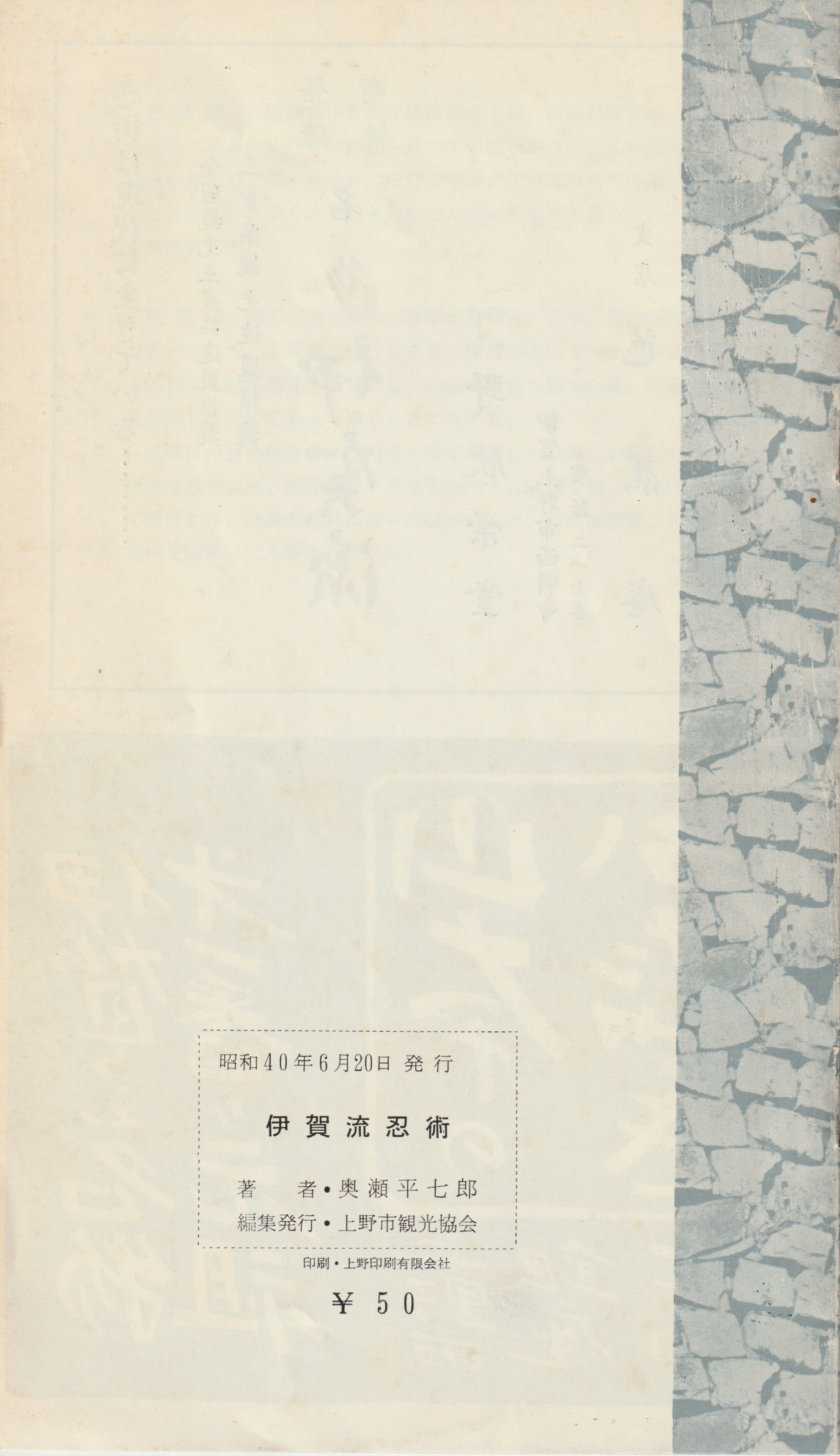
The 50-Yen Souvenir Subversion: Unlike commercial martial arts volumes meant for widespread bookstore distribution, this monograph was printed as an unpretentious, site-specific souvenir piece. It was sold directly to early postwar domestic travelers visiting the historic castle town for a mere 50 Yen, meaning very few copies were treated as permanent archival items by their original buyers, contributing to its modern-day scarcity.
The Pre-Merger Geographical Marker: The publishing credits anchor this booklet to a vanished administrative era. It was edited and released by the Ueno City Tourism Association decades before Ueno City was formally dissolved and consolidated into modern Iga City in 2004, preserving a precise snapshot of mid-century Japanese municipal history.
Edition details
- Published:
- 06/20/1965
- Publisher:
- Ueno City Tourism Association
- Edition:
-
- • Series Profile: Independent promotional release highlighting the historical heritage of regional ninja arts.
- • Physical Format: Textured softcover booklet utilizing a stone wall motif modeled after the castle defenses at Iga Ueno.
- • Dimensions: Pocket Size (20 cm x 18 cm)
- • Complete Page Count: 20 pages
- • Registry Status: Standard tourism release compiled by legendary ninja scholar and municipal leader Okuse Heishichirō; originally sold for 50 Yen.
- Condition:
- Good