
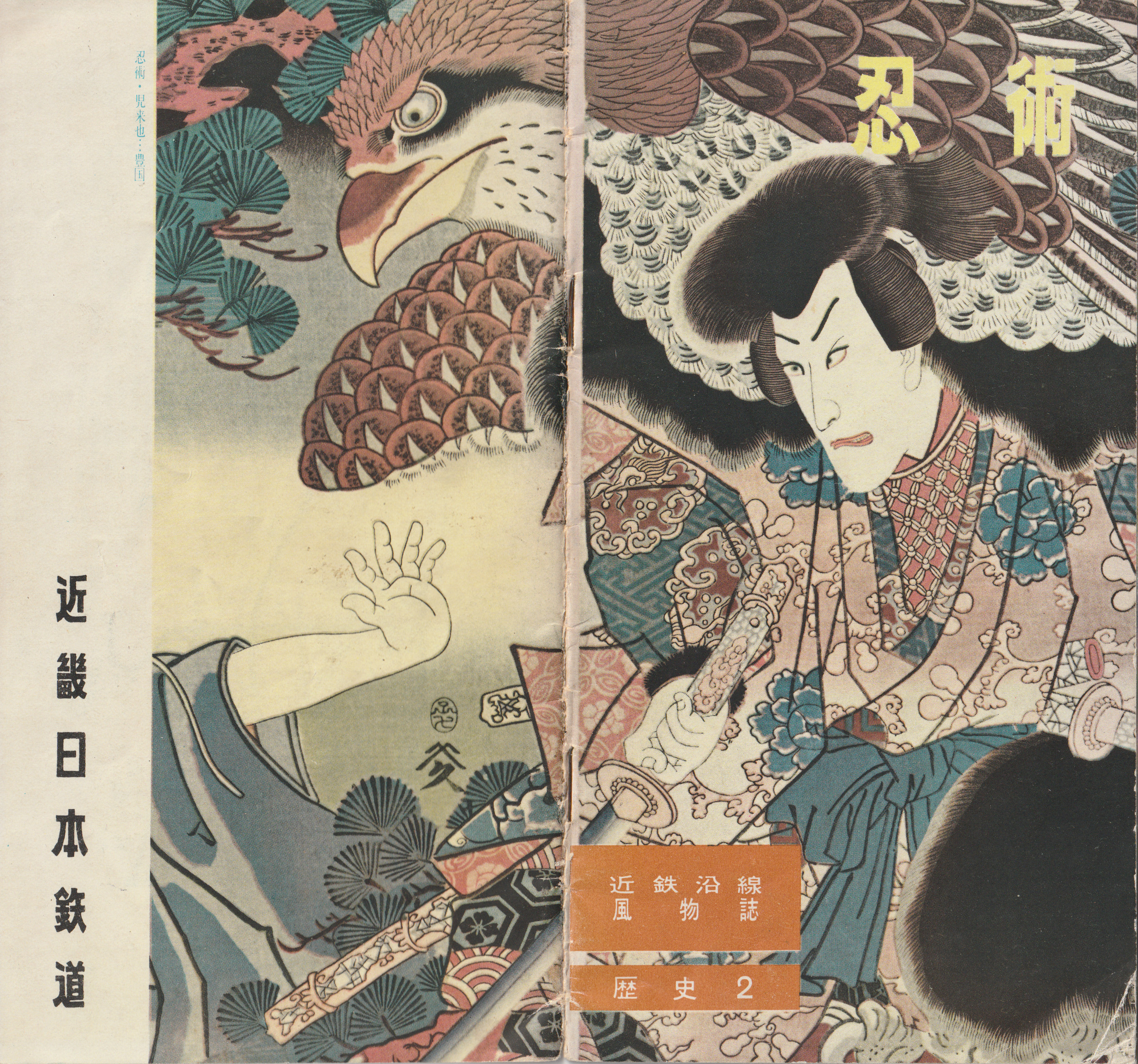
忍術 (近鉄沿線風物誌 歴史2)
Ninjutsu
- Author:
- Okuse Heishichiro (奥瀬平七郎)
- Category:
- Ninjutsu
- Collection:
- Robert C. Gruzanski Collection
Description
THE VANGUARD OF POSTWAR NINJA HISTORY
Long before the global “ninja boom” of the 1970s and 80s, this incredibly scarce 1956 regional promotional pamphlet laid the serious academic foundation for all modern ninjutsu historical research. Written at a time when the Western world knew virtually nothing of the art, and Japanese pop culture viewed it purely as fictional wizardry, Ninjutsu (Volume 2 of the Kintetsu Ensen Fūbutsu-shi series) was a groundbreaking attempt to separate theatrical myth from historical reality.
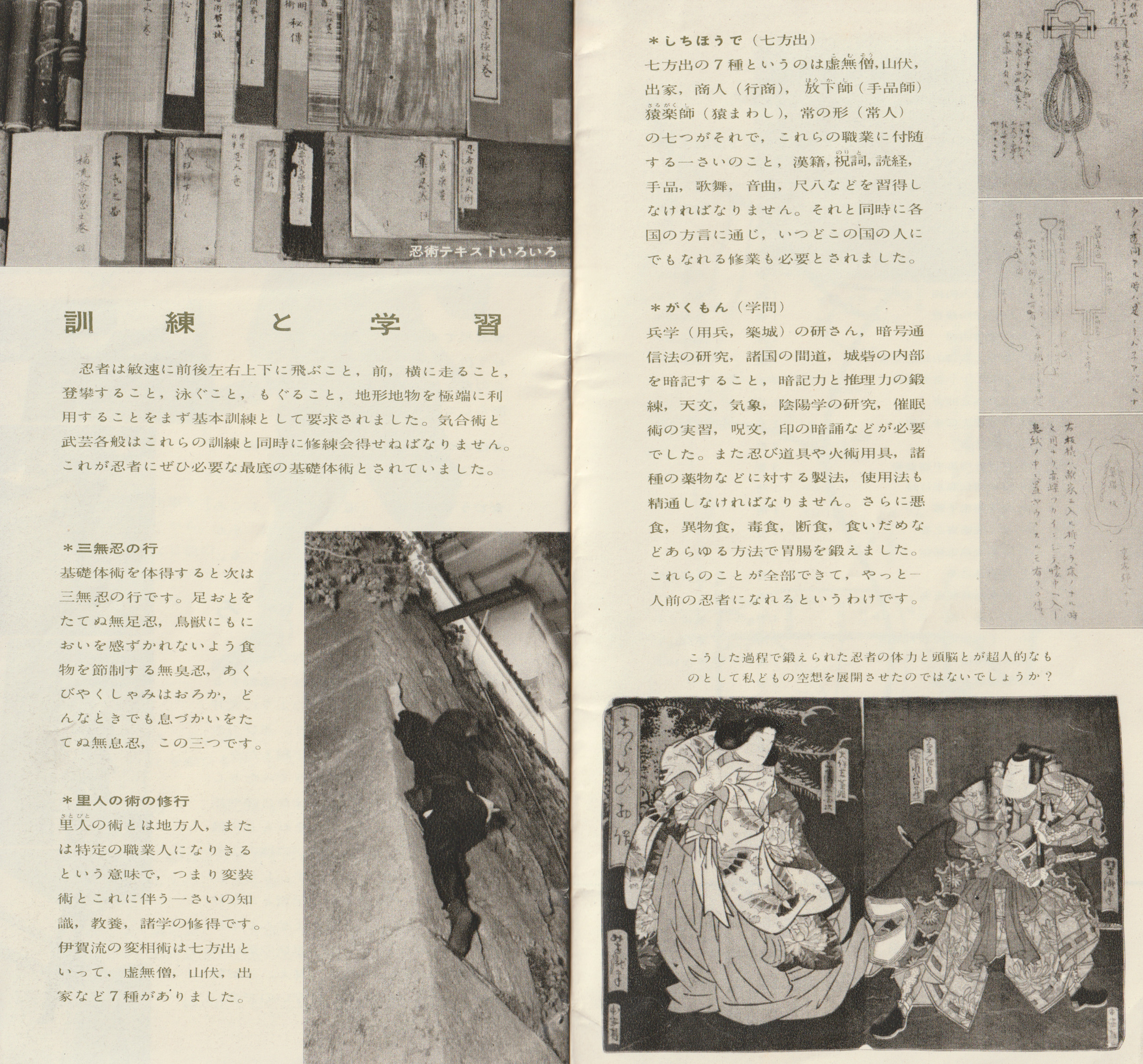
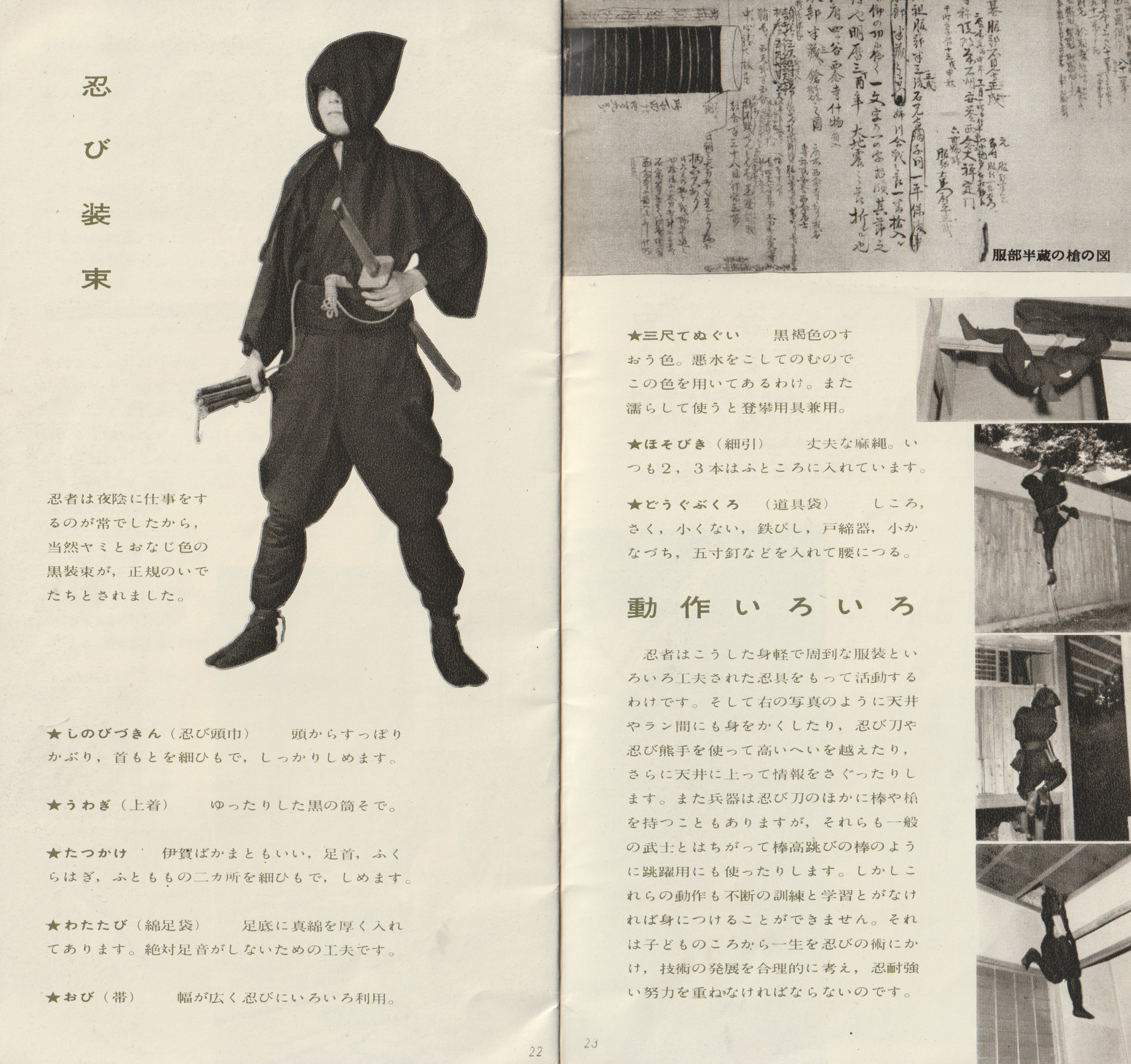
The publisher, Kinki Nippon Railway, produced a highly restricted, low-volume promotional printing meant solely for distribution to commuters traveling along the regional transit networks that linked urban centers directly to the historic, mountainous heartlands of the Iga and Koga regions. Unlike the author’s later mass-market commercial paperbacks from the mid-1960s, this original 24-page booklet features specialized layout designs pairing concise historical essays with rare local photographic plates, traditional ukiyo-e artwork references, and a crucial bibliographic registry detailing classical shadow scrolls.
THE EXCLUSIVE HISTORICAL DOCUMENT REGISTRY
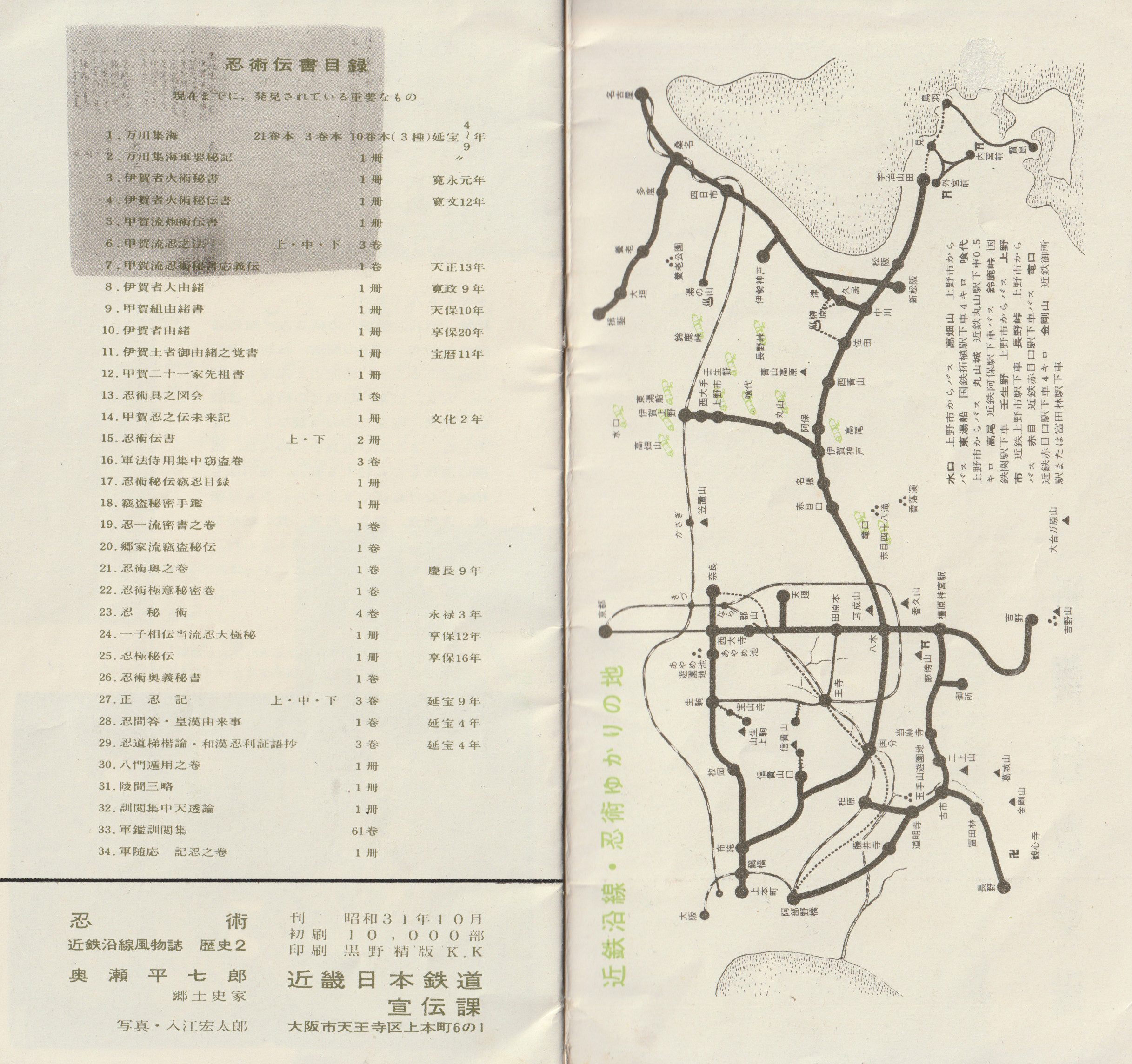
The core academic highlight of this pamphlet is the inclusion of the official Ninjutsu Densho Mokuroku (忍術伝書目録), an itemized research registry printed alongside the publishing colophon. Okuse meticulously curated a list of 34 legendary shinobi scrolls known to survive across hidden regional family archives. This list provided everyday commuters with their very first public glance at the primary sources of feudal espionage. Notable classical records explicitly registered and accounted for in this internal catalog include:
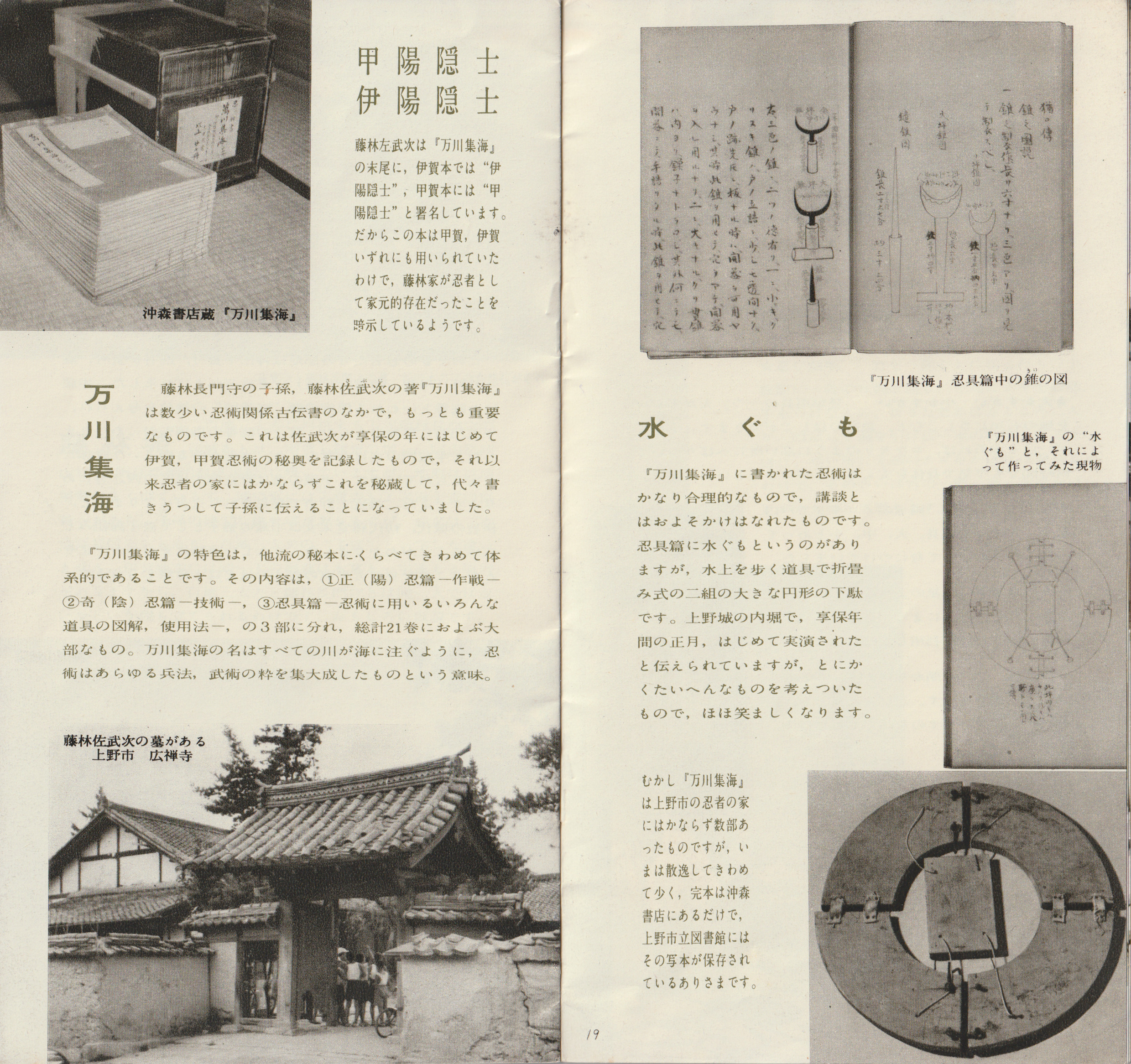
- No. 1: Bansenshūkai (萬川集海 – The Sea of Ten Thousand Rivers) – Compiled in 1676 by Fujibayashi Sabuji; the ultimate multi-volume encyclopedia of the entire registry.
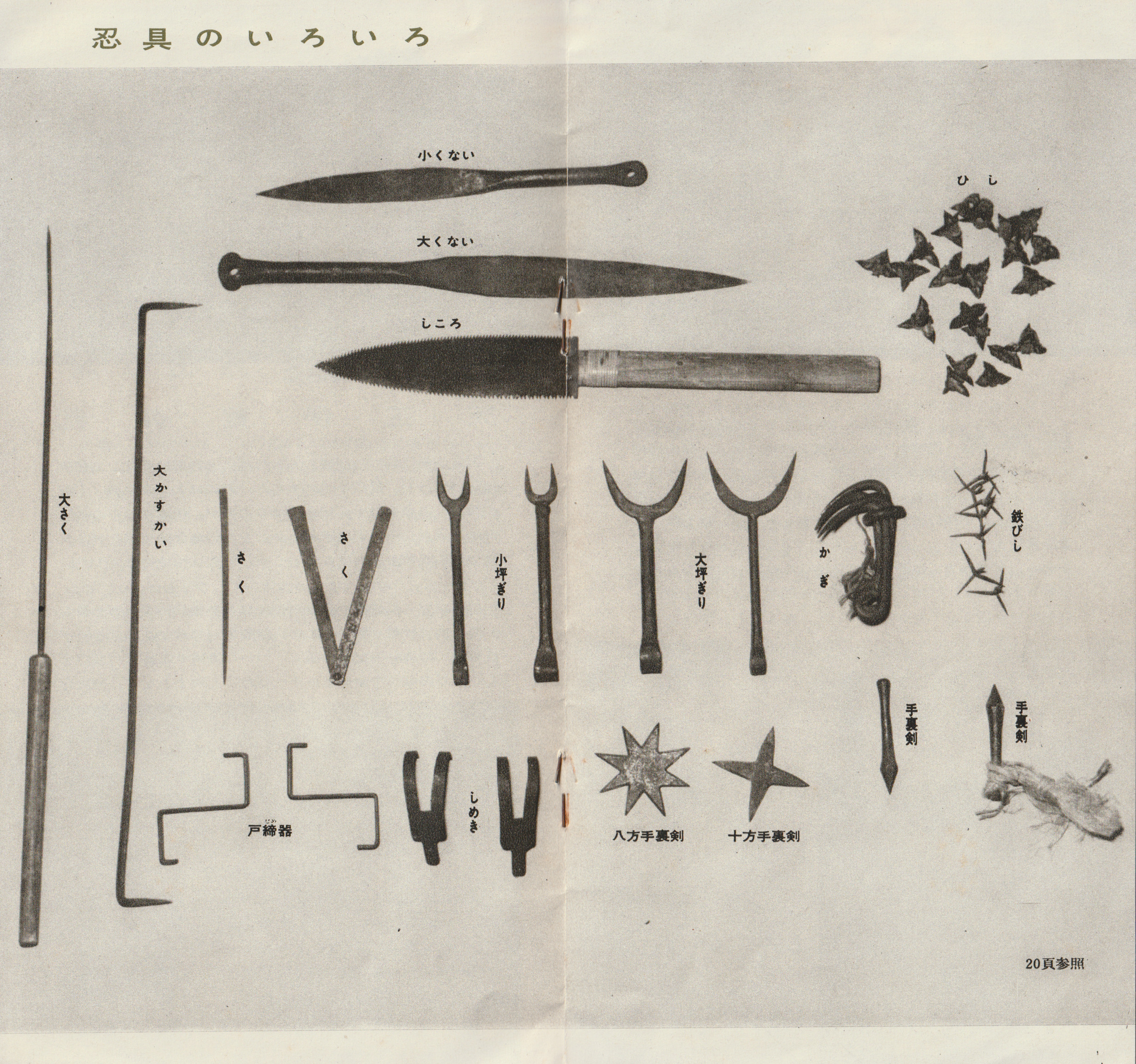
- No. 15: Ninpiden (忍秘伝 – Secret Transmission of Ninja) – A core historical lineage text detailing practical tools and infiltration methods.
- No. 27: Shōninki (正忍記 – True Ninja Journal) – The famous three-volume stealth and psychological strategy manual compiled in 1681.
- No. 34: Gunyō Hidengi (軍用秘伝記) – The final entry wrapping up the strategic wartime spy manuals in the catalog.
TRANSIT MARKETING & POSTWAR TOURISM MECHANICS
- Strategic Rail Routing: Published specifically for the Kintetsu Osaka and Nagoya Lines, the multi-colored geographic transit map printed on the final pages illustrates the precise railway networks linking major urban terminals directly to the hidden valley checkpoints of Iga-Ueno Station and Kōka Station.
- Postwar Cultural Revivalism: In 1956, Japan was experiencing a massive transformation during its mid-century economic recovery. Kinki Nippon Railway commissioned prominent local scholars to design these high-end, free cultural booklets to actively generate domestic weekend tourism. By re-framing ninja history as an intellectual regional treasure, they successfully pushed urban rail commuters to explore rural temple ruins, regional battlegrounds, and hidden mountainside historic hot spots along the Kintetsu lines.
THE SCHOLARLY SHIFT: REJECTING WIZARDRY
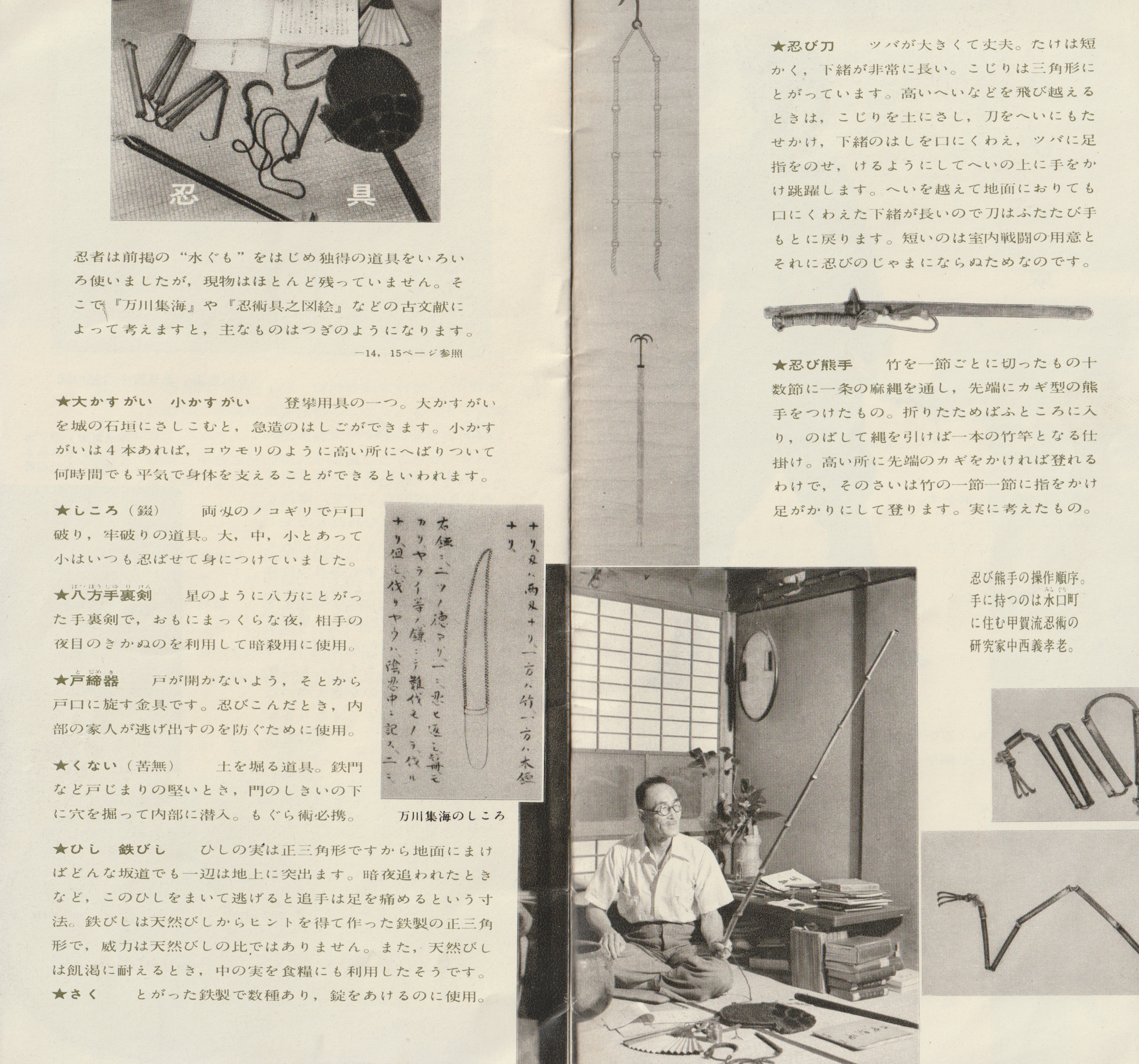
At the time of this booklet’s printing, Japanese mass media exclusively represented ninja through the lens of theatrical Kabuki tropes, magical hand gestures (Kuji-kiri), and folkloric frog-summoning special effects. This pamphlet represents an abrupt, monumental shift in tone. Okuse used the short publication length to completely reject fictionalized wizardry, introducing the public instead to genuine, grounded battlefield disciplines. He highlighted tactical espionage, weather pattern analysis, chemical poison brewing, and specialized defensive fortifications, permanently changing the trajectory of how historical shinobi lineage was studied.
UNUSUAL & RARE DETAILS OF THE AUTHOR & PAMPHLET
The Missing Commuter Inserts: Because these pamphlets were handed out freely at train stations, most surviving copies found today are completely missing the original loose-leaf transit maps, railway timetable slips, and local tourism route inserts that were tucked inside the covers by station staff. Complete, intact copies showing the full original layout are exceptionally difficult to acquire for modern martial arts bibliophiles.
Pre-Mayoral Fieldwork: The author, Okuse Heishichiro (1911–1997), was a native of Iga who later became the actual, sitting Mayor of Ueno City (modern-day Iga Ueno) in 1959. This 1956 pamphlet represents his earliest formalized public research, written three years before his famous hardcover masterwork Ninjutsu Hiden. He used his deep local pedigree and unique regional authority to gain access to heavily guarded private family archives, temple ledgers, and clan cellars that had been closed to outsiders for centuries.
Collaborative Ties to Fujita Seiko: While pop culture often mislabels them as master and disciple, Okuse was actually a vital contemporary peer to the legendary Fujita Seiko (1898–1956). In 1952, Okuse coordinated with Fujita to feature live Kōga-ryū ninjutsu demonstrations at Ueno City’s regional exposition. This collaborative effort effectively bridges the regional traditions of the Iga and Koga networks, transforming this 1956 tract into a highly objective cross-regional study.
The Master Photographer Connection: The high-quality documentary photographs inside the pamphlet were captured by Taikichi Irie (1905–1992), one of Japan’s most celebrated postwar landscape and cultural photographers. Famous for dedicating half a century to capturing the ancient atmosphere, Buddhist statues, and rural beauty of Nara and the surrounding Kansai region, Irie’s professional visual touch elevates this ephemeral railway giveaway into a highly collectable, premium art artifact.
Edition details
- Published:
- 10/10/1956
- Publisher:
- Kinki Nippon Railway Co., PR Dept.
- Edition:
-
- • Title Translation: Ninjutsu: Kintetsu Line Cultural History, Vol. 2
- • Formats & Binding: Slim B5 softcover promotional pamphlet featuring an illustrated map insert and a detailed historical ninja book bibliography.
- • Print Details: Print Date: October 5, 1956 (Shōwa 31) | Publication Date: October 10, 1956 (Shōwa 31)
- • Distribution Origins: Issued and distributed out of Uehonmachi, Tennoji-ku, Osaka, Japan.
- • Historical Pricing: Free promotional distribution item.
- Condition:
- Good