
忍術極意帳
Ninjutsu Gokui-cho
- Author:
- Kodansha (株式会社 講談社)
- Category:
- Ninjutsu
- Collection:
- Robert C. Gruzanski Collection
Description
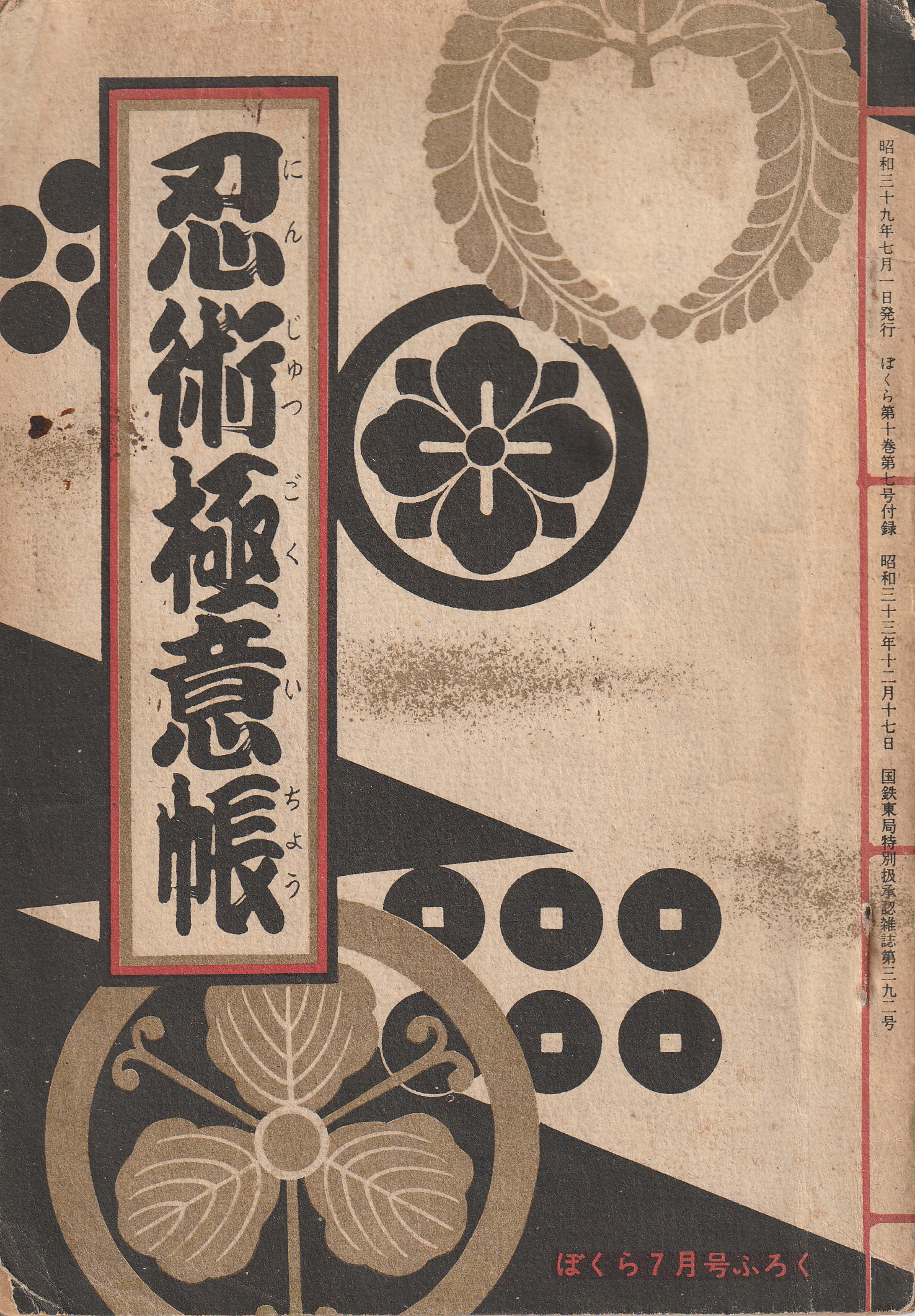
This is a rare 1964 first-edition of the Ninjutsu Gokui-cho (忍術極意帳), an original promotional supplement (furoku) included with the July issue of Kodansha’s “Bokura” magazine.
Produced at the absolute peak of Japan’s post-war “Ninja Boom,” it represents a unique historical moment where the media fantasy of the popular “manga ninja” began to merge with the serious historical research of pioneering scholars like Fujita Seiko and Okuse Heishichirō.
Rare & Unusual Aspects
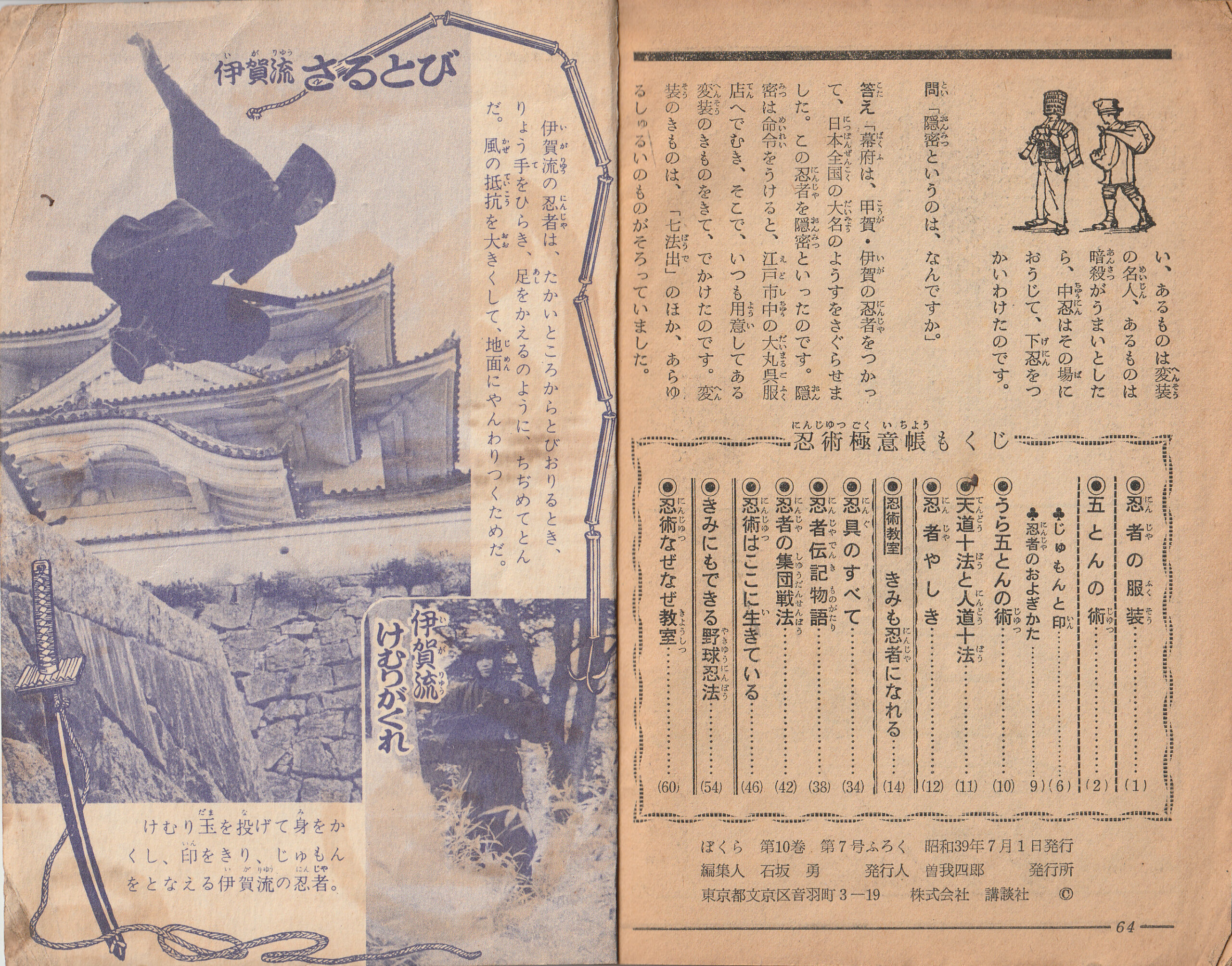
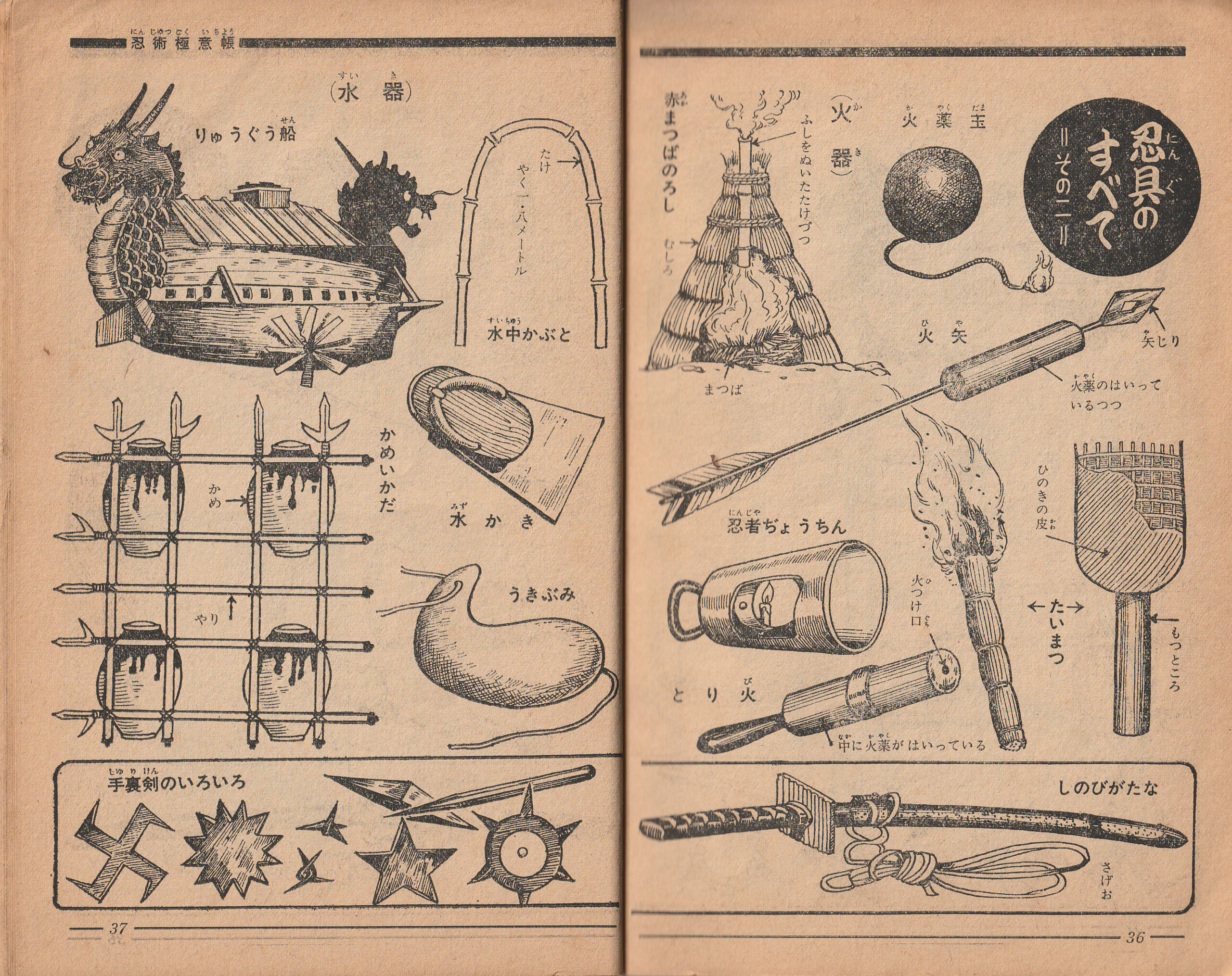
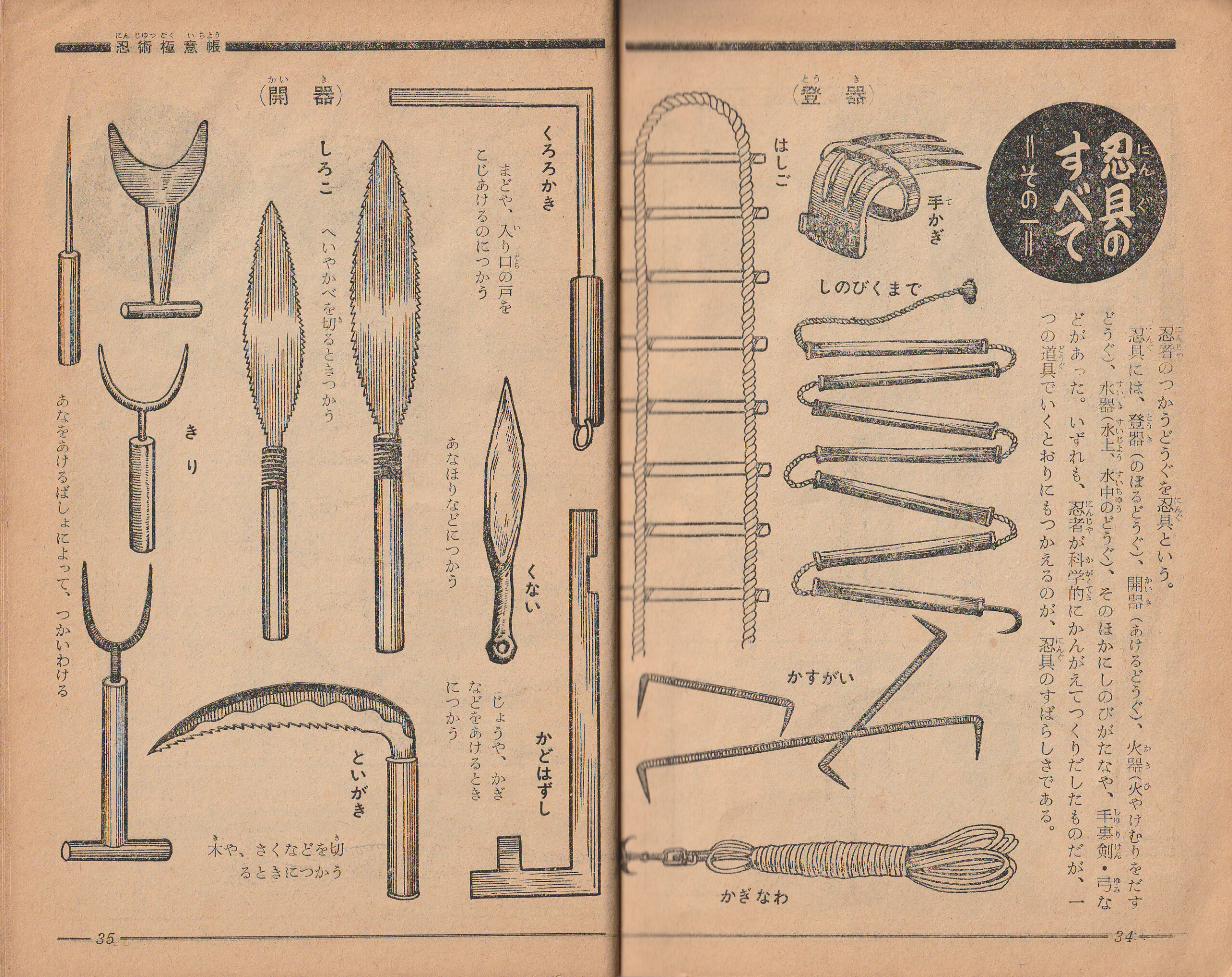
Keiji-no-Ninjutsu (Detective Ninjutsu): A highly unusual, dedicated section in this booklet draws a direct comparison between the historical ninja and modern 1964 Japanese detectives. It suggests that the “Six Tools” (Shinobi Roku-gu) evolved directly into the modern detective’s fieldwork kit—a theory heavily pushed by Fujita Seiko during his tenure as an instructor for municipal police departments.
Survival Ephemera: Because these specialized magazine inserts were printed on low-grade, highly acidic newsprint paper meant for young children, very few copies survived intact or in good condition. The “Iga-ryū Sarutobi” leap illustration and the stylized Kamon (Family Crest) cover art are iconic pieces of 1960s Japanese graphic design that are now highly sought after by collectors.
The “Last Ninja” Connection: While his name is not officially credited on the cover, the detailed technical illustrations for the Shuriken and Kaki (fire tools) are direct visual adaptations of Fujita Seiko’s private collection and training manuals. Fujita was actively consulting for various media companies at the time, and this booklet served as an entry-level “technical manual” for Japanese youth to learn his specific Koga-ryū lineage.
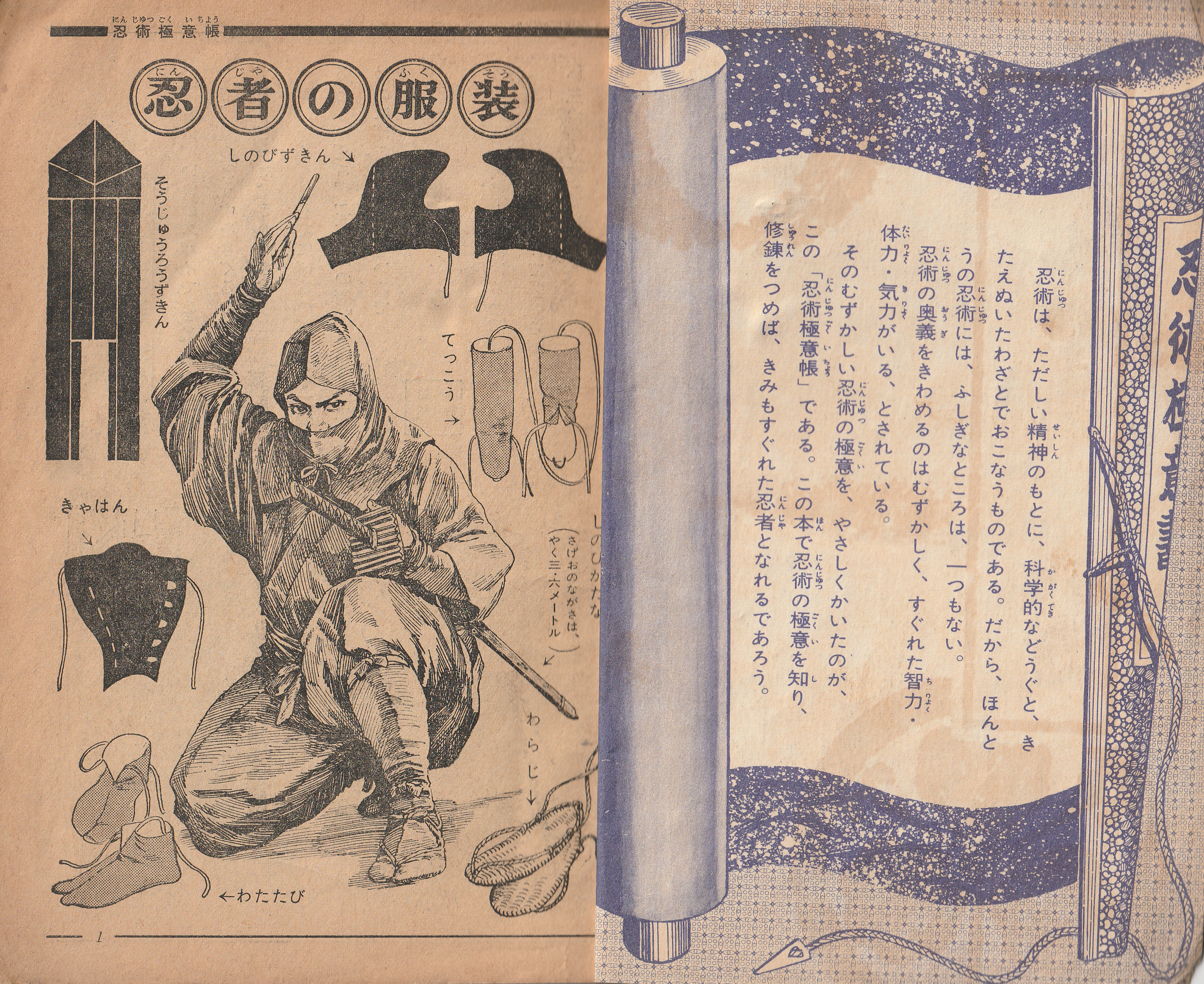
The “Scientific” Pivot: This book is one of the earliest mass-media examples of the “Rational Ninjutsu” movement. Instead of emphasizing magical spells, it strictly frames ninjutsu as “scientific movements” (科学的な動き). This was a deliberate effort by the editors to modernize the ninja image, moving away from 19th-century folklore into 20th-century espionage.
Edition details
- Published:
- 07/01/1964
- Publisher:
- Kodansha Limited
- Edition:
-
- • Title Translation: Secret Handbook of Ninjutsu (忍術極意帳)
- • Media Source: Original standalone supplement booklet (furoku) from Bokura (ぼくら) Magazine, Vol. 10, No. 7 (July Issue)
- • Release Date: July 1, 1964 (Showa 39)
- • Editorial Staff Credit: Akira Ishihara (石原明)
- • Publishing House Representative: Tadashi Gomi (五味忠)
- • Distribution Origin: Published out of Otowa, Bunkyo-ku, Tokyo by Kodansha Ltd. (株式会社 講談社)
- • Visual Style Note: While not explicitly credited by name on the final colophon page, the artwork style is entirely consistent with the action illustrators Kodansha employed for boys' magazine properties in the 1960s.
- Condition:
- Good