
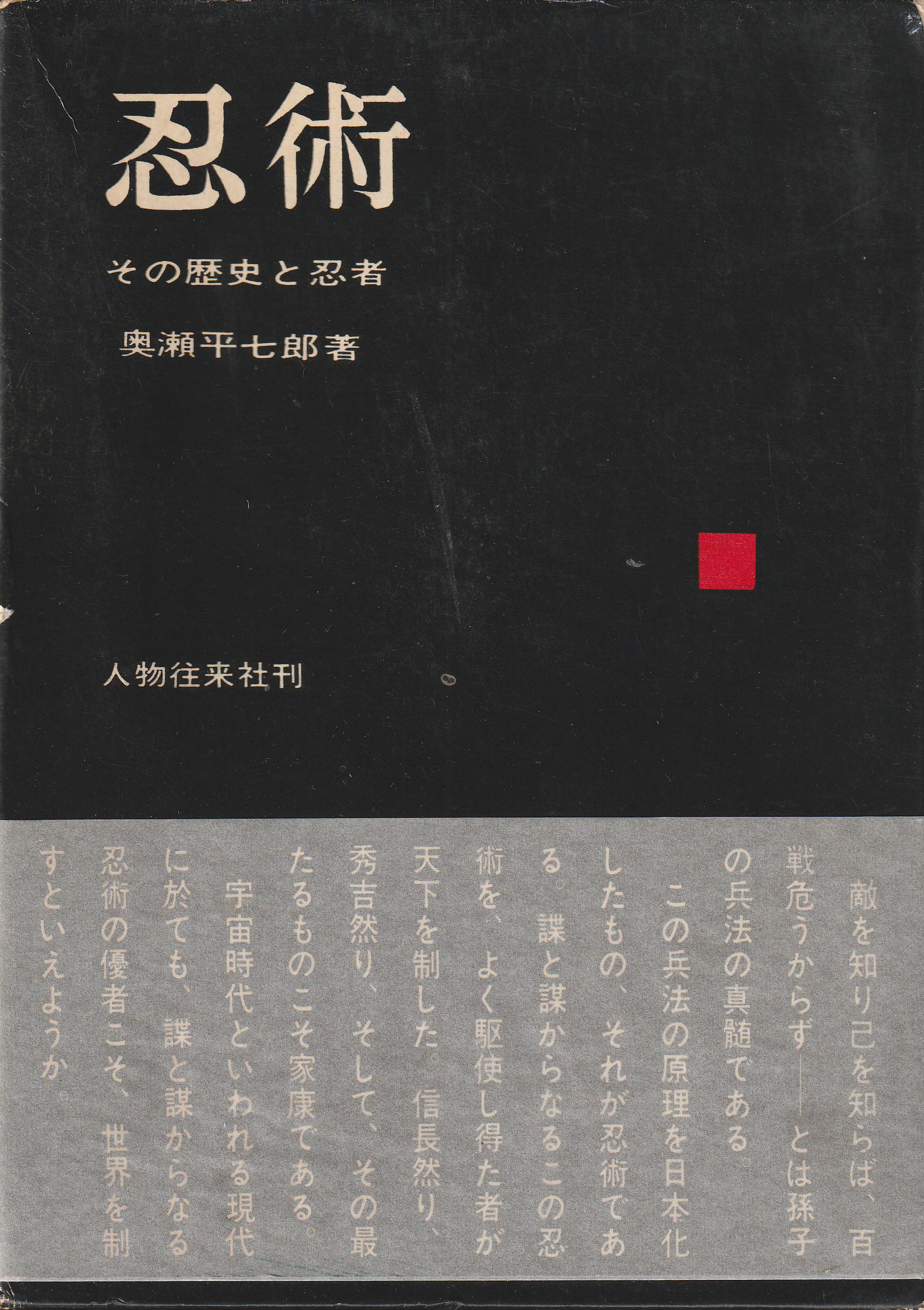
忍術:その歴史と忍者
Ninjutsu: Its History and the Ninja
- Author:
- Okuse Heishichiro (奥瀬平七郎)
- Category:
- Ninjutsu
- Collection:
- Robert C. Gruzanski Collection
Description
This 1963 volume by Heishichirō Okuse is a foundational pillar of modern, evidence-based ninja research. Unlike the sensationalist “ninja boom” literature of the era, this work seeks to strip away cinematic myth and replace it with historical, geographic, and scientific reality.
Core Theme
A rigorous academic investigation into the distinct Iga and Koga regional traditions, focusing directly on strategic mountain geography, genuine tool classifications, and the socio-economic origins of the shinobi.
Rare and Unusual Features
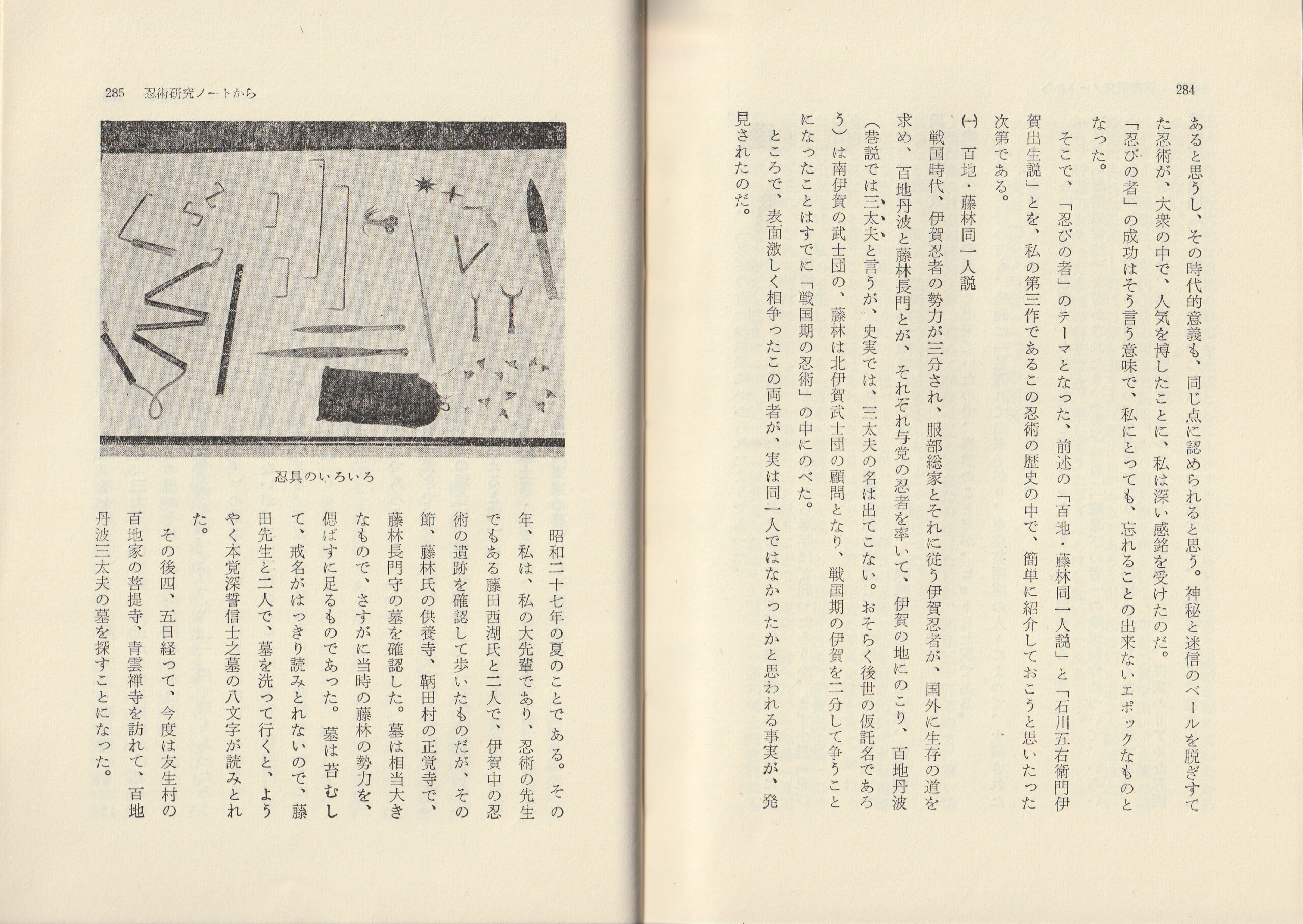
- Field Research Documentation: Page 285 documents an important, highly localized historical event: a 1952 field expedition where Okuse and Fujita Seiko traveled through the rugged Iga mountains together to physically map out and verify the forgotten ruins of ancient ninja residences and hidden fortifications.
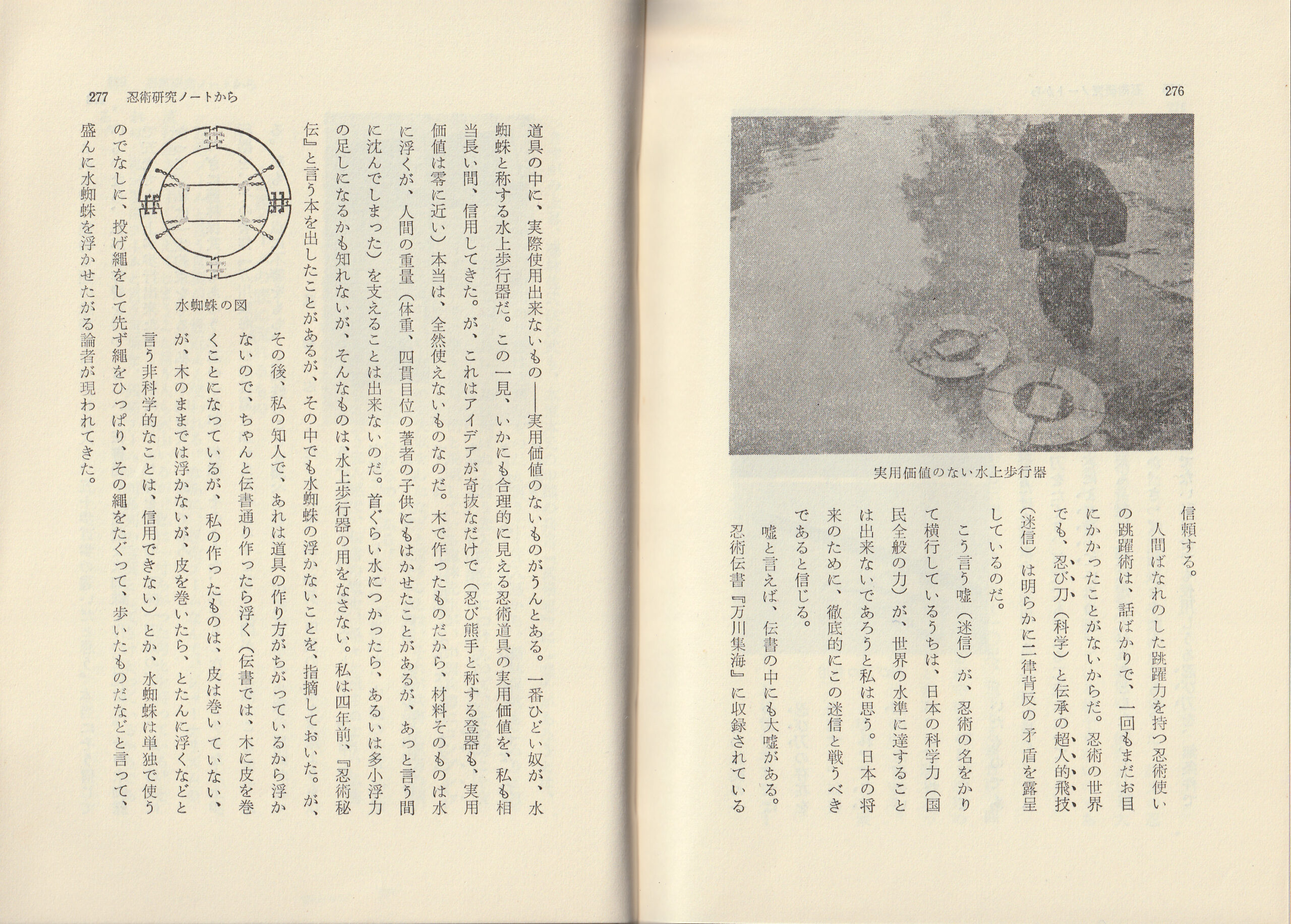
- The “Science of Skepticism”: A standout and unusually critical section features Okuse thoroughly debunking the mechanics of the Mizugumo (water spider). He provides hand-drawn structural diagrams (page 277) and uses buoyancy calculations to prove that “walking on water” with these shoes was a physical impossibility, explicitly labeling such legends as “superstitions” that damage the historical credibility of the art.
- The Fujita Seiko Connection (Page 285): Perhaps the most significant “rare” find in the text is the explicit mention of Fujita Seiko (the “Last Koga Ninja”). Okuse formally identifies Fujita within these pages as his highly revered “senior and teacher” (daisenpai and sensei).
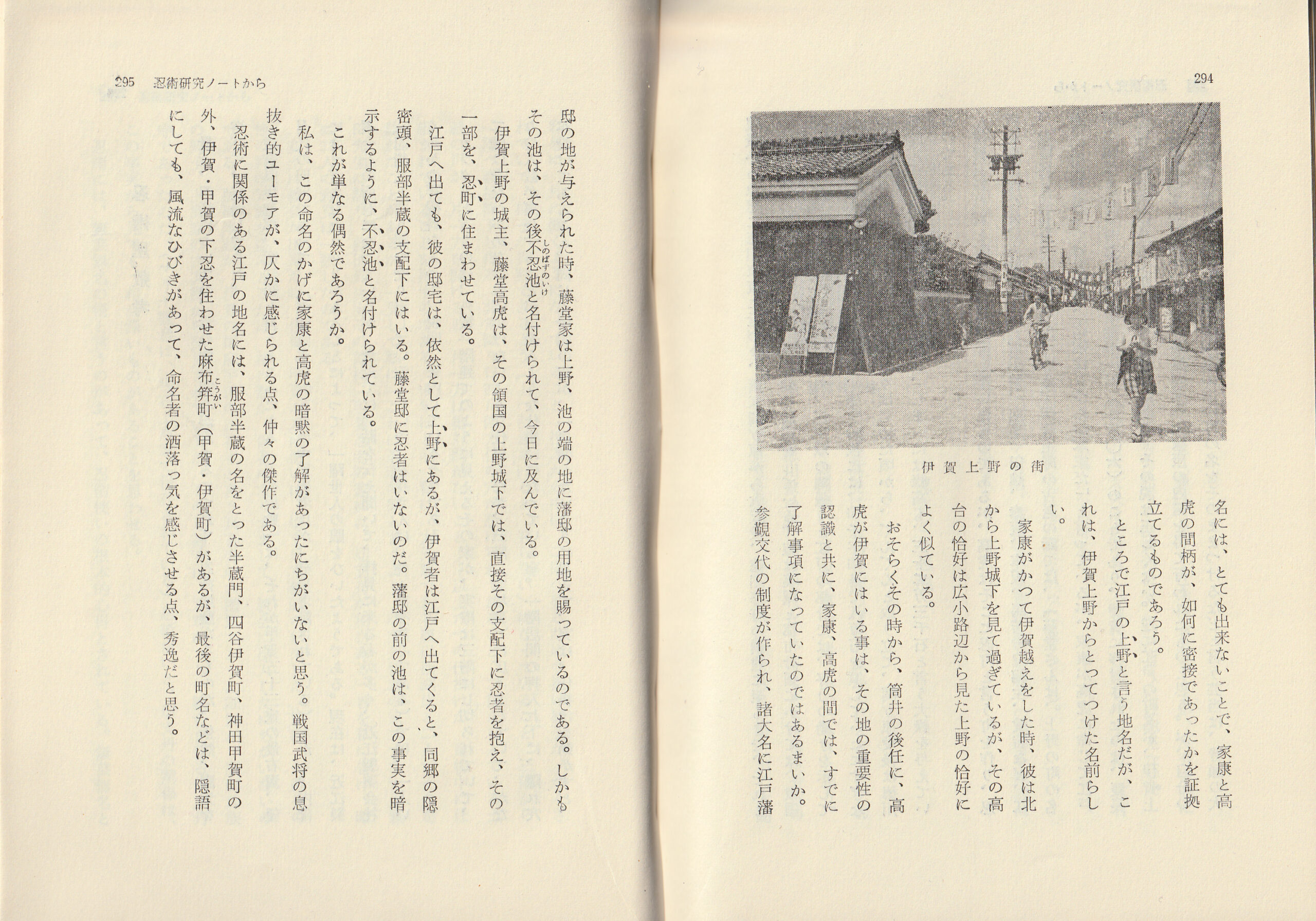
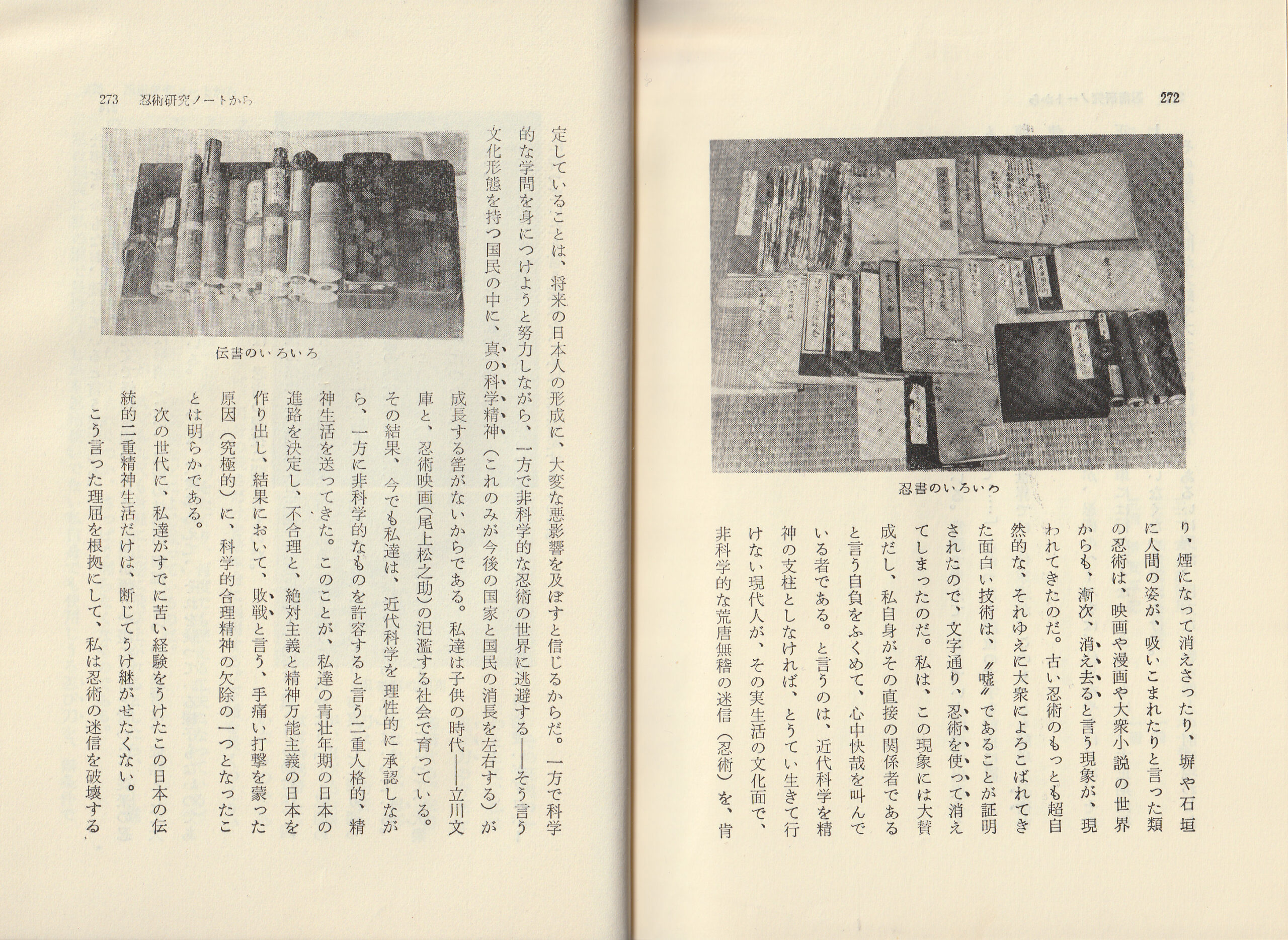
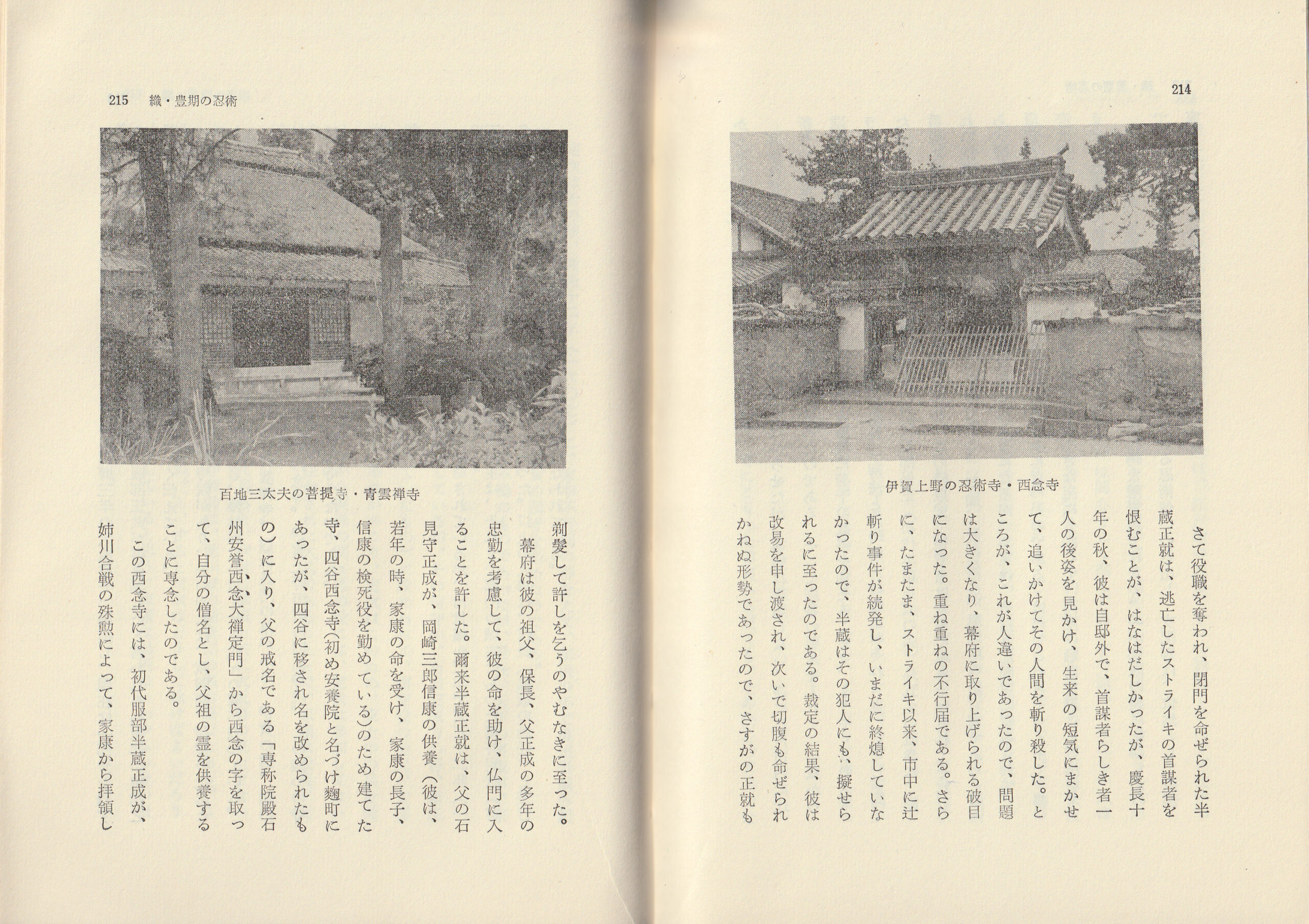
- Primary Source Photography: The book is deeply enriched with rare black-and-white photography of actual ninja manuscripts (Ninsho), regional family gravesites like that of the legendary Momochi Sandayū, and atmospheric landscape shots of Iga-Ueno in the heavy rain, which the author uses to explain how the local climate patterns were perfectly suited for clandestine guerrilla activities.
Deep-Dive: Lost & Hidden Historical Facts
- The “Ninjutsu Pavilion” Genesis: The true origin of this entire book traces back to a major regional project in 1951 (Showa 26). Okuse was tasked with designing and managing the local “Children’s Exposition” in Ueno City. On a whim, he drew up plans to build a dedicated, historically accurate “Ninjutsu Pavilion”. This exhibition was such a massive regional success that it forced him to reach out to Fujita Seiko, sparking the lifelong partnership and field research that ultimately formed the pages of this 1963 text.
- The Five-Shō Drinking Capacity: On page 138, Okuse includes an incredibly rare, candid personal vignette regarding his private social life with Fujita Seiko. He notes that while he would turn bright red and collapse after just two or three small cups of sake, Fujita possessed an unbelievable “ninja-level” tolerance. Okuse discovered that Fujita’s true drinking capacity was five to six shō (nearly 9 to 10 liters of alcohol), yet he would maintain absolute military composure and calmly refer to his heavy drinking as merely “operating at the licking level”.
- Sun Tzu’s Strategic Seed: In Chapter 2, Okuse presents a highly controversial academic argument that split mid-century martial arts communities. He documents that true ninjutsu did not naturally originate within Japan. Instead, he traces its structural blueprints directly back to the 6th-century importation of Chinese espionage strategy—specifically the “Yōkan-jutsu” (Art of Spies) sections found in Sun Tzu’s The Art of War. He proves that this raw foreign strategic system served as the seed that rural Japanese clans slowly weaponized across centuries of civil war.
About the Author: The Multi-Faceted Legacy of Heishichirō Okuse
Pop-Culture DNA: Because this volume is so highly regarded for its dense regional data, it has deep roots in modern Japanese media. This exact book is formally cited in production logs as a core, primary research textbook used to write the historical world details for the legendary, long-running manga and anime franchise Nintama Rantaro (Rakudai Ninja Rantaro).
The Elite Protégé: Okuse wasn’t just a municipal worker who liked history. He was a highly educated political economy graduate from the prestigious Waseda University. While in Tokyo, his precision writing talents allowed him to be personally selected to study as a core literary disciple under Masuji Ibuse—one of Japan’s most celebrated 20th-century mainstream authors. This rare elite training is why this book reads like a polished historical narrative rather than a dry listing of records.
The Continental Spy Framework: Long before writing about hidden cells in Iga, Okuse managed sensitive strategic communication frameworks abroad. He worked directly as a communications asset for the Manchurian Telephone & Telegraph Company during the pre-war era, giving him a real-world, practical understanding of intelligence interception and information networks.
Architect of the Global Ninja Capital: Following his return to Japan, Okuse rose to become the actual, sitting Mayor of Ueno City from 1969 to 1977. He single-handedly used his double authority as a historian and top public official to physically build the tourist infrastructure of modern Iga Ueno. By turning old family estates into formal museum properties and constructing localized exhibits, his public service career is universally credited by modern Japanese historians as the true birth spark for the entire global “Ninja Boom” of the late 20th century.
Edition details
- Published:
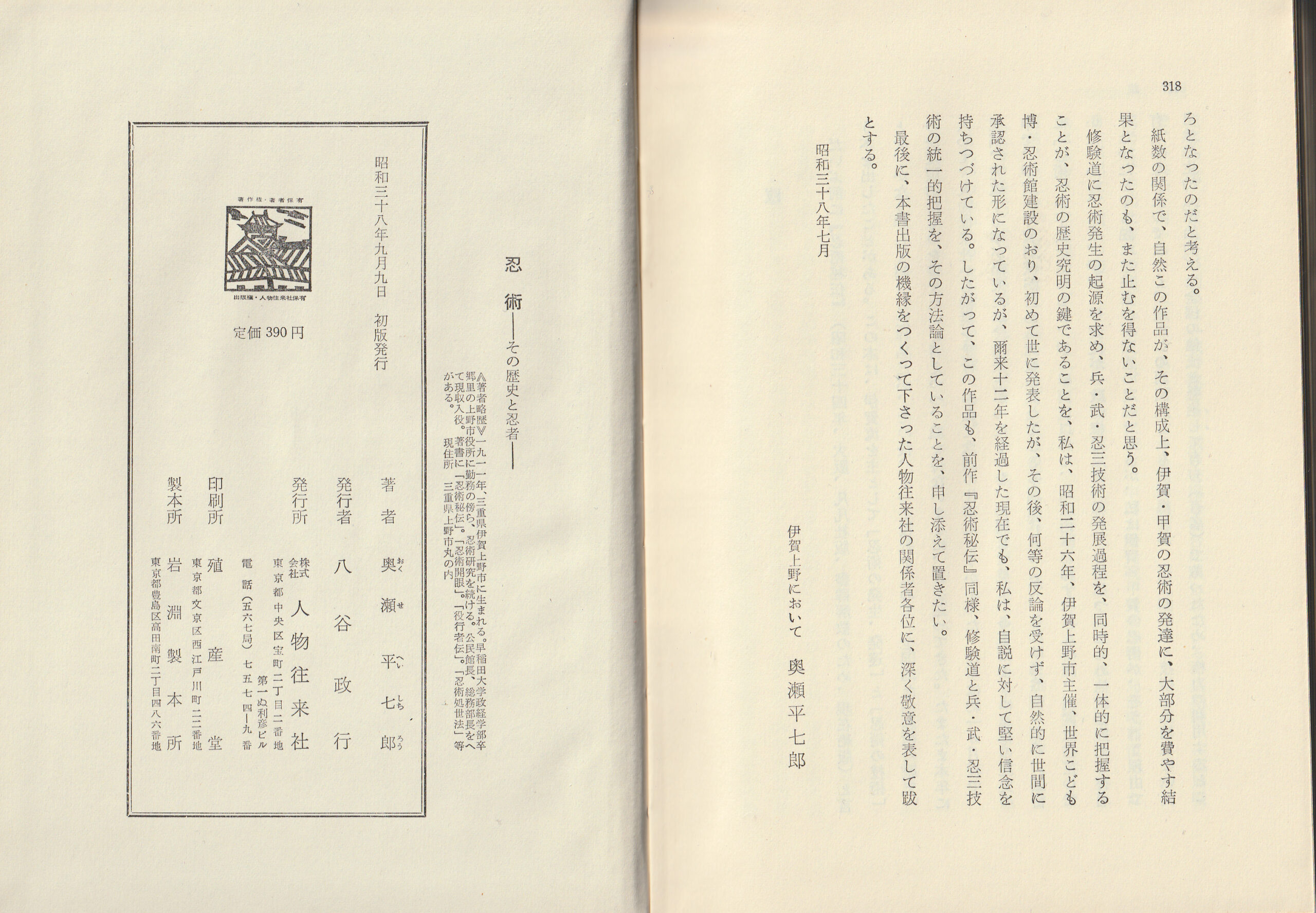
- 09/09/1963
- Publisher:
- Shin Jinbutsu Oraisha
- Edition:
-
- (Ninjutsu: Its History and the Ninja)
- • Publisher: Shin Jinbutsu Ōraisha (新人物往来社)
- • Original Release Pricing: 390 Yen (定価 390円)
- • Publication Milestone: 1963 True First Edition release featuring original un-redacted field research entries and historical photographic plates.
- Condition:
- Good
- Slipcase:
- Yes