

忍術とは
Ninjutsu to wa?
- Author:
- Fujita Seiko (藤田西湖)
- Category:
- Ninjutsu
- Collection:
- Robert C. Gruzanski Collection
Description
Core Themes & Content
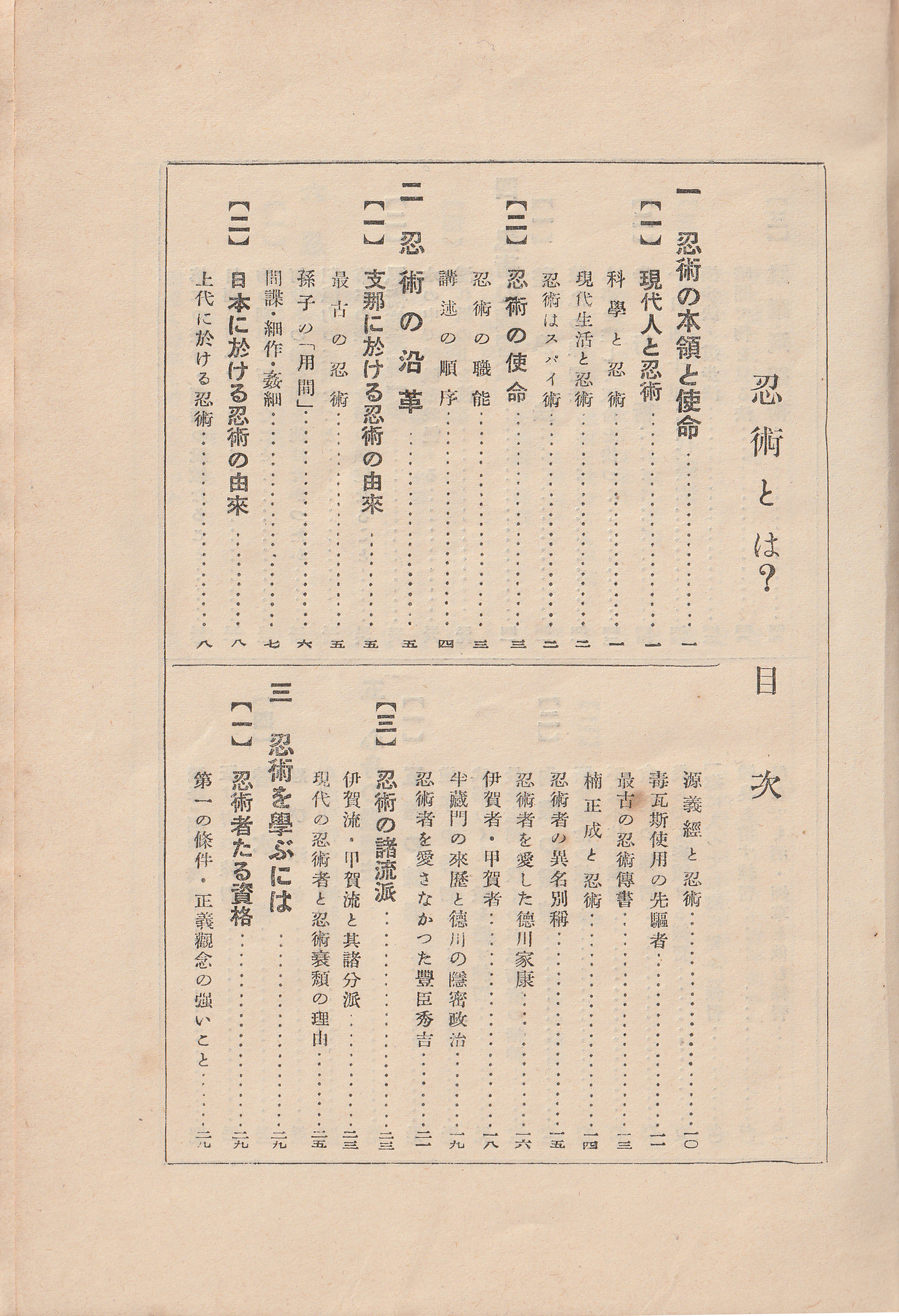
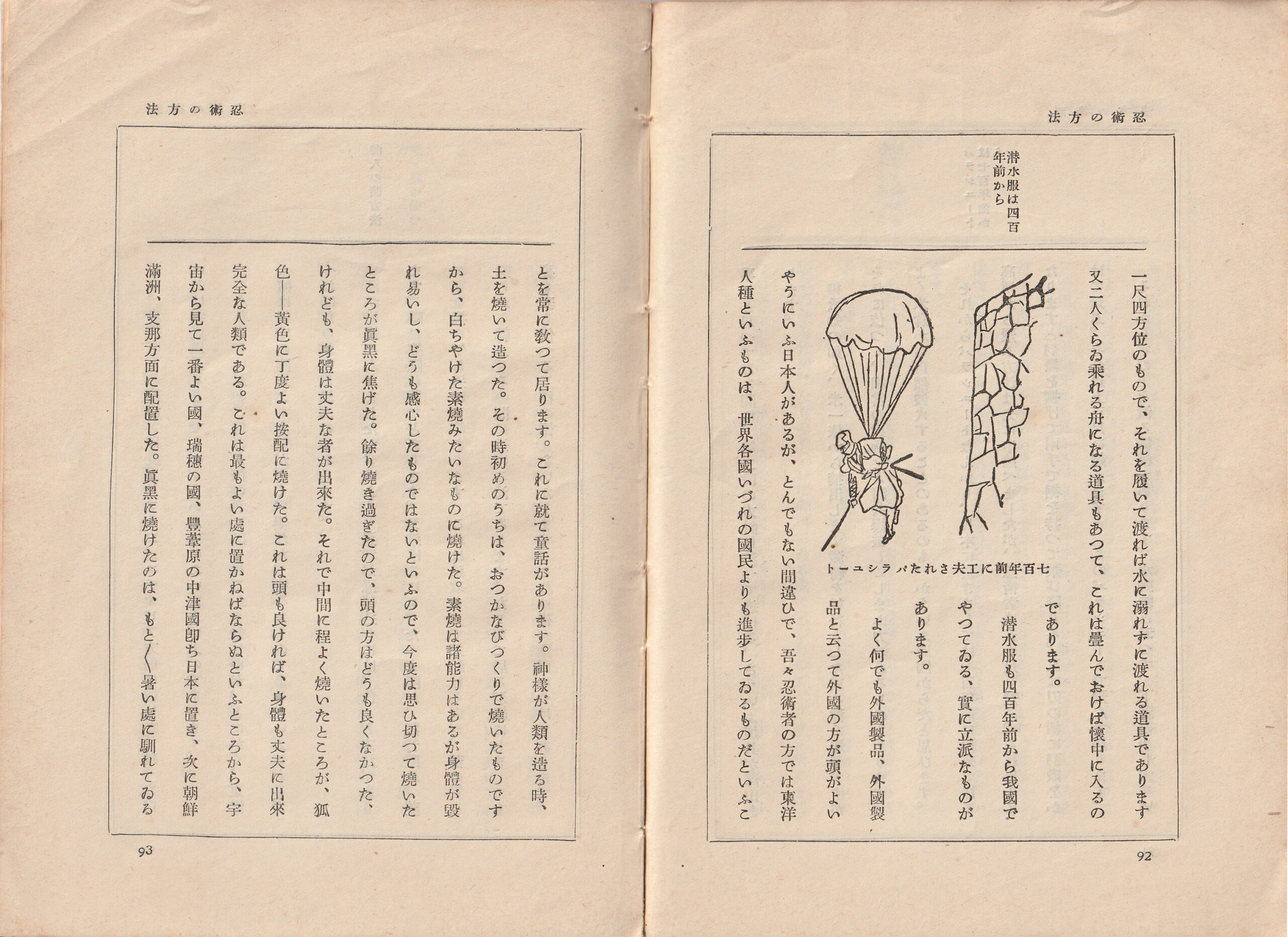
- Historical Correction: Fujita argues that ninjas were not “magicians” who disappeared in puffs of smoke. He defines ninjutsu as a strategic collection of intelligence-gathering (espionage) and guerrilla warfare techniques developed through necessity.
- The Five Elements of Infiltration (Goton): He breaks down the traditional methods of using the environment—Earth, Water, Fire, Wood, and Metal—to hide, escape, or infiltrate enemy lines, explaining them through physics and human psychology.
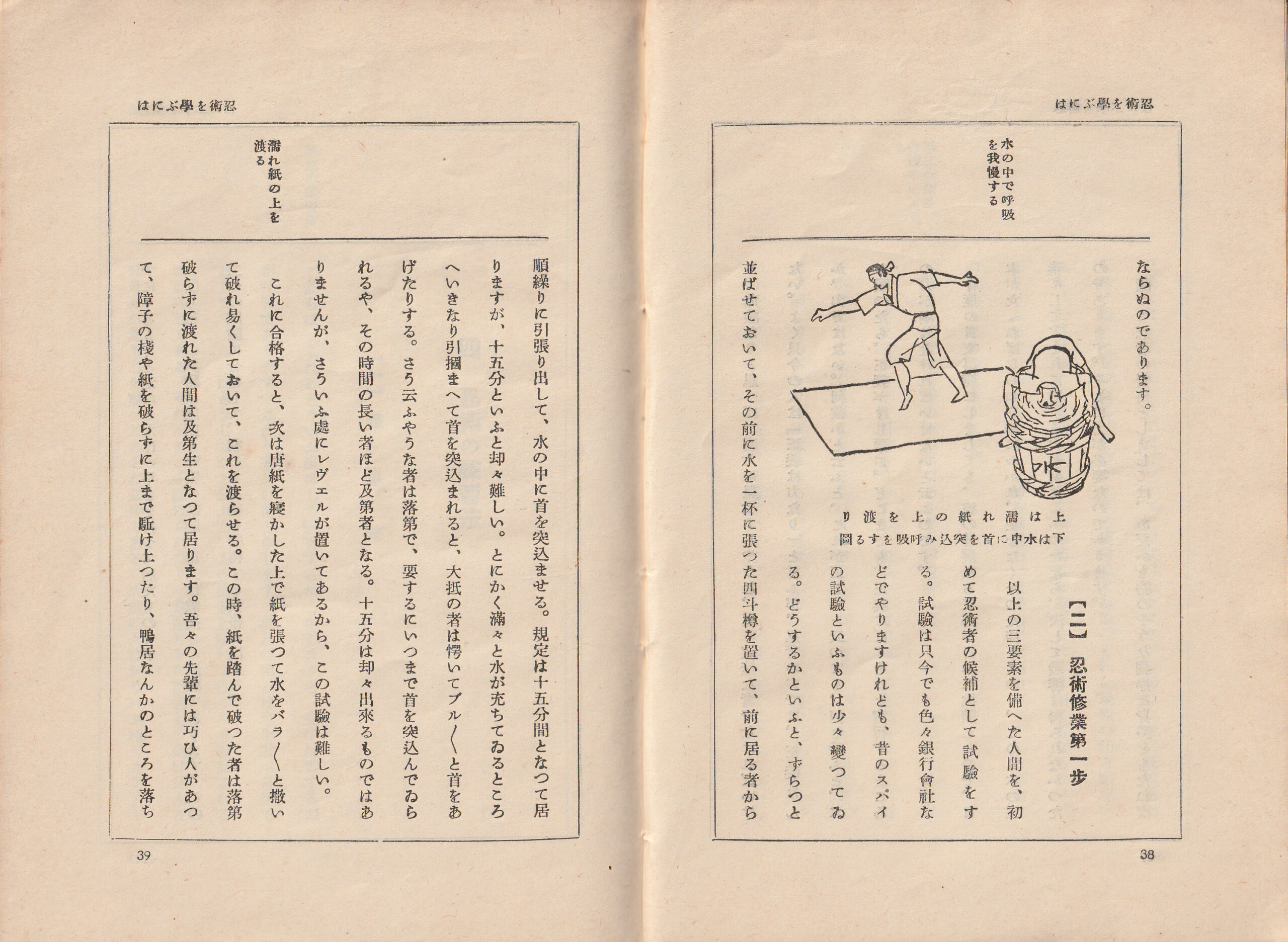
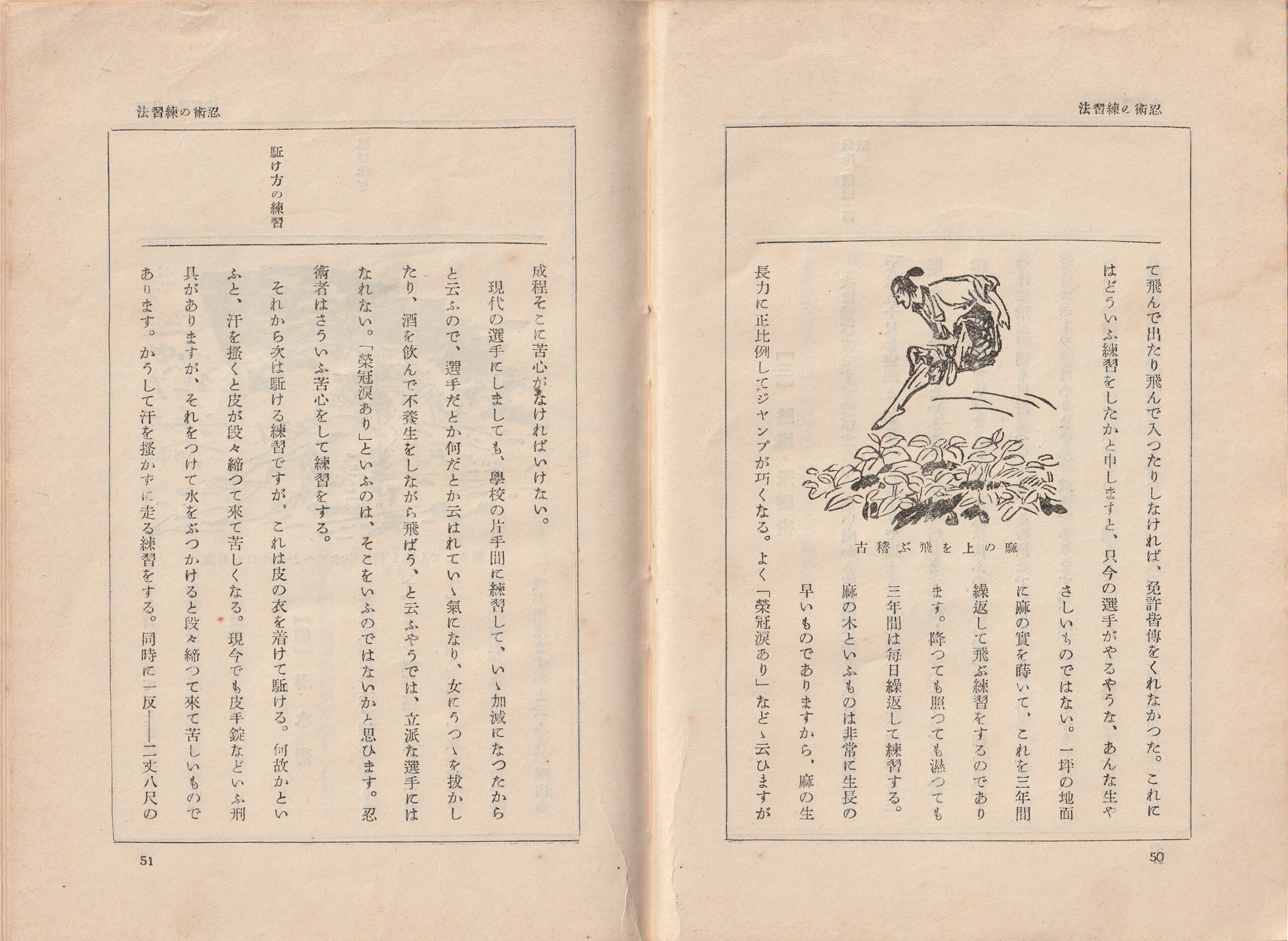
- Physical & Mental Conditioning: The book covers specialized training, including breathing techniques, ways to increase walking speed (shinobi-ashi), and methods for sharpening the senses for night missions.
- Psychology and Disguise: A significant portion is dedicated to “Shichi-ho-de” (The Seven Disguises), teaching how to blend into any social environment by adopting the speech and mannerisms of different classes, such as monks or merchants.
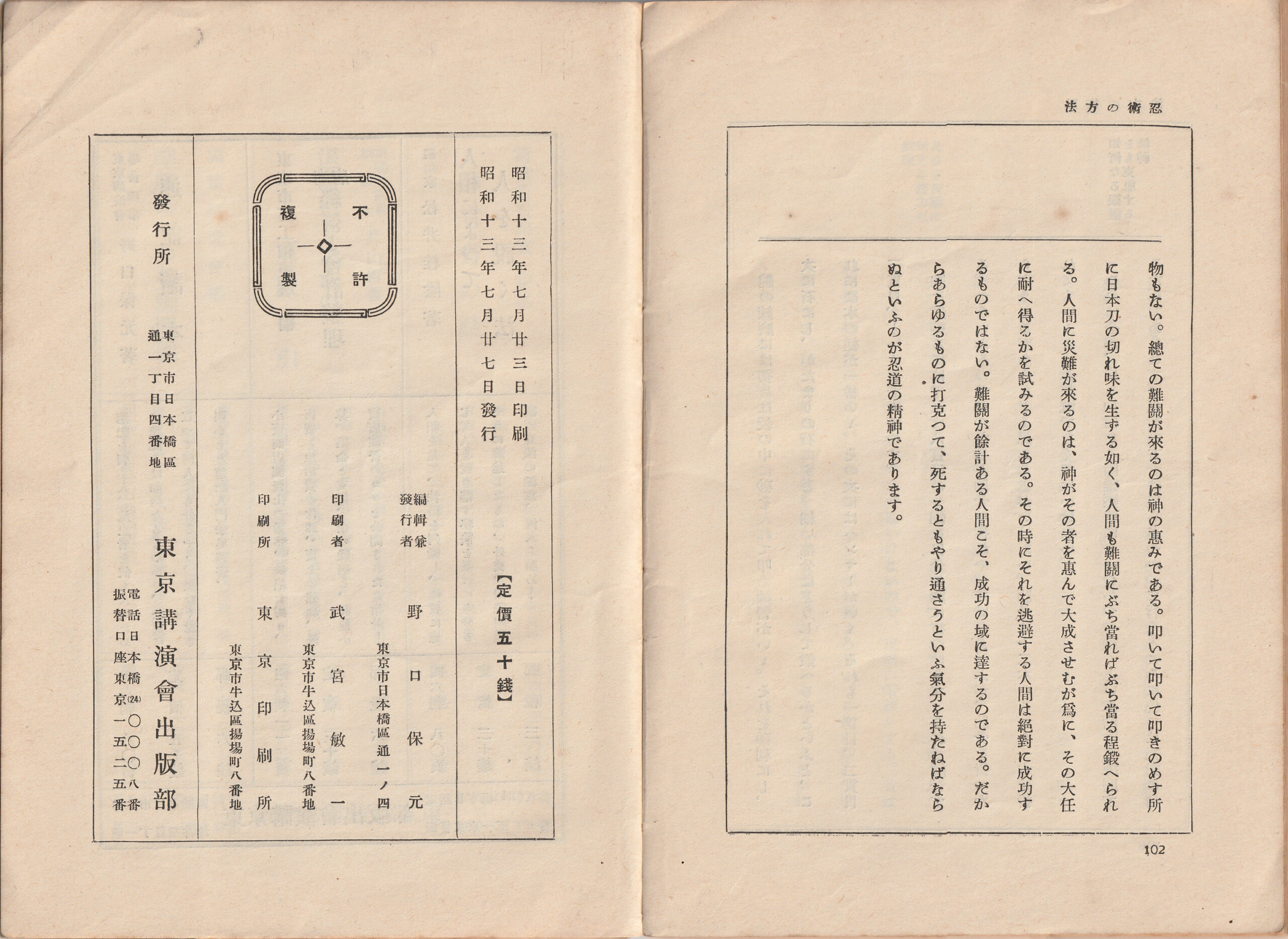
- The Spirit of Ninpō: As seen on your final page (page 102), Fujita emphasizes that the true core of a ninja is unbreakable willpower. He frames it as a quiet psychological endurance under extreme duress.
Rare & Unusual Facts About the Book and Author
- The Shorthand “Live” Trap: This volume is a true historical anomaly because it is a “Sokki” record. It was not written as a manuscript in a quiet study. Instead, a professional military stenographer sat in the back of a restricted lecture room, utilizing hyper-speed shorthand to capture Fujita’s spoken words live as he delivered tactics to pre-war imperial defense units. Because it preserves a spoken lecture, it features a raw, conversational, and direct tone entirely missing from his dry post-war encyclopedias.
- The 1938 Wartime Mobilization Context: Released in July 1938, this book landed exactly as the National Mobilization Law was sweeping through Japan. While the public consumed sensationalized ninja stories in magazines, this book was an official effort by the Tokyo Kōen-kai (Tokyo Lecture Association) to extract practical, survivalist intelligence-gathering doctrines from the Koga tradition for state defense applications.
- Exploding the Magic Myth Before the Boom: Decades before the global “Ninja Boom” of the 1960s and 1980s popularized historical ninja research, Fujita used this 1938 platform to aggressively strip away the fantasy elements of the shinobi. He mathematically and physically explained away classic “magic spells” as practical sensory misdirection tools, establishing himself as Japan’s very first rationalist ninja historian.
- The Saineikan Connection: The lectures compiled in transcripts like this one helped establish Fujita’s reputation within elite martial circles, ultimately leading to his recruitment as a specialized close-quarters combat instructor for the Imperial Army’s clandestine Nakano Spy School.
Edition details
- Published:
- 07/27/1938
- Publisher:
- Tokyo Kōen-kai Shuppan-bu
- Edition:
-
- • Full Title: Ninjutsu to Wa? (忍術とは? / What is Ninjutsu?)
- • Publication Date: July 27, 1938 (Showa 13)
- • Publisher: Tokyo Kōen-kai Shuppan-bu (東京講演會出版部)
- • Record Type: Sokki Enjutsu Kiroku (速記演術記錄 / Shorthand Lecture Transcript)
- • Historical Context: Compiled from confidential military and police lecture series delivered by Fujita Seiko across Tokyo during the pre-war era.
- Condition:
- Good
- Dust jacket:
- Yes