
忍法: 現代人はなぜ忍者にあこがれるか
Ninpō: Gendaijin wa naze ninja ni akogareru ka
- Author:
- Makiichi Adachi, Hideki Ozaki, Munemutsu Yamada (足立巻一, 尾崎秀樹, (山田宗睦)
- Category:
- Ninjutsu
- Collection:
- Robert C. Gruzanski Collection
Description
Ninpō: Gendaijin wa naze ninja ni akogareru ka (Ninja Arts: Why do Modern People Admire Ninjas?)
Summary: The Sociology of the Shadow
Released during the height of Japan’s mid-century “Ninja Boom” and just months before the 1964 Tokyo Olympics, this work is a sophisticated sociological and psychological critique. Rather than a tactical manual, this collaboration between a philosopher, a literary critic, and a historian explores why a rapidly modernizing, corporate Japan became obsessed with the image of the feudal spy. The authors argue that the ninja represents the ultimate individualist—a symbol of personal freedom and specialized mastery for the post-war worker trapped in rigid social hierarchies.
Key Content & Historical Insights (From Your Scans)
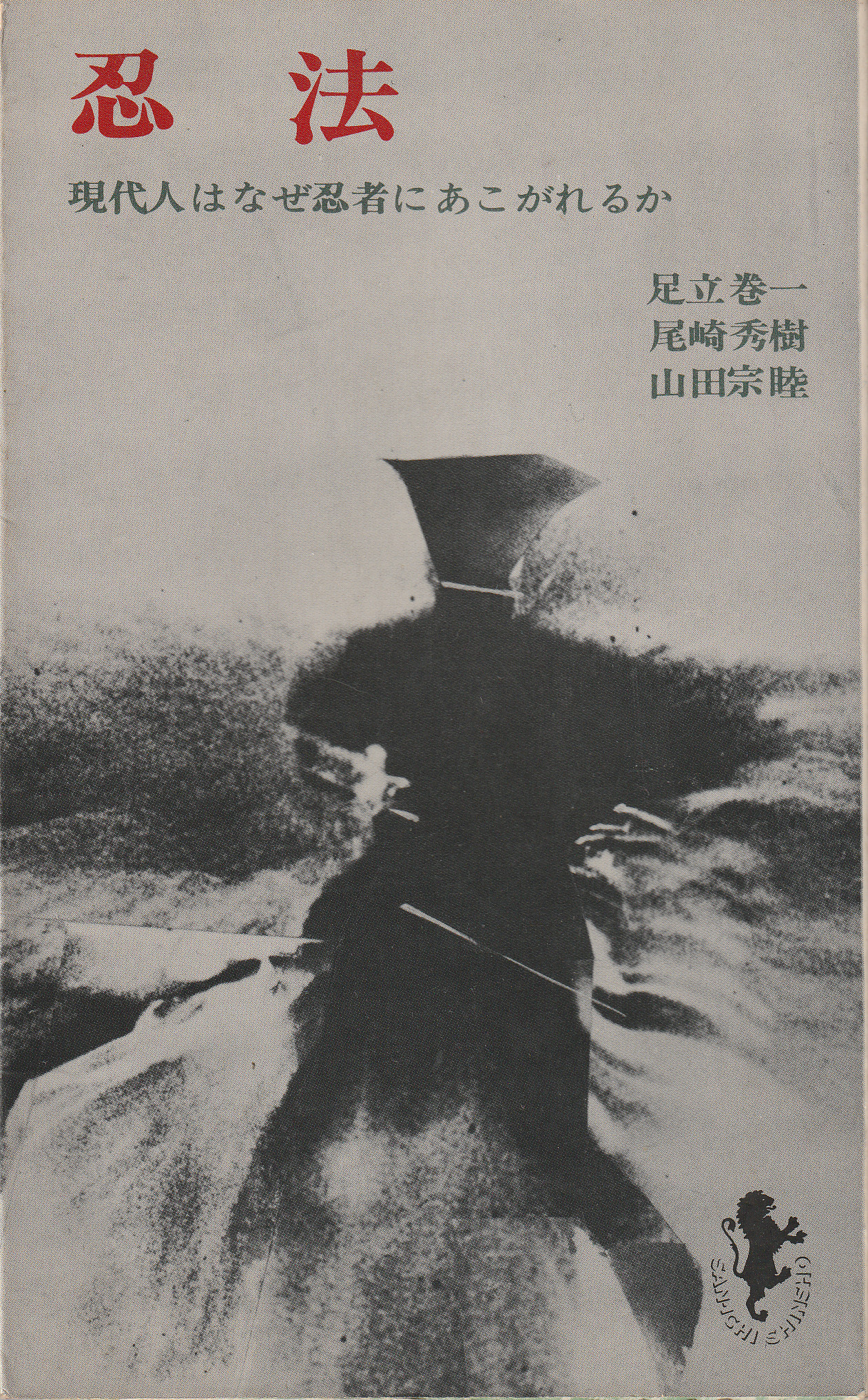
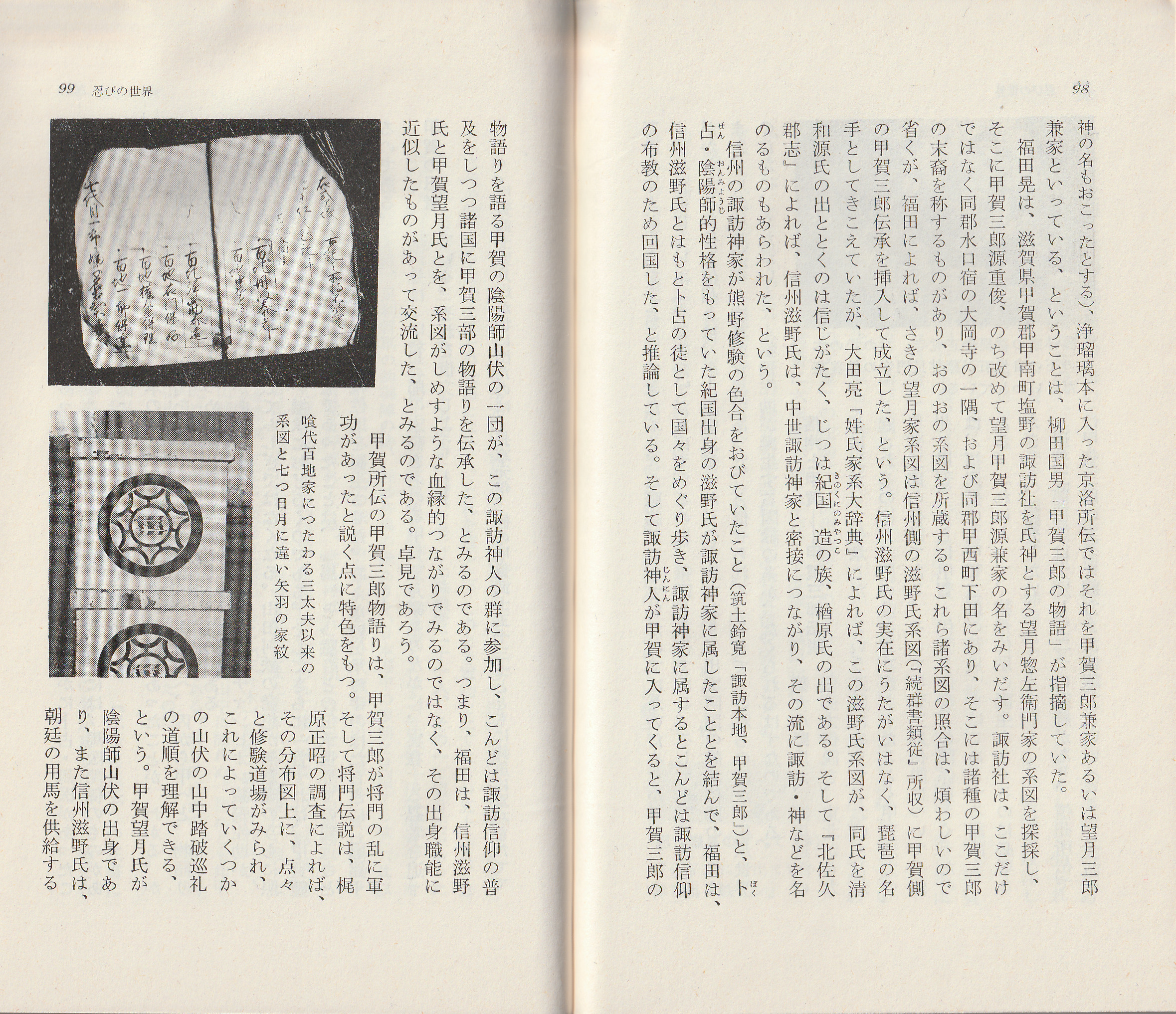
- Part 1: Origins and Birth (pp. 52–99): The book opens with a stylized “Shadow Ninja” (p. 52) to set the mood for a historical deep dive. It explores the Yamabushi (mountain ascetic) roots of the art (p. 99) and clarifies that many “secret” tools were actually modified peasant farming implements (p. 62).
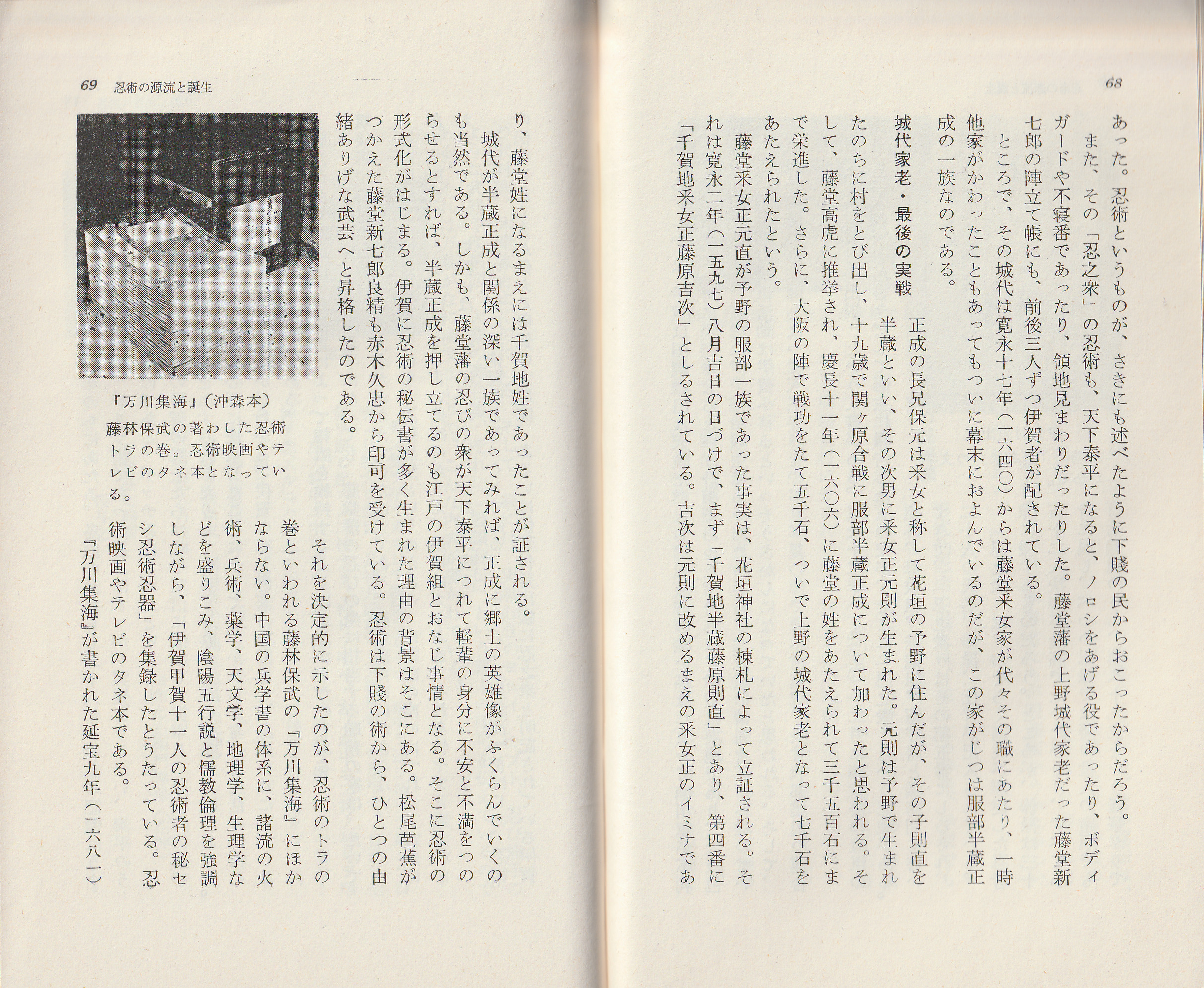
- Genealogical Foundations: The authors use verified family records from the Mochizuki, Yamanaka, and Hattori clans (pp. 68–69, 99) to bridge the gap between historical landowning samurai (jizamurai) and the legends that followed.
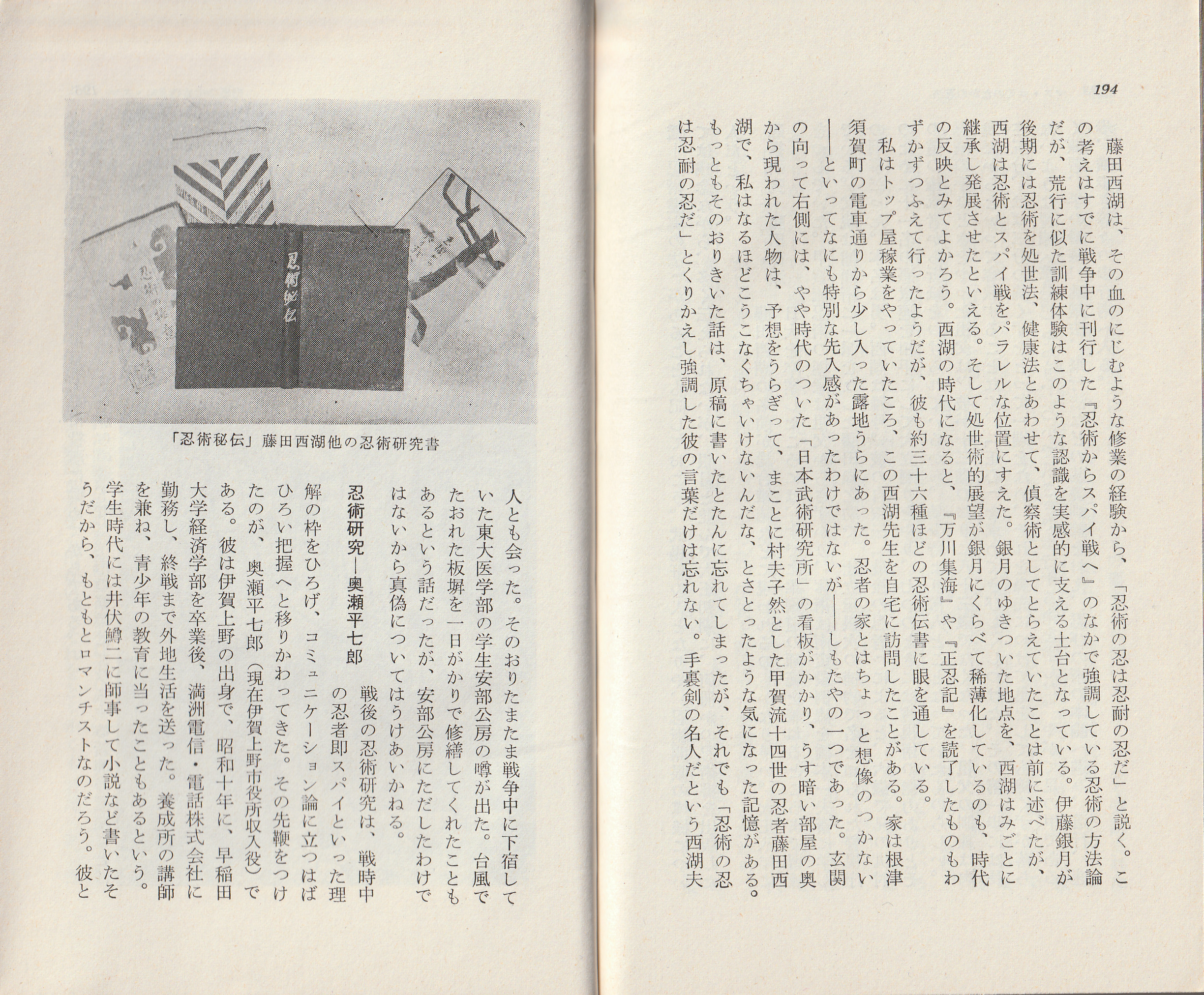
- The “Last Ninja” Profile (pp. 194–195): Features a detailed study of Fujita Seiko (1898–1966). It analyzes his philosophy of “Endurance” (Ninniku) and his transition from wartime intelligence to academic researcher. It also includes an unexpected sociological comparison using the palmistry of historical figures to discuss mass psychology and obsession (p. 195).
- Translation & Analysis of the Fujita Seiko Section (p. 194): The text describes Fujita as a man who lived a life of rigorous, often extreme, physical and mental discipline. Key points from this section include:
- The Philosophy of “Ninniku” (Endurance): The text highlights Fujita’s core teaching: “Ninjutsu is the art of endurance” (Ninpō wa ninniku no jutsu nari). It explains that for Fujita, the physical feats he performed were not for show, but were manifestations of a highly trained “ninja mind” capable of overcoming any obstacle or pain.
- The “Last Ninja” Lifestyle: One of the authors describes visiting Fujita at his home. He notes that while the surroundings seemed like a humble throwback to another era, Fujita himself was a sharp, modern intellectual. The author was struck by the contrast between Fujita’s quiet, unassuming demeanor and the “unbelievable” feats of strength and agility he was known for.
- Wartime Intelligence: The text touches upon Fujita’s role as a consultant for the Japanese government during WWII, specifically his involvement with the Nakano Army School. It notes that he didn’t teach “magic,” but rather the practical psychology of survival, infiltration, and information gathering—skills he believed were timeless.
- Training Feats: Page 194 mentions some of Fujita’s most famous “endurance” tests, such as needle swallowing (a psychological exercise in absolute internal focus and muscular control), resilience training (the ability to withstand extreme temperatures and physical strikes through specialized breathing and mental conditioning), and the science of pressure points (using ancient medical knowledge to disable an opponent or manage one’s own pain).
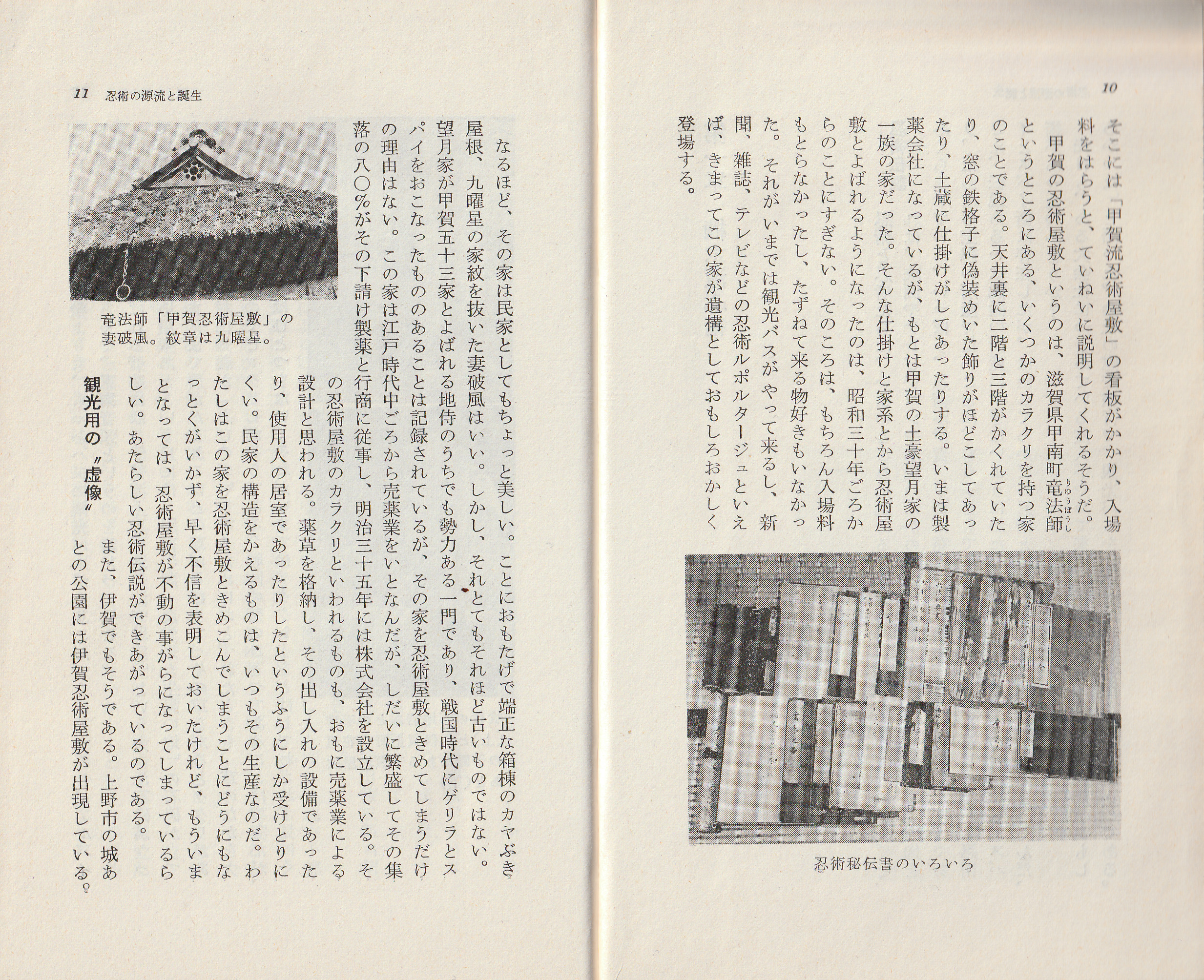
- The Tourism Paradox (pp. 10–11): The authors provide a critical look at the Koka Ninja House (Mochizuki Residence), noting its 1950 transition into a tourist landmark. They analyze how the “ninja image” was marketed to the public through “karakuri” (trap doors) while its true roots lay in the medieval herbal medicine trade.
The Sociological Takeaway
The authors conclude that Fujita was the ultimate individualist. In a mid-1960s Japan that was becoming increasingly “mass-produced,” Fujita represented a man who had absolute mastery over his own body and mind—a figure who successfully “hid in plain sight” while maintaining a connection to an ancient, powerful lineage.
Rare and Unique Facts
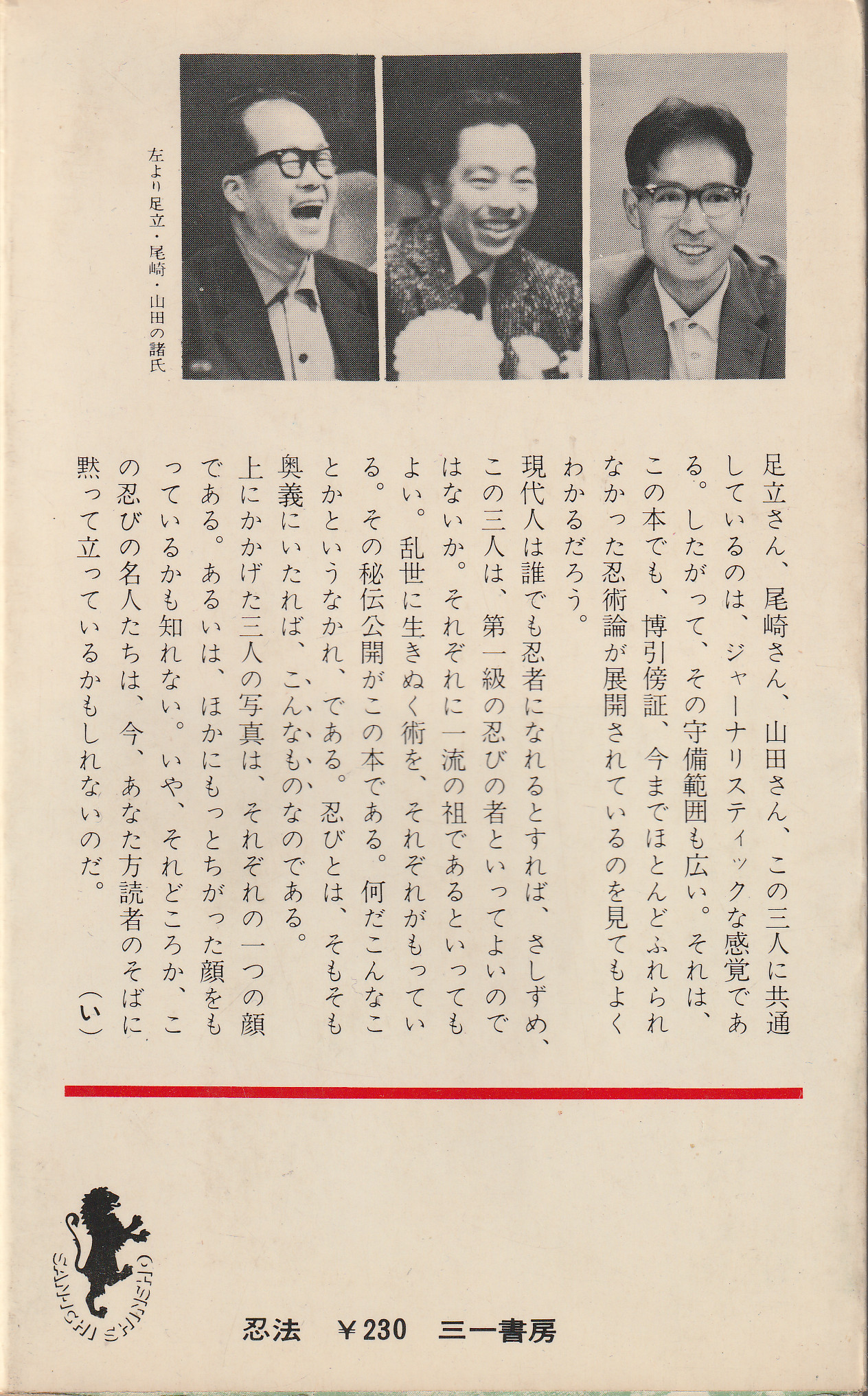
- A “Journalistic” Theory: The back cover (p. 3) with a picture of all three authors, proposes that “any modern person can become a ninja,” suggesting that the “secret scrolls” of the past have evolved into the psychological strategies needed to navigate modern office politics and social pressures.
- The “Silent Master” Philosophy: The book concludes that true ninjutsu masters are not movie stars, but the quiet, highly-skilled individuals successfully “hiding in plain sight” within modern society.
- Contemporary Artifact: Because it was published in 1964, the book captures a unique cultural contradiction: a nation showing its modern technological face to the world while its citizens secretly idealized the “master of the shadows.”
- Rare Fact from the Text: The authors note that Fujita often preferred to be called an “Intelligence Researcher” rather than a “Ninja,” emphasizing that the true value of the art lay in its academic and psychological depth, not its theatrical tropes.
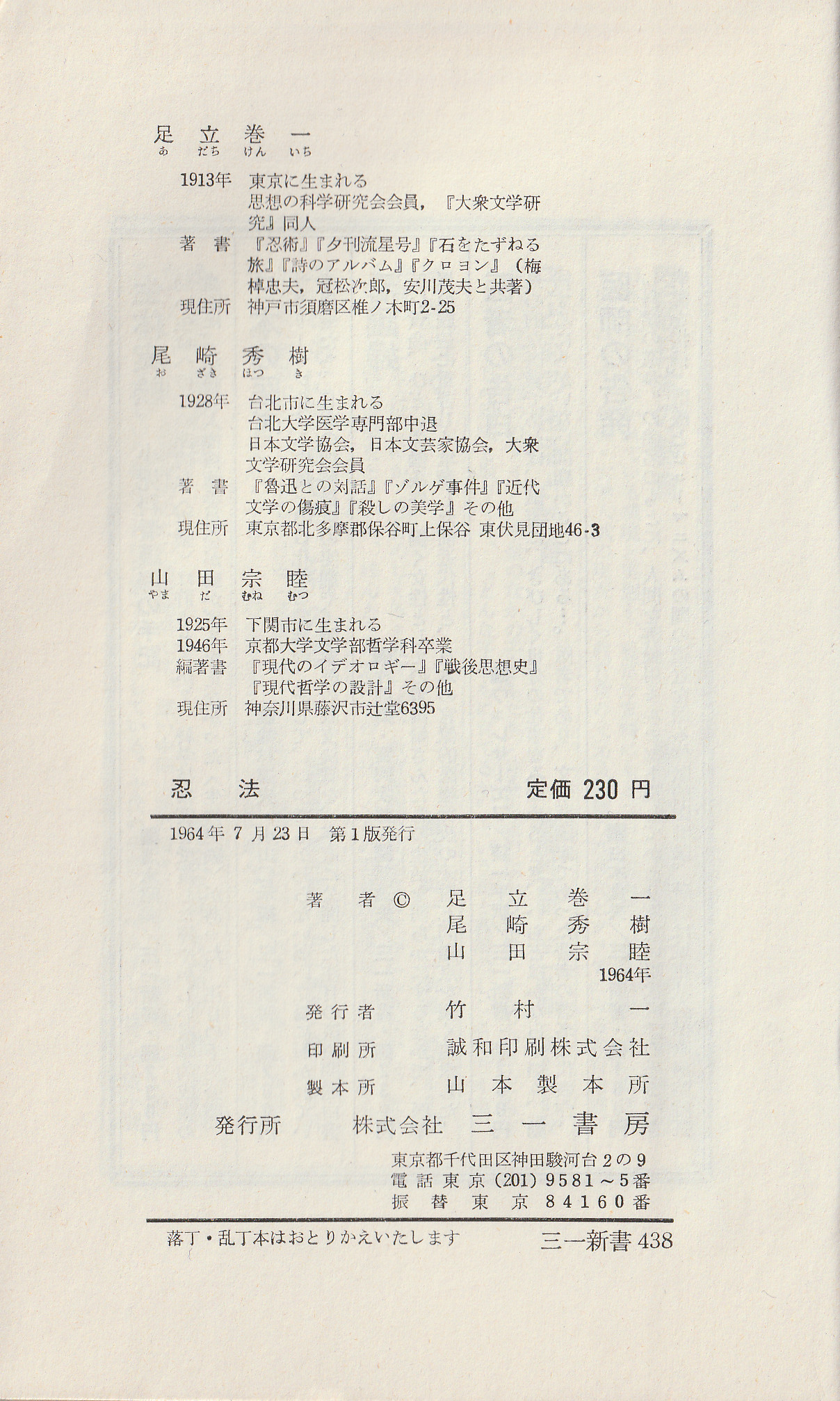
- The Forbidden Intellectual Triad: The collaborative team behind this book was highly unusual for martial arts pop-culture items. Makiichi Adachi was an anti-authoritarian child education reformer, Hideki Ozaki was an avant-garde leftist literary historian, and Munemutsu Yamada was an elite post-Marxist philosopher. By standardizing this layout, they produced a profound counter-culture philosophical text disguised as a cheap pocket-book.
- The Olympic Disruption: Because this volume hit shelves exactly on July 25, 1964, it was planned to challenge the massive wave of Western nationalism rolling into Tokyo for the 1964 Summer Games. The publisher, San-ichi Shobo, used this specific text block to warn Japanese youth that the rapid adoption of Western sports culture was erasing their real local history and internal psychological endurance practices.
Edition details
- Published:
- 07/23/1964
- Publisher:
- San-ichi Shobō
- Edition:
-
- • Series Assignment: San-ichi Shinsho (三一新書), Volume 438
- • Production Configuration: First Edition, First Printing
- • Publication Release Date: July 25, 1964 (昭和39年7月25日)
- • Technical Production House: Printed by Seibi Printing Co., Ltd. (誠美印刷株式会社)
- • Presentation Finish: Softcover pocket edition size (Shinsho-ban) bound by Yamamoto Bookbinding (山本製本所)
- • Historical Cover Retail: Original List Price: ¥230 Yen
- Condition:
- Good
- Dust jacket:
- Yes