(正忍記
Shoninki
- Author:
- Mori Senzo (森 銑三)
- Category:
- Ninjutsu
- Collection:
- Robert C. Gruzanski Collection
Description
This 1944 edition of the Shoninki is a true “survivor” artifact. It represents a rare moment where ancient espionage tactics were revitalized for a modern audience in the middle of World War II.
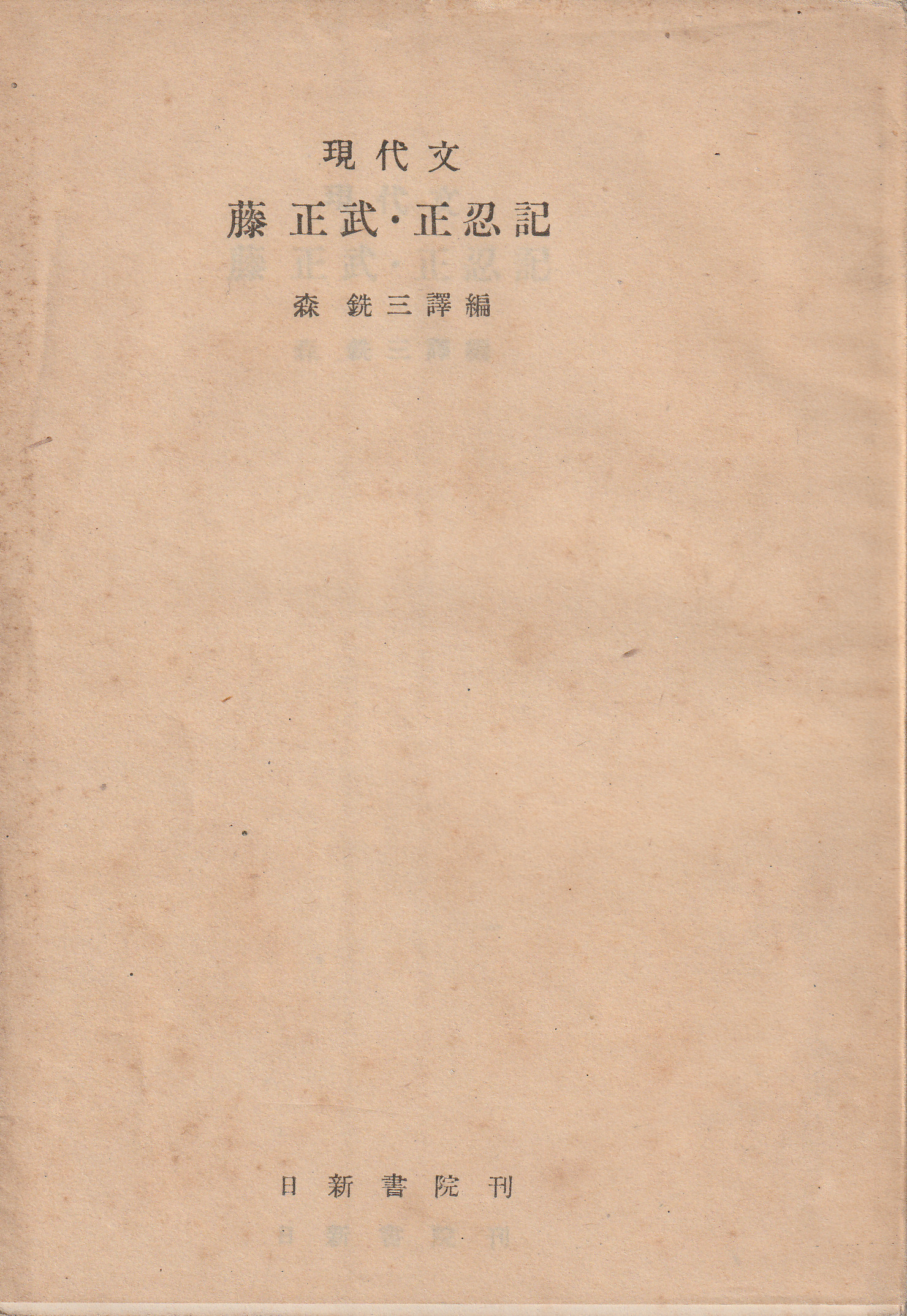
The Book: Gendaibun Shoninki (1944)
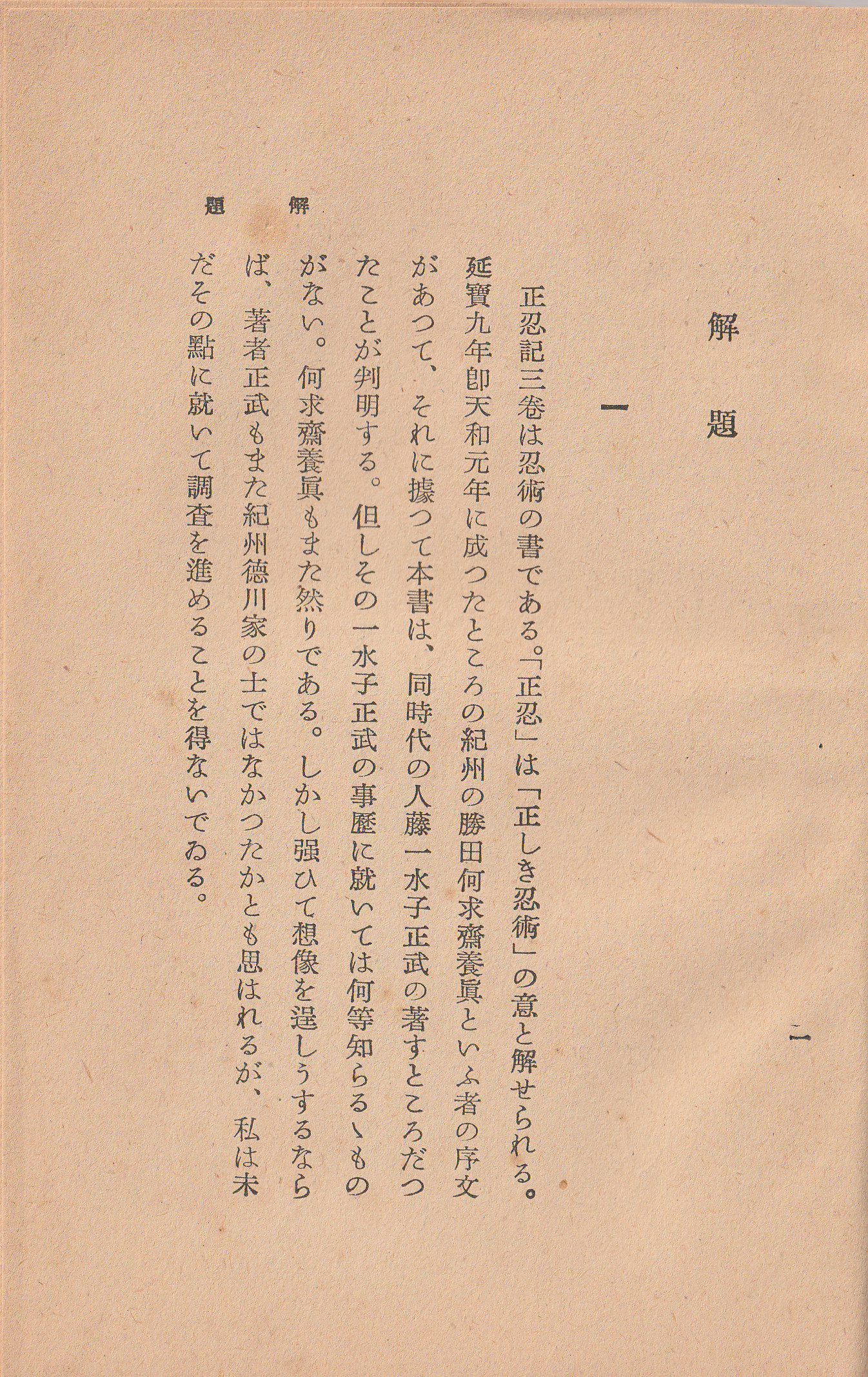
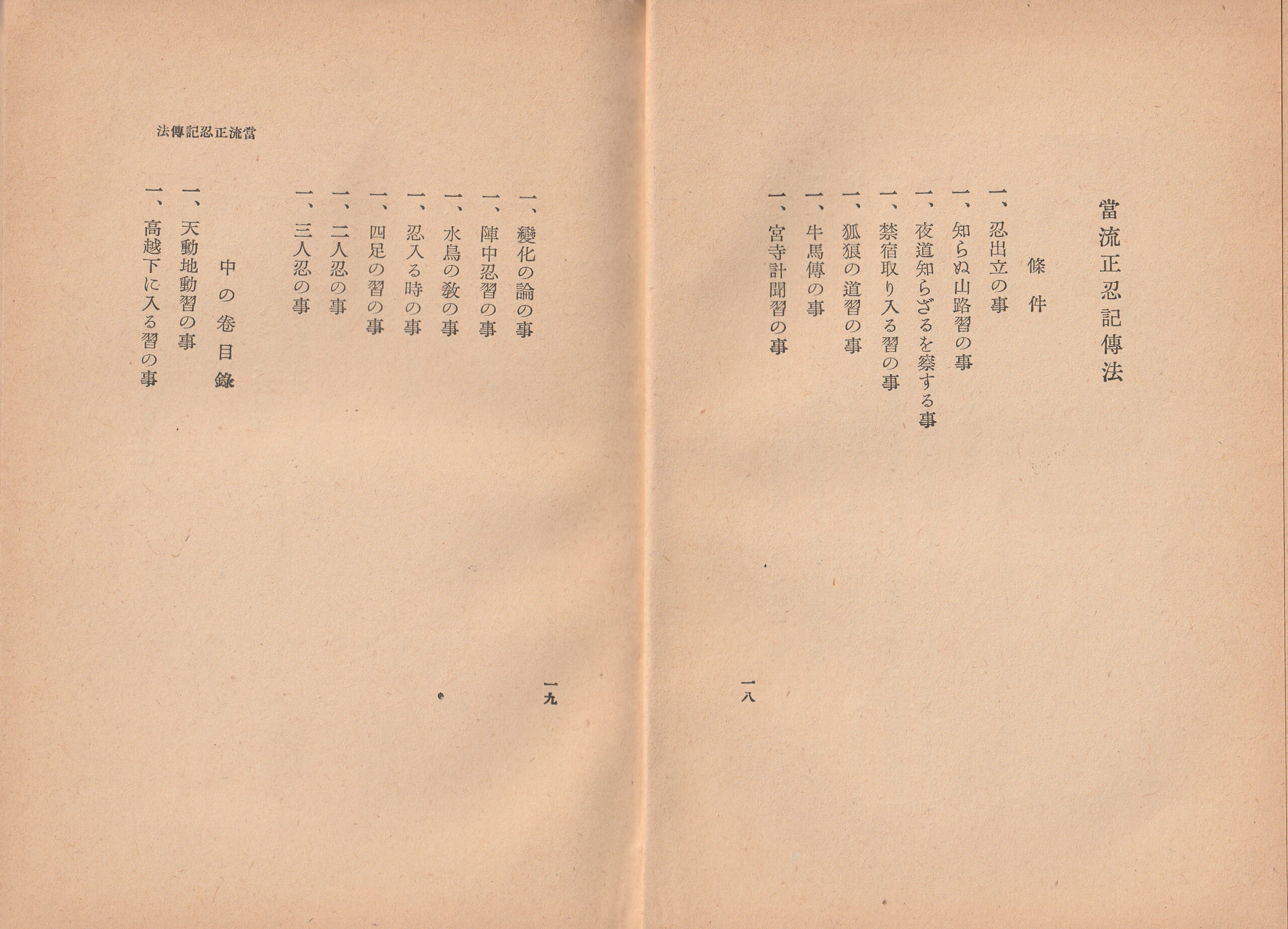
- The Text: The Shoninki (originally written in 1681) is one of the three “bibles” of ninjutsu. It focuses on the Kishu-ryu (Natori-ryu) style, which was the official school of the Tokugawa Shogunate’s secret police and guards.
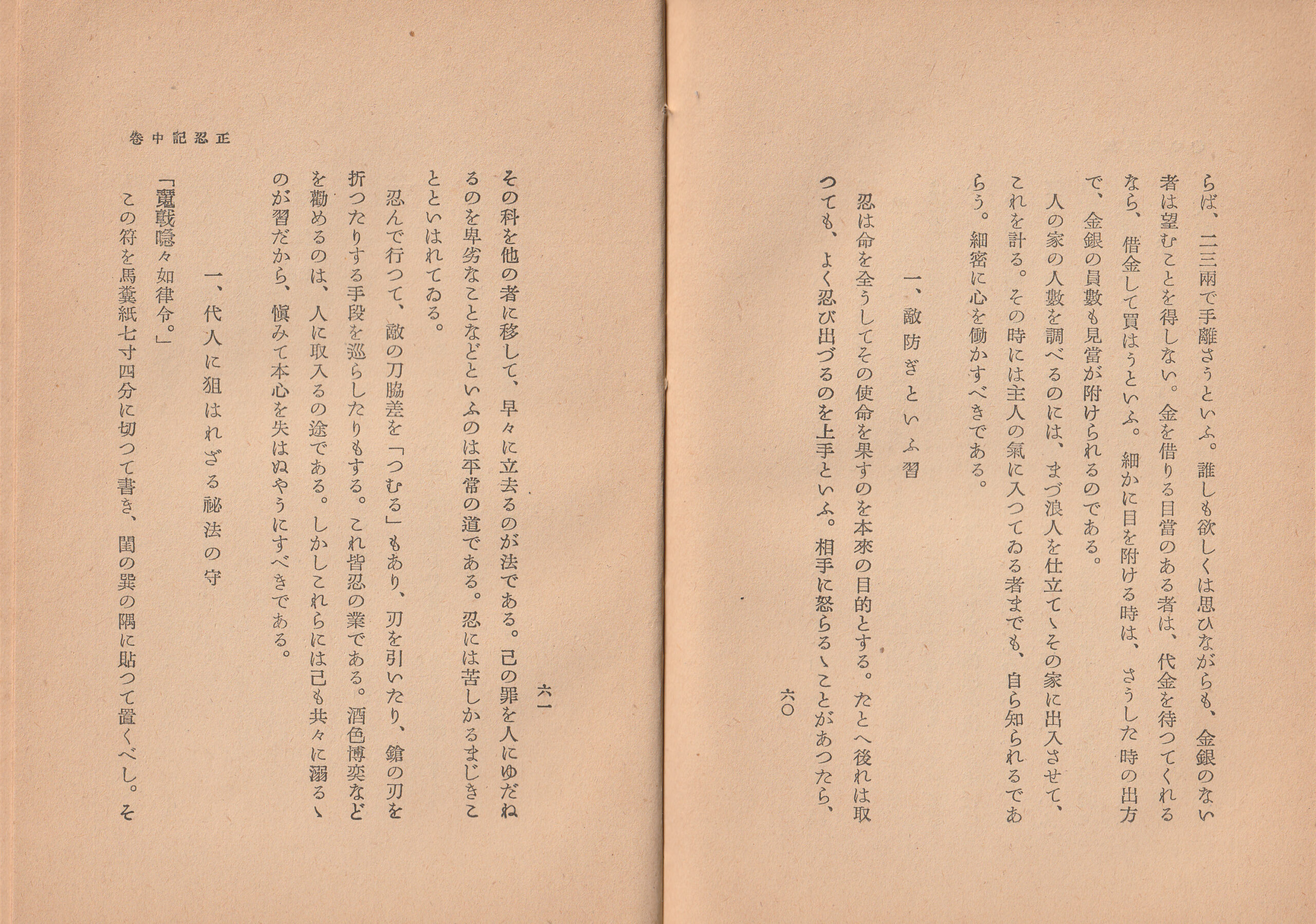
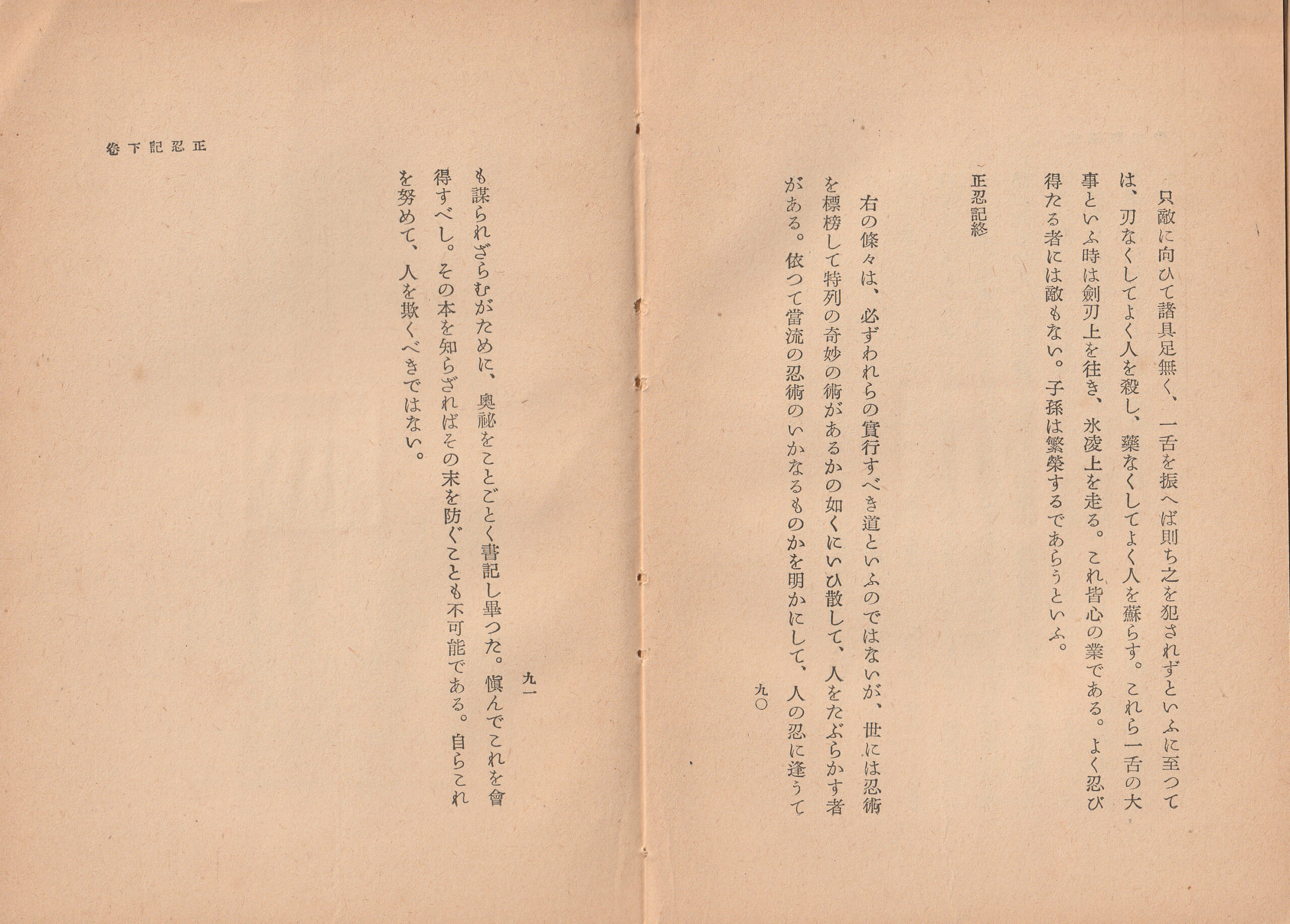
- The “Gendaibun” Twist: “Gendaibun” means it was translated into modern Japanese. Before this, the text was written in archaic Kanbun, making it unreadable to most people. This 1944 edition was one of the first to make authentic ninja secrets accessible to the general public.
- Wartime “War Paper”: Because it was printed in 1944 (Showa 19), it used low-quality, acidic paper due to resource shortages. The brown spotting (foxing) in the images is actually “battle scars” from the era—finding a copy that hasn’t crumbled to dust is quite rare.
The Author/Translator: Mori Senzō (森 銑三)
- The “Library Detective”: Mori wasn’t a martial artist; he was one of Japan’s most elite historians. He worked at the Naikaku Bunko (The Cabinet Library), meaning he had the “highest security clearance” to handle the Emperor’s private collection of secret scrolls.
- Academic Integrity: While many 1940s books were filled with wartime propaganda, Mori kept this translation strictly academic. He treated ninjutsu as a serious science of psychology and strategy, which is why it was published in a “Natural Science” series.
- Legendary Status: He is so respected in Japan that he was later awarded the Order of the Sacred Treasure. Collectors prize his work because he never “sensationalized” the ninja; he only reported what was in the original secret scrolls.
Interesting “Unknown” Facts
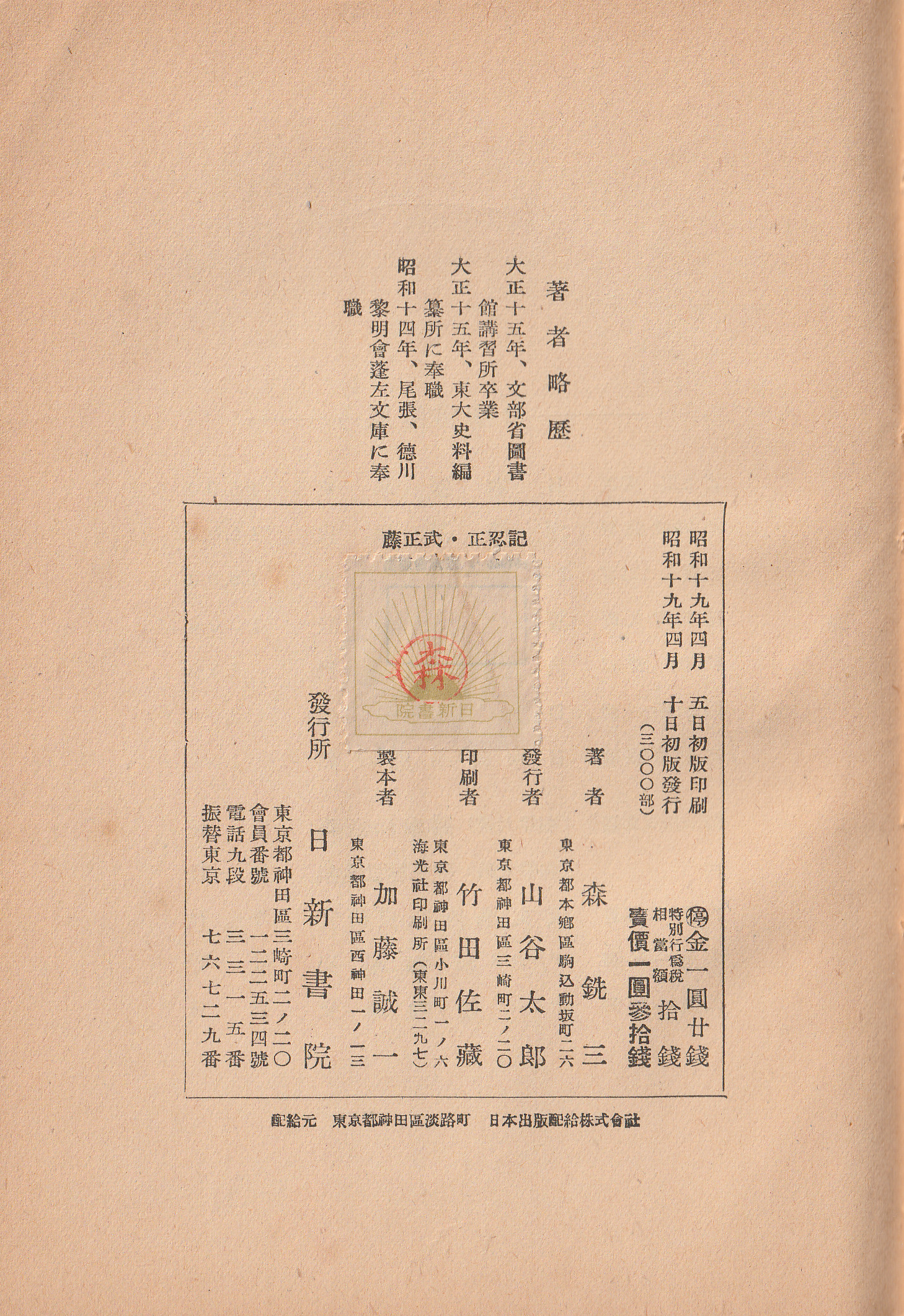
- The 3,000 Copy Mystery: The colophon lists a print run of only 3,000 copies. Given that Tokyo was heavily firebombed just months after this was published, the number of surviving copies is likely in the hundreds, not thousands.
- The Author’s Seal: The small red stamp (Ken-in) in this book was hand-stamped (or authorized) by Mori himself. In 1944, this was a legal requirement to prevent “pirated” copies and ensure the author received his royalties in a strictly controlled economy.
- Hidden “Spells”: This edition includes the translation of ninja kuji-kiri (hand signs) and spells. Mori included them not as “magic,” but as a psychological “mental focus” tool used by the shinobi to maintain calm in high-pressure situations.
This book is a fascinating bridge between the 17th-century samurai world and the 20th-century world at war.
Edition details
- Published:
- 04/10/1944
- Publisher:
- Nisshin Shoin
- Edition:
-
- • Title: Gendaibun: To-Masatake Shoninki (現代文 藤正武・正忍記)
- • Series: Part of the "Natural Science and History" series by Nisshin Shoin.
- • Translator: Mori Senzō (森 銑三)
- • Format: B6-size "War-time Pocket Edition"
- • Page Count: 91 pages of main text (~110 total including ads/intro)
- • Original Print Run: 3,000 copies (as noted in the colophon)
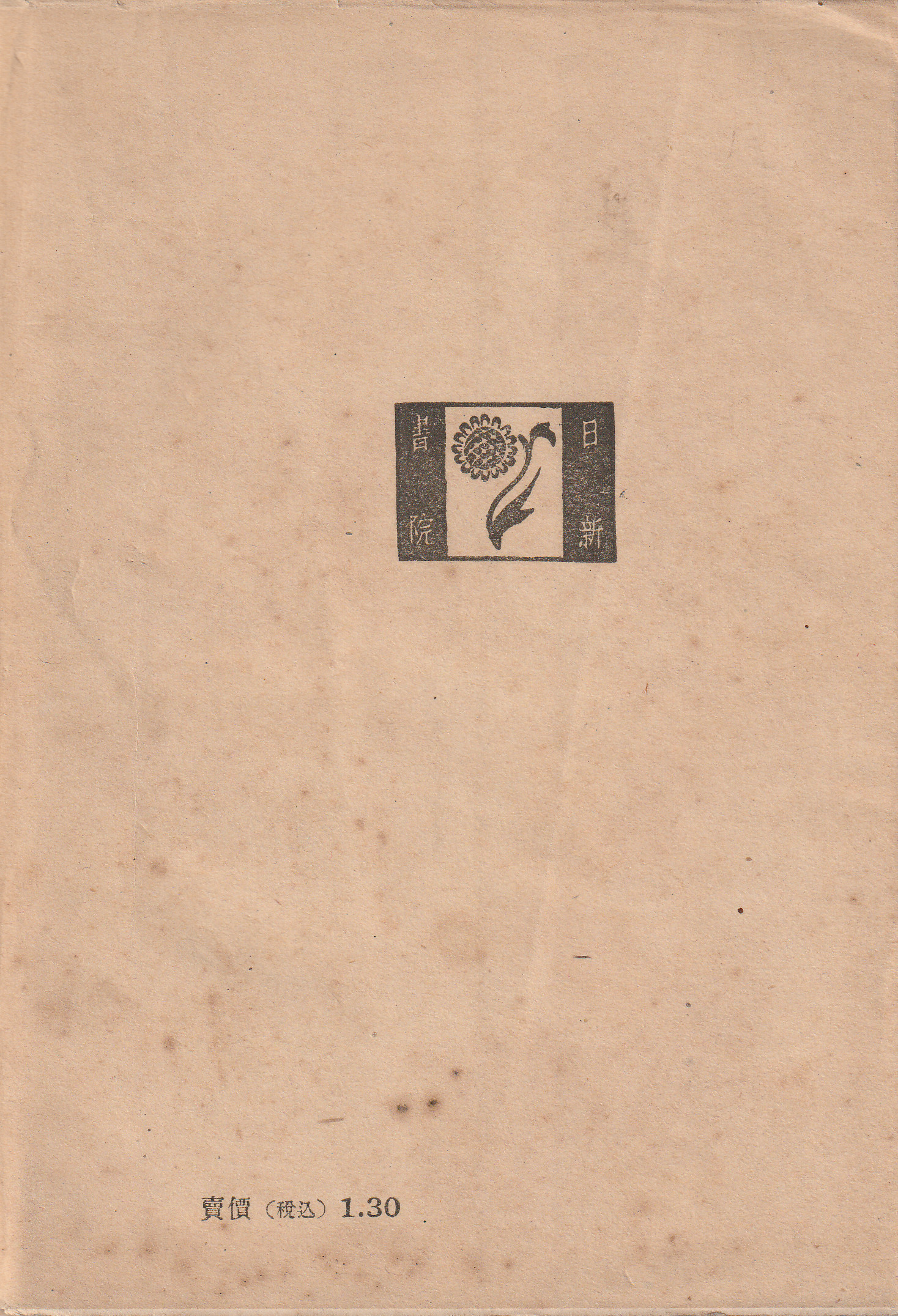
- • Original Price: 1.30 Yen (Tax included)
- Condition:
- Good
- Dust jacket:
- Yes