
絵でみる時代考証百科 日本刀・火縄銃・忍びの道具編
E de Miru Jidai Kosho Hyakka
- Author:
- Nawa Yumio (名和弓雄)
- Category:
- Weapons
- Collection:
- Robert C. Gruzanski Collection
Description
An Exceptionally Rare Archival Set: Signature, Slipcase, and Original Obi
This specific volume represents an extraordinary, museum-grade collector’s find. Finding a clean first-edition copy of Nawa Yumio’s foundational work is difficult; finding one that preserves both its original cardboard publisher’s slipcase and its fragile red promotional paper belt (Obi) is remarkably rare. Most paper obi bands were instantly discarded by readers in 1983, making surviving examples highly sought after by book collectors.
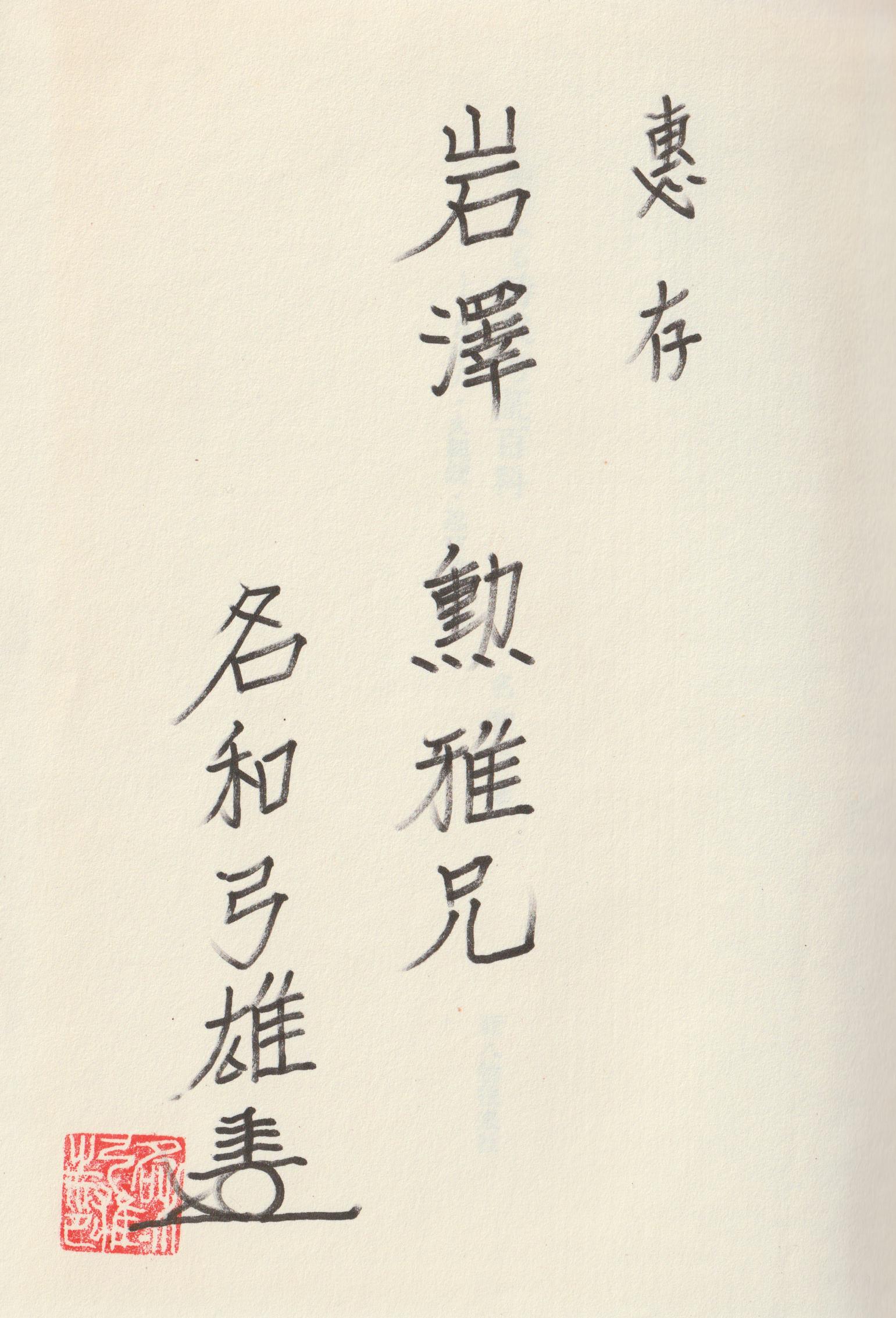
Elevating this copy into a class of its own is an authentic, hand-brushed presentation inscription by the author across the flyleaf. Signed in fountain pen by Nawa Yumio (名和弓雄) and stamped with his personal red artist seal (hanko), this is a verified association copy gifted directly to his contemporary and peer martial artist, Iwasawa Isao (岩澤勲雅).
The dedication features the formal honorific 兄 (kei / brother-in-arms)—a respectful designation utilized strictly between high-level martial arts masters to denote shared lineage and mutual respect. This documented provenance offers an immutable link directly to the elite mid-20th-century Japanese martial arts community.
Translating the Ephemera: What the Jacket and Wrappers Say
The Front Red Obi (Promotional Band Text)
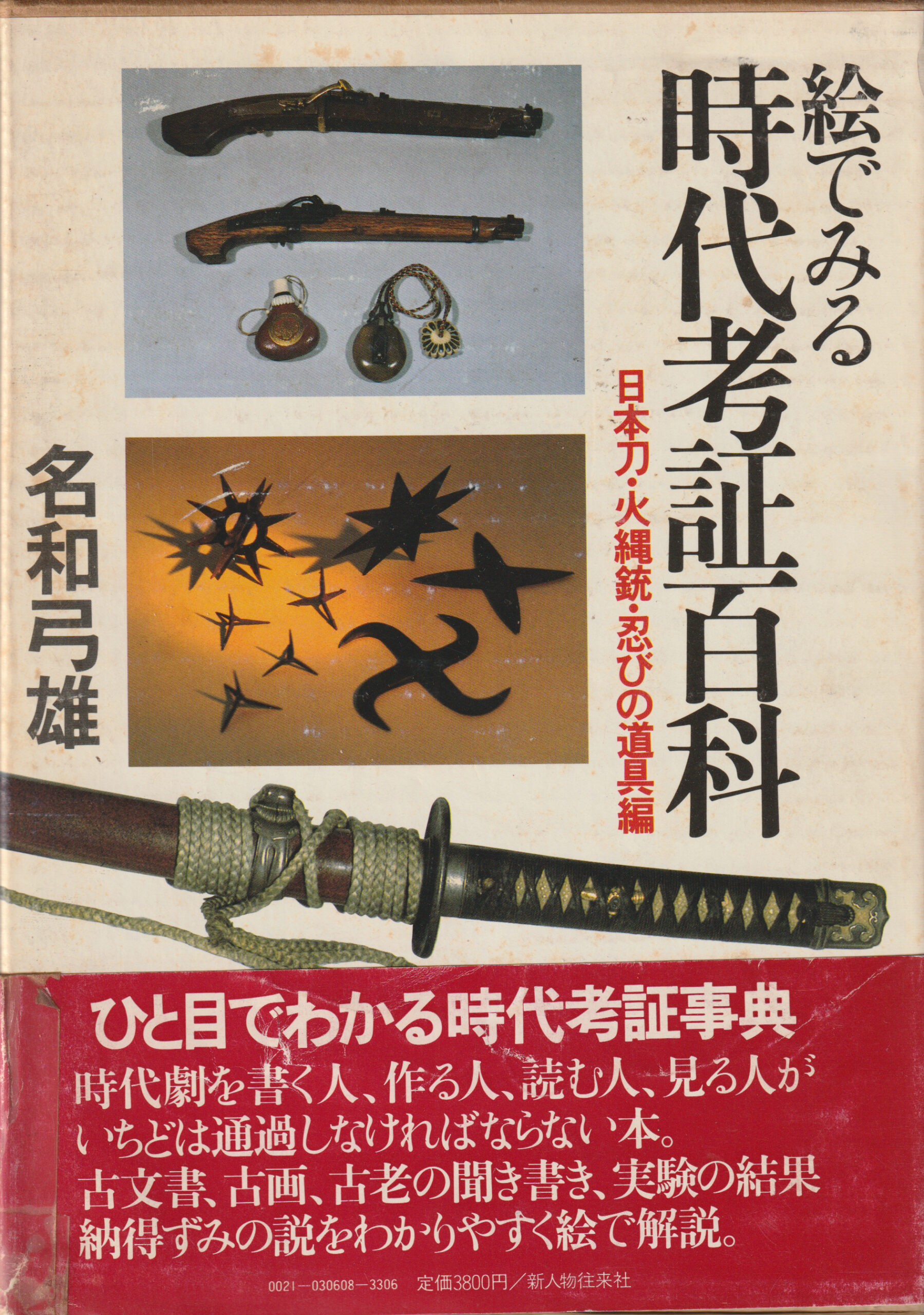
The striking red band wrap-around on the front cover acts as a historical manifesto for the book’s purpose. It reads:
- “An easy-to-understand historical verification dictionary. This is the book that anyone who writes, produces, reads, or watches historical period dramas (Jidaigeki) must experience at least once.”
- “Ancient documents, historical paintings, old oral accounts, and the results of rigorous physical experiments—conclusive and fully verified theories are explained clearly through illustrations.”
The Back Cover & Slipcase Advertisement
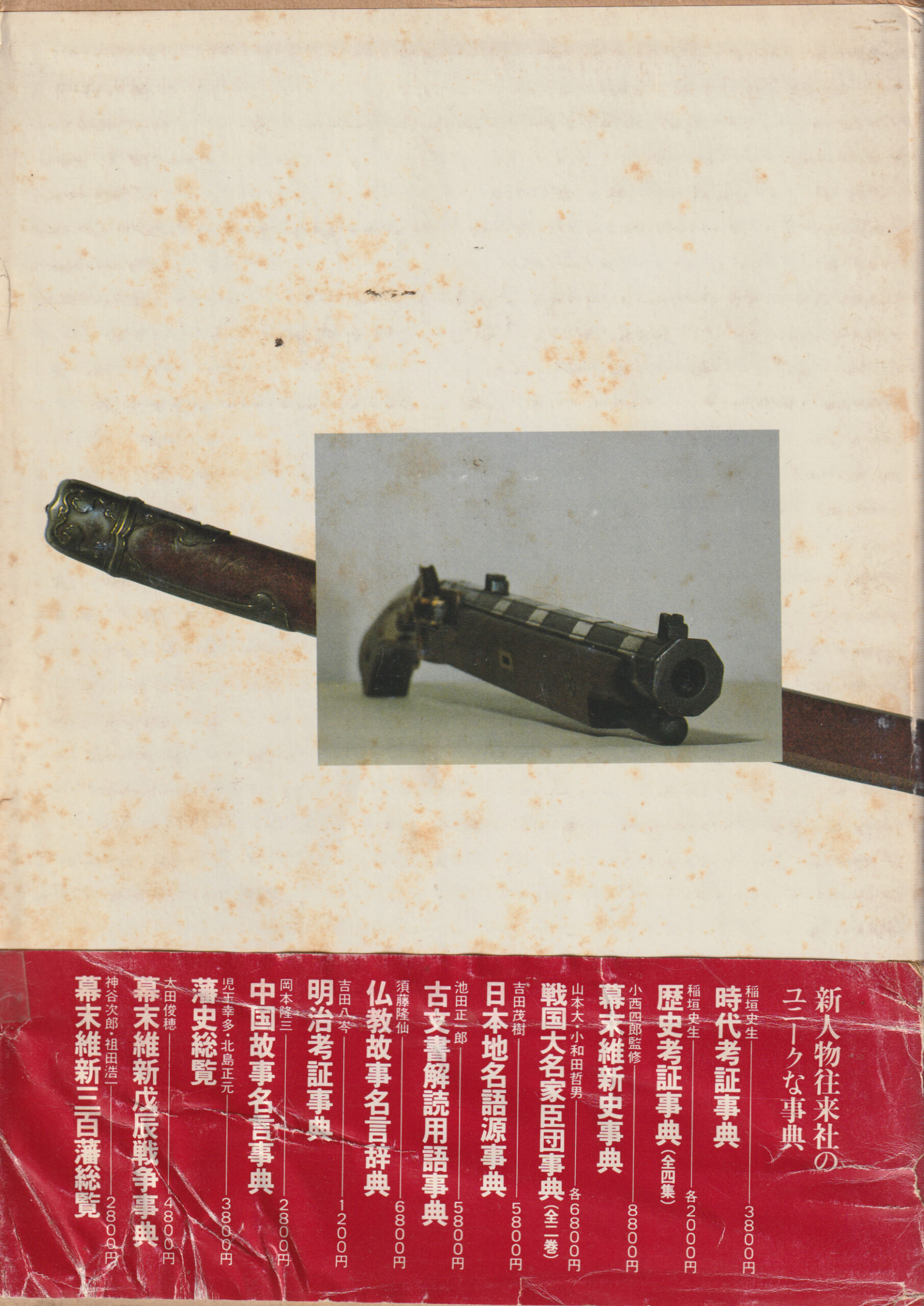
The back of the slipcase transforms into a comprehensive reference library checklist published by Shinjinbutsu Ōraisha. It prints a stylized, technical photograph of an Edo-period matchlock pistol resting alongside its matching lacquered scabbard companion blade. Below the image, the publisher lists their elite historical dictionary catalogue, pricing each legendary work for the 1980s researcher market:
- Unique Dictionaries of Shinjinbutsu Ōraisha: Features the Dictionary of Edo Period Verification (明治考証事典 – ¥1200) and the Dictionary of Historical Verification (時代考証事典 – ¥3800).
- Samurai & Military Registers: Lists the massive Encyclopedia of Warring States Daimyo and Vassals (戦国大名家臣団事典 – 6 Volumes, ¥6800 each) and the comprehensive Chronology of the Bakumatsu and Ishin Three Hundred Domains (幕末維新三百藩総覧 – ¥2800).
- Classical Culture & Ideology: Promotes the Dictionary of Classical Document Terms (古文書解説用語事典 – ¥5800) and the Dictionary of Buddhist Narrative Names (仏教故事名言辞典 – ¥6800).
Nawa Yumio: Historical Significance & Methodology
E de Miru Jidai Kosho Hyakka: Nihonto, Hinawaju, Shinobi no Dogu Hen is the opening entry in Nawa Yumio’s definitive three-volume illustrated material-culture masterwork. Compiled by the late Nawa—10th Grandmaster of Masaki-ryū Manrikikusari-jutsu and legendary historical consultant for Japanese television and film—this reference manual was built specifically to strip away theatrical tropes and preserve the gritty, mechanical truth of feudal warfare.
Rather than relying on modern folklore, Nawa constructs his analyses directly from physical artifact inspections, military edicts, and his own ballistic and structural field trials. Backed by thousands of precise technical illustrations by master artist Hironori Ishizu, the text dives into technical topics rarely treated with comparable depth in Western scholarship.
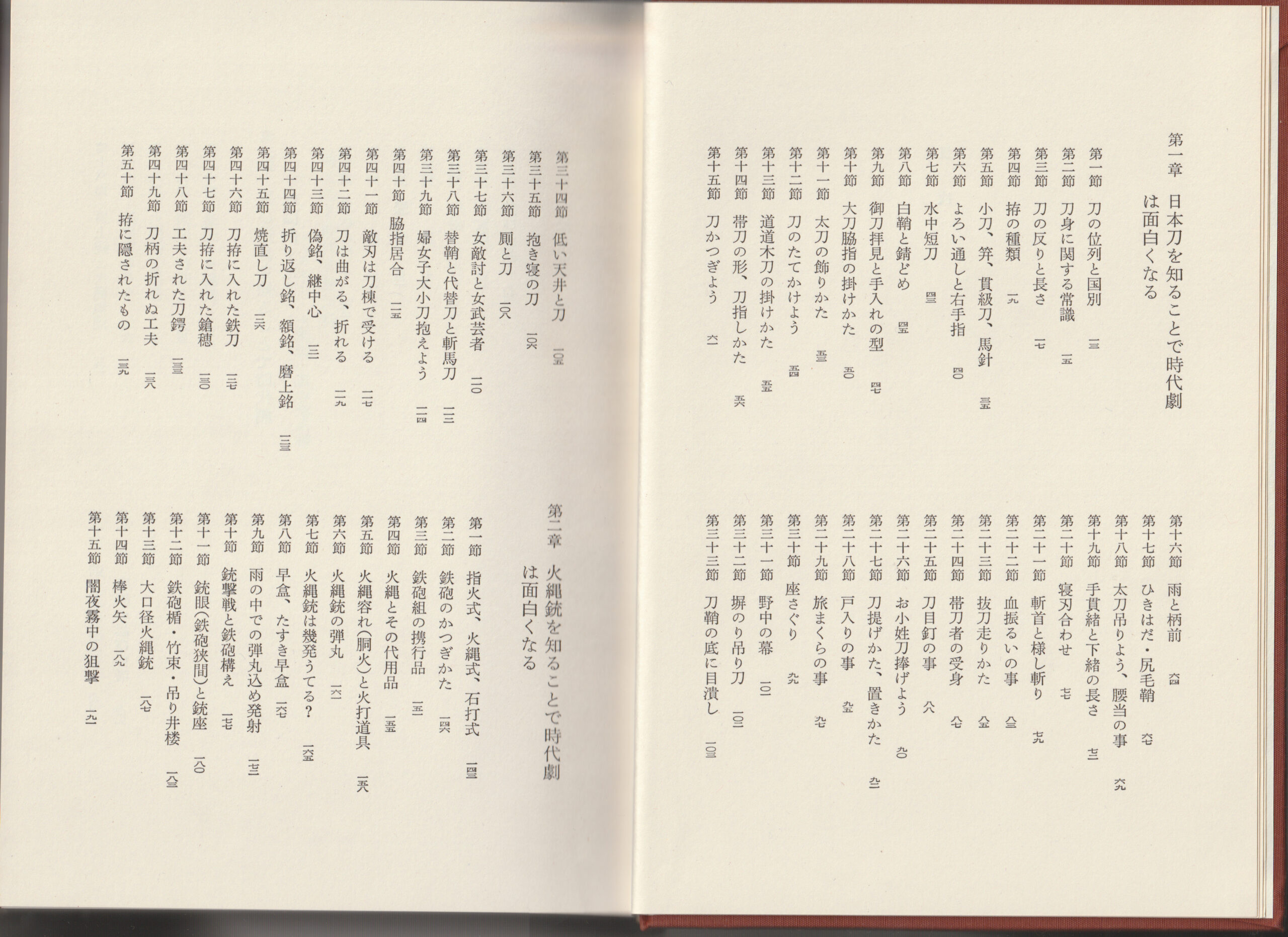
DEEP DIVE: INSIDE THE 3 CHAPTERS & 79 SUBSECTIONS
While structured around three primary pillars, the text features 79 highly specific subsections acting as a granular material-culture dictionary.
- Chapter 1: The Practical Reality of the Japanese Sword (日本刀) — [Subsections 1–50]
Bypasses romantic myths to treat the Katana and Wakizashi as cold, functional machinery. It maps out regional smith variations, internal hilt construction (Tsuka), and strict placement rules for the Mekugi (retaining peg). Nawa provides technical data on armor-piercing daggers (Yoroi-dōshi), underwater blades (Suichū-tantō), and blades concealed within hollowed split bamboo. Crucially, it tracks practical adaptations like fur-covered rain scabbards (尻毛鞘) built to protect cordage from rot, techniques for drawing at a full sprint, and the structural limits of blades bending vs. breaking against iron defenses. - Chapter 2: The Ballistics and Logistics of Matchlock Firearms (火縄銃) — [Subsections 1–20]
Explores the technical reality of early Japanese firearms (Hinawajū). It profiles everything from standard matchlock ignition sequences and flint-striking plates to massive anti-barricade wall guns (大筒). Nawa answers a major historical mystery by publishing experimental data on how gun crews kept matches burning during torrential downpours via water-resistant matchlock boxes and leather shields. It indexes squad equipment like speed-loading paper cartridges (Hayago), powder flasks, bullet molds, and infantry volley tactics. - Chapter 3: The Unromanticized Tools of Espionage (忍びの道具) — [Subsections 1–9 + Appendices]
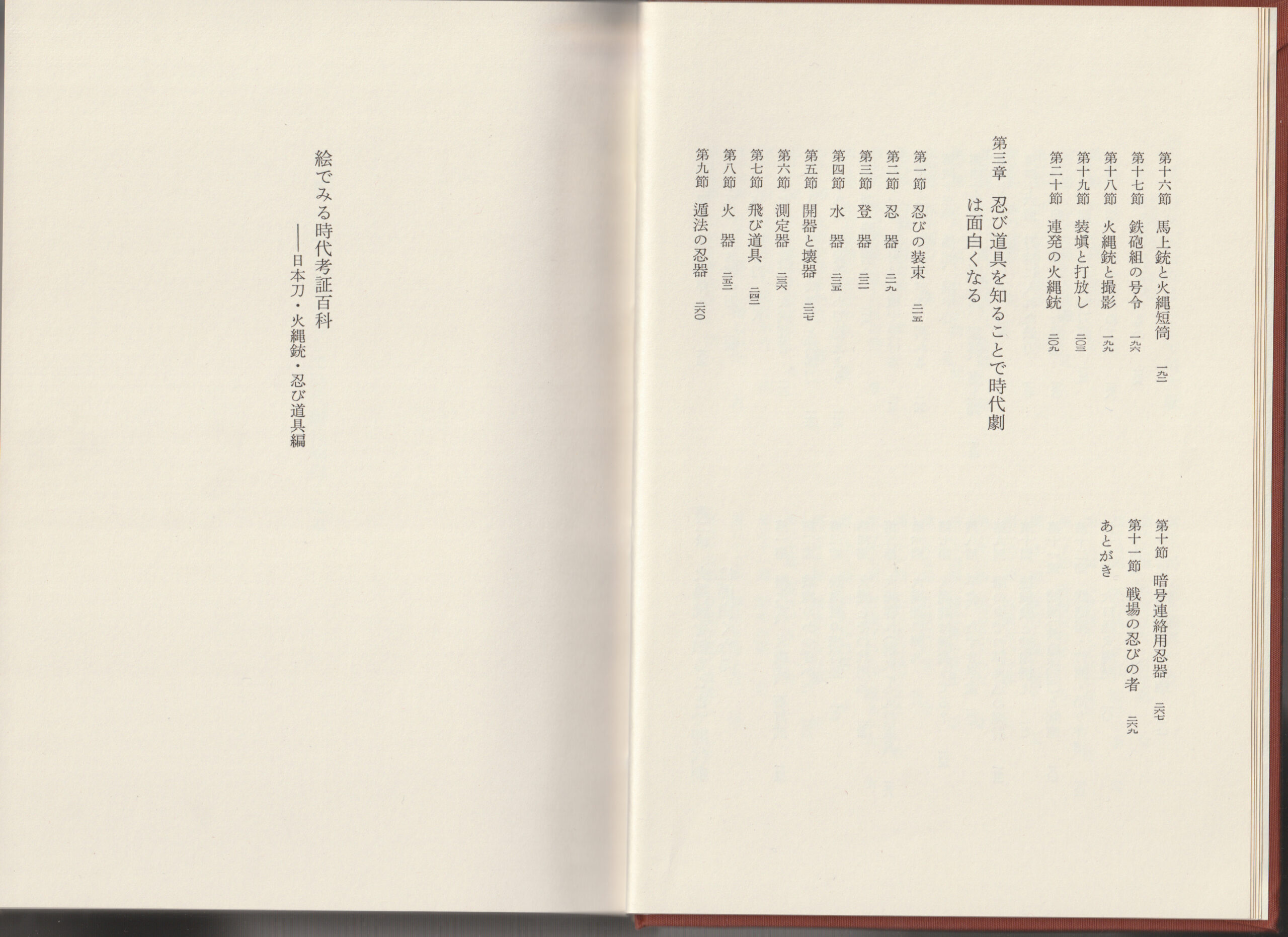
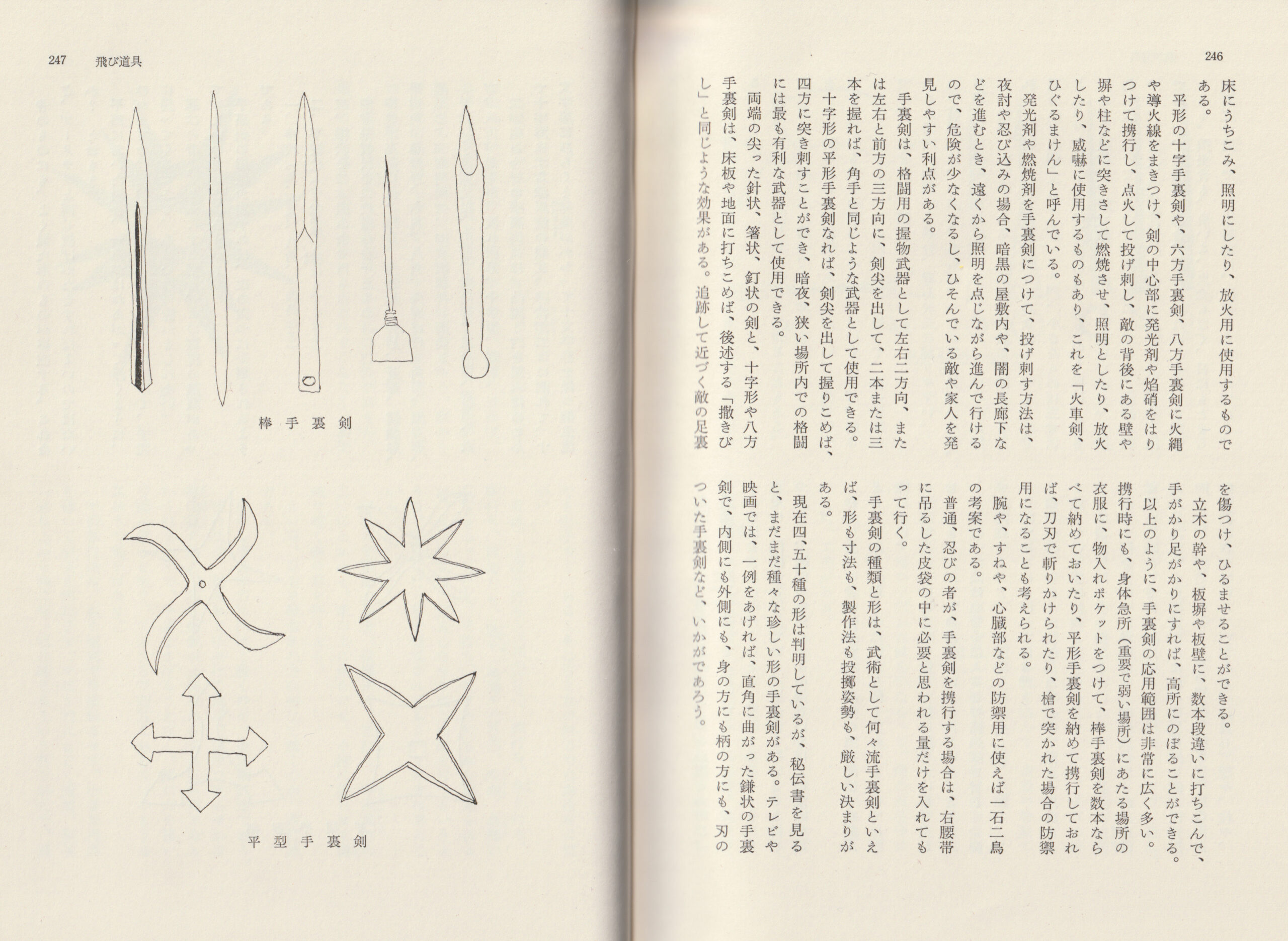
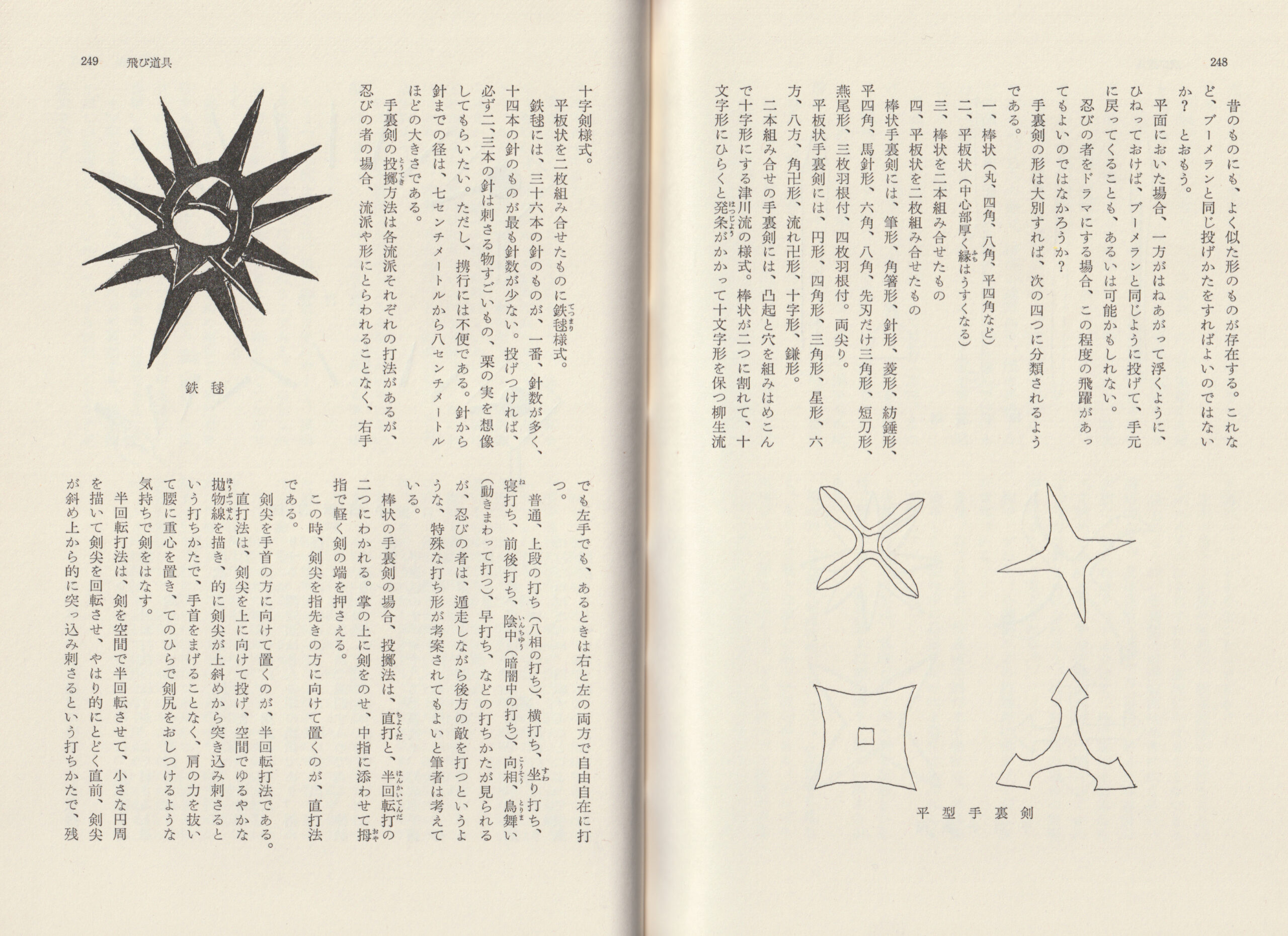
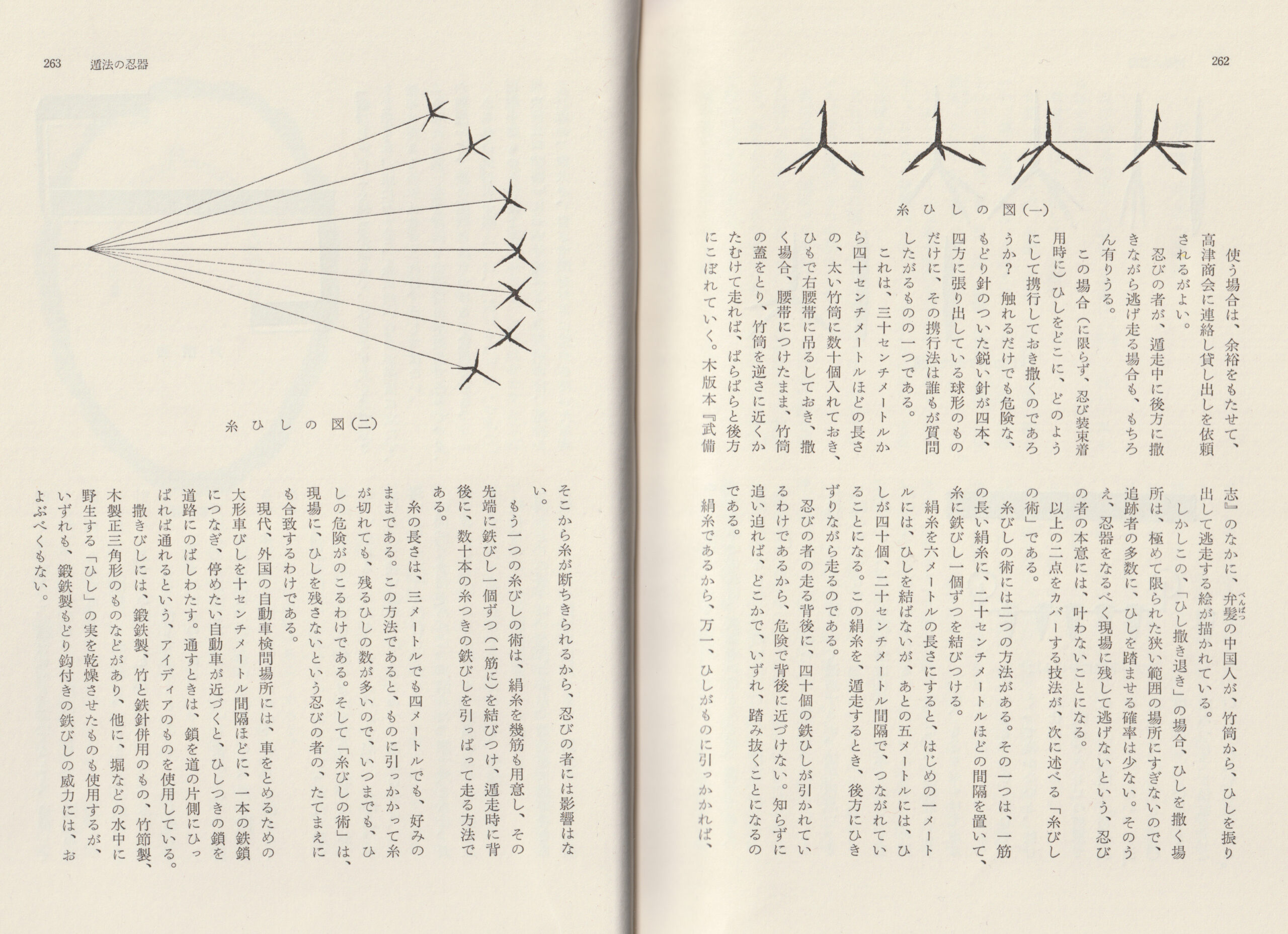
Delivers a raw, historical inventory of authentic ninja fieldcraft. It details espionage garments, structural breaching tools (開器・壊器), and surveying instruments. Projectiles are broken down into structural lineages, analyzing the physics of straight-spike Bō-shuriken and flat-plate Hira-shuriken via the Direct Strike (直打法) and Half-Rotation (半回転打法) throwing methods. It concludes with area-denial warfare, illustrating iron caltrops (Tetsu-bishi), dried water-caltrop seeds (Hishi), and the sophisticated Ito-hishi—a trap linking 40 caltrops across a 6-meter silk cord to cripple pursuing forces instantly.
Edition details
- Published:
- 12/25/1983
- Publisher:
- Shin-Jinbutsu-Oraisha
- Edition:
-
- • Author: Nawa Yumio (名和弓雄)
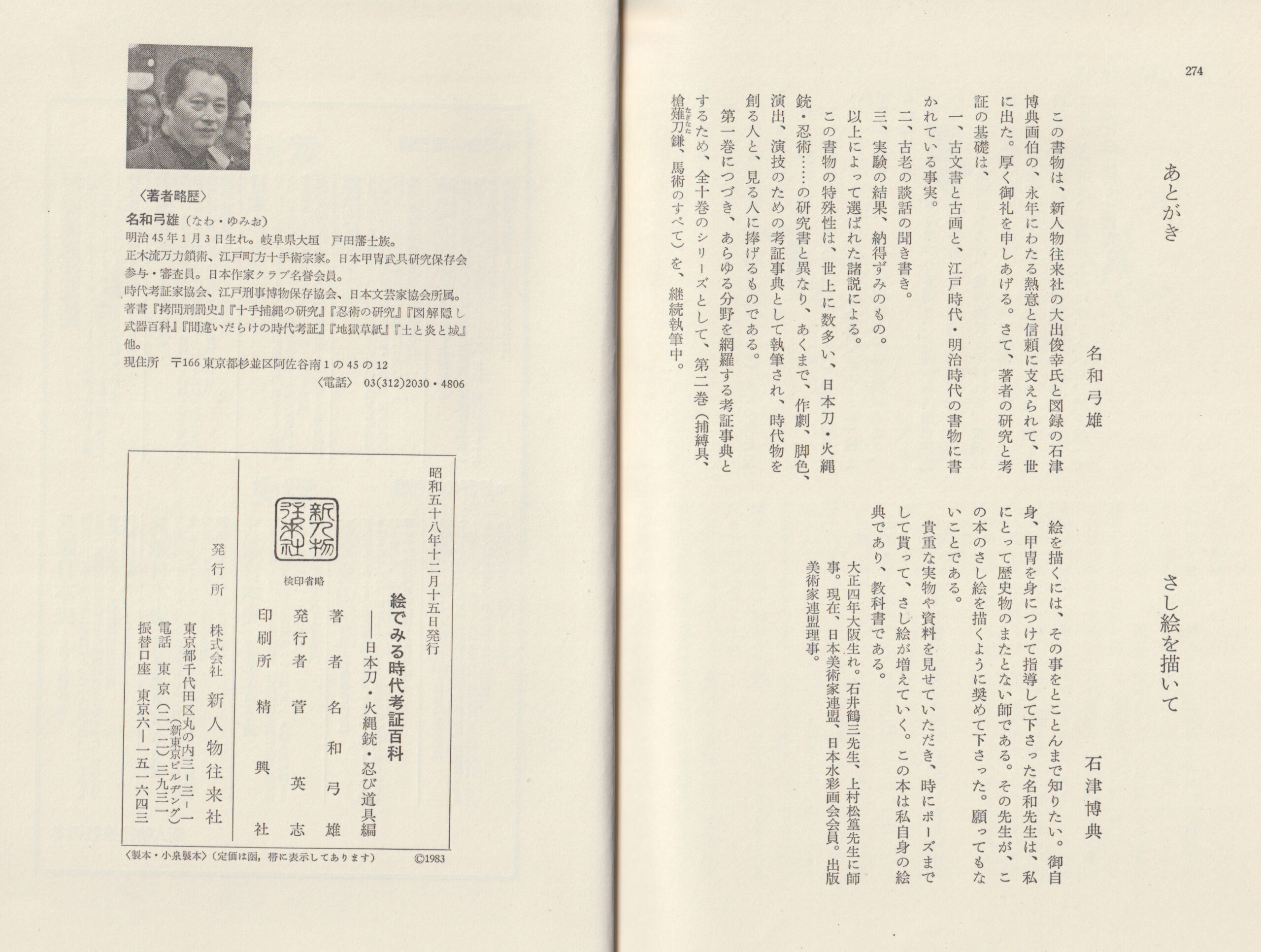
- • Publisher: Shinjinbutsu Ōraisha (株式会社 新人物往来社)
- 原 英雄)
- • Printer: Seikosha (精興社)
- • Binder: Koizumi Seihon (小泉製本)
- • Publication Date: 08/15/1975 (昭和50年8月15日発行)
- • Note: Seal Omitted (検印省略) | ©1983
- Condition:
- Good
- Signed:
- Signed copy
- Slipcase:
- Yes