
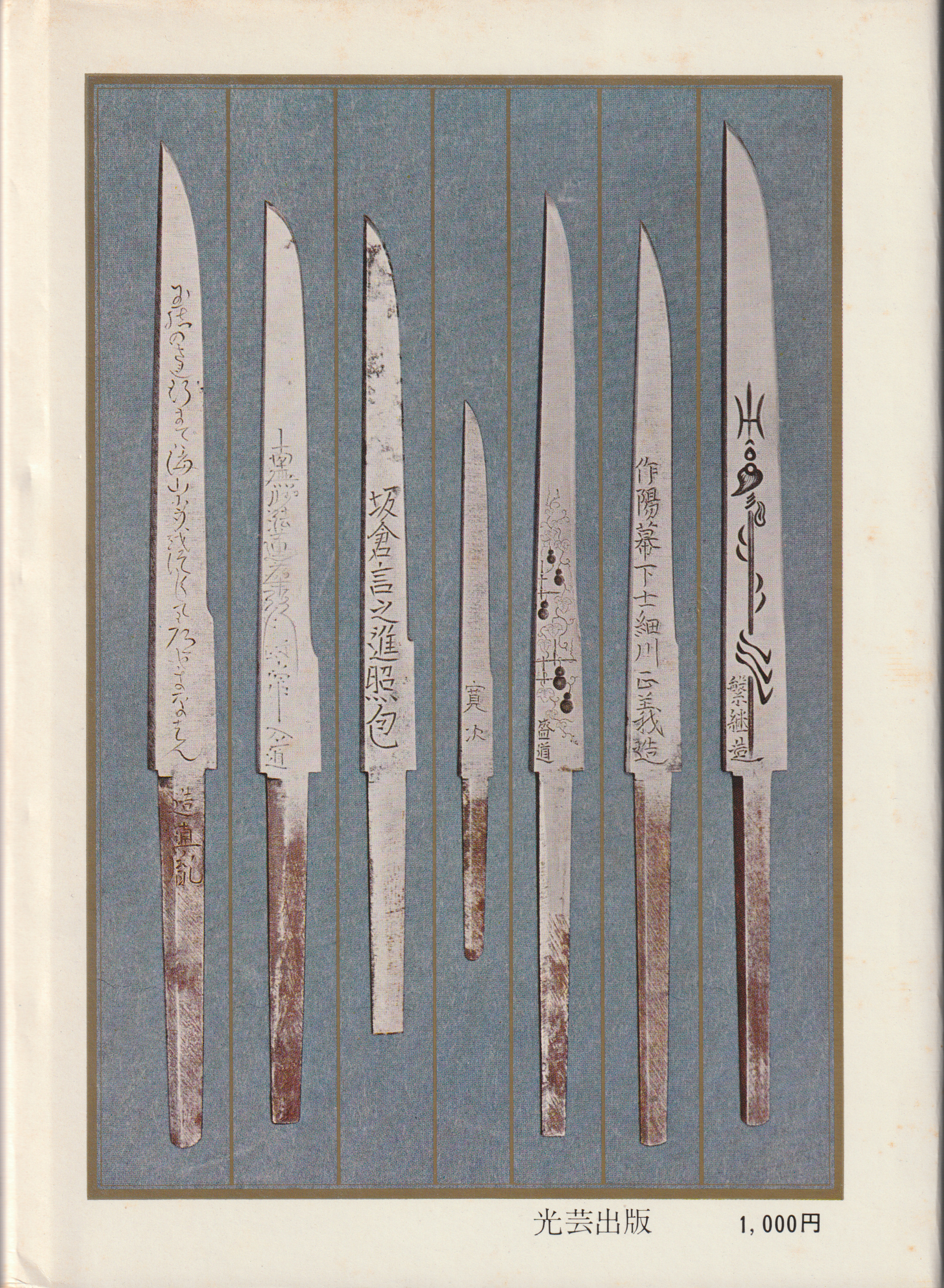
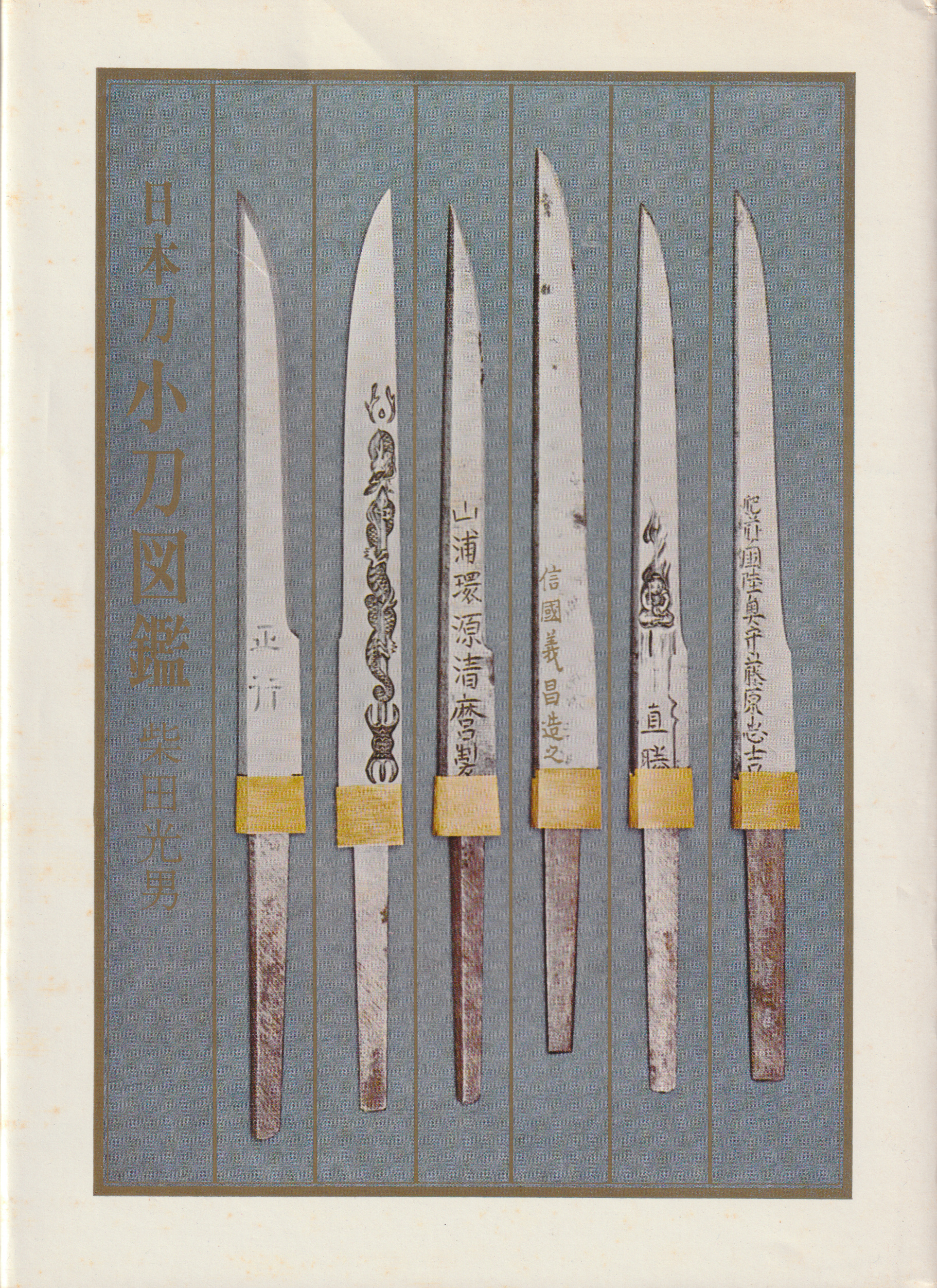
日本刀小刀図鑑
Nihonto Kogatana Zukan
- Author:
- Mitsuo Shibata & Yumio Nawa (柴田光男・名和弓雄)
- Category:
- Weapons
- Collection:
- Robert C. Gruzanski Collection
Description
Nihonto Kogatana Zukan: Comprehensive Reference on Japanese Sword Utility Blades
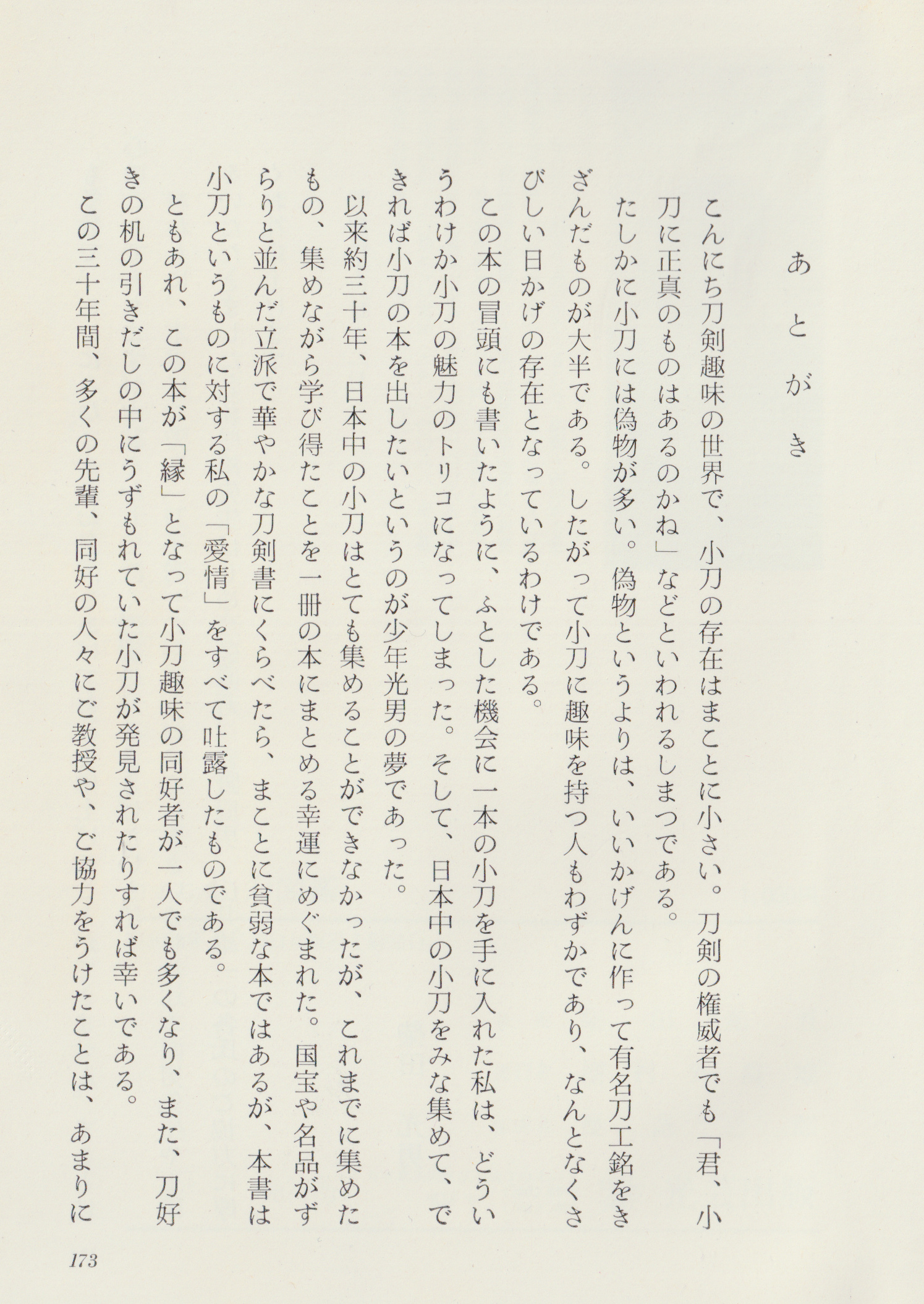
Nihonto Kogatana Zukan (日本刀小刀図鑑) stands as a seminal, specialized reference work focusing exclusively on the artistic evolution, metallurgical properties, and historical context of kogatana—the small utility blades integrated into traditional Japanese sword mountings. Authored by the prominent sword appraiser and expert Mitsuo Shibata (柴田光男), this volume acts as a critical bridge to rescue these small accessories from the shadow of full-sized katana, detailing a niche area of craftsmanship frequently plagued by historic counterfeiting and poor documentation.
Rather than relying on casual hobbyist observations, Shibata leverages three decades of physical collection and physical blade examinations to establish a formal taxonomy of these tools. To elevate its research utility, the volume features a highly critical, technical appendix authored by legendary martial arts historian and 10th Grandmaster of Masaki-ryū Manrikikusari-jutsu, Yumio Nawa (名和弓雄). Nawa’s contribution strips away modern cinematic tropes to critically assess the practical reality, engineering geometry, and ballistic limitations of utility cutlery when adapted for feudal combat.
DEEP DIVE: INSIDE THE REFERENCE & TECHNICAL SECTIONS
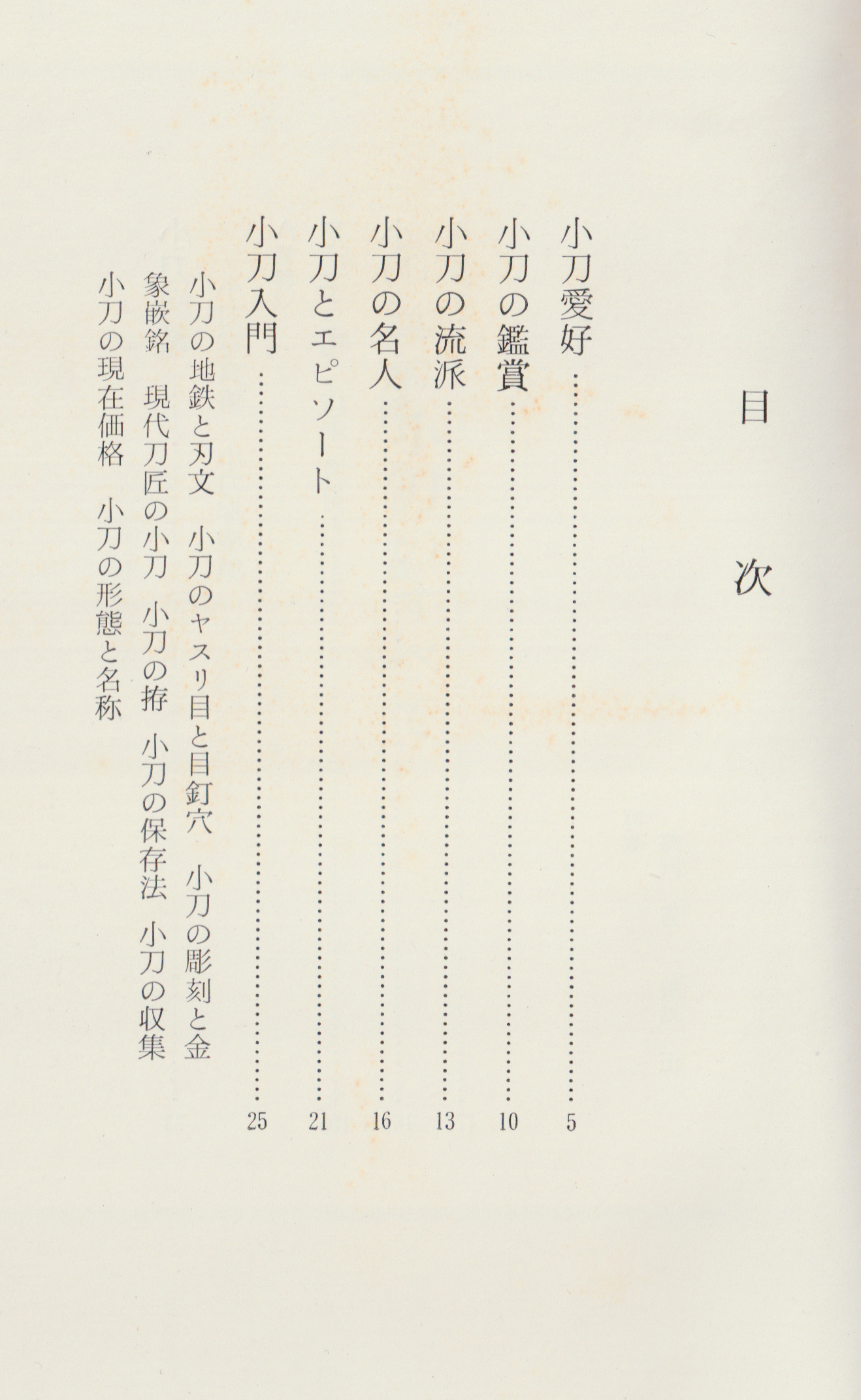
While structured as an itemized photographic catalog, the volume operates as a technical textbook divided across key investigative pillars:
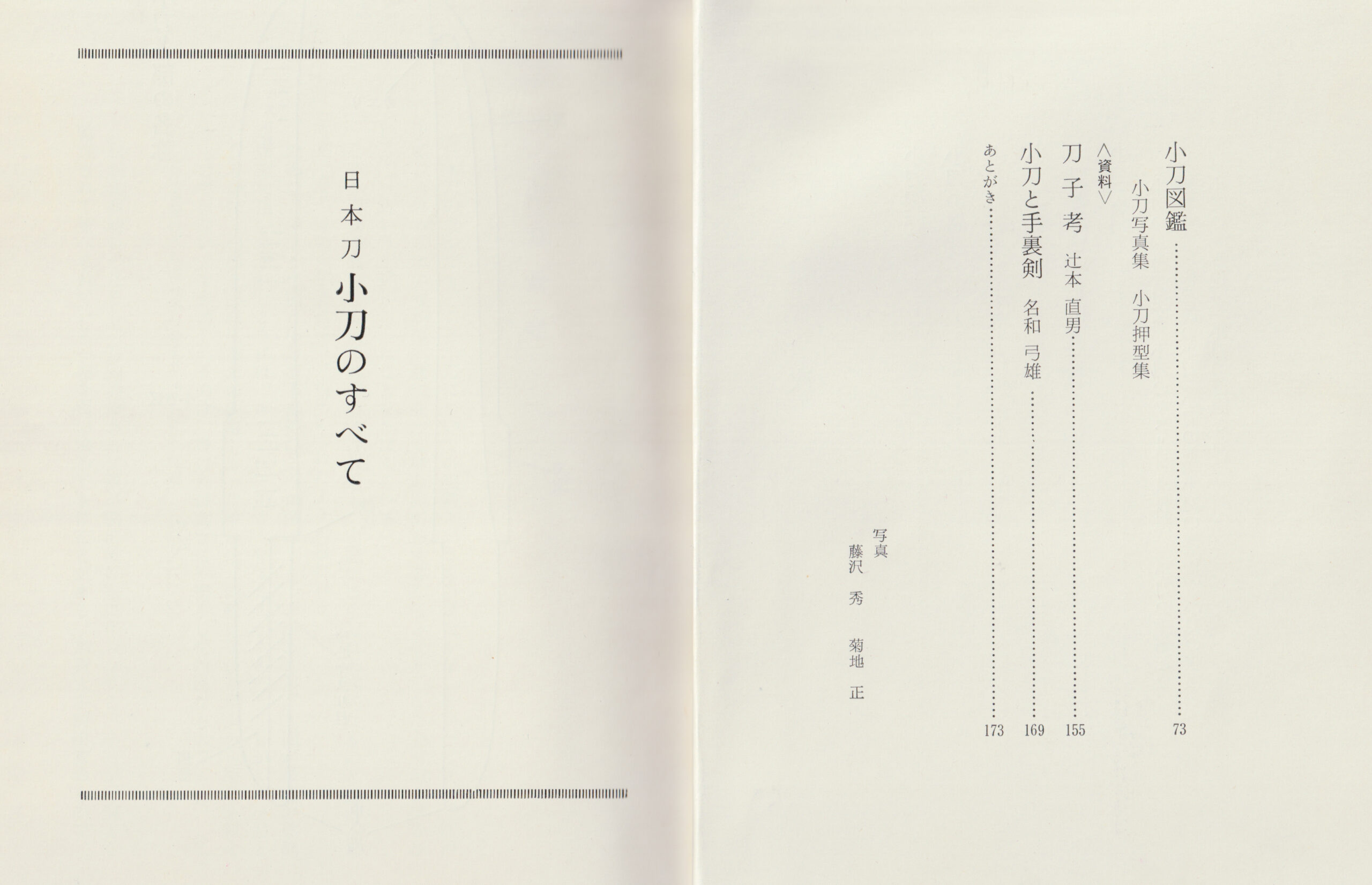
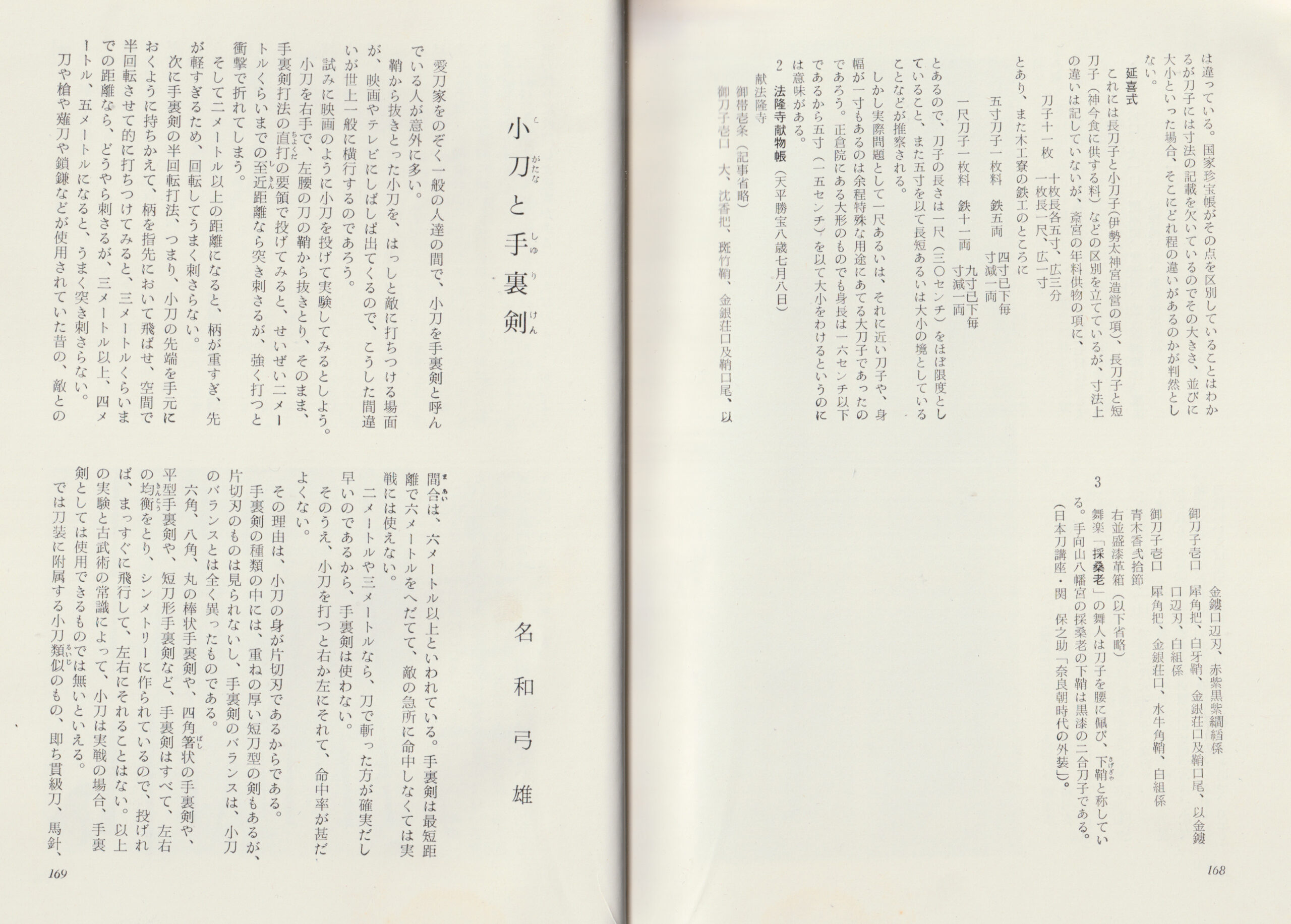
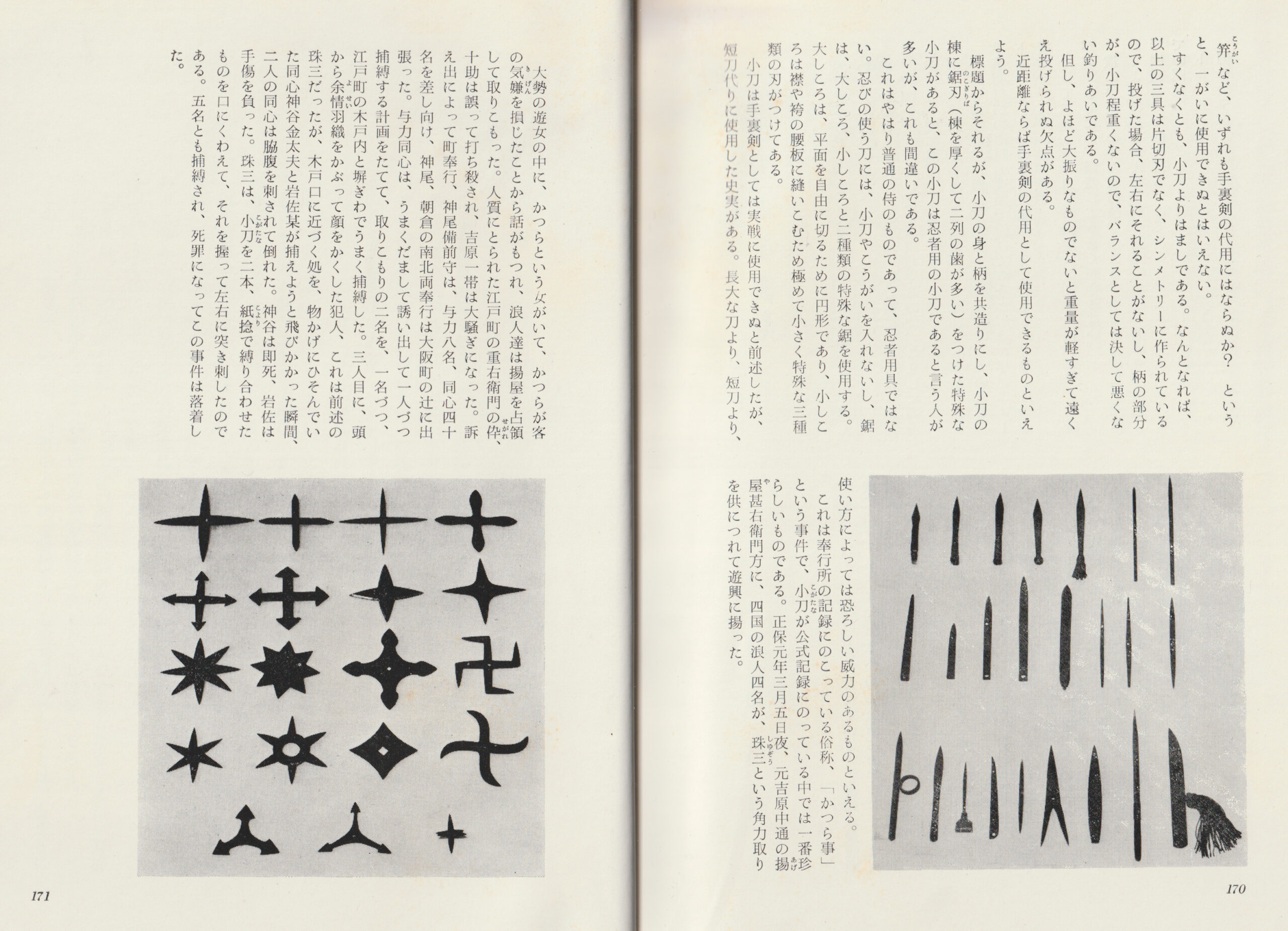
Section 4: Special Appendix — Kogatana and Shuriken (小刀と手裏剣)
A rigorous physical and logistical deconstruction of martial myths by Yumio Nawa. Nawa analyzes the asymmetric weight distribution of standard utility blades, detailing why their heavy, flat tangs (nakago) make them inherently unstable, aerodynamically poor, and ineffective as improvised throwing weapons beyond a tight 1.5 to 2-meter envelope. The analysis is backed by schematic diagrams of multi-point throwing stars (kuruma-shuriken) and a historical investigation into an Edo-period criminal assault near Kanda, mapping out the tactical realities and brutal legal penalties of feudal weapon deployment.
Section 1: The Artistry and Technical Appraisal of Kogatana (小刀の鑑賞と鑑賞法)
Establishes the criteria for evaluating the grain pattern (ji-hada) and tempering lines (hamon) unique to small-format blades. Shibata outlines specialized methodologies for distinguishing authentic masterworks from crude historical reproductions (gatsumi), detailing how tool file-marks (yasurime) and peg holes (mekugi-ana) expose a blade’s true lineage.
Section 2: Lineages, Masters, and Cultural Lore (小刀の流派・名人・エピソード)
Indexes the major regional smithing guilds and prominent historical masters who specialized in the intricate forging of kogatana. It traces historical accounts and workshop lore, contextualizing how these auxiliary tools shifted from simple utilitarian accessories to elite expressions of status and decorative sword-art carving (horimono).
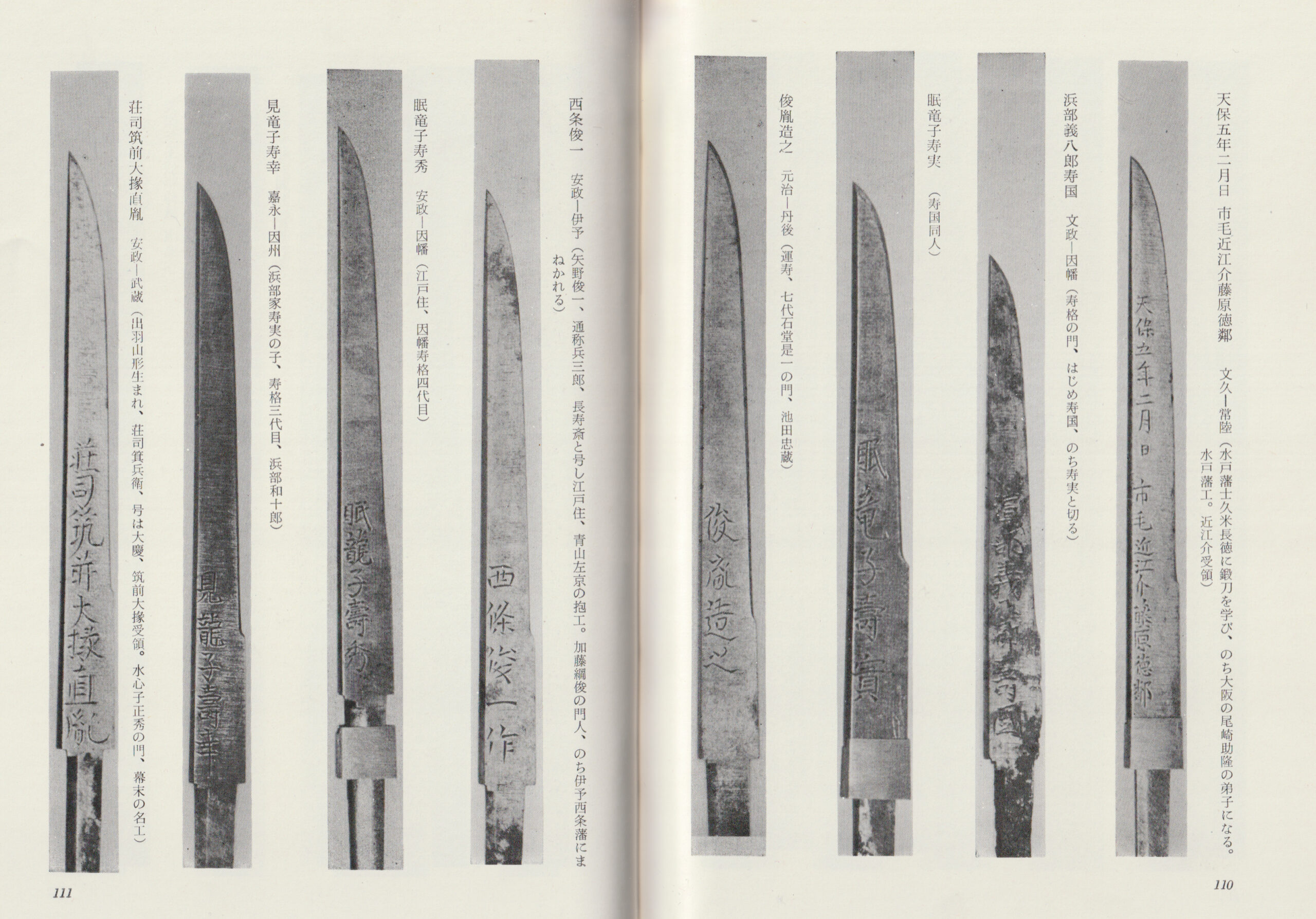
Section 3: The Photographed Catalog and Rubbed Ink Tracings (小刀写真集・小刀押型集)
The core visual engine of the book, combining clear studio plates captured by photographers Hidemasa Fujisawa and Tadashi Kikuchi alongside precise oshigata (traditional hand-rubbed ink tracings). The oshigata map out minute metallurgical traits, signatures (mei), and gold-inlay accents (kin-zōgan) with absolute geometric accuracy for collector comparison.
1. The Book Inspired a Famous “Haiku Collection” Named After Metal Imperfections
Beyond his deep work as a rigid sword appraiser, Shibata was a deeply artistic man who secretly published a poetry book under the master pen name Shibata Hakusui (柴田伯水). In 1986, he released a dedicated anthology of traditional Japanese Haiku titled Gyokusekicho (玉石帖). The title is an elite double entendre derived directly from raw sword polishing metallurgy—referring to the process where a polisher must separate true flawless jade (Gyoku) from common unrefined mountain stone (Seki).
2. Shibata’s Store Was Awarded a Rare Imperial Lineage Name by a Legendary Scholar
Shibata was the founder of Token Shibata (刀剣柴田), one of the most prestigious, multi-generational samurai sword brokerages in Ginza, Tokyo. When he opened his historic Kanda branch expansion in 1969 (the exact same year Nihonto Kogatana Zukan was printed), the legendary sword scholar Dr. Sato Kanzan was so impressed by Shibata’s ethical commitment to cataloging overlooked blades that he personally gifted him a sacred calligraphy name plaque reading “Tsurugi no Ya” (つるぎの屋). This name explicitly channeled a famous Edo-period imperial story where the Kyoto court honored an elite merchant for protecting ancient imperial artifacts.
3. The Book Created a 1970s Collecting Counter-Culture
Before Shibata and Yumio Nawa published this 1969 text, full-sized Katana and Wakizashi dominated the high-end antique market, while small Kogatana utility knives were treated as mere scrap pocket cutlery or generic toolbox items. Modern Japanese sword restoration masters directly credit this specific textbook as the definitive catalyst that turned Kogatana into an independent, highly respected genre of fine art collecting. By listing forgeries and documenting true edge-grain structures, it single-handedly forced the antique market to value small auxiliary handles (Kozuka) and side-knives as standalone historical masterpieces.
Edition details
- Published:
- 01/20/1969
- Publisher:
- Kogei Shuppan (光芸出版)
- Edition:
-
- • Co-Author (Appendix): Nawa Yumio (名和弓雄)
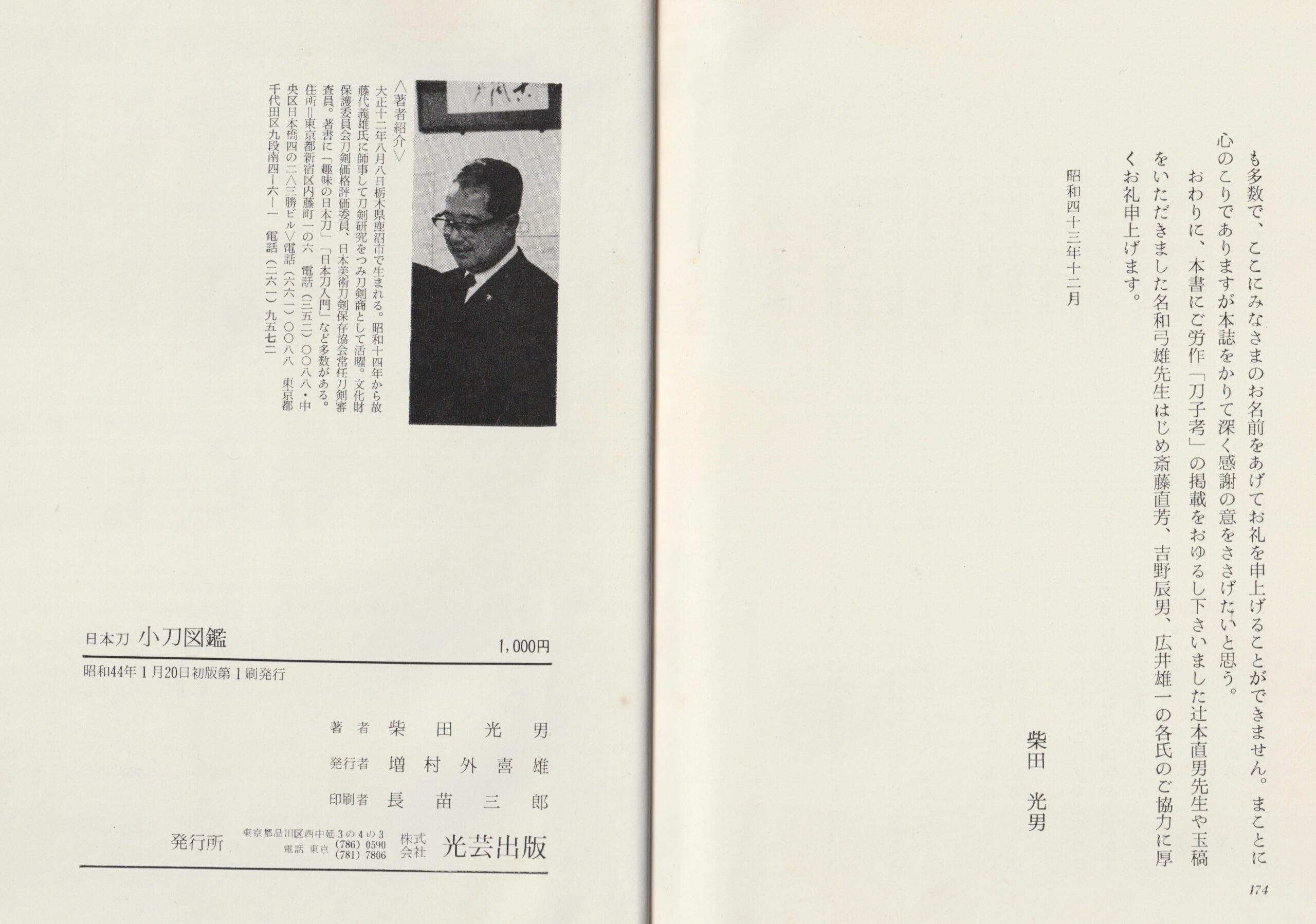
- • Printer: Saburo Nagane (長苗三郎)
- • Publication Date: 01/20/1969 (昭和44年1月20日初版第1刷発行)
- • Note: Original retail price 1,000 Yen.
- Includes technical Oshigata (blade alignment tracings), photographic plates, and a specialized ninja weaponry study on Kogatana vs Shuriken
- Condition:
- Excellent
- Dust jacket:
- Yes