
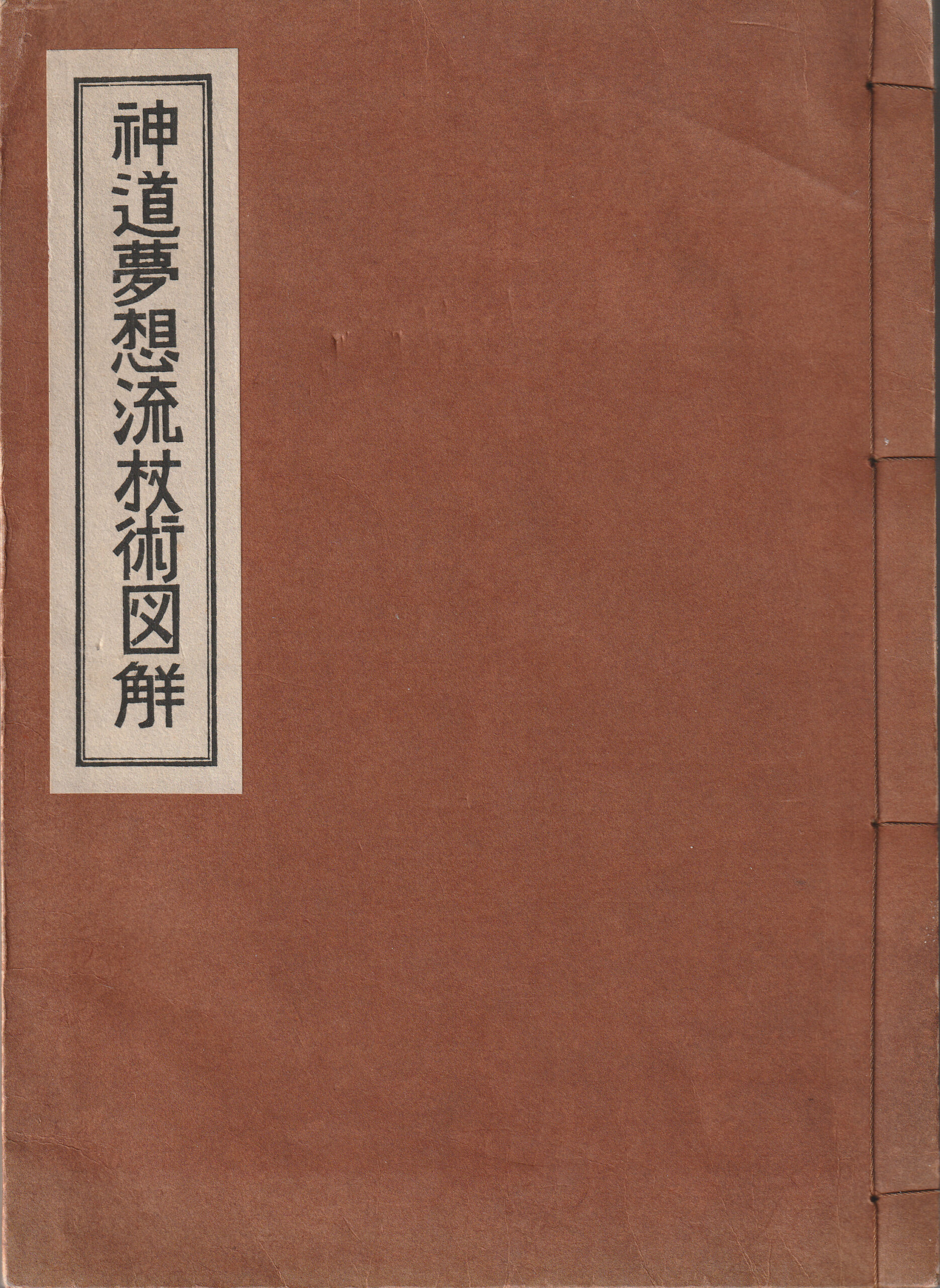
神道夢想流杖術図解
Shintō Musō-ryū Jōjutsu Zukai
- Author:
- Fujita Seiko (藤田西湖)
- Category:
- Weapons
- Collection:
- Robert C. Gruzanski Collection
Description
Shintō Musō-ryū Jōjutsu Zukai: The Authorized Master Edition
This 150-page illustrated manual stands as one of the most significant surviving publications documenting the Shintō Musō-ryū staff tradition in the twentieth century. Published through the Japan Martial Arts Research Institute (日本武術研究所), it records the school’s foundational Twelve Kihon and complete Sixty-Four Kata, preserving a comprehensive technical system that integrates the tactical principles of the staff, spear, sword, and club into a unified martial discipline.
Produced during a pivotal period in post-war Japan, the manual represents not only an instructional text but also an important historical document reflecting the preservation and transmission of classical Japanese martial traditions.
The “DNA” of the Master Edition
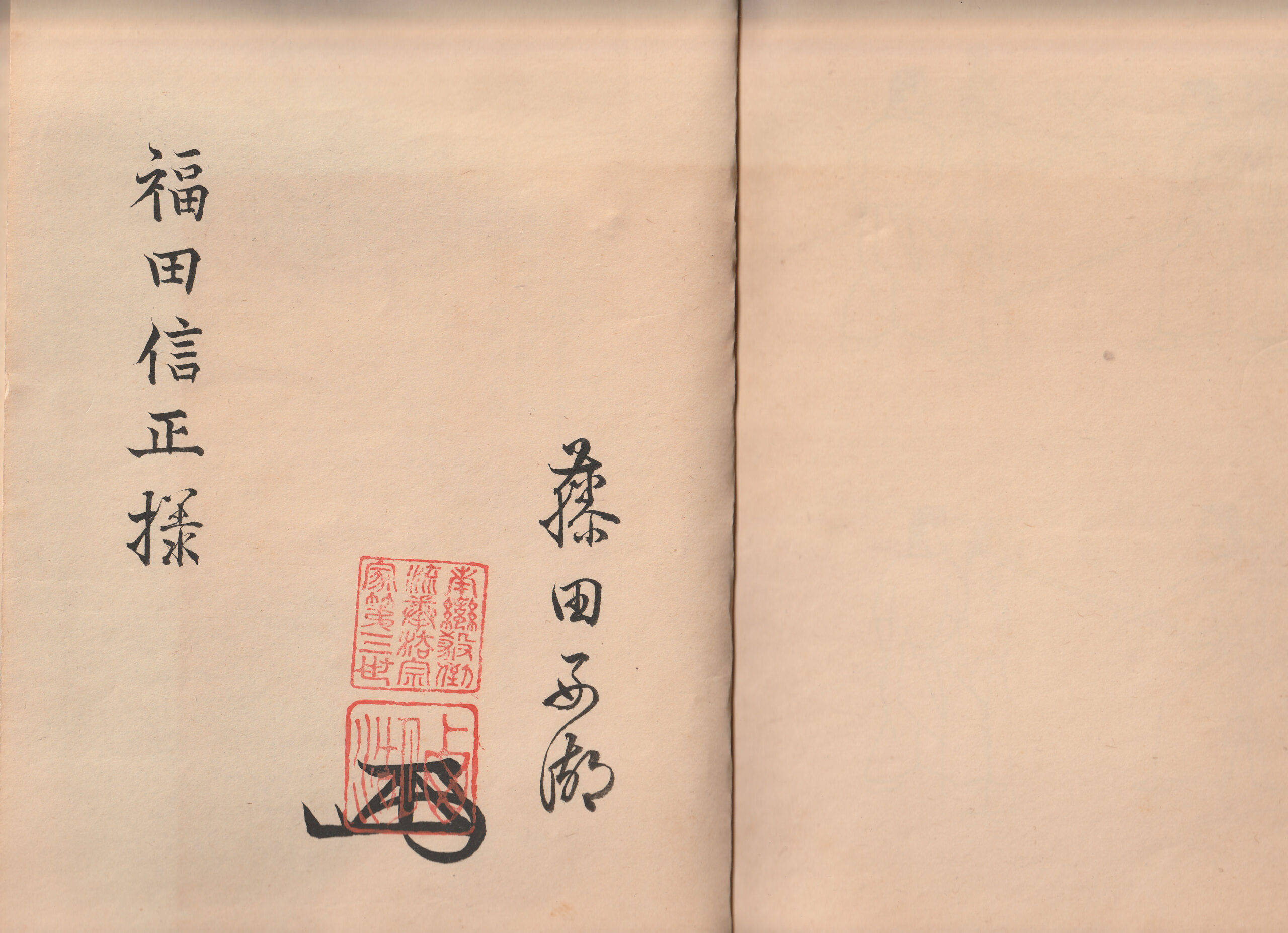
The dedication page distinguishes this volume from ordinary examples by preserving an exceptional presentation inscription executed in brush and accompanied by original cinnabar seals.
The right-hand inscription bears the signature of Fujita Seiko (藤田西湖) together with his personal seal impressions, directly associating the volume with its author.
The left-hand inscription identifies Fukuda Nobumasa (福田信正様), a respected figure connected with the Shintō Musō-ryū Kuroda-han tradition. The relationship between the inscription, accompanying calligraphic elements, and seal impressions suggests that this copy occupied a special place within the transmission of the school’s teachings and was intended for presentation rather than ordinary commercial distribution.
The combination of handwritten inscriptions, original seal impressions, and documented provenance elevates this copy beyond a standard instructional manual into an important association copy with exceptional historical and research significance.
The Forensic Discovery: The “Acid Shadow”
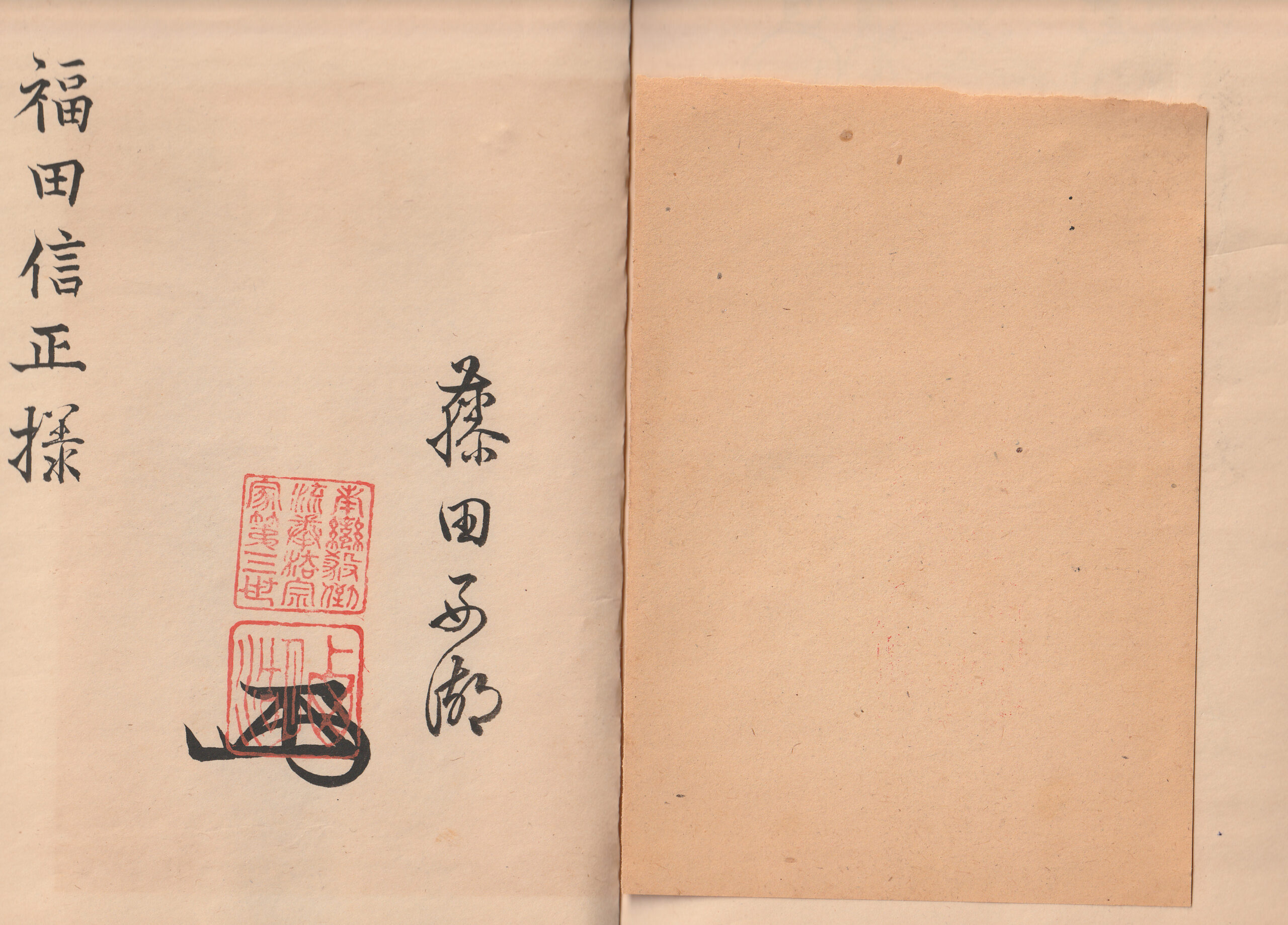
Among the most remarkable features of the Gruzanski copy is the survival of its original 5 × 7.5 inch protective interleaving tissue (slip-sheet), preserved within the volume for more than seventy years.
Both the tissue and the facing page display distinct offset staining produced through prolonged contact with the original seal impressions. This surviving physical evidence is consistent with the seals having been applied with fresh cinnabar paste before the volume was closed, preserving a rare record of the original presentation process.
The preservation of both the tissue and its corresponding offset pattern provides uncommon physical evidence supporting the originality of the inscription and seal impressions, making this copy particularly valuable from both archival and conservation perspectives.
Archival Significance
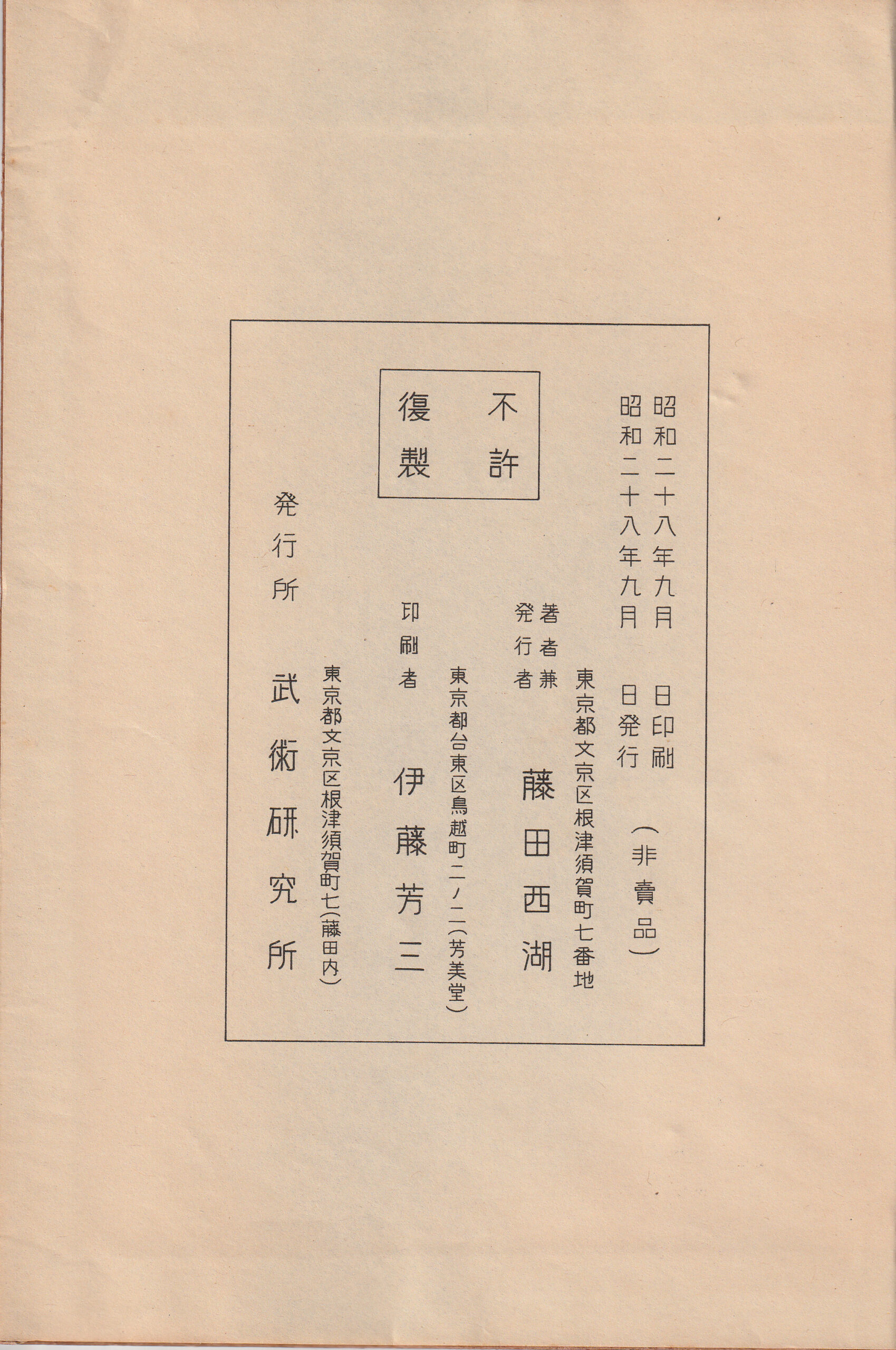
The official colophon (Okuzuke) confirms publication from Fujita Seiko’s headquarters in Nezu-Sukamachi, Tokyo.
Marked 非売品 (Hibaihin – Not for Sale), the volume appears to have been produced for limited distribution rather than general commercial sale, suggesting circulation among selected practitioners, associates, and individuals connected with the preservation of classical martial traditions.
The Robert C. Gruzanski copy survives as an exceptionally complete presentation example, retaining its original inscriptions, seals, interleaving tissue, and publication integrity. Together, these elements create a tangible documentary link between post-war martial arts scholarship and the custodians of Japan’s traditional combative arts.
To ensure its continued preservation, the original interleaving tissue has been rehoused in a pH-neutral archival glassine enclosure, minimizing further chemical interaction while preserving both the tissue and its evidentiary value for future research.
Rare & Unusual Facts About the Book and Author
The Post-War Revival of Classical Martial Arts
Printed in September 1953, this volume appeared during the early revival of traditional Japanese martial arts following the end of the Allied Occupation. As restrictions on classical martial traditions were lifted, publications such as this played an important role in documenting and preserving technical knowledge that might otherwise have remained confined to oral or manuscript transmission.
The Thread-Binding Tactical Choice
The traditional Japanese fukurotoji (袋綴じ) string binding was exceptionally well suited to a training manual. Unlike many modern adhesive bindings that suffer structural stress when opened flat, the flexible thread-bound construction permits repeated consultation with minimal strain to the spine, making it practical for study within the dojo environment while preserving the integrity of the volume.
A Rare Association Between Two Martial Traditions
The dedication to Fukuda Nobumasa establishes a direct historical association between Fujita Seiko and a respected representative of the Shintō Musō-ryū Kuroda-han tradition. The accompanying calligraphic elements and seals suggest that this volume occupied a special role beyond that of an ordinary instructional text, reflecting the close relationships through which classical martial knowledge was transmitted and preserved during the post-war period.
The Cinnabar Seal Impressions
The vivid orange-red seal impressions retain remarkable clarity more than seventy years after publication. Their corresponding offset staining on the original protective tissue provides unusual physical evidence of the book’s original state and supports the conclusion that the seals were individually impressed during the preparation of the presentation copy.
The survival of both the seal impressions and their associated offset pattern represents an uncommon archival feature seldom preserved in comparable martial arts publications, contributing substantially to the historical and research value of this remarkable volume.
Edition details
- Published:
- 09/01/1953
- Publisher:
- Bujutsu Kenkyujo (Martial Arts Research Institute)
- Edition:
-
- • Full Title: Shintō Musō-ryū Jōjutsu Zukai (神道夢想流杖術図解)
- • Release Date: September 1953 (Showa 28)
- • Availability: Non-Sale / Private Limited Distribution (非売品 - Hibaihin)
- • Format: Traditional Japanese thread-bound volume (Fukurotoji / 袋綴じ)
- • Original Price: N/A (Never sold commercially / Private presentation copy)
- • Content Scale: Includes over 250 technical illustrations of short-staff combat techniques.
- • Headquarters: Issued from Nezu-Suka-machi, Tokyo (根津須賀町)
- Condition:
- Good
- Signed:
- Signed copy