
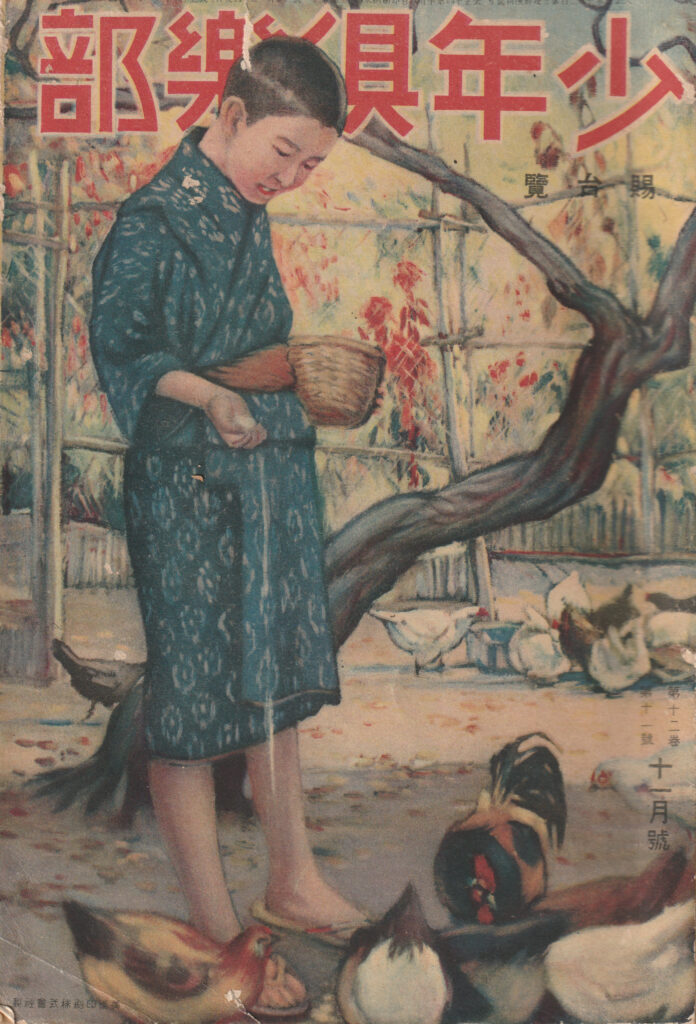
Itoh Gingetsu Shonen Club Ninjutsu Hiden Monogatari Feature – November 1925 Issue
11/01/1925
- Japanese title
- 忍術秘傳物語
- Publication
- Shōnen Club (少年倶楽部)
- Type
- Magazine
- Language
- Japanese
- Editor
- Kokusai Ogawa
- Publisher
- Dai Nippon Yūbenkai Kōdansha
- Authors
- Itoh Gingetsu
- People
- Itoh Gingetsu
Notes
This complete six-page feature preserves Itoh Gingetsu's original article exactly as published in the November 1925 issue of Shōnen Club. The article is significant because it predates the modern popular image of the ninja by several decades and presents ninjutsu through a historical and educational perspective rather than as fantasy. Throughout the feature, Gingetsu repeatedly distinguishes practical espionage methods from the exaggerated supernatural transformations commonly portrayed in popular fiction and kabuki theater. His explanations emphasize observation, deception, environmental awareness, psychology, and the practical use of animals and natural substances as tools of infiltration. The original right-to-left vertical Japanese text, page sequence, illustrations, and prewar orthography have been preserved in this archival presentation.
View:
Description
Published in the November 1925 issue of Shōnen Club (少年倶楽部), Ninjutsu Hiden Monogatari (忍術秘傳物語, “Tales of Secret Ninjutsu Traditions”) is a six-page illustrated feature by Itoh Gingetsu introducing young readers to historical ninjutsu through a series of practical examples and illustrations. Rather than presenting ninja as supernatural figures, Gingetsu examines traditional concealment methods involving rats, toads, snakes, and cats, explaining them as techniques based on deception, psychology, timing, and the careful observation of animal behavior. The article concludes by arguing that ninjutsu was fundamentally a practical military discipline rooted in strategy and scientific reasoning rather than magic or theatrical fantasy. As one of the earliest known Japanese juvenile magazine features devoted entirely to ninjutsu, it provides an important window into how ninja traditions were interpreted and popularized during the Taisho period.
Loading pages…
No document pages available.