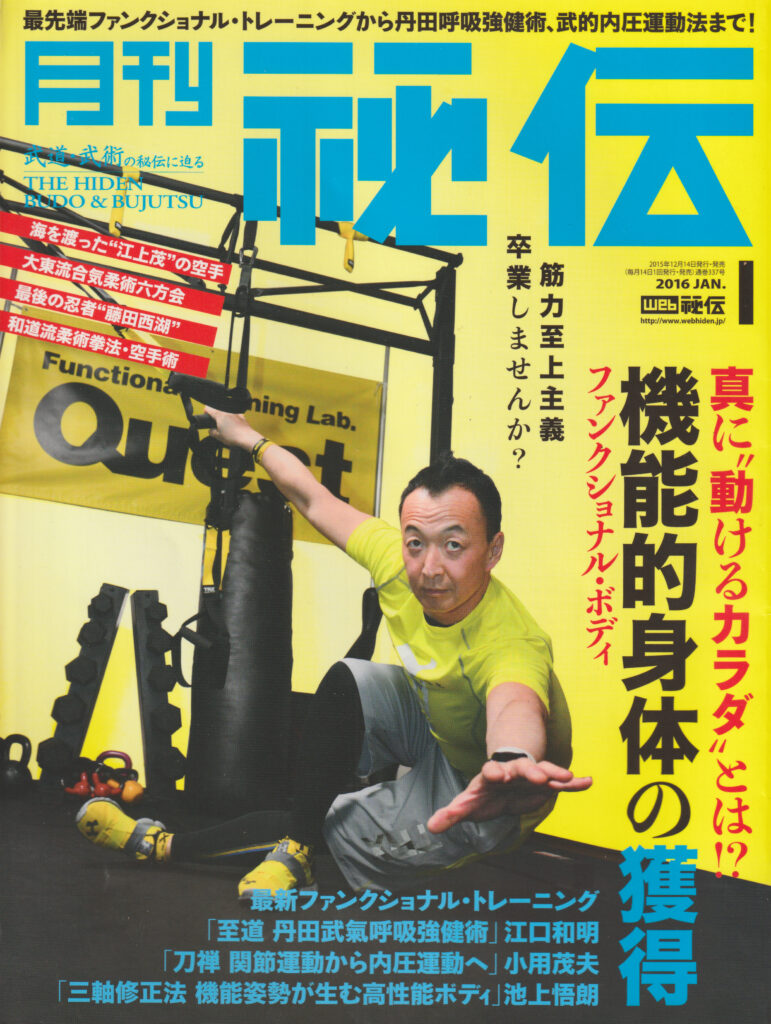
Fujita Seiko Gekkan Hiden Feature – January 2016 Issue
12/14/2015
- Japanese title
- 月刊 秘伝 2016年1月号「異能の人 藤田西湖 研究」
- Publication
- Gekkan Hiden (Monthly Hiden / 月刊 秘伝)
- Type
- Magazine
- Language
- Japanese
- Publisher
- BAB Japan
- Collection
- Fujita Seiko Collection
- Authors
- Yuji Yamada
- People
- Fujita Seiko
Notes
This feature is written by Professor Yuji Yamada of the International Ninja Research Center at Mie University. It breaks down five pages of primary sources regarding Seiko Fujita's martial arts lineages and his 1939 Imperial Army instructional assignments.
View:
Description
This entry archives a specialized 5-page historical research feature on Seiko Fujita (藤田西湖, 1899–1966) published in the January 2016 issue of Gekkan Hiden (Monthly Hiden / 月刊 秘伝). Written by Professor Yuji Yamada of Mie University, the comprehensive article critically analyzes primary sources, personal scrolls, and official wartime documents to evaluate the legacy of the 14th master of Koga-ryu Ninjutsu and Soke of Nanban Satto-ryu Kempo.
Professor Yamada systematically cross-references Fujita’s famous autobiography Doronron against vintage 1920s newspaper prints, revealing critical historical discrepancies—including local archive evidence showing his legal birth track on Izu Oshima island rather than Asakusa, alongside records detailing his legendary 100-day childhood wilderness exile and his combat match victory against a giant Russian agent named Kent.
A central highlight of this document is the inclusion of an official July 1939 Imperial Japanese Army archival record (JACAR Ref: C01004653900) detailing the curriculum at the Rear Duties Personnel Training Center—the classified precursor facility to the infamous Rikugun Nakano Gakko (Nakano Spy School). The military roster explicitly names Seiko Fujita as a specialist instructor hired to teach traditional Ninjutsu (忍術) alongside modern espionage tactics. Additionally, the article tracks his early life under the Shurei Tansinhai body conditioning society, his 250-needle piercing feat, and his postwar physical culture contributions—including an unusual 1964 Tokyo Olympics training proposal. This curated archival scan serves as a vital resource for scholars investigating the intersection of traditional Japanese martial arts, Shugendo physical conditioning, and covert military history.
Loading pages…
No document pages available.