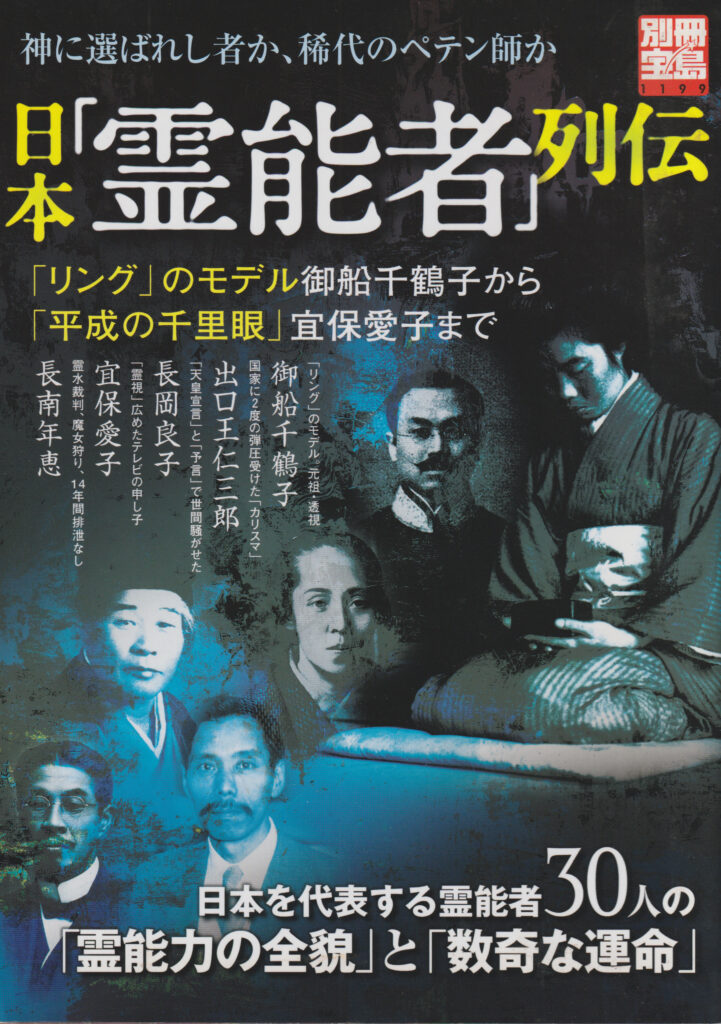
Fujita Seiko Shukan Shincho Feature – October 2, 2005 Issue
10/02/2005
- Japanese title
- 日本「霊能者」列伝
- Publication
- Bessatsu Takarajima 1199
- Type
- Magazine
- Language
- Japanese
- Editor
- Takarajimasha
- Publisher
- Takarajimasha
- Collection
- Fujita Seiko Collection
- Authors
- Takarajimasha
- People
- Fujita Seiko
Notes
Features an article on Kōga-ryū Ninjutsu master Fujita Seiko (藤田西湖), highlighting his childhood reputation for clairvoyance, extreme body conditioning feats, and hidden historical role as a special wartime intelligence asset.
View:
Description
An archival record covering the Fujita Seiko Bessatsu Takarajima Feature published in Bessatsu Takarajima 1199. This comprehensive document serves to preserve and analyze historical materials regarding the life, lineage, and controversial military career of the 14th sōke (grandmaster) of Kōga-ryū Ninjutsu. Widely recognized across modern popular culture as “Japan’s Last Ninja,” his legacy spans across traditional classical martial arts, early 20th-century media sensations, and confidential national defense espionage operations.
## Historical Analysis of the Fujita Seiko Bessatsu Takarajima Feature
### Heritage and Esoteric Foundations
Born in Tokyo in 1899 (Meiji 32), Fujita Seiko claimed direct lineage to the traditional onmitsu (secret agents) who historically served the Tokugawa Shogunate. From early childhood, he was rigorously trained by his grandfather in foundational ninja techniques, including specialized walking methods (hokō-jutsu) and jumping techniques (chōtō-jutsu). During his youth, his deep fascination with spiritual asceticism led him to run away with traveling Yamabushi (mountain ascetics). He lived and trained alongside them at the remote Mitsumine training grounds, mastering classical incantations, sutra recitations, fire-walking rituals, and severe water endurance practices.
### The Boy Clairvoyant Media Sensation
These rigorous spiritual practices coincided with the public development of what contemporary observers called supernatural or clairvoyant abilities. At just 13 years old, acting as a “boy clairvoyant” (千里眼), Fujita assisted local law enforcement—a path facilitated by his father’s role as a police officer. His remote-viewing capabilities successfully located the hidden hideout of a fugitive and identified the professional background of an unidentified homicide victim. This event captured massive nationwide newspaper headlines, positioning him as a child prodigy or “Divine Child” (神童) in the twilight years of the Meiji era.
### Martial Arts Preservation and Physical Feats
As an adult, Fujita Seiko dedicated his life to preventing traditional “Shinobi-jutsu” from fading into historical obscurity amid rapid modernization. Beyond his ninja lineage, he achieved grandmaster status in separate classical combat traditions, including Nanban Ippo-ryū (Nanban Satō-ryū) and Shindō Musō-ryū Jōdo (staff arts), and co-founded the Classical Martial Arts Promotion Society (Kobudō Shinkōkai). He became internationally famous for demonstrating absolute control over physical pain, highlighted by an officially recorded physical conditioning feat where he pierced his own body with 500 oversized tatami needles without sustaining lethal injuries.
### Wartime Espionage and Special Operations
Following a brief postwar career as an investigative newspaper journalist—during which he famously infiltrated a sprawling Mejirodai estate to expose a fraudulent psychic—his specialized skill set was co-opted by the state. During the Sino-Japanese War and World War II, he operated as a confidential special intelligence operative and spy across mainland China under direct government orders, which included a highly classified mission to assassinate Nationalist leader Chiang Kai-shek. Concurrently, he served as an unranked military instructor, teaching survival, espionage, and unconventional combat to elite personnel within the Imperial Japanese Army and Navy, notably at the elite Rikugun Nakano Gakkō (Army Nakano School).
### Archival Continuity and Collection Scope
This specific print compilation, published on October 2, 2005, contextualizes his extraordinary life alongside 29 other prominent mystics, spiritualists, and esoteric masters from Japanese history. By preserving this text, the collection bridges the secretive traditions of the historical Kōga-ryū Minamiyama Six Houses with the documented realities of modern wartime intelligence operations.
Loading pages…
No document pages available.