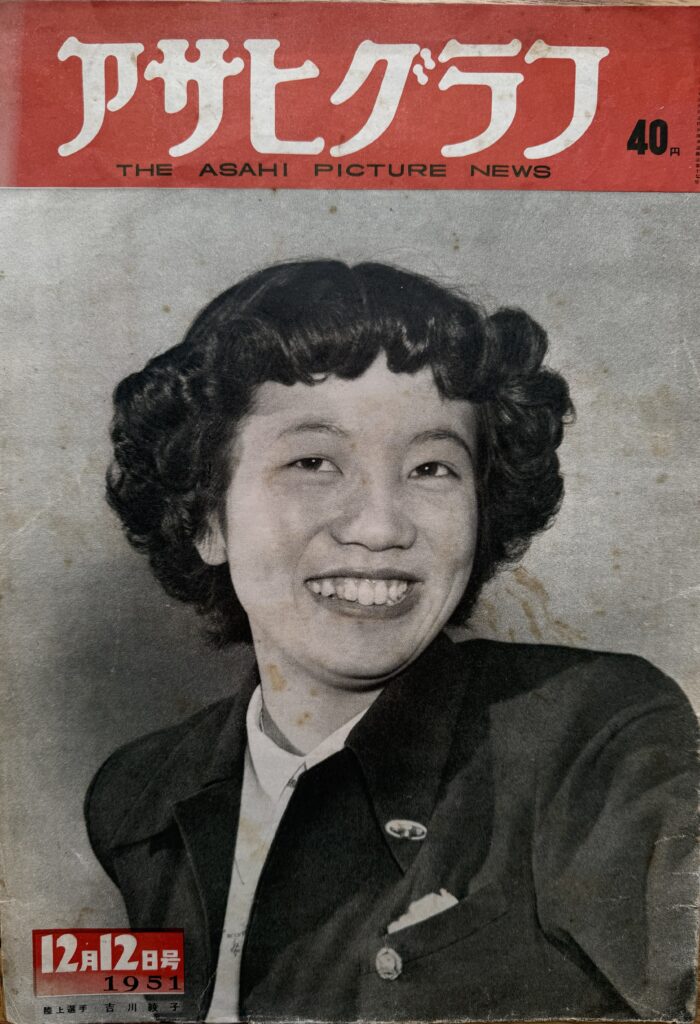
Fujita Seiko Asahigraph Feature – December 12, 1951 Issue
12/12/1951
- Japanese title
- 特異学校校長 忍術学校 藤田西湖氏 (52)
- Publication
- Asahigraph (アサヒグラフ)
- Type
- Magazine
- Language
- Japanese
- Publisher
- Asahi Shimbun Company (朝日新聞社)
- Collection
- Fujita Seiko Collection
- People
- Fujita Seiko
Notes
This document records a historic magazine feature profiling Fujita Seiko, the 14th headmaster of Koga-ryu Ninjutsu. Published on December 12, 1951, as part of Asahigraph's "Unique School Principals" (特異学校校長) series, the article provides an early postwar look at his Ninja School (Ninjutsu Gakko) and his Tokyo dojo, the Renshinkan Airinkan Dojo. The text offers invaluable biographical insights into Fujita Seiko's early training, including his martial arts challenges, his studies with Yamabushi ascetics in the Chichibu mountains, his work with the Metropolitan Police Department, and his ultimate mission to systematically preserve and study traditional Japanese martial arts traditions through his research institute.
View:
Description
Historical Context and Biographical Overview
This December 12, 1951 feature provides a critical window into the postwar public activities of Fujita Seiko, who claimed title as the 14th Generation Master of Koga-ryu Ninjutsu. During this period of occupational and post-occupation Japan, traditional martial arts systems were navigating a transition into modern educational formats and research institutes. The article highlights his efforts to establish the Japan Martial Arts Research Institute to systematically analyze and preserve comprehensive traditions, ensuring that esoteric knowledge would not be entirely lost to history.
The text documents his primary training facility, the Renshinkan Airinkan Dojo, alternatively recognized within local martial arts circles simply as the Ninjutsu Dojo. According to the text, the instruction offered under his supervision extended beyond stealth and espionage concepts to focus heavily on practical martial skills. These combat systems included Kenpo, staff techniques (杖術 – Jojutsu), and capturing arts (捕手術 – Hojojutsu or Torite). The presence of fifty active members at the time underscores a steady domestic interest in retaining authentic combat methods during the early 1950s.
Furthermore, the publication provides fascinating anecdotal details regarding his early development. It references his youth in the Chichibu mountains training under ascetic practitioners (山伏 – Yamabushi), where he studied intense physical discipline, spiritual methodologies, and regional esoteric systems. These foundational experiences eventually guided his service as an instructional resource for law enforcement entities, including the Metropolitan Police Department, before he focused his energies entirely on archiving traditional Japanese combat methodologies.
Loading pages…
No document pages available.